St. Joseph is one of the most beloved figures in the Catholic faith. He was the earthly father of Jesus and the spouse of the Blessed Virgin Mary. Although Scripture does not record even one spoken word from him, his actions tell us so much.
Through his silence, obedience, humility, hard work, and selfless love, St. Joseph shows us what true faith looks like in daily life.
May 1 has just passed — the feast of St. Joseph the Worker. Did you remember to pray to St. Joseph before your prayer corner, statue, or any holy place?
For me, I placed a bouquet of lilies before my St. Joseph statue and prayed for him to bless my career life. Lilies always remind me of his purity, quiet strength, and faithful love.
If you did not do anything special for St. Joseph this year, don’t worry. This article is not only a list of interesting facts about him. It is also a gentle reminder: when you read this post, you can pause for a moment and pray to our beloved saint.
Let us go to Joseph!
He Was a Descendant of King David
Royal blood flowed through St. Joseph.
According to the Gospel of Matthew(1:1–16) NIV, Joseph was from the line of King David. This is very important because the Old Testament promised that the Messiah would come from David’s line.
Through Joseph, Jesus was legally placed within the family of David. This helped show that Jesus fulfilled the promises God made to Israel.
But what interests me most is this: although Joseph had a royal bloodline, he was probably poor.
In the Gospel of Luke 2:24, when Mary and Joseph presented Jesus in the Temple, they offered “a pair of turtledoves or two young pigeons” instead of a lamb. This was the offering allowed for poor families.
So Joseph carried both dignity and poverty.
He had a noble family line, but he lived a simple life. To me, this makes him even more beautiful. He shows us that true greatness does not come from money, fame, or power. It comes from holiness.
He Was a Carpenter
St. Joseph was traditionally known as a carpenter. The Gospel uses the word tekton, which can mean a craftsman, builder, or worker with wood and stone.
This may seem like a contradiction:
- He had a royal bloodline.
- But he worked with his hands.
- He came from David’s family.
- But he lived as a poor laborer.
Yet I think this is exactly why God chose him to be the earthly father of Jesus.
His noble bloodline gave him dignity.
His humble work taught him patience.
His poverty helped him understand the suffering of ordinary people.
Through his daily labor, Joseph provided for Mary and Jesus. He also taught Jesus the value of skill, discipline, patience, and perseverance.
St. Joseph reminds us that ordinary work can become holy. Every job, even the simple and unnoticed ones, can become a way to serve God and love others.
That is why he is the patron of workers and a special friend of the poor.
He Shows Us Why God Created Work
Work is not only about earning money. It is also about forming our soul.
God gives each of us gifts and talents, and work helps these gifts grow. Sometimes our work is joyful. Sometimes it is tiring, boring, or full of pressure. But even then, work can teach us many virtues.
Through work, we learn:
- patience;
- responsibility;
- humility;
- respect for others;
- self-control;
- sacrifice;
- service.
Daily work also helps us take part in something greater than ourselves. We serve our families, our communities, and society.
St. Joseph teaches us that work is not a punishment. Work can be a path to holiness.
When we work with love, even a small task can become an offering to God.
Was St. Joseph a Widower or a Virgin Before Marrying Mary?
There are different traditions about St. Joseph’s life before he married Mary.
One ancient tradition says that Joseph was a widower. This idea appears in early Christian writings such as the Protoevangelium of James. According to this view, Joseph was an older man who already had children from a previous marriage. This tradition was sometimes used to explain the “brothers and sisters of Jesus” mentioned in the Bible.
Another tradition, especially strong in the Western Church, sees Joseph as a young man who lived a life of virginal purity with Mary.
The Catholic Church does not define as dogma whether Joseph was a widower or a virgin before his marriage to Mary. Catholics may hold either opinion, as long as they respect the Church’s teaching on Mary’s Perpetual Virginity.
The Catechism of the Catholic Church teaches that the “brothers and sisters” of Jesus were not other children of the Virgin Mary. They were close relatives, according to the way family relationships were often described in biblical language.
For me, the most important point is this:
Joseph’s marriage to Mary was real, faithful, and holy.
Their love was pure, total, and deeply united to God’s will.
Whether one imagines Joseph as older or younger, his heart was completely given to God, to Mary, and to Jesus.
He Was a Silent Man in the Bible
One of the most fascinating things about St. Joseph is his silence.
The Bible does not record a single word spoken by him.
But his silence is not empty. It is full of meaning.
Joseph does not speak with many words. He speaks through action. When God calls, he obeys. When danger comes, he protects. When Mary needs him, he stays. When Jesus needs a father, he gives his whole life.
St. John Paul II once reflected that Joseph’s silence has a special eloquence. It reveals his inner strength and his deep union with God.
In a world full of noise, St. Joseph teaches us the beauty of quiet faith.
Sometimes the holiest people are not the loudest ones. They are the ones who love faithfully when no one is watching.
He Was the Earthly Father of Jesus and the Spouse of Mary
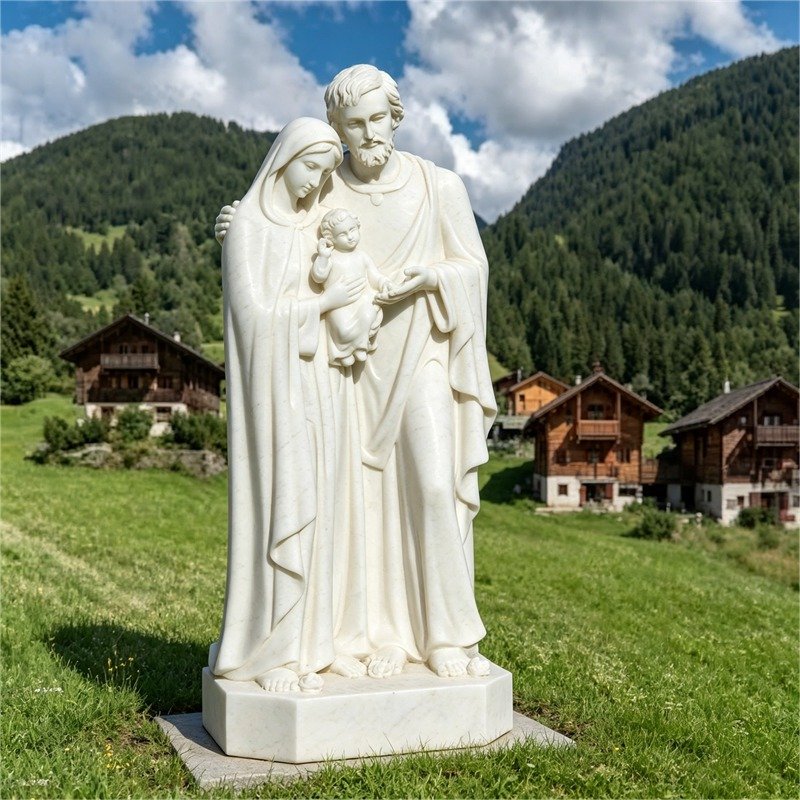
Joseph was not the biological father of Jesus. Jesus was conceived by the power of the Holy Spirit. He is the Son of God.
But Joseph was not “just” a foster father in a cold or distant sense. He was truly given a fatherly mission by God.
Mary herself called him Jesus’ father when she found Jesus in the Temple and said that she and Joseph had been searching for Him with great anxiety.
Jesus respected Joseph’s authority. After the finding in the Temple, Jesus returned to Nazareth and was obedient to Mary and Joseph.
This shows us something very tender: the Son of God allowed Himself to be raised in a human family.
Joseph protected Him.
Joseph taught Him.
Joseph worked for Him.
Joseph loved Him.
Joseph was also the true spouse of Mary. Their marriage was virginal, but it was not less real. It was a holy union of love, fidelity, purity, and shared mission.
Christ lived with them in the most concrete way possible — in their home, at their table, in their daily life.
To me, this makes Joseph’s vocation incredibly beautiful. He loved without possession. He protected without pride. He served without asking for attention.
He Is the Patron Saint of Many Things
St. Joseph is one of the most powerful and beloved patron saints in the Church.
He is most famously known as the Patron of the Universal Church. But his patronage also reaches into many practical areas of daily life.
He is the patron of:
- workers;
- carpenters;
- fathers;
- families;
- husbands;
- the dying;
- expectant mothers;
- travelers;
- immigrants;
- home buyers and sellers;
- many countries and communities.
He is also honored as a patron in many places, including countries such as Canada, China, and others.
This wide patronage makes sense. Joseph knew many human situations: work, poverty, family duty, travel, danger, exile, silence, and death.
So when we go to Joseph, we go to someone who understands ordinary life.
He Has Two Main Feast Days
St. Joseph has two important feast days in the Catholic Church.
The first is March 19, the Solemnity of St. Joseph, Spouse of the Blessed Virgin Mary. This feast honors his role in the Holy Family.
The second is May 1, the feast of St. Joseph the Worker. This feast was established by Pope Pius XII in 1955. It reminds us of the dignity of labor and the Christian meaning of work.
These two feast days show two beautiful sides of Joseph:
- March 19 shows him as husband, father, and guardian.
- May 1 shows him as worker, provider, and model for laborers.
Together, they remind us that holiness is found not only in churches and chapels, but also in kitchens, workshops, offices, classrooms, and every place where people work with love.
He Was Guided by Dreams
St. Joseph received divine guidance through dreams.
In the Gospel of Matthew, an angel appeared to Joseph in dreams several times. Through these dreams, God told him:
- to take Mary as his wife;
- to flee to Egypt with Mary and Jesus;
- to return to Israel after Herod’s death;
- to settle in Galilee.
Every time Joseph received God’s message, he obeyed.
He did not delay.
He did not argue.
He did not demand full explanations.
He simply trusted and acted.
This shows us that Joseph was deeply open to God’s will. He was a man of prayer, a man who could listen, and a man ready to move when God called.
In this sense, he was a vessel of destiny. His obedience helped protect the Savior of the world.

He Is a Model of Fatherhood and Husbandly Love
St. Joseph is a beautiful model for fathers and husbands.
He protected Mary when she was vulnerable.
He protected Jesus when His life was in danger.
He provided for his family through hard work.
He led his household with humility and courage.
He was the “pillar” of the Holy Family, not because he controlled everything, but because he gave himself completely.
True fatherhood is not about power.
True husbandly love is not about possession.
It is about sacrifice, protection, fidelity, and tenderness.
Joseph teaches men how to love with strength and purity. He teaches families how to trust God in uncertain times.
He also teaches all of us that love is not always loud or dramatic. Sometimes love looks like waking up early, working hard, staying faithful, and quietly doing what must be done.
That kind of love is holy.
He Is Called the “Terror of Demons”
One of St. Joseph’s most powerful titles is Terror of Demons.
This title may sound surprising because Joseph seems so gentle and quiet. But his holiness is exactly why demons fear him.
He was pure.
He was obedient.
He was humble.
He protected Jesus and Mary.
He lived completely for God.
Demons fear a soul that belongs totally to God.
When life feels heavy, when temptations are strong, or when fear surrounds us, we can go to St. Joseph. His intercession is strong because his love for Jesus and Mary was so faithful.
He reminds us that spiritual strength does not always look dramatic. Sometimes it looks like quiet obedience, deep purity, and steady trust in God.
Go to Joseph when you are afraid.
Go to Joseph when your family needs protection.
Go to Joseph when your soul needs peace.
He Is the Patron of a Peaceful Death
St. Joseph is also the patron of a happy and peaceful death.
Tradition says that Joseph died before Jesus began His public ministry. Many people believe he died in the presence of Jesus and Mary.
What a beautiful way to leave this world — held by the love of Jesus and Mary.
That is why Catholics often pray to St. Joseph for a peaceful death, for themselves and for their loved ones.
There is also a devotion to Sleeping St. Joseph. Pope Francis has spoken warmly about this devotion. He used to place written prayer intentions under a statue of Sleeping St. Joseph, asking him to intercede.
The image of Sleeping Joseph reminds us of trust. Even while sleeping, Joseph is open to God’s voice. He rests, but his heart belongs to the Lord.
To me, this is very moving. A happy death is not a sad thing in the deepest Christian sense. It is the peaceful return of a soul to God.
St. Joseph can help us prepare for that final meeting with faith, hope, and peace.
He Was a Just Man Who Obeyed God’s Law
The Gospel of Matthew 1:19 describes Joseph as a just man.
This means he was righteous, faithful, and obedient to God’s law. He observed the Jewish faith with devotion. We see this in the way Joseph and Mary presented Jesus in the Temple and made pilgrimages according to their religious tradition.
Joseph’s justice was not harsh. It was full of mercy.
When he first learned that Mary was pregnant, he planned to divorce her quietly. He did not want to expose her to shame. Even before he understood the mystery, he acted with kindness.
This shows us the beauty of true righteousness.
To be just is not to be cruel.
To be holy is not to humiliate others.
To follow God’s law is also to act with mercy.
St. Joseph teaches us how to combine truth and compassion.
He Is Often Portrayed with Lilies
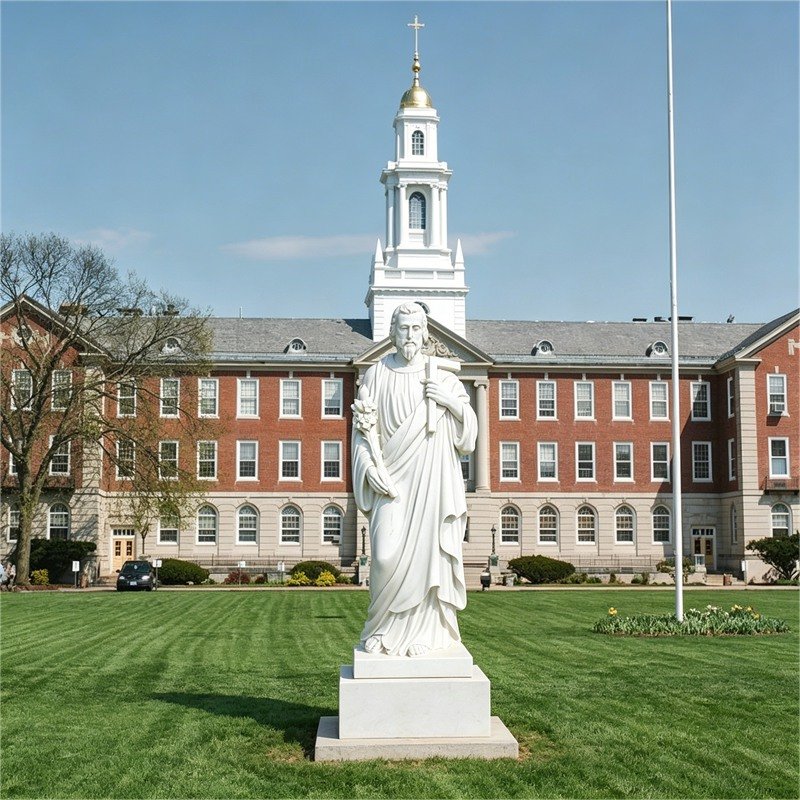
In Catholic art, St. Joseph is often shown holding lilies.
The lily is a symbol of purity, chastity, and holiness. It reminds us of Joseph’s pure love for Mary and his faithful protection of the Holy Family.
Sometimes he is also shown holding:
- carpenter’s tools;
- a square;
- a staff;
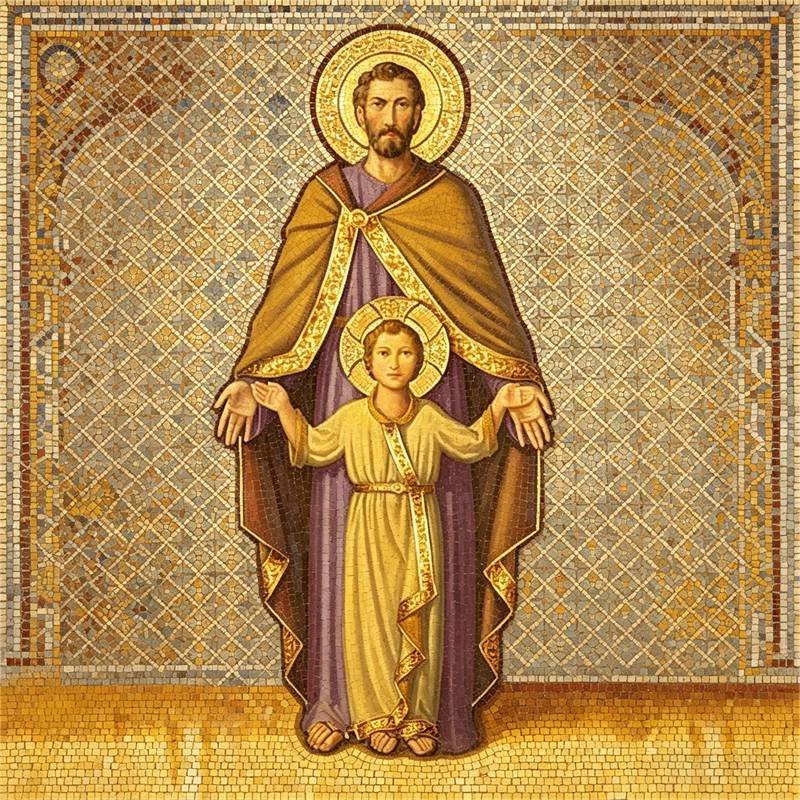
- the Child Jesus;
- or the hand of the young Jesus.
Each image tells us something about him.
The tools show his work.
The lily shows his purity.
The staff shows his authority and guidance.
The Child Jesus shows his fatherly love.
This is why I personally love placing lilies before my St. Joseph statue. They feel like a small but meaningful gift to him — a sign of love, respect, and prayer.
Conclusion: Go to Joseph
St. Joseph’s life continues to inspire Catholics all over the world.
He was silent, but his life speaks loudly.
He was poor, but he carried royal dignity.
He was hidden, but he protected the Savior.
He was humble, but demons fear him.
He was a worker, but his daily labor became holy.
As the earthly father of Jesus and the spouse of Mary, Joseph shows us how to love without seeking attention. He teaches us how to work, how to pray, how to protect our families, how to trust God, and how to remain faithful in silence.
If May 1 has passed and you did not do anything special, it is not too late.
You can still pause now.
You can still say a simple prayer.
You can still go to Joseph.
Place your worries, your work, your family, and your future under his care.
St. Joseph, patron of workers, fathers, families, and the Universal Church, pray for us.