Description
Museum-level fidelity
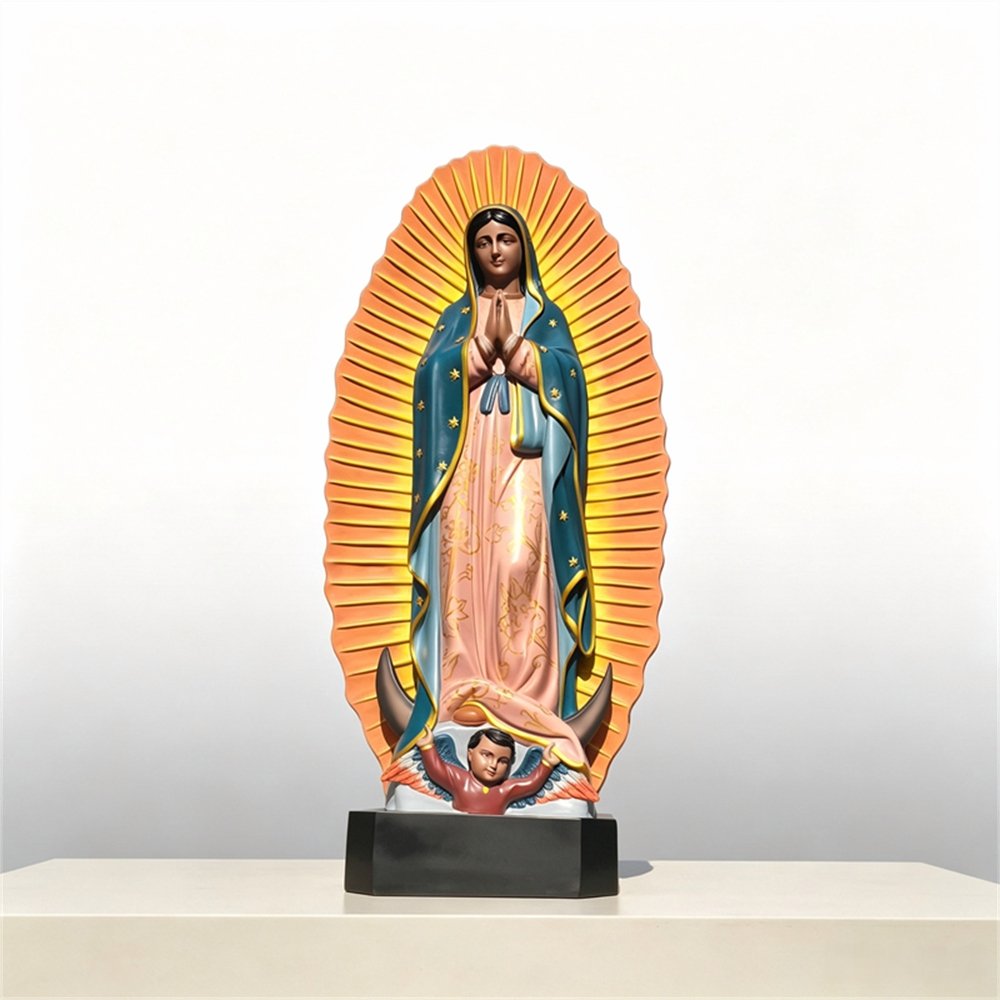
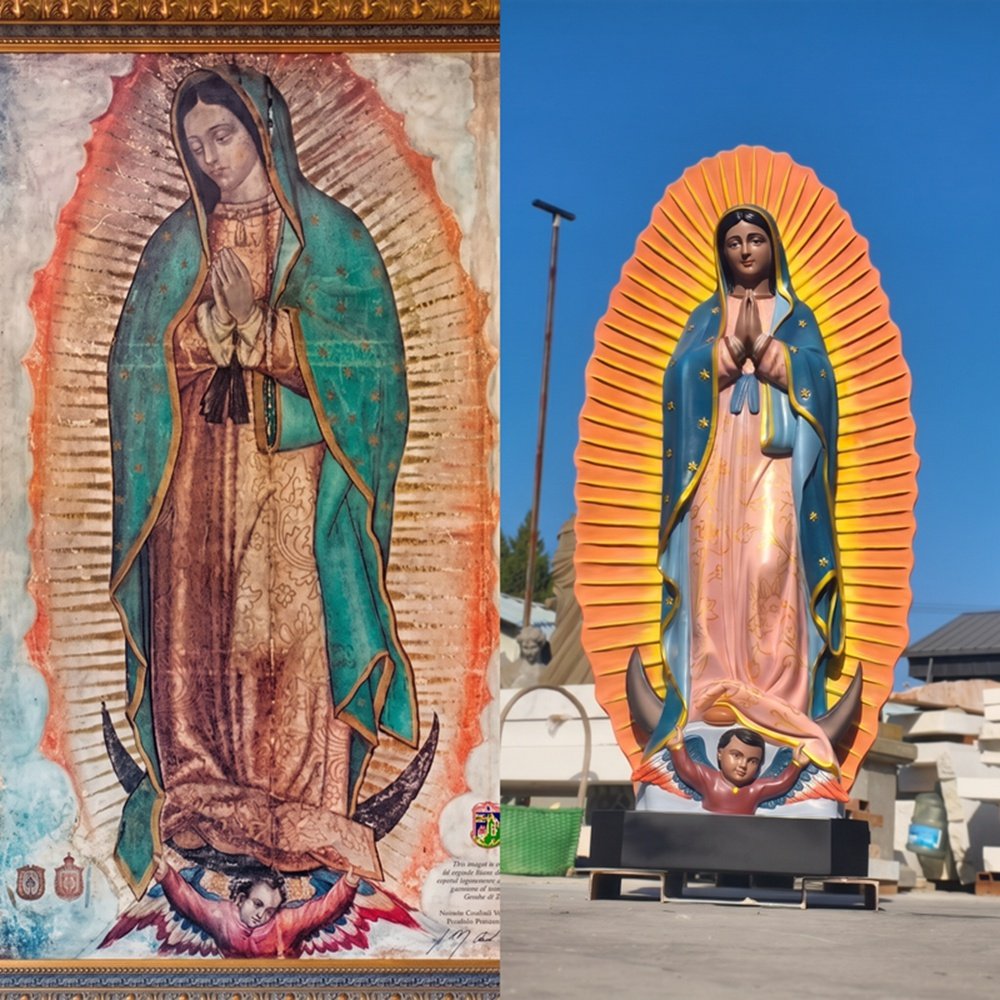
We select premium natural marble with a porcelain-smooth, luminous texture — a superior stone canvas that perfectly retains delicate mineral pigment layers without dulling the marble’s natural radiance, fully restoring the soft and sacred tone of the original cactus-fiber cloak image.
The sacred midnight mantle
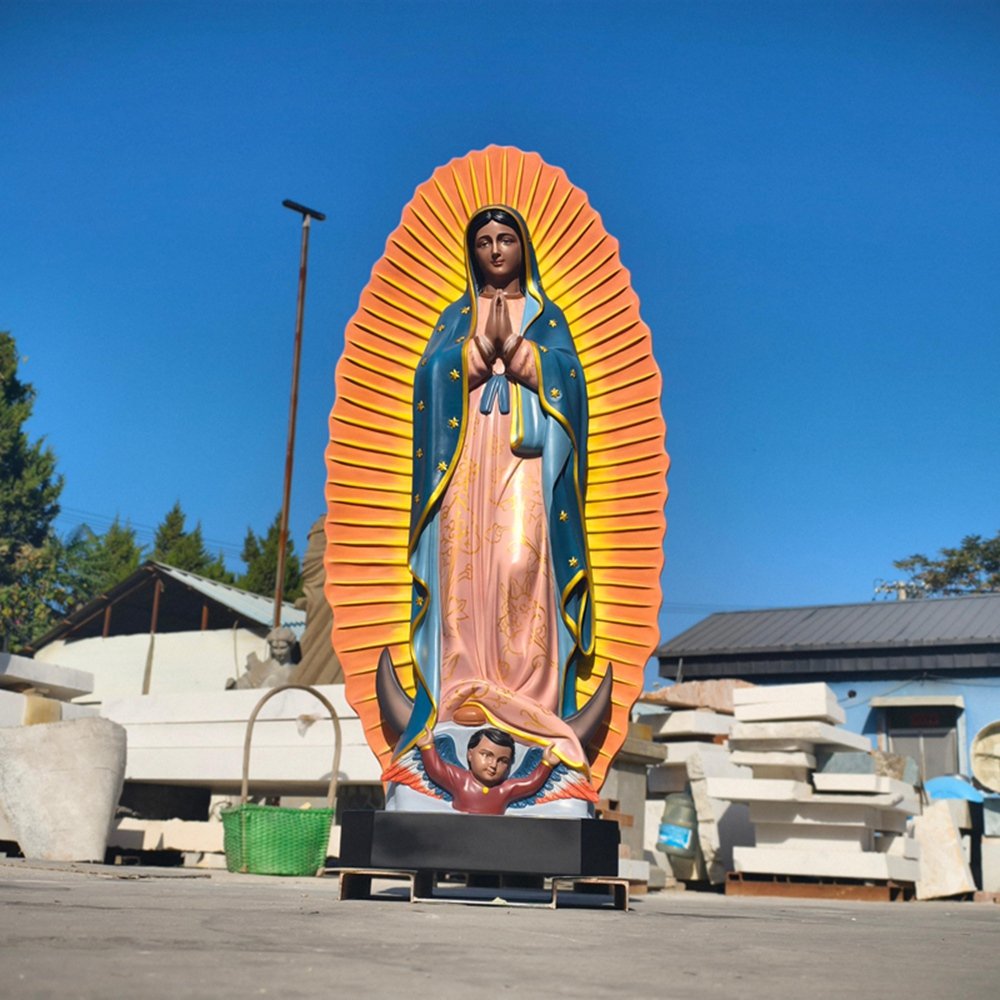
Our master artisans adopt layered, proportionally precise carving techniques strictly calibrated to the original Guadalupe icon’s symbolic layout and dimensional proportion.
every layered fold, natural drape and cascading hemline of the sacred midnight mantle is meticulously adjusted to replicate the heavy, flowing texture of real fabric.
The star-flecked mantle details are carved in strict accordance with the original star distribution density, solving the common flaws of flat, rigid or exaggerated carving. The depth of each fold is precisely controlled to capture natural light and shadow, restoring the solemn, ethereal sense of the Virgin’s sacred robe in the miracle image.
The iconic radiant halo rays
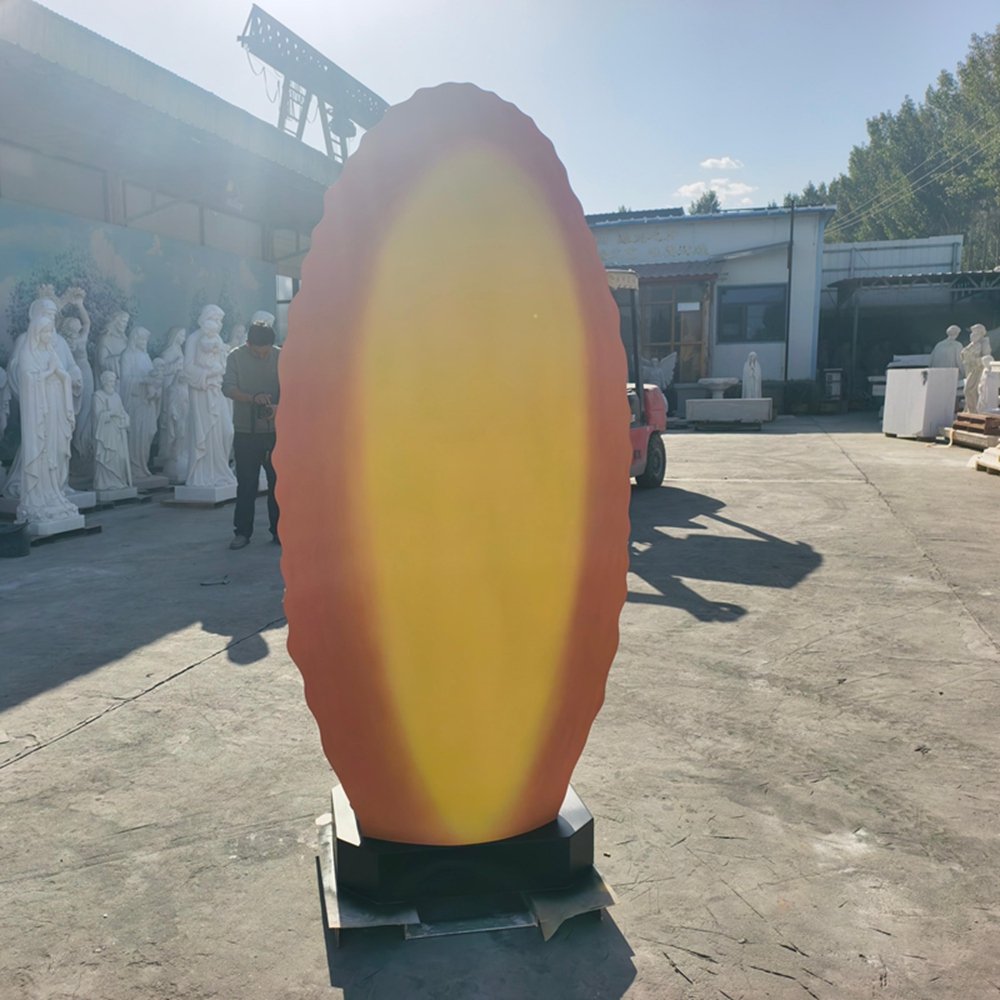
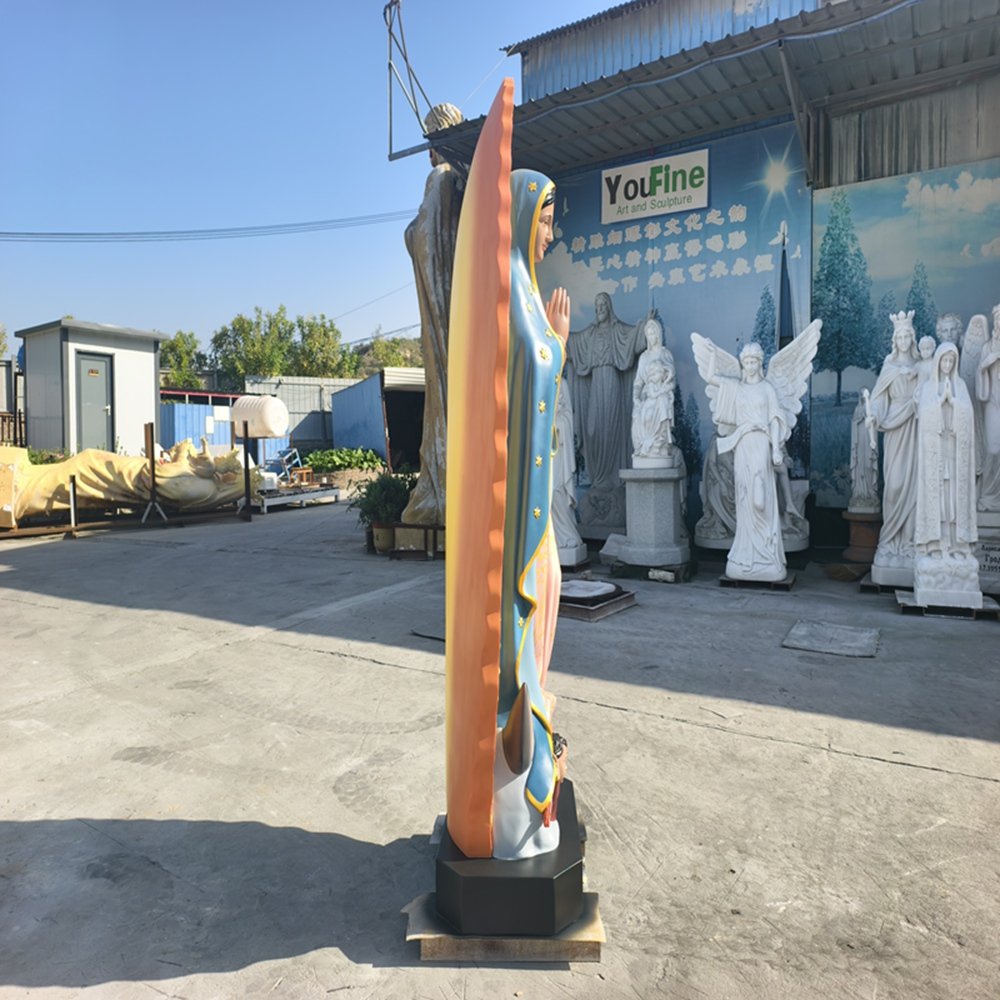
The iconic radiant halo rays are carved in graded three-dimensional relief with one-to-one proportional restoration of the original layout. Each light beam is individually tapered, polished and layered in gradient thickness, completely reproducing the dynamic luminous effect of the miraculous apparition. Viewed from any angle, the entire golden halo presents a vivid vibrating aura, perfectly restoring the sacred scene of divine light bursting outward recorded in the original artwork.
Authentic Color System
I did not come as a stranger. I came wearing your own face.
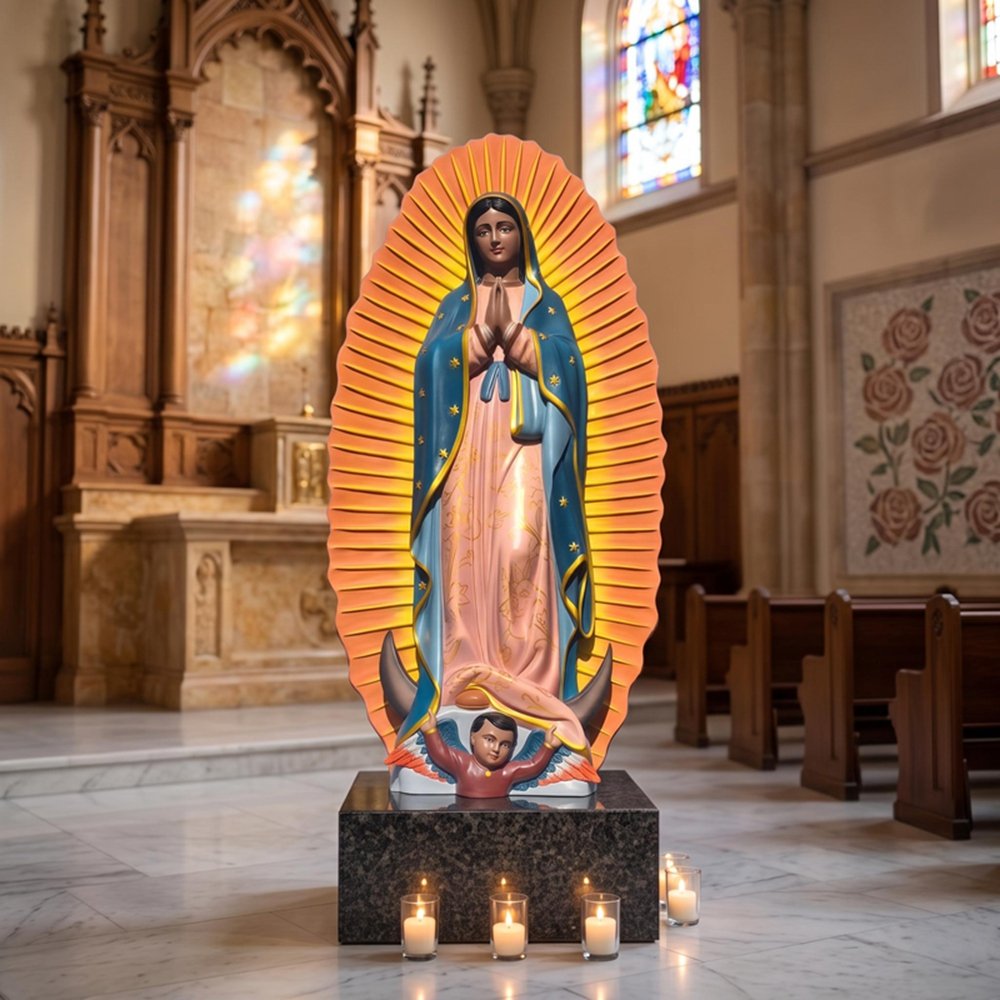
Recommended Placement
Background of the Original Icon
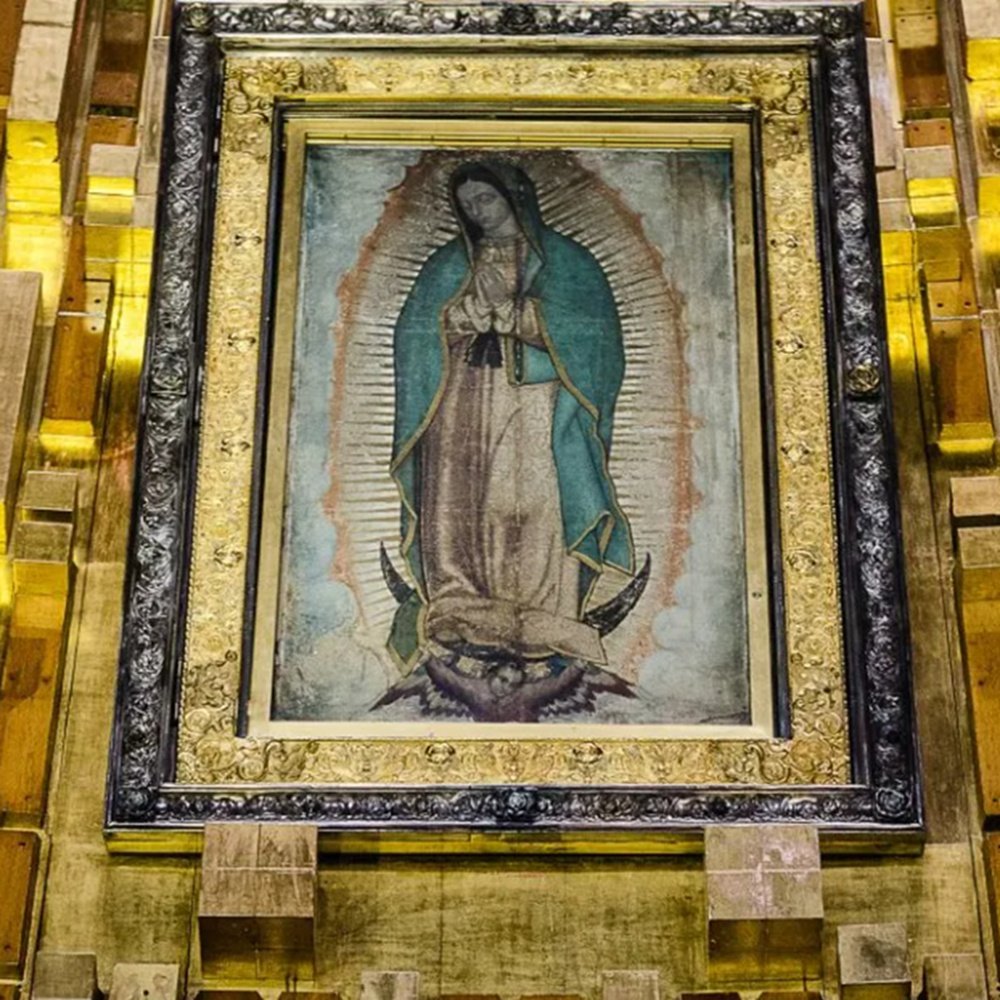
The Icon traces its origin to December 1531, when the Virgin is said to have appeared multiple times to a young indigenous man, Juan Diego, on Tepeyac Hill north of Mexico City — a site already sacred in Aztec tradition to the mother goddess Tonantzin. The resulting image, imprinted on a cactus-fiber cloth (tilma) measuring roughly 2 meters by 1.1 meters, became the founding icon of Mexican Catholicism.
What makes the image historically singular is not merely its miraculous origin story, but its visual language. Painted — or, as tradition holds, miraculously formed — in the early 16th century, it predates by decades the mature flowering of New Spain’s colonial art movement, yet it already contains the movement’s defining tension: European Marian iconography (the mantle, the halo, the crescent moon of the Woman of the Apocalypse) fused with a distinctly indigenous visual identity.
By the time the image reached its most celebrated artistic elaborations in the 18th century, New Spain’s painters were actively synthesizing Baroque European technique with local color, ornament, and symbolism — the same era in which Mexican silverwork, architecture, and devotional painting were forging a visual identity independent of Madrid. The image’s golden rays and floral cartouches belong unmistakably to this world: European in grammar, American in accent.
The original now resides above the altar of the modern Basilica of Guadalupe, completed in 1976 — a structure built specifically because the 1709 basilica, sinking into Mexico City’s unstable lakebed foundations, could no longer safely house the millions of pilgrims who came each year to stand before her.
Customize your Our Lady of Guadalupe marble statue: multiple heights, base styles and finishes available, with outdoor sealing for exterior use. Contact our sculpture team for sizing, pedestal, freight and installation advice; receive your tailored proposal within 24 hours.