Desciption
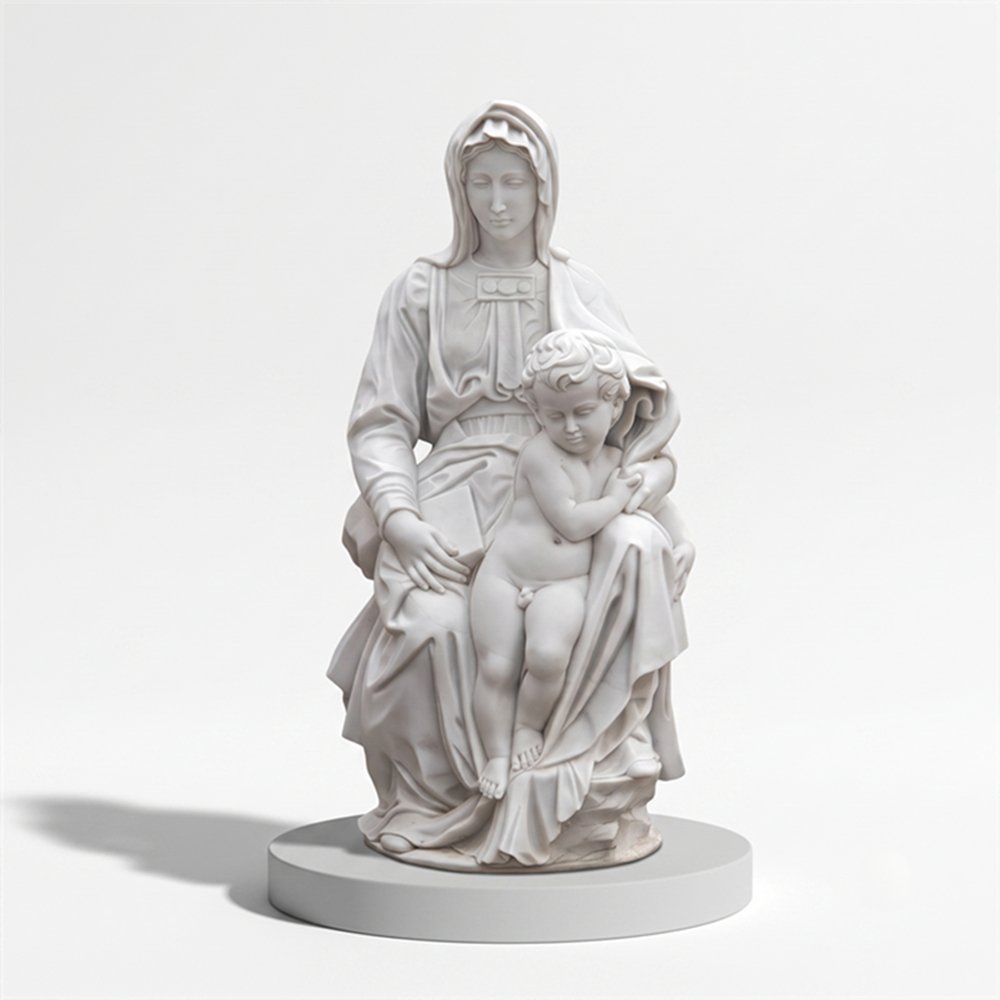
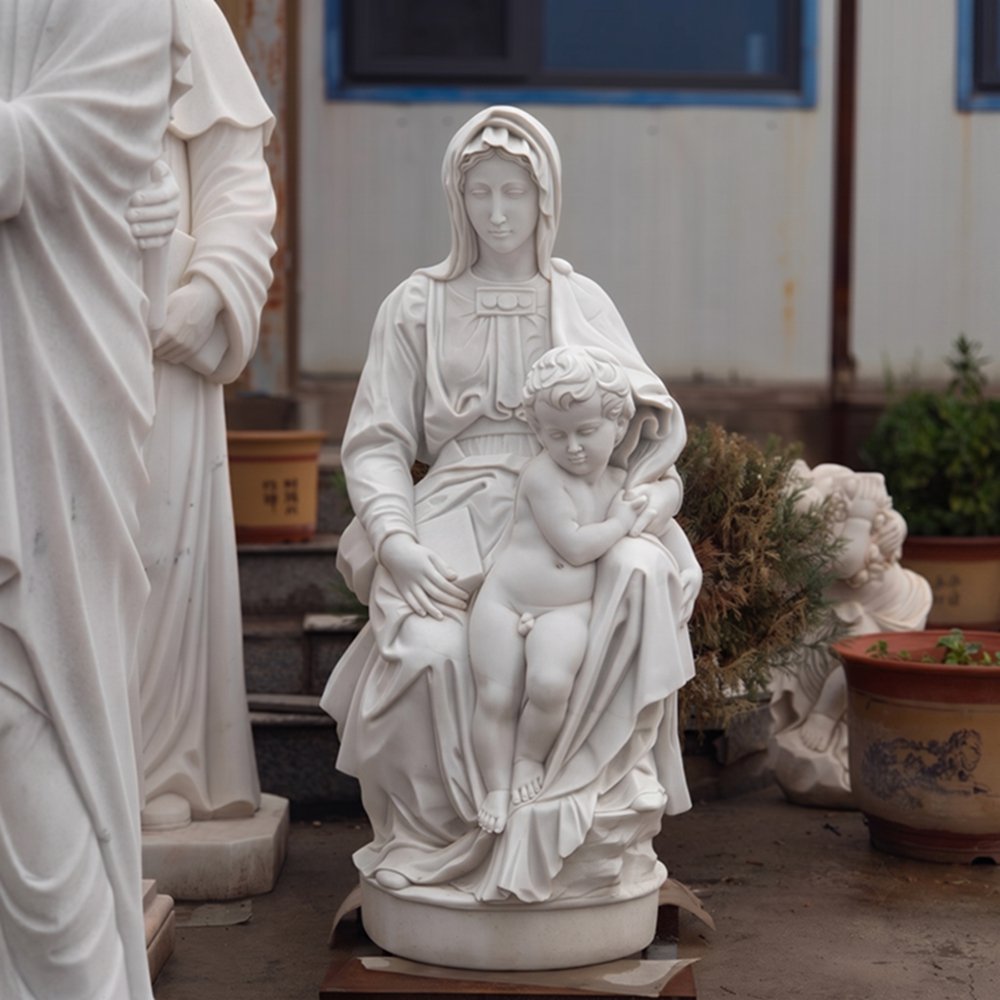
In this Madonna of Bruges, the Virgin Mary is seated, with the toddler Christ Child resting between her knees and leaning gently against her thigh.
Their hands are clasped together.
Mary draws the Child Jesus near, offering comfort while softly restraining his restless impulse to wander.
It captures an authentic human moment: a quiet pause shared between a mother and her curious, active‑spirited child.
Mary bows her head, her gaze falling softly downwards, serene and far‑reaching. Upon her forehead, the folds of her veil fall to form the silhouette of the Greek letter Omega (Ω).
“I am the Alpha and the Omega, the Beginning and the End, says the Lord.”
— Revelation 1:8, 21:6, 22:13
Though subtle, this detail bears profound spiritual weight. Even as Christ rests playfully at her knees, Mary’s tranquil countenance bears foreknowledge of the suffering that awaits him.
Art historians continue to debate whether Michelangelo shaped this veil fold as a deliberate theological symbol, or whether it arose purely from his unparalleled mastery of stone drapery.
Regardless, the striking likeness between Mary’s features here and those of the Virgin in his Pietà — completed five years prior — remains unmistakable.
Carved just five years earlier, it is hard to miss.
Madonna of Bruges vs. the Pietà
| Madonna of Bruges(c.1503‑1505) | Pietà(c.1498‑1499) | |
|---|---|---|
| Moment | Christ as a living child | Christ after death, in Mary’s arms |
| Mood | Warm, intimate, quietly foreboding | Grief held in stillness |
| Omega meaning | Mary foresees the suffering to come | Redemption already fulfilled |
Both mother and son. Both marked by the same fold in the same veil. One looks forward; the other looks back.
Where is the Original Madonna of Bruges?
Michelangelo’s Madonna of Bruges stands just 50 inches tall in the Church of Our Lady, Bruges, Belgium — the only marble sculpture he made that left Italy during his lifetime.
It was meant for a larger commission under Pope Pius III, but the project was never finished. A Bruges cloth merchant, Jan Van Moeskroen, purchased the piece instead. His family donated it to the church in 1516, where it remains today.
Where This Statue Belongs
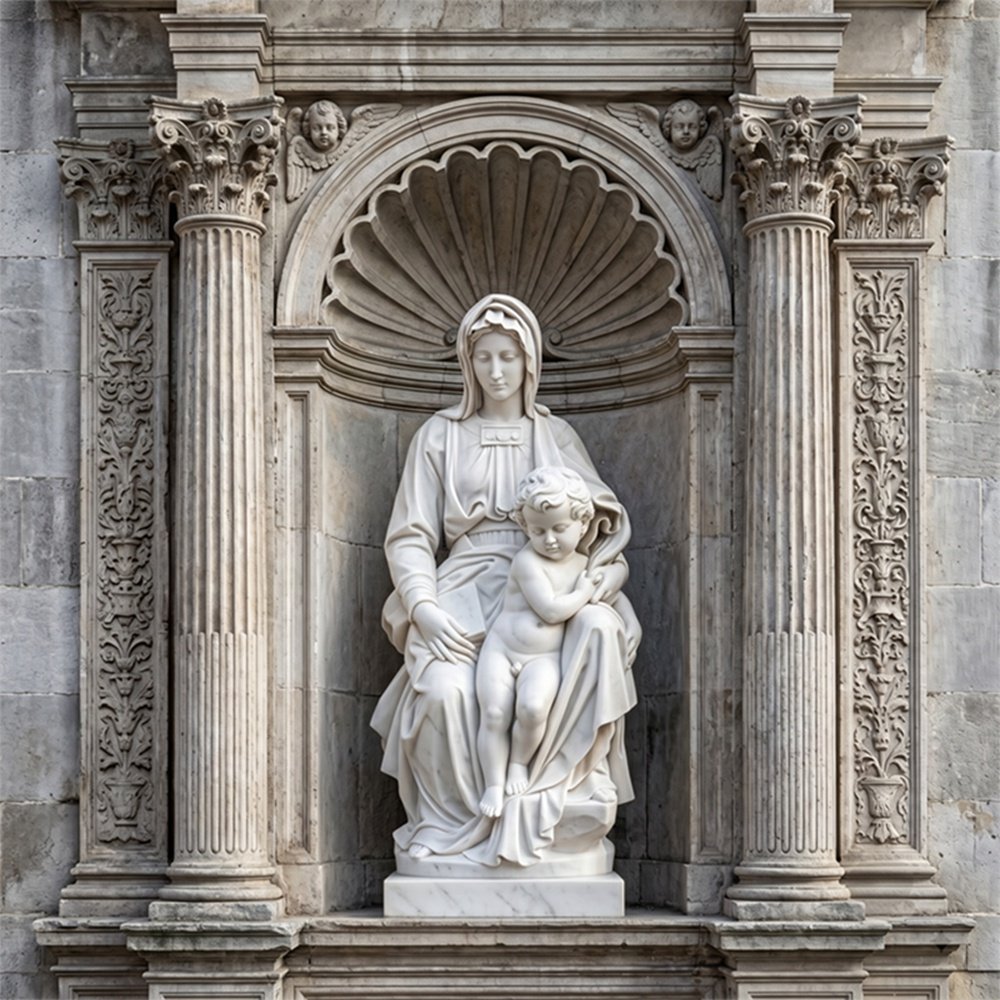
This hand‑carved marble Virgin Mary statue embodies the sacred maternal love of the Blessed Virgin Mary, bringing a serene, peaceful ambiance to your sacred spaces:
- Church sanctuary, side chapel, prayer hall
- Cathedral devotional niche
- Sacred garden, cloister courtyard
- Private chapel or home devotional space
- Seminary, Catholic school, religious institution
- Memorial space and meditation garden
Why Choose Ours
Our master sculptors strictly adhere to Michelangelo’s original proportions, subtle facial expressions, and intricate drapery details, reproducing every delicate feature with devotional precision. Every tender gesture, including the softly joined hands and the iconic Omega fold on Mary’s veil, is faithfully restored.
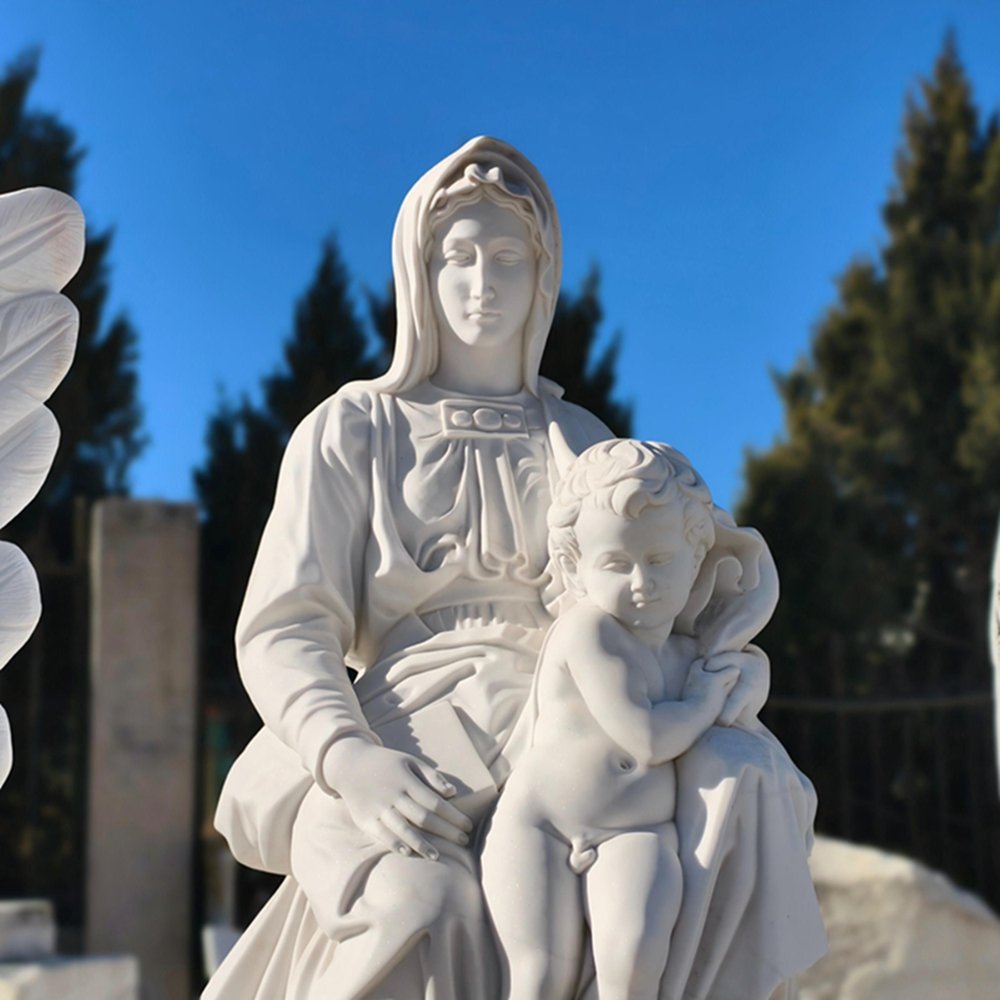
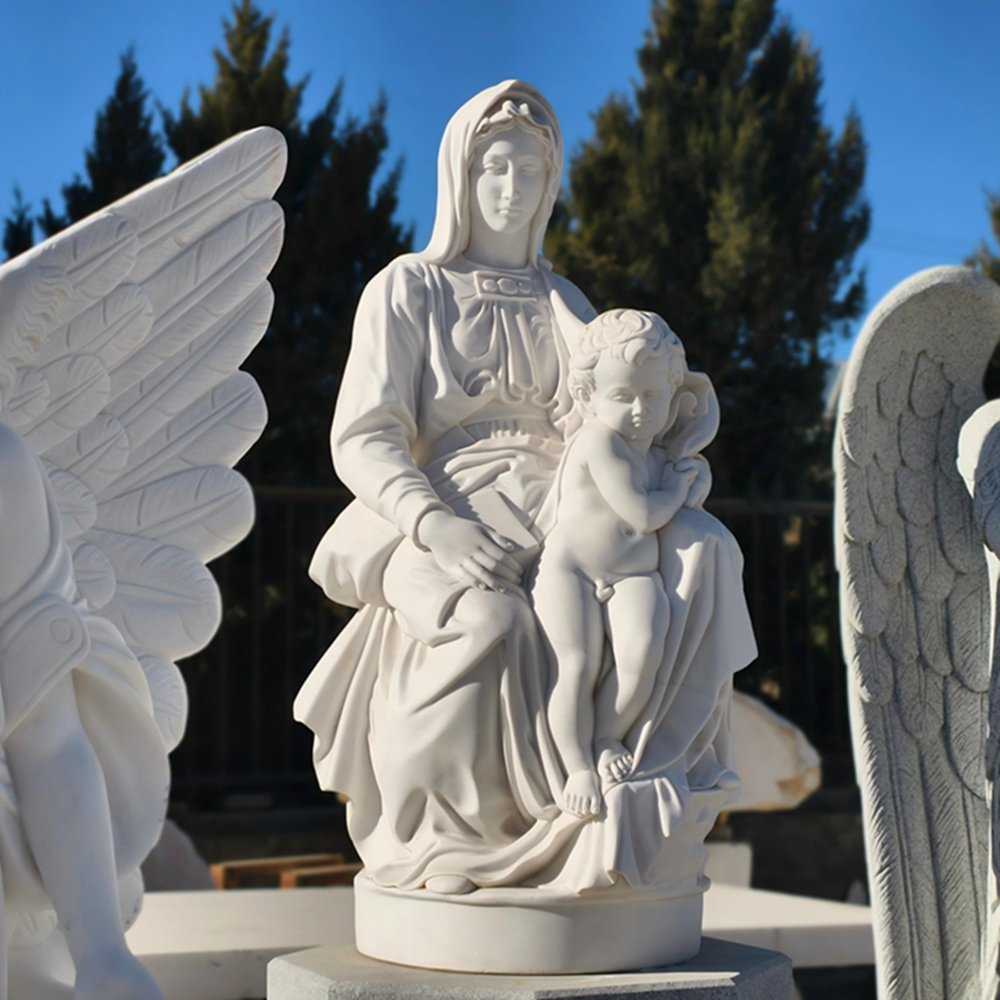
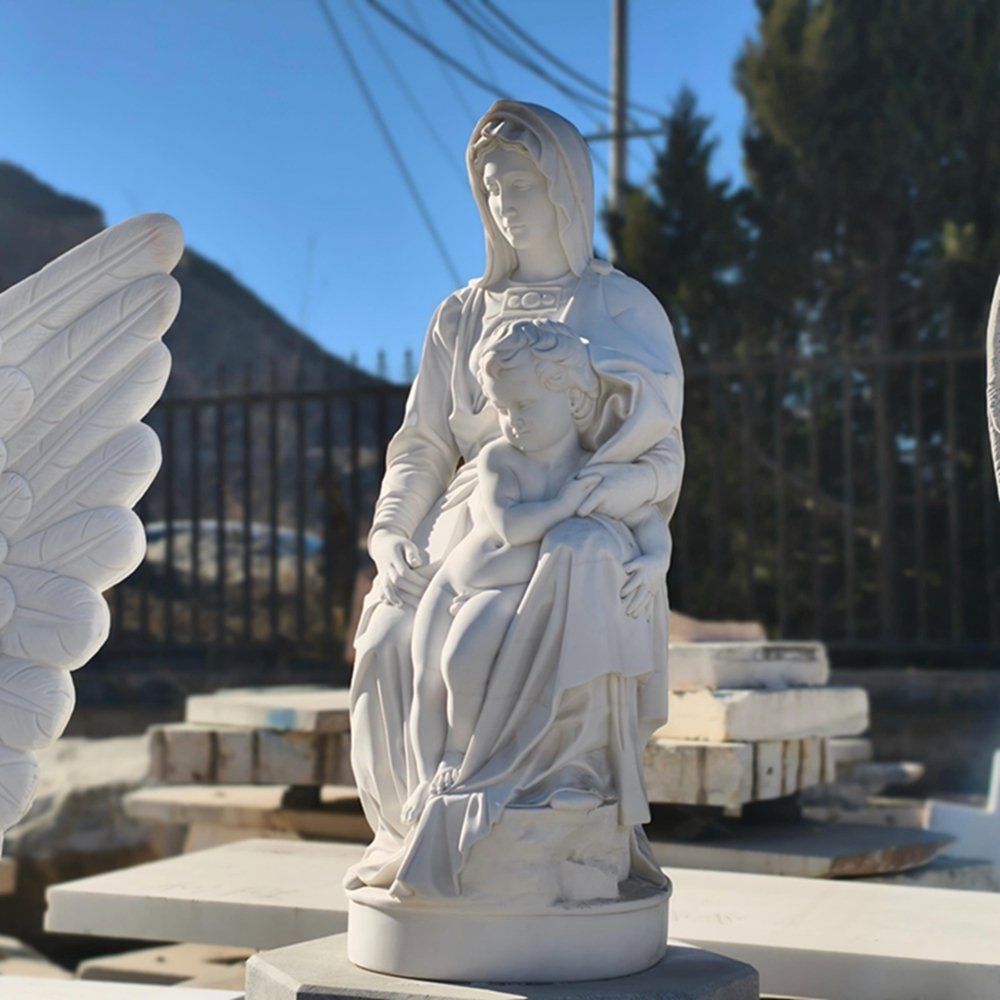
What’s more, we excel in lifelike emotional carving: the Virgin Mary’s serene, solemn, and prophetic gaze conveys quiet foresight and gentle maternal sorrow, while the lively, innocent expression of the toddler Jesus radiates childlike curiosity and pure vitality.
Bring this revered hand‑carved Madonna of Bruges to your sacred space. Send us your dimension requirements and project details today for a detailed quotation.