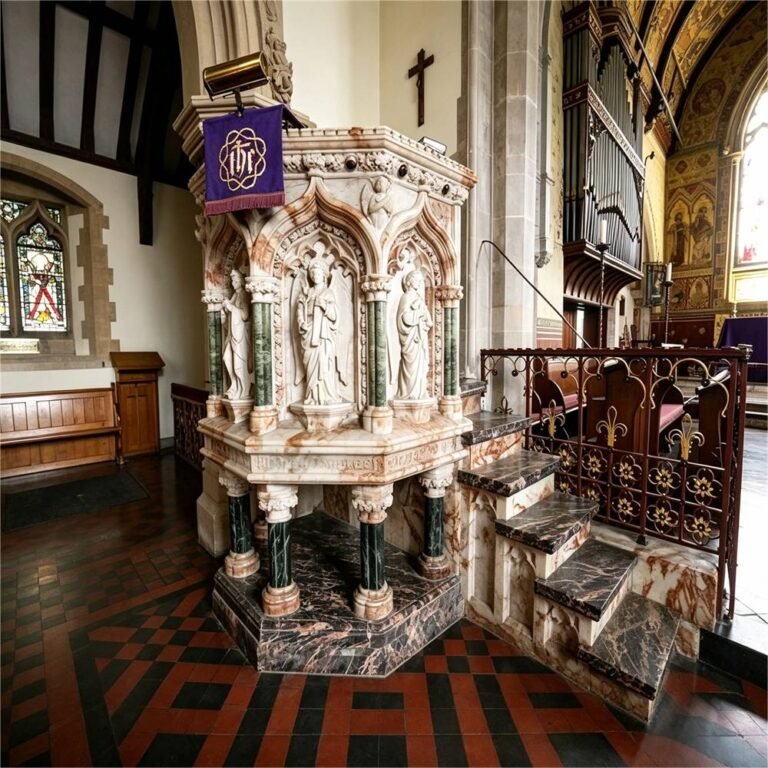
From the very beginning of this article, I want to honor the Sacred Heart of Jesus and express my deepest respect and devotion.
In the Catholic tradition, June is the month especially dedicated to the Sacred Heart of Jesus.
It is no coincidence, at least in my heart, that I first stepped into the YouFine sculpture factory as a sculpture consultant in June, shortly after finishing my religious studies during university.
Looking back now, that timing feels less like an accident and more like one of those quiet arrangements that God makes without explaining them in advance.
What makes it even more meaningful to me is this: the first religious statue I ever sold was also a Sacred Heart of Jesus statue.
When I remember those moments in my life, I cannot help but feel that Jesus had already been helping me silently for a long time. He pulled me, little by little, out of the inner chaos and darkness of my former life. He did not ask for anything in return. He simply guided, waited, healed, and opened a path before me.
For me, this is no abstract doctrine.
It is a lived truth: Nothing can compare with believing in Jesus, who can transform the wasteland of the human soul and bring real peace and happiness into this life.
And that is why I want to write this article.
But why Jesus called Himself the Sacred Heart?Why Is June the Month of the Sacred Heart of Jesus? What does the Sacred Heart represent? And how can we honor the Sacred Heart, especially during the month of June?
Let’s walk through these questions step by step.
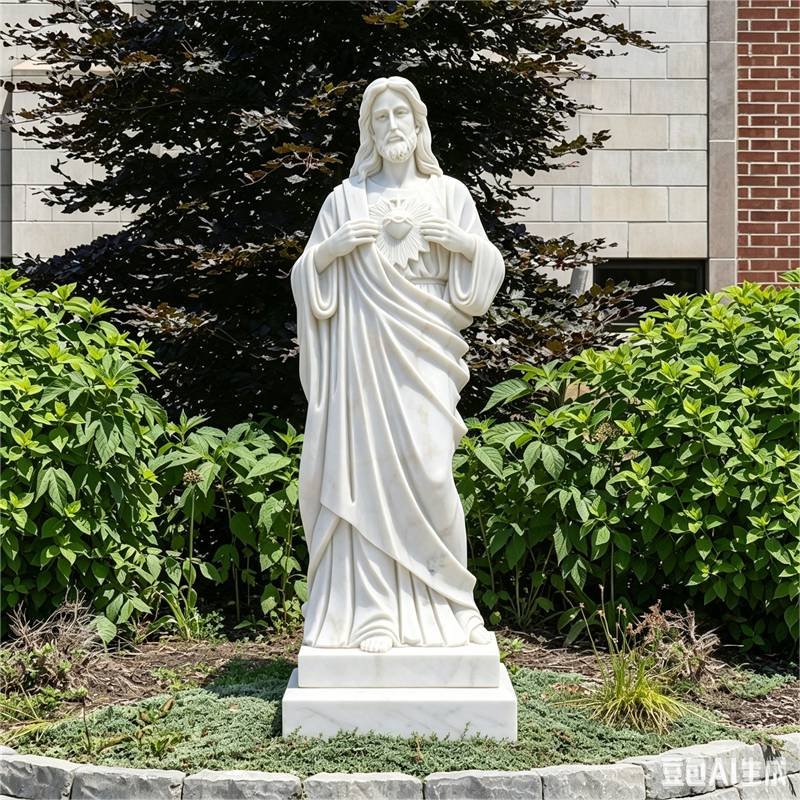
Why Does Jesus Call Us to His Sacred Heart?
When we speak of the Sacred Heart of Jesus, we are speaking about the boundless, divine, self-giving love of Christ for the human race.
His Heart represents His compassion, His mercy, His sacrifice, and His love given freely, without calculation and without asking anything in return.
That is one reason this devotion moves me so deeply. The Sacred Heart is not merely a religious symbol. It is a revelation of who Jesus is.
He is the Savior who loves even when He is rejected.
He is the Lord who gives even when He receives indifference.
He is the God whose Heart remains open even after being wounded.
He was wounded to protect us.
He sacrificed Himself for our sins.
Yet He seeks nothing in return.
For the sake of our small, feeble love, He offers His own Heart to us.
What a profound act of love!
No wonder when I behold a statue of the Sacred Heart of Jesus, I cannot help but kneel and weep.
For I know the truth of who Jesus is.
Christ’s love is not vague; it is wounded and visible.
His mercy is stronger than human sin.
The human heart can only be healed when it returns to Him.
Why June Is the Month of the Sacred Heart of Jesus?
To answer this question, we need to return to the history of this devotion.
June did not become the Month of the Sacred Heart by chance. Rather, this connection developed gradually through centuries of prayer, reflection, liturgical practice, and the spiritual experience of the Church.
What began as meditation on Christ’s suffering love eventually grew into a formal feast, and from that feast, June came to be especially associated with the Sacred Heart of Jesus.
Origin: Rooted in the Holy Wound
The devotion to the Sacred Heart has its deepest roots in devotion to Christ’s sacred humanity, especially in meditation on His Passion and His Sacred Wounds.
Among these wounds, the one that became especially significant was the wound in Jesus’ side, inflicted by the Roman soldier traditionally known as Longinus, who pierced Christ with a spear to confirm His death on the Cross.
For Christians, this was never seen as merely a physical detail of the Passion.
The pierced side of Christ was understood as a profound spiritual sign: the Heart of Jesus was opened for the salvation of the world.
From that open side flowed blood and water, symbols long associated in Christian tradition with grace, mercy, and the life of the Church.
In this sense, devotion to the Sacred Heart developed from earlier contemplation of the wounded Christ. It did not replace devotion to the Passion, but grew out of it.
The Sacred Heart is, in a way, the inner meaning of the Passion made visible: the love of Christ laid open before the world.
This is the first foundation for understanding why June became associated with the Sacred Heart.
Before there was a feast, before there was a month dedicated to it, there was already the Church’s deep meditation on the wounded and loving Heart of Christ.
Planted the Seed of Devotion: 11th to 13th Centuries
Following this spiritual thread, we can clearly see early signs of devotion to the Sacred Heart in the Middle Ages.
The devotion began to take recognizable shape during a time of religious renewal.
The spiritual climate of the age, together with a growing devotion to the suffering Christ, created fertile ground for attention to the Heart of Jesus.
Figures such as Saint Bernard of Clairvaux and Saint Francis of Assisi encouraged deep meditation on Christ’s Passion, helping Christians move from simply remembering Christ’s suffering to entering into the love behind it.
In Benedictine and Cistercian monasteries, early forms of Sacred Heart spirituality began to appear.
Saint Bernard, in particular, reflected on Christ’s pierced side as a revelation of His interior goodness and love.
The open side of Christ was no longer seen only as a wound, but as a doorway into His Heart.
Some early mystical figures also played an important role in planting these seeds more deeply in Christian devotion.
Saint Lutgarde spoke of a mystical exchange of hearts with Christ.
Saint Mechtilde of Helfta received visions in which the Heart of Jesus appeared as a place of refuge and consolation.
Saint Gertrude the Great left some of the richest early writings connected with devotion to the Heart of Christ.
An early hymn associated with this devotion, Summi Regis Cor Aveto, is attributed to Blessed Herman Joseph.
At this stage, devotion to the Sacred Heart was still emerging.
It had not yet become a universal public devotion, and June had not yet been dedicated to it.
But the spiritual seeds had clearly been planted.
The Church was already learning to see the Heart of Jesus as the symbol and reality of His redeeming love.
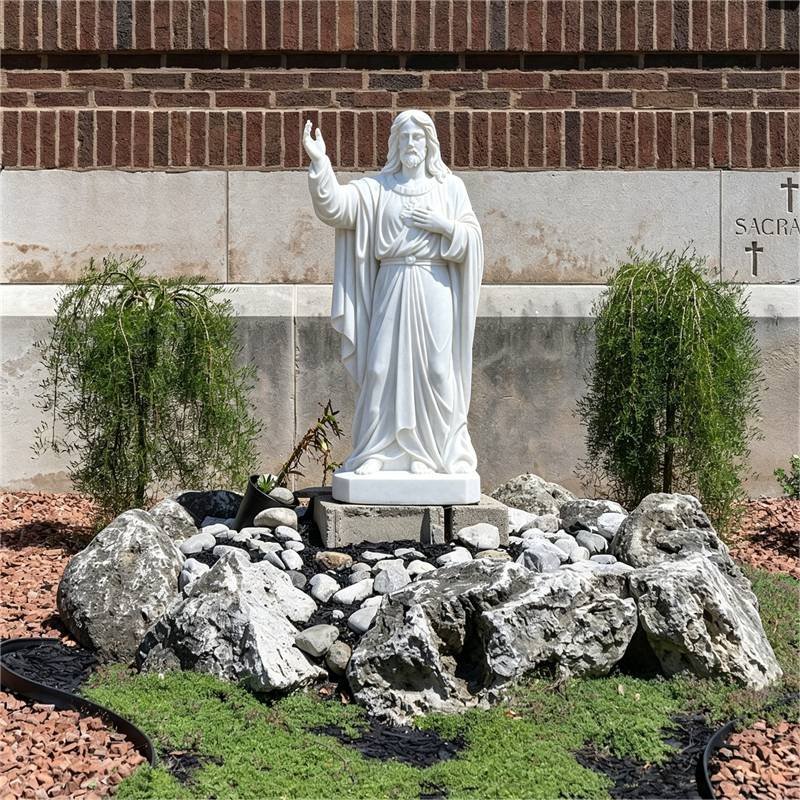
17th Century: The Key Figure Appears — Saint Margaret Mary Alacoque
If one person is most closely associated with the modern form of Sacred Heart devotion, it is Saint Margaret Mary Alacoque.
She was a Visitation nun in Paray-le-Monial, France, and between 1673 and 1675 she received a series of major apparitions of Jesus.
In these revelations, Christ showed His Heart as burning with love for humanity and sorrowful because of human indifference and ingratitude.
These apparitions gave clear shape to the devotion in a way that deeply affected the Catholic world.
Through Saint Margaret Mary, the devotion was no longer only a private mystical current.
It became more defined, more concrete, and more closely tied to liturgical practice.
Jesus entrusted to her several core practices that became central to devotion to the Sacred Heart:
- frequent reception of Holy Communion
- especially Communion on the First Friday of each month
- a Holy Hour of prayer, especially on Thursday night
- a feast of reparation in honor of the Sacred Heart
- meditation on Christ’s agony in Gethsemane
This is where the connection with June becomes especially important.
The Sacred Heart Apparition reportedly took place in June 1675, during the octave of Corpus Christi.
In that revelation, Jesus asked for a special feast in honor of His Sacred Heart, to be celebrated on the Friday after the octave of Corpus Christi.
Because this feast naturally falls near or within June, the month gradually became linked with devotion to the Sacred Heart.
So June is associated with the Sacred Heart not simply because of later custom, but because of the timing of these key revelations and the placement of the feast itself in the Church’s liturgical calendar.
Saint Margaret Mary’s spirituality was intense, even severe at times.
Her life was marked by deep suffering, self-offering, and radical dedication to Christ.
Her confessor, Father Claude de la Colombière, recognized the importance of her experiences and helped spread them through preaching and writing.
Because of this, her visions became the definitive source of the modern devotion to the Sacred Heart.
Latter days: Spreading Throughout the Church
After Saint Margaret Mary, devotion to the Sacred Heart spread widely through the life of the Church.
Jesuit authors such as Jean Croiset and Joseph de Gallifet helped systematize and promote the devotion through books, prayers, and devotional guides.
It spread among Visitation nuns, priests, religious communities, and lay Catholics, especially through Jesuit and Capuchin influence.
By the 19th century, devotions to the Sacred Heart in June had become increasingly common in Catholic life.
Prayer books began to offer meditations and prayers for each day of June, helping the whole month take on a distinct devotional identity.
What had once been centered on a feast day now expanded into a month-long spiritual practice.
This development was strengthened further by major events in the Church.
On June 11, 1899, Pope Leo XIII consecrated the whole world to the Sacred Heart of Jesus, giving the devotion even broader recognition and authority.
Over time, the Feast of the Sacred Heart was extended to the universal Church, and because that feast falls in June, the month itself became firmly established as the Month of the Sacred Heart of Jesus.
In other words, June became the month of the Sacred Heart through a combination of history, liturgy, revelation, and lived devotion.
The feast was celebrated in June, key apparitions were connected to June, and generations of Catholics gradually filled the month with prayers, consecrations, reparation, and love for the Heart of Christ.
That is why June is not just a convenient time for this devotion.
It is the month in which the Church, through long tradition, has learned to contemplate in a special way the burning, wounded, and merciful Heart of Jesus.
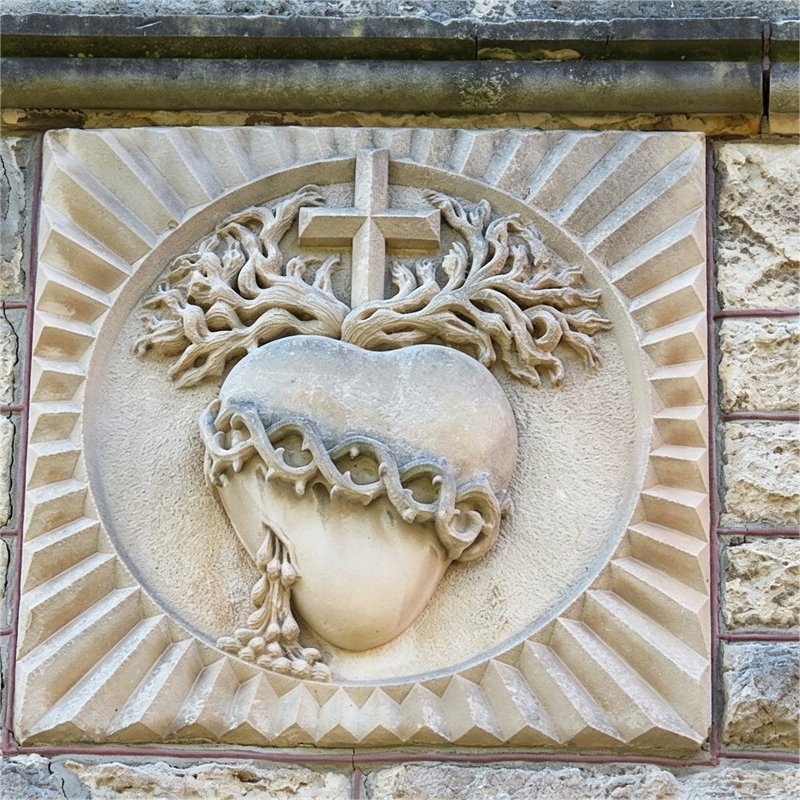
What Does the Sacred Heart of Jesus Represent?
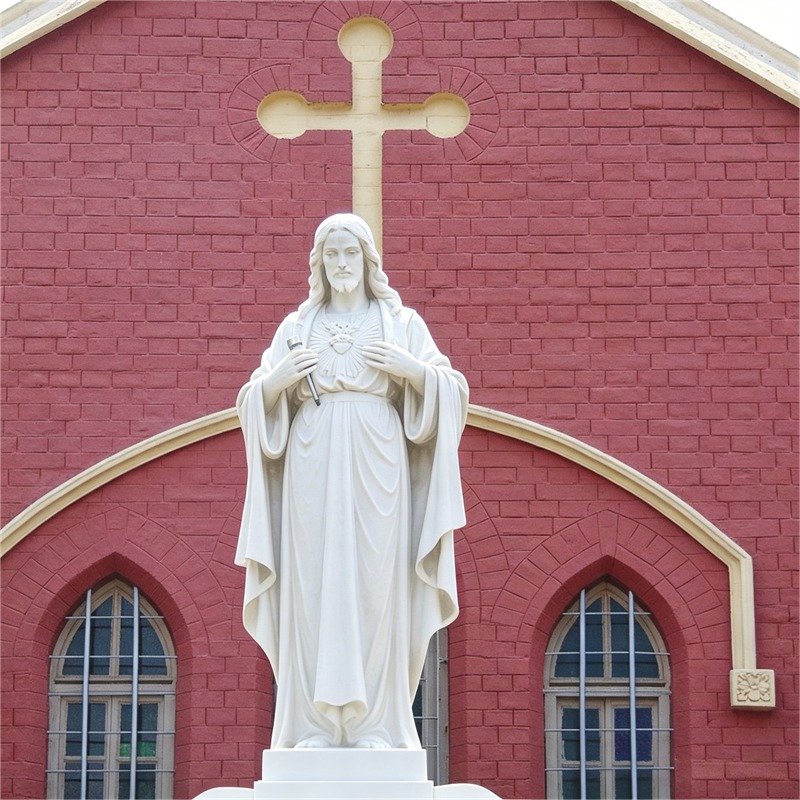
When people look at an image or statue of the Sacred Heart, they are not just looking at decoration. Every part of it carries meaning.
The Sacred Heart reveals the love of Christ.
It tells us that the love of God is selfiness, merciful, and ground.
The exposed Heart
The Heart is shown outside Jesus’ chest because He is revealing His inner love openly. It is as if He is saying:
” See how much I love you. Nothing is hidden.”
The flames
The flames represent Christ’s burning love — His love for the Father and His love for every human soul. This is love that does not cool down, even when it is rejected.
The crown of thorns
The thorns around the Heart remind us of Christ’s Passion, but also of the pain caused by human sin, indifference, and ingratitude. Love is wounded, yet still loving.
The wound
The pierced Heart recalls the spear thrust in Jesus’ side. It also reminds believers that grace, mercy, and the life of the Church flow from Christ’s wounded side.
The cross
The cross above the Heart shows that this love is sacrificial. The Sacred Heart is not sentimental. It is crucified love — love proven through suffering and total self-gift.
These five elements of the Sacred Heart together proclaim one single message:
Jesus loves us with a divine love that suffers for us, remains faithful to us, and seeks to save us.
How Can We Honor the Sacred Heart in June?
For me, this question is not only historical or theological. It is personal.
If Jesus has really been so patient with us, so faithful in silence, and so generous without asking anything in return, then devotion to His Sacred Heart should not remain just a concept. It should become a response.
One of the most traditional ways Catholics honor the Sacred Heart in June is through prayer, Eucharistic devotion, and acts of consecration.
Many people attend Mass more intentionally during this month.
Some receive Holy Communion on the First Friday.
Others spend time in Eucharistic Adoration or pray the Litany of the Sacred Heart.
Many families also renew their consecration to the Sacred Heart of Jesus during June.
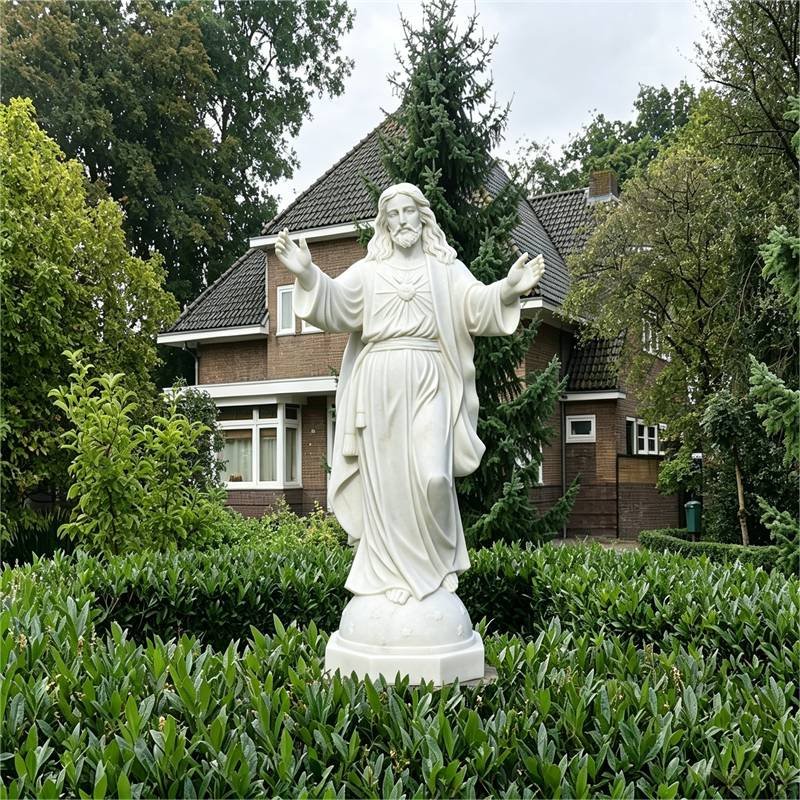
And then there is another very tangible form of devotion: placing an image or statue of the Sacred Heart in the home, church, school, or garden.
In Catholic tradition, especially in the practice known as the Enthronement of the Sacred Heart, families often place a blessed image or statue of the Sacred Heart in a prominent place to proclaim that Jesus is the center of the home.
By doing this, we can quietly honor Jesus in every daily life and repay, in our own small way, His love and sacrifice for us, while allowing the image to become a quiet point of return — a spiritual anchor that helps calm the chaos within our hearts.
That is why a Sacred Heart statue should have a presence that feels steady rather than dramatic.
It should invite prayer, not distract from it. In this sense, sacred art should serve devotion.
What inner reflection do I long to share here?
When I think of the Sacred Heart of Jesus, I think of my own life.
I think of June.
I think of the darkness of my adolescence.
I think of the beginning of my work.
I think of the first Sacred Heart statue I sold.
I think of how Jesus helped me quietly, patiently, almost invisibly.
Conclusion
Perhaps this is a good time to slow down a little,
to stop chasing life so fiercely for a moment,
to step away from noise, pressure, and endless distraction,
and to stand once again before the Heart of Christ.
It is the Heart that still burns with love for us.
The Heart that was pierced for us.
The Heart that waits patiently for us.
The Heart that can still turn the wasteland of the soul into a place of peace.