Saints are at the heart of Catholic devotion. Besides Our Lord Jesus Christ, Catholics also honor the saints as spiritual heroes, heavenly intercessors, and role models.
When we walk through an unpeaceful life journey, the saints give us courage. They show us how to pray, how to suffer with hope, how to love the poor, how to forgive, and how to stay close to God even in darkness. But How Many Saints are there in the Catholic Church?
The short answer is: the Catholic Church recognizes more than 10,000 saints, but there is no single official total number. And the number continues to grow as the Church canonizes new saints. At the same time, many holy men and women from early Christian history were venerated long before today’s formal canonization process existed.
However, what matters most is not how many saints there are. More importantly, their lives show us courage, kindness, wisdom, selflessness, humility, and love for God, and teach us how to live a good and meaningful life.
What Does “Saint” Mean?
A saint is a person who lived a life of extraordinary holiness and is believed to be in heaven with God. Catholics do not worship saints. Worship belongs to God alone. Instead, Catholics honor saints and ask for their intercession, just as we may ask a holy friend to pray for us.
In Catholic life, saints are not distant historical names. They are living members of the communion of saints, and their stories continue to encourage the faithful today.
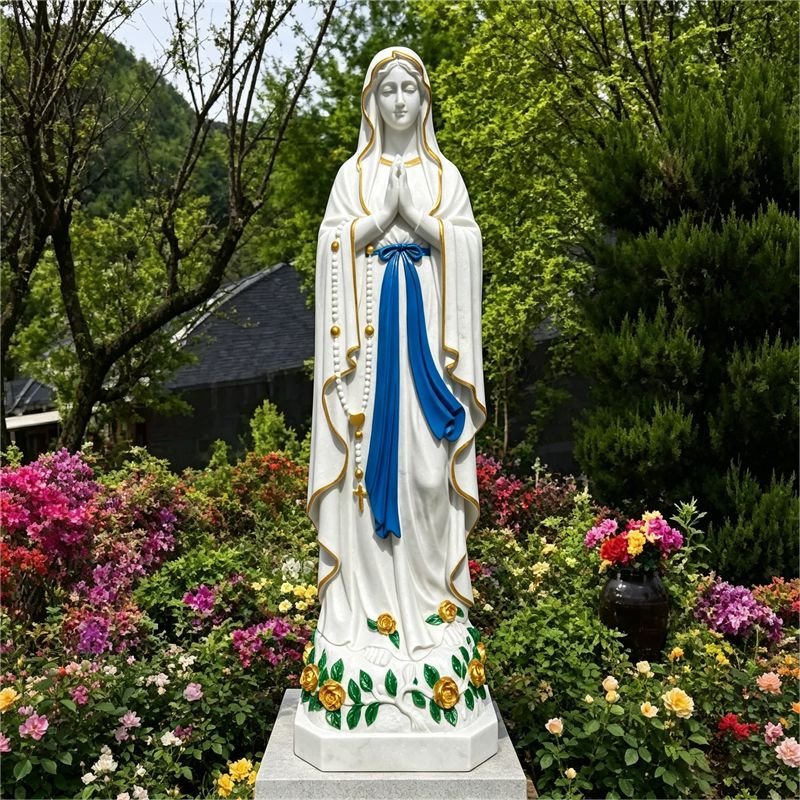
Saints Serve Three Important Roles
| Role | Meaning in Catholic Devotion |
|---|---|
| Intercessors | Catholics ask saints to pray for them before God. |
| Role Models | Saints show how to live with faith, courage, charity, humility, and perseverance. |
| Patrons | Many saints are connected with specific needs, professions, countries, causes, or groups of people. |
How Many Catholic Saints Are Canonized?
The Catholic Church honors thousands of saints, but there is no universally agreed fixed number. Many Catholic sources estimate that there are more than 10,000 canonized and recognized saints in Catholic tradition. However, the exact number is difficult to define because the history of sainthood is very long and complex.
Why Is There No Exact Number?
There are several reasons why the total number of Catholic saints is difficult to calculate.
-
Early Saints Were Often Recognized Locally: In the first centuries of Christianity, many martyrs and holy people were honored by local Christian communities. Their holiness was recognized by the faith of the people, not by the centralized canonization process we know today.
-
The Formal Canonization Process Developed Gradually: The current canonization process did not exist in the earliest centuries of the Church. Before formal papal canonization became standard, many saints were declared by tradition, local devotion, regional recognition, or long-standing liturgical use.
-
Some Saints Are Universal, While Others Are Local: Some saints are known throughout the world, such as Saint Peter, Saint Paul, Saint Francis, and Saint Thérèse of Lisieux. Others may be deeply loved in one country, one diocese, one religious order, or one local community, but less known in the wider Church.
-
Changes in the Canonization Process Have Impacted the Numbers: Over time, the way the Catholic Church recognizes saints has changed. Notably, revisions in 1983 made the process more accessible. For example, Pope John Paul II eliminated the office of the Promoter of the Faith—often called the “Devil’s Advocate”—whose role was to argue against a candidate’s canonization. With this change, the pace of canonizations increased dramatically. In fact, John Paul II canonized more saints than the popes from the previous 500 years combined.
When Did Popes Claim Sole Authority to Canonize Saints?
During the Middle Ages, concerns sometimes arose about local communities venerating individuals who may not have always lived lives of heroic virtue—ranging from beloved folk heroes to unlikely candidates. In response to this, popes gradually asserted that the official act of declaring someone a saint was a unique privilege belonging to the papal office alone. By the 12th century, papal canonization had become recognized as the only universally accepted path to sainthood in the Catholic Church. This change ensured consistency, theological integrity, and universal recognition across Christian communities—turning sainthood into a more centralized and carefully regulated process.
For this reason, the number of Catholic saints is not simply a fixed statistic. It is part of a living spiritual history.
What Is the Process for Someone to Become a Saint?
The Catholic Church uses a careful process called canonization to formally declare that a person is a saint. This process investigates the person’s life, virtues, writings, reputation for holiness, and any miracles attributed to their intercession. Sainthood is not treated casually. It is a solemn recognition that the person’s life reflects the grace of God in a powerful and exemplary way.
The Main Stages of Canonization
| Stage | Meaning |
|---|---|
| Servant of God | The Church opens an official investigation into the person’s life and holiness. |
| Venerable | The Pope recognizes that the person lived a life of heroic virtue. |
| Blessed | Beatification usually requires one verified miracle, except in the case of martyrs. |
| Saint | Canonization usually requires another verified miracle and means the person may be venerated by the universal Church. |
This process reminds us that a saint is not only a good person. A saint is someone whose life becomes a clear sign of God’s grace.
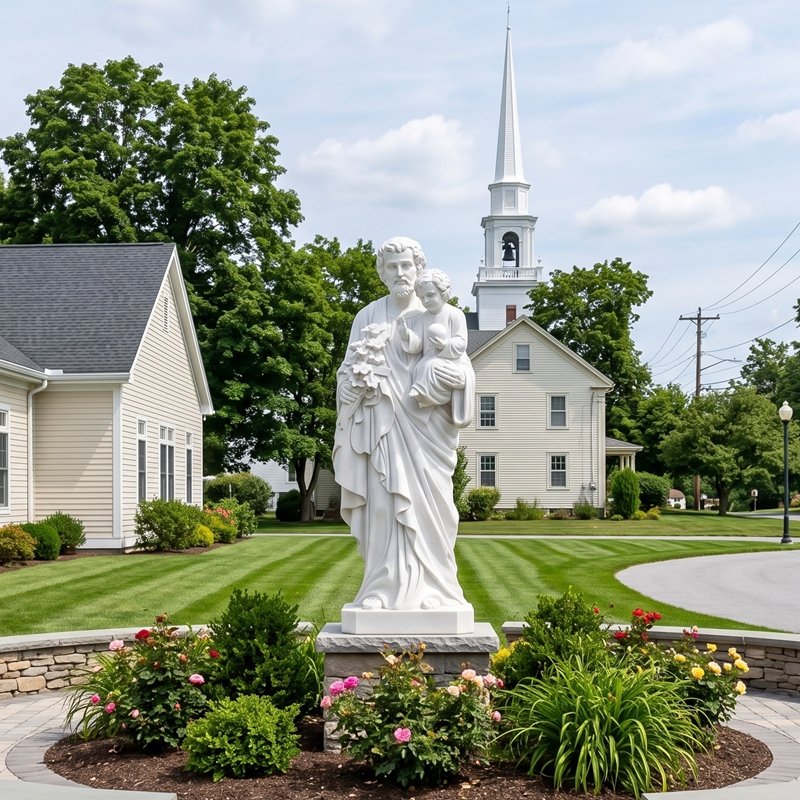
Who are The Famous Catholic Saints?
Many saints are known across the world because their lives, writings, miracles, or martyrdom have deeply shaped Christian history. Their statues are often found in churches, chapels, schools, hospitals, cemeteries, monasteries, gardens, and private devotional rooms.
The Blessed Virgin Mary
The Blessed Virgin Mary holds a unique place in Catholic devotion. She is not worshiped as God, but she is honored above all saints as the Mother of Jesus and the spiritual mother of the Church.
Symbolism
Mary symbolizes mothering, purity, obedience, compassion, and complete trust in God. She is the one who leads believers closer to Jesus.
Common Features of Image or Statue
- A blue or white mantle
- A crown
- A rosary
- Stars
- The Child Jesus
- A gentle and peaceful face
- A Sacred Heart
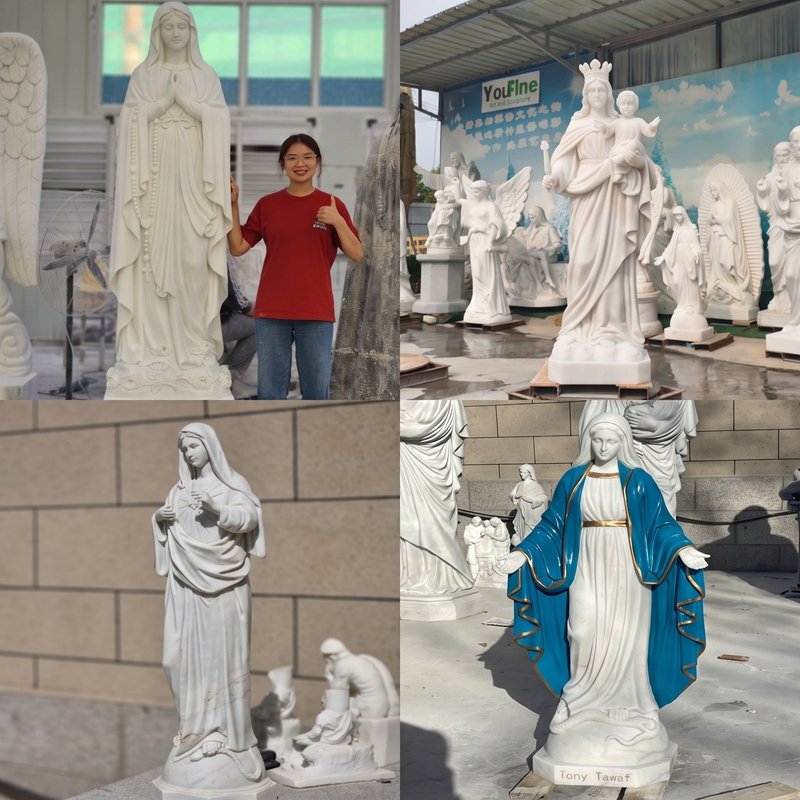
Why Mary Is So Loved
Mary shows universal mothering. She warms the world with tenderness and leads people to Jesus. In Scripture, Mary gives one of the most beautiful examples of obedience to God when she accepts God’s will with humility. Her life teaches us that faith is not only spoken in words, but lived through trust.
For many Catholic families, a statue of the Virgin Mary is not only decoration. It is a reminder of prayer, protection, purity, and motherly love.
Saint Joseph
Saint Joseph is the earthly guardian of Jesus, the spouse of Mary, and the foster father of Christ. He is honored as patron of fathers, families, workers, and the universal Church.
Symbolism
Saint Joseph symbolizes faithful fathering, quiet strength, protection, humility, and selfless love.
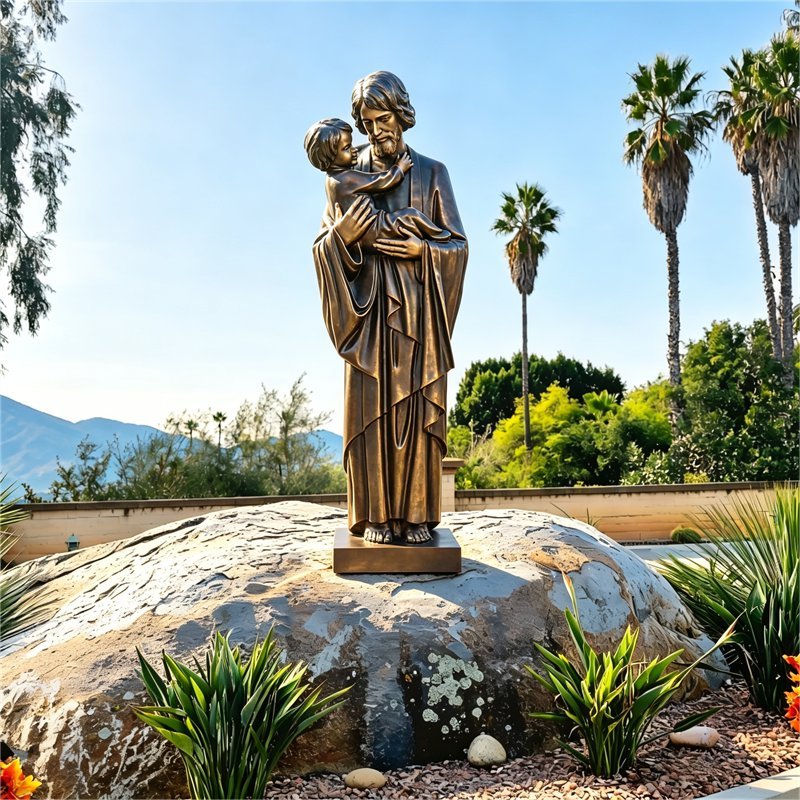
Common Features of Image or Statue
- Lilies
- Carpenter’s tools
- A square
- The Child Jesus
- Brown or green robes
Why Saint Joseph Is Famous
Family is the foundation of daily life. It gives people the first model of love, values, protection, and personal growth. As the head of the Holy Family, Saint Joseph gave Jesus and Mary a peaceful earthly home. He did not speak any recorded words in the Bible, but his actions speak deeply.
He teaches us that true strength can be silent. True love does not always need loud words. Sometimes the greatest father is the one who protects quietly, works faithfully, and sacrifices without asking for applause. In a deeper sense, Saint Joseph reminds many people of the Church itself: a quiet, fatherly protection over our spiritual life.
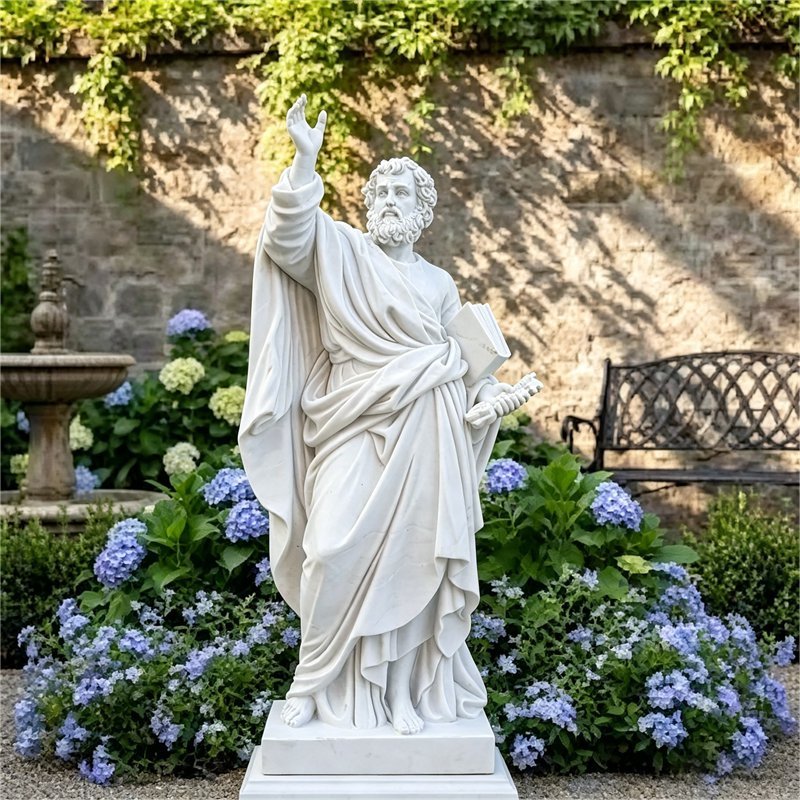
Saint Peter the Apostle
Saint Peter was a Jewish fisherman called by Jesus to become one of the Twelve Apostles. In Catholic tradition, he is honored as the first Pope and the leader among the apostles.
Symbolism
Saint Peter symbolizes leadership, repentance, weakness transformed by grace, and the authority of the Church.
Common Features of Image or Statue
- Keys
- A book or scroll
- Papal symbols
- An inverted cross
- A rooster
Why Saint Peter Is Famous
Saint Paul the Apostle
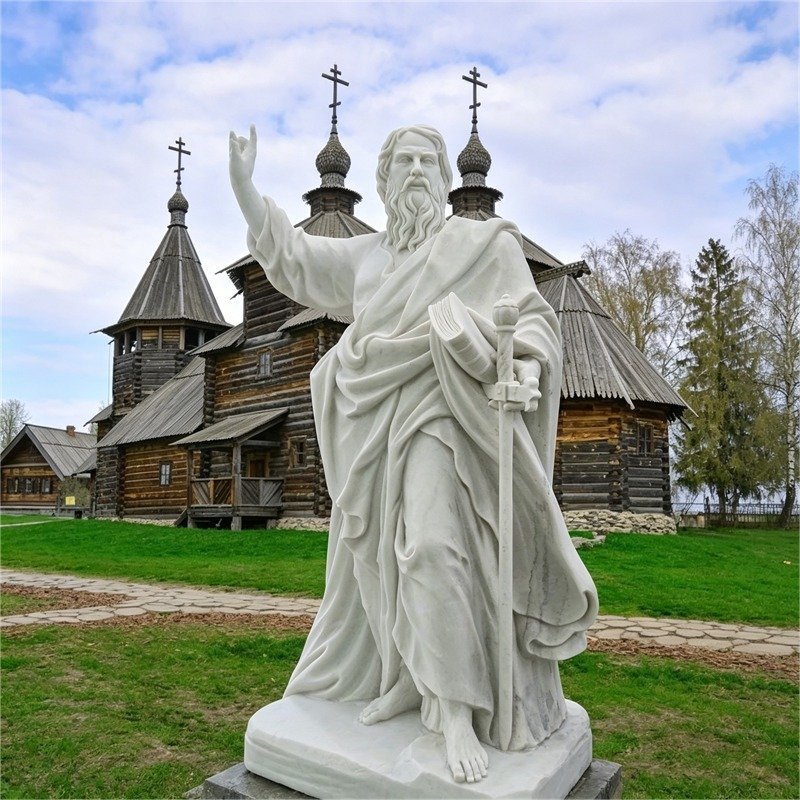
Saint Paul was one of the most influential figures in early Christianity. Though he was not one of the Twelve Apostles, he became a great missionary, theologian, preacher, and writer.
Symbolism
Saint Paul symbolizes conversion, missionary courage, wisdom, preaching, and faithfulness to the Gospel.
Common Features of Image or Statue
- A sword
- A book
- A scroll
- A bald head
- A long beard
Why Saint Paul Is Famous
Saint Paul’s life was transformed by Christ. After his conversion, he traveled widely to preach the Gospel and establish Christian communities. He wrote letters to encourage, teach, correct, and strengthen early Christians. Many of these letters became part of the New Testament and continue to influence Christian theology and spiritual life.
Saint Paul is especially important because he helped spread Christianity beyond its Jewish roots to the Gentile world. His mission showed that God’s salvation is offered to all people. He teaches us that no life is too far from God’s grace. A person can be changed, renewed, and sent with a new purpose.
Saint Francis of Assisi
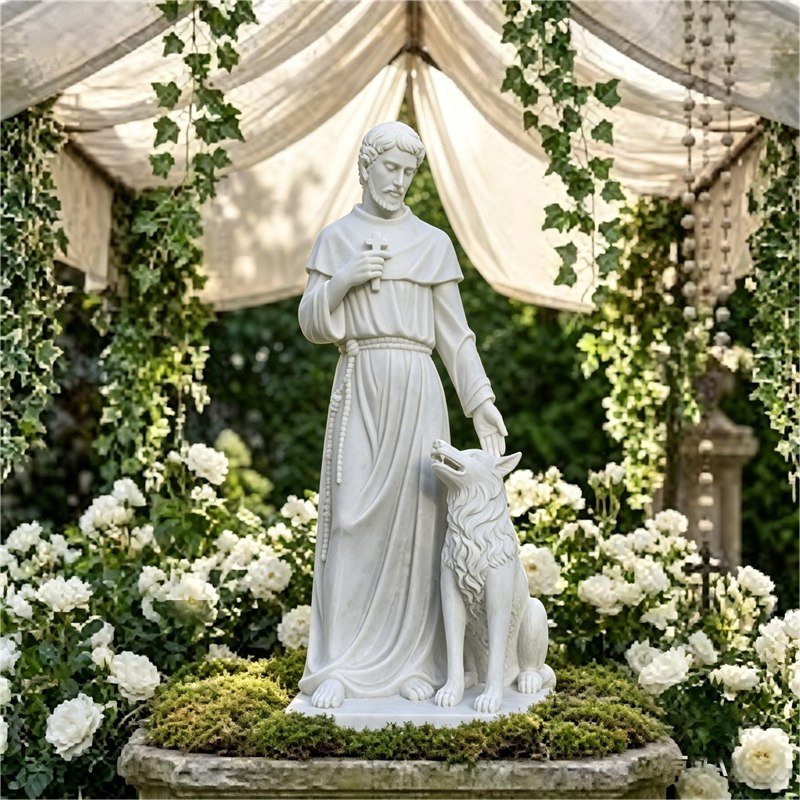
Saint Francis of Assisi was an Italian friar who lived in the 13th century. He founded the Franciscan Order and became one of the most beloved saints in the world.
Symbolism
Saint Francis symbolizes peace, simplicity, care for creation, love for animals, and compassion for the poor.
Common Features of Image or Statue
- Birds
- A wolf
- A simple brown robe
- The stigmata
- A gentle expression
Why Saint Francis Is Famous
Saint Francis rejected worldly possessions and chose to serve the poor, the forgotten, and those living at the margins of society. In a competitive world, people often respect the strong and the rich. But Saint Francis reminds us that the voice of the poor must be heard. He shows that God’s love is not only for the powerful, but for every person and every creature.
His life teaches us to live simply, love generously, and see creation as a gift from God. This is why Saint Francis statues are often placed in gardens, churches, animal shelters, schools, and homes. They bring a peaceful message: love God, love the poor, and care for creation.
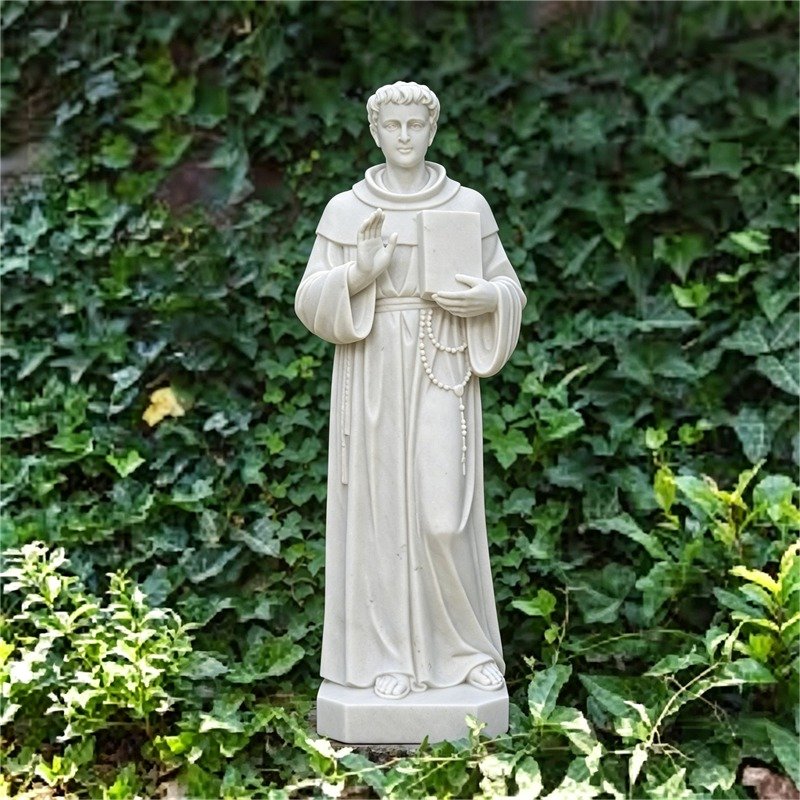
Saint Anthony of Padua
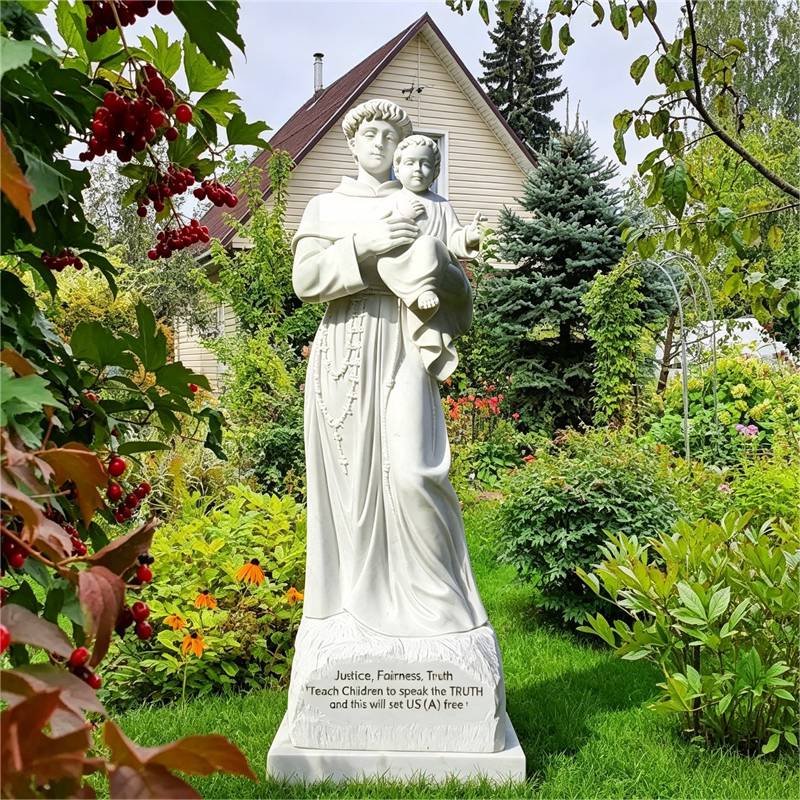
Saint Anthony of Padua was a Portuguese Catholic priest and Franciscan friar. He is one of the most beloved saints in Catholic devotion.
Symbolism
Saint Anthony symbolizes hope, help in times of loss, compassion for the poor, and trust in God.
Common Features of Image or Statue
- The Child Jesus
- A lily
- A book
- A Franciscan robe
Why Saint Anthony Is Famous
Many people pray to Saint Anthony when they lose something. But his meaning is deeper than finding lost objects. Saint Anthony represents quiet strength during difficult times. Life is full of ups and downs. When we meet difficulties, the wisest choice is sometimes to become quiet first.
Quiet does not mean doing nothing. It means giving the soul time to breathe, think, pray, and find the right way forward. For example, when something important is lost — a document, a plan, a chance, or even inner peace — devotion to Saint Anthony can remind us to calm down, trust God, and begin again.
This is why Saint Anthony is so loved throughout the world. What makes a saint famous is not only how holy the saint was, but how deeply the saint helps ordinary people gain spiritual strength for daily life.
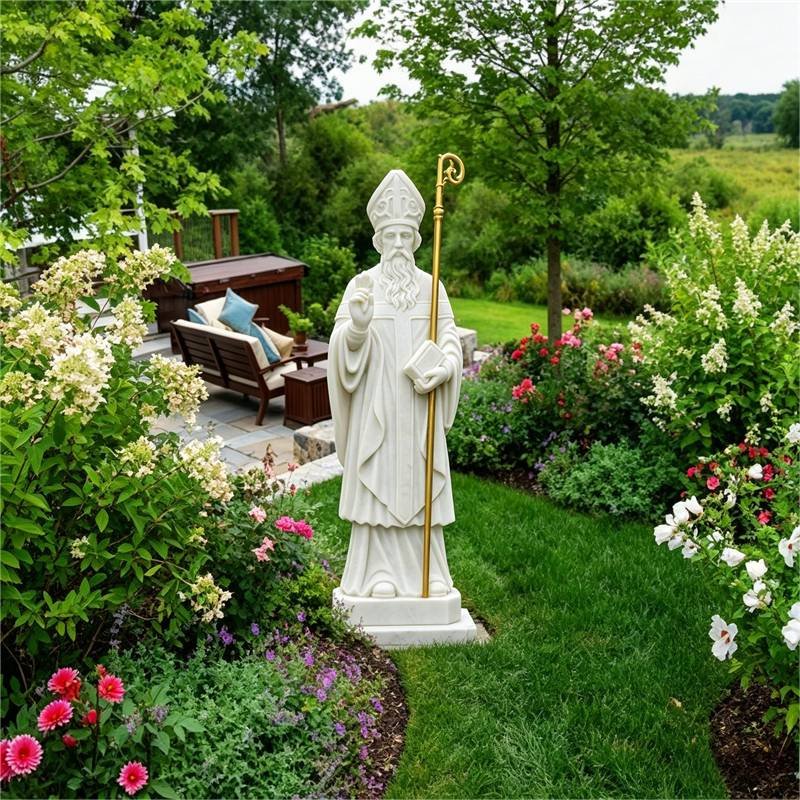
Saint Patrick
Saint Patrick was a fifth-century missionary and bishop in Ireland. He is one of the most famous saints in the world and is especially loved as the patron saint of Ireland.
Symbolism
Saint Patrick symbolizes missionary courage, conversion, endurance, and the light of faith brought to a nation.
Common Features of Image or Statue
- A bishop’s robe
- A staff
- A shamrock
- A cross
- Green vestments
Why Saint Patrick Is Famous
Saint Patrick was not originally Irish. He was born in Roman Britain and was kidnapped by Irish pirates when he was young. He spent years in slavery in Ireland, where his faith grew stronger through suffering and prayer. Later, he returned to Ireland as a missionary. He preached, baptized, built churches, and helped spread Christianity across the land.
Many legends surround Saint Patrick, including the story that he drove snakes out of Ireland. Historically, this is likely symbolic rather than literal. The more important truth is that Patrick helped drive spiritual darkness away by preaching the Gospel. Saint Patrick’s life reminds us that suffering can become mission. A wounded person can become a healer. A captive can become a messenger of freedom.
Other Beloved Catholic Saints in Religious Sculpture
| Saint | Common Symbolism | Common Features of Image or Statue |
|---|---|---|
| Saint Nicholas | Generosity, children, charity, protection | Bishop’s vestments, gifts, children, staff |
| Saint Thomas Aquinas | Wisdom, theology, study, truth | Book, sun on chest, Dominican habit |
| Saint Thérèse of Lisieux | Little way, humility, spiritual childhood | Roses, crucifix, Carmelite habit |
| Saint Augustine of Hippo | Conversion, wisdom, repentance, love of God | Bishop’s robe, book, flaming heart |
| Saint Benedict | Prayer, monastic life, protection, discipline | Book, staff, raven, Benedictine habit |
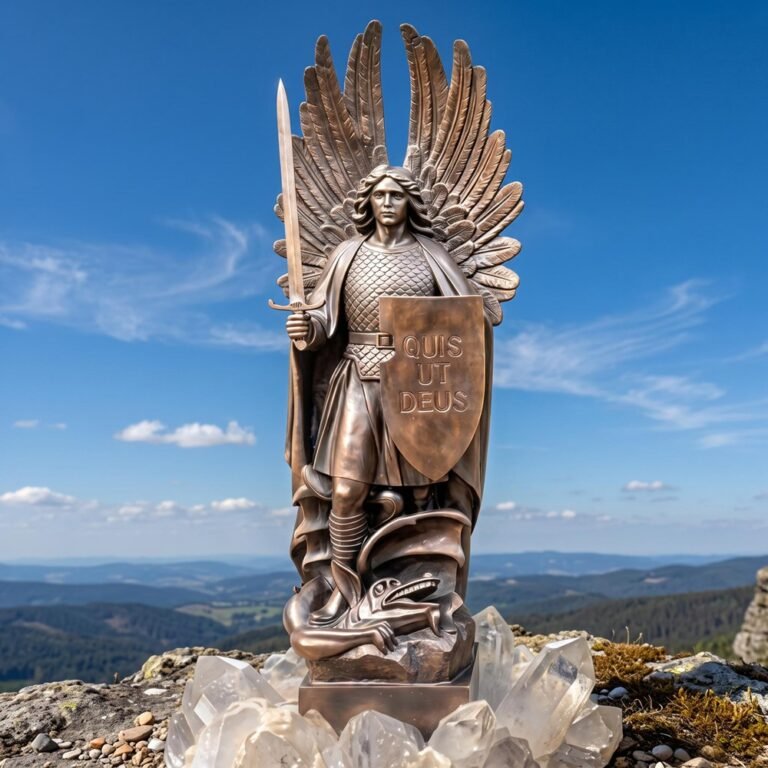
| Saint Michael the Archangel | Spiritual battle, protection, victory over evil | Armor, sword, shield, defeated dragon |
| Saint Jude | Hope in desperate cases | Medallion of Christ, flame, staff |
| Saint Rita | Impossible causes, suffering, forgiveness | Roses, crucifix, forehead wound |
| Saint Cecilia | Music, purity, martyrdom | Musical instruments, crown of flowers |
| Saint Joan of Arc | Courage, mission, sacrifice | Armor, sword, banner |
What Is the Significance of Saints in Our Common Life?
The greatest significance of saints is for common life.
They walk with us through ordinary struggles:
- When we are afraid, they show courage.
- When we are poor in spirit, they show hope.
- When we are tired, they show perseverance.
- When we fail, they show repentance.
- When we feel alone, they remind us that heaven is not far away.
The saints lead us to Jesus.
They are like windows. Through them, we see how God’s grace can shine through human life.
Saints were not perfect people in the simple sense. Many of them struggled, doubted, suffered, sinned, repented, and began again. That is why they are so close to us.
They prove that holiness is not only for the strong, the rich, the clever, or the important. Holiness can grow in fishermen, fathers, mothers, students, monks, missionaries, workers, children, teachers, and even people who once made serious mistakes.
This is the beauty of Catholic devotion to the saints.
The saints tell us:
Your life can also become a place where God works.
Conclusion
The real meaning of the saints is that they show us how to live. They are intercessors, role models, patrons, and spiritual friends. Their lives bring courage to our unpeaceful journeys and remind us that holiness is possible even in ordinary daily life.
For this reason, Catholic saint statues are more than religious artworks. They are signs of faith, memory, prayer, protection, and hope.
Whether placed in a church, chapel, cemetery, garden, school, hospital, monastery, or private home, a saint statue carries a quiet message:
Do not lose heart.
God’s grace can transform every life.
The saints have walked before us, and they still guide us toward Christ.
FAQ
Who are the 12 saints of god?
The 12 apostles are: Peter, Andrew, James the Greater, John, Philip, Bartholomew (Nathanael), Thomas, Matthew (Levi), James the Less, Jude (Thaddeus), Simon, and Judas.
What are saint relics?
A relic refers to the physical remains of a saint or an object associated with a saint. It includes a saint’s body parts, personal clothing and items, martyrdom instruments, and objects touched to other saint relics. Relics are symbolic signs of reverence and memory instead of magical items.
What are the common materials for saint statues and their applicable scenarios?
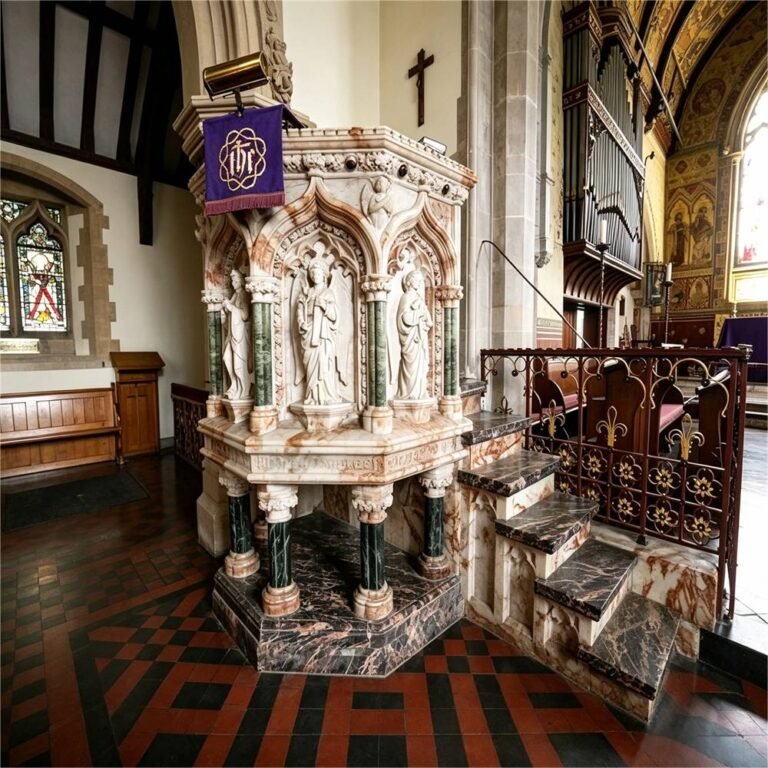
Marble: Ideal for churches, shrines, and memorials, elegant and durable.
Bronze: Suitable for outdoor and public spaces, weather-resistant and sturdy.
Wood: Perfect for chapels and traditional indoor spaces, with warm handcrafted features.
Fiberglass: Used for processions and large lightweight statues, easy to move and cost-effective.
Resin: Fit for homes, gift shops, and small chapels, affordable and delicate.
Stone: Great for gardens, cemeteries and outdoor prayer spaces, natural and long-lasting.
Who are some representative modern Catholic saints?
Typical modern saints include Saint John Paul II, Saint Mother Teresa of Calcutta, Saint Oscar Romero, Saint Faustina Kowalska and Saint Padre Pio.
What impact did historical research have on the list of recognized saints?
From the 17th–18th centuries, scholars critically reviewed saint legends. Many famous saints (St. George, St. Valentine, St. Christopher) were found to be backed by folklore instead of credible historical records. The Vatican updated canonization standards and centralized review power. Saints without verifiable life stories or miracles were removed from the universal saint calendar, though local devotions to them are still permitted. The total number of officially recognized saints is not fixed, as canonization rules keep improving.
What role does the Congregation for the Causes of Saints play?
Founded by Pope Paul VI in 1969, it is the Vatican department in charge of the whole canonization procedure. Its core work: check historical records, verify miracles, and examine the life of every candidate for sainthood. If a saint’s related legends lack reliable evidence, it may reject official recognition or delete the saint from the universal calendar to keep the canonization process authentic and credible.
What revisions were made to the canonization process in 1983?
Pope John Paul II carried out major reforms: abolished the “Devil’s Advocate” (Promoter of the Faith), who used to raise doubts against sainthood candidates. The process became more efficient, and more people have been canonized in recent decades than any other historical period, forming a more globalized group of saints. The Church still keeps strict reviews through other procedures.
What was the Devil’s Advocate, and what happened to this role?
The Devil’s Advocate (official name: Promoter of the Faith) was a traditional position in canonization. Its duty was to question the candidate’s holiness and miracle evidence, and put forward all doubts to ensure full inspection. It was canceled in the 1983 canonization reform to speed up the review process. The Vatican still maintains rigorous examination through other rules without this dedicated role.
What changes occurred in the canonization process in 1588?
Pope Sixtus V set up the Congregation of Rites and Ceremonies within the Vatican. For the first time, saint canonization had a fixed, unified official department for standardized review. Previously, canonization standards varied in different regions; this reform unified inspection rules across the whole Church.
Were any saints based on legend, folklore, or even non-human figures?
Yes. Many well-known saints, including St. George, St. Valentine, and St. Christopher, have biographies mostly made up of folk tales; some legends even existed before Christianity. There are non-human venerated figures: St. Guinefort, a dog in rural France, was worshipped as a child protector for saving a baby from a snakebite. These legendary figures can still inspire local devotion even without universal official recognition.
Why were some saints’ cults suppressed in the 20th century?
In 1969, Pope Paul VI founded the Congregation for the Causes of Saints to standardize canonization. The Church rechecked historical records of old saints. Some saints lost universal official worship because there was no credible historical proof of their lives or miracles, and their stories mixed too much unverified folklore. Suppression does not ban local or private devotion—believers can still honor them in small communities, but the Church will no longer set worldwide feast days or build global churches for them.