The Virgin Mary, as the Mother of Jesus and the wife of St. Joseph, has always been a significant figure in Christian and religious art. Among many images of Mary honored worldwide , Our Lady of Lourdes and Our Lady of Fatima are two of the most cherished and recognized.
While both refer to the same Virgin Mary, they represent different Marian apparitions and emphasize distinct devotional themes. This is why their statues vary in style, mood, symbolism, and artistic details.
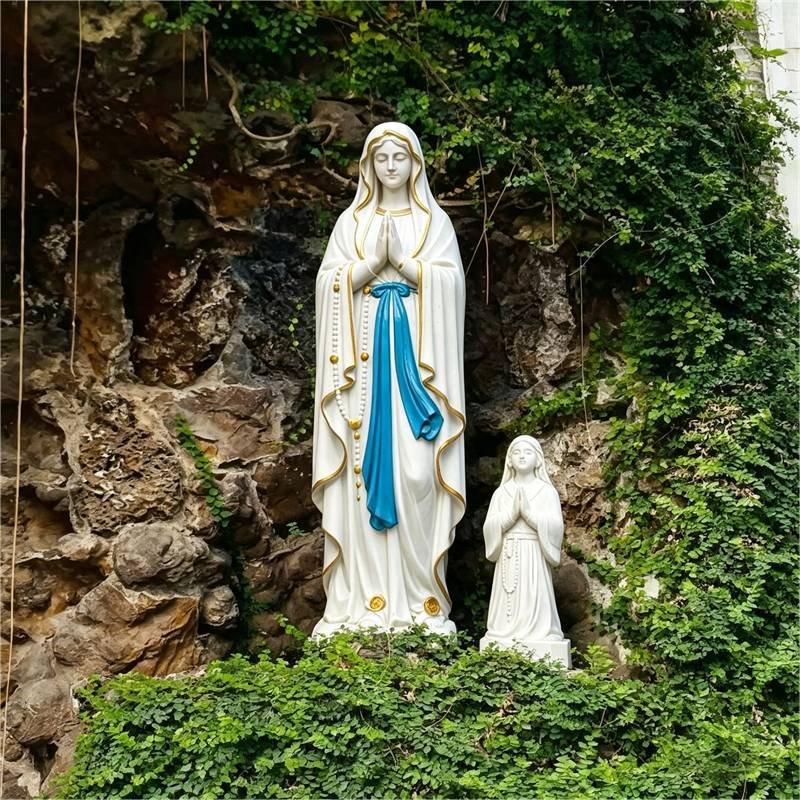
Visually, Our Lady of Lourdes is usually shown with a softer and more gentle appearance, wearing a white robe with a blue sash and roses at her feet, while Our Lady of Fatima is often portrayed in a more solemn and radiant style, typically dressed in white with a crown, rosary, and a more formal devotional presence.
In this blog, we will explore their historical backgrounds, the key differences between the statues, their symbolic meanings, and how to choose the right statue for your church, shrine, garden, or family space.
Historical Background of the Apparitions
Both Lourdes and Fatima are Marian apparitions, where the Virgin Mary is seen as a symbol of purity, holiness, and compassion. However, the two events occurred at different times and places, shaping their messages and artistic expressions.
Our Lady of Lourdes
Our Lady of Lourdes appeared on February 11, 1858, at the grotto of Massabielle in Lourdes, France, to Bernadette Soubirous, a poor and physically weak young girl who suffered from asthma.
The setting itself is meaningful. The grotto was considered dirty, forgotten, and unimportant, yet it became the place of a Marian apparition. Bernadette also seemed an unlikely messenger by worldly standards, but she remained humble, honest, and consistent in her testimony.
Beginning on February 18, Bernadette returned faithfully to the grotto for 15 consecutive days. There she prayed the Rosary and later discovered the spring that became famous for its association with healing.
Our Lady of Fatima
The first apparition of Our Lady of Fatima took place on May 13, 1917, in Fatima, Portugal, 59 years after Lourdes.
The Virgin Mary appeared six times to three shepherd children: Lucia, Francisco, and Jacinta. Her message centered on prayer, repentance, sacrifice, and peace, and the apparitions became closely associated with the three secrets of Fatima.
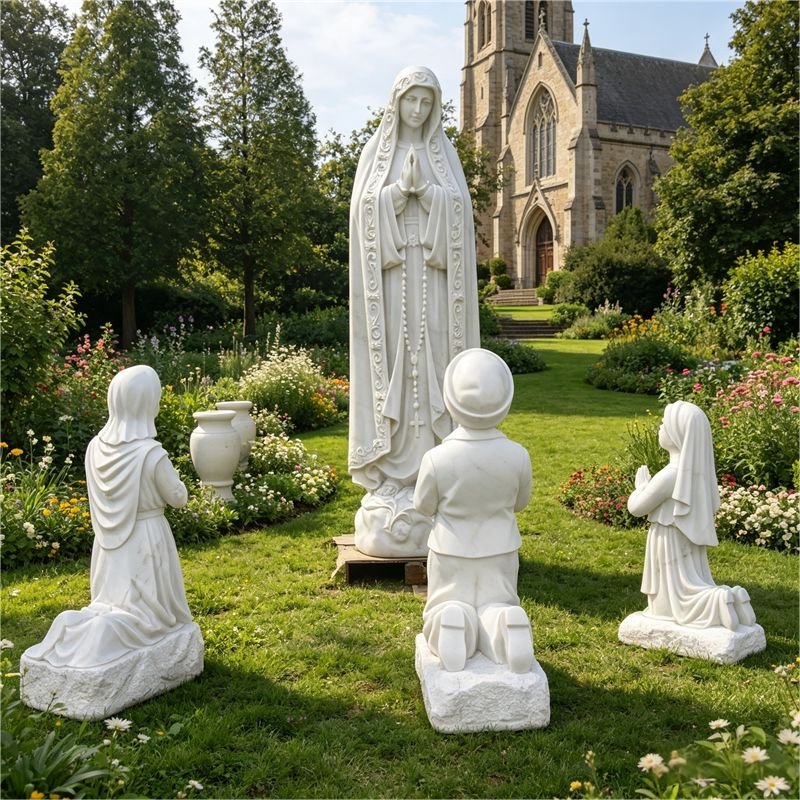
According to traditional accounts, after each apparition, Our Lady rose “towards the east until she disappeared,” a detail that many believers see as symbolically linked to her heavenly glory.
In both Lourdes and Fatima, Our Lady appeared to poor but sincere children, highlighting the spiritual importance of humility, purity of heart, and inner faith.
Main Differences in Statue Styles
Although both statues represent the Virgin Mary, Our Lady of Lourdes and Our Lady of Fatima differ in expression, posture, robe details, base design, and devotional elements. These visual distinctions influence both the devotional atmosphere and the artistic identity of the statue.
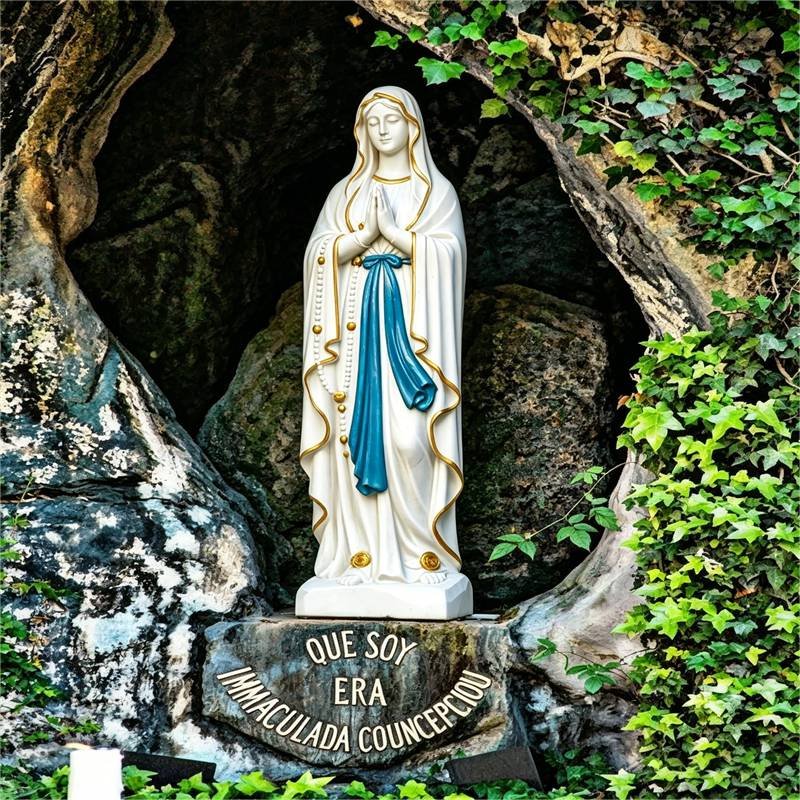
Bernadette described Lourdes as a lady in white with a blue girdle and yellow roses on each foot, surrounded by dazzling light.
Lucia described Fatima as a Lady all dressed in white, more brilliant than the sun.
These descriptions already suggest the difference: Lourdes feels more intimate and healing, while Fatima feels more radiant and solemn.
Facial Expression and Overall Mood
Lourdes statues usually have a gentle, soft, and comforting expression. They reflect healing, humility, and compassion, making them ideal for healing gardens, memorial spaces, and quiet prayer areas.
Fatima statues usually appear more solemn and devotional. Their more serious expression reflects prayer, repentance, and peace, making them especially suitable for church courtyards, shrines, and public devotional settings.
Hand Position
Our Lady of Lourdes is most often shown with hands joined in prayer, emphasizing humility and devotion.
Our Lady of Fatima may also appear in prayer, but many versions show the hands in a more formal devotional pose, often highlighting the rosary and the call to daily prayer.
Clothing and Robe Details
Lourdes statues are traditionally shown in a white robe with a blue sash, a key identifying feature of Lourdes iconography.
Fatima statues are also usually dressed in white, but often appear more formal, radiant, or shrine-like in presentation.
Foot Details and Base Design
In Lourdes statues, the roses on the feet are a classic detail. They are also often placed on a grotto-style base, linking them to Massabielle and the idea of pilgrimage and healing.
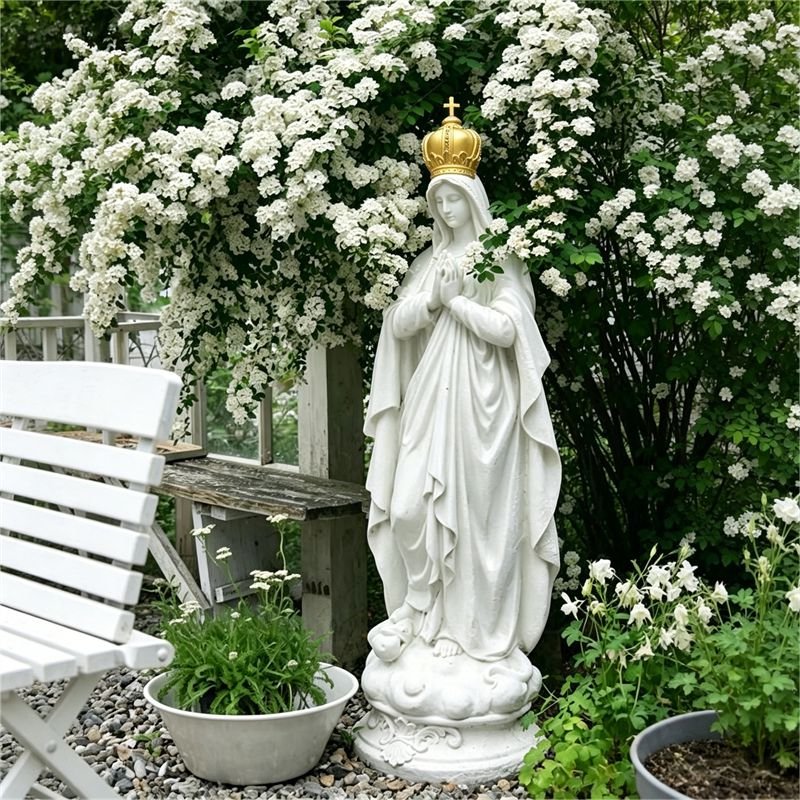
In Fatima statues, the base is more often a cloud base, pedestal, or shrine platform, giving the statue a cleaner and more formal appearance.
Crown and Devotional Elements
Lourdes statues are usually simpler and more restrained, with symbolism expressed through the robe, prayerful pose, and grotto setting.
Fatima statues are more often associated with crowns, rosaries, and sometimes the Immaculate Heart, reflecting Marian queenship and devotion.
The Different Symbolism Between the Two Images
Although both statues honor the same Virgin Mary, they differ in symbolic emphasis and devotional meaning.
Symbolism of Our Lady of Lourdes
Our Lady of Lourdes is closely associated with healing, comfort, purity, and hope. Lourdes is linked with 70 medical miracles officially recognized by the Catholic Church, and the Lourdes Medical Bureau is known for its careful investigation of reported cures.
A well-known example is Sister Bernadette Moriau, whose healing was officially recognized. I also had a client who had long suffered from severe headaches and later visited the Lourdes grotto. After drinking the Lourdes water, he told me that he experienced not only relief, but also a deep sense of peace in spirit. That experience eventually inspired him to choose a Lourdes statue for his family.
Because of these associations, Lourdes statues are often chosen for spaces intended to bring comfort, prayer, reflection, and hope, especially where people are seeking healing in body or spirit.
Symbolism of Our Lady of Fatima
Our Lady of Fatima is more strongly associated with prayer, repentance, peace, and spiritual warning. Her message to the three children called people to return to God and pray earnestly for the world.
Fatima is especially known for the three secrets of Fatima, which are often connected with suffering, sin, war, and spiritual struggle. The first part included a vision of hell, emphasizing the seriousness of sin and the need for repentance. The second part is often understood as referring to World War I and World War II, persecution, and devotion to the Immaculate Heart of Mary as a path toward peace. The third part, later published by the Holy See, described a symbolic vision of persecution, martyrdom, and a “bishop dressed in white.” In the Vatican’s theological commentary, this vision was interpreted in connection with the suffering of the Church and the trials endured by the popes in the twentieth century, and it has often been discussed in relation to the 1981 assassination attempt on Pope St. John Paul II.
Fatima is also associated with the Miracle of the Sun, when 70,000 witnesses reported that the sun changed color, spun, and moved in an extraordinary way. This event gave Fatima a lasting association with divine sign, awe, and the urgency of Mary’s message.
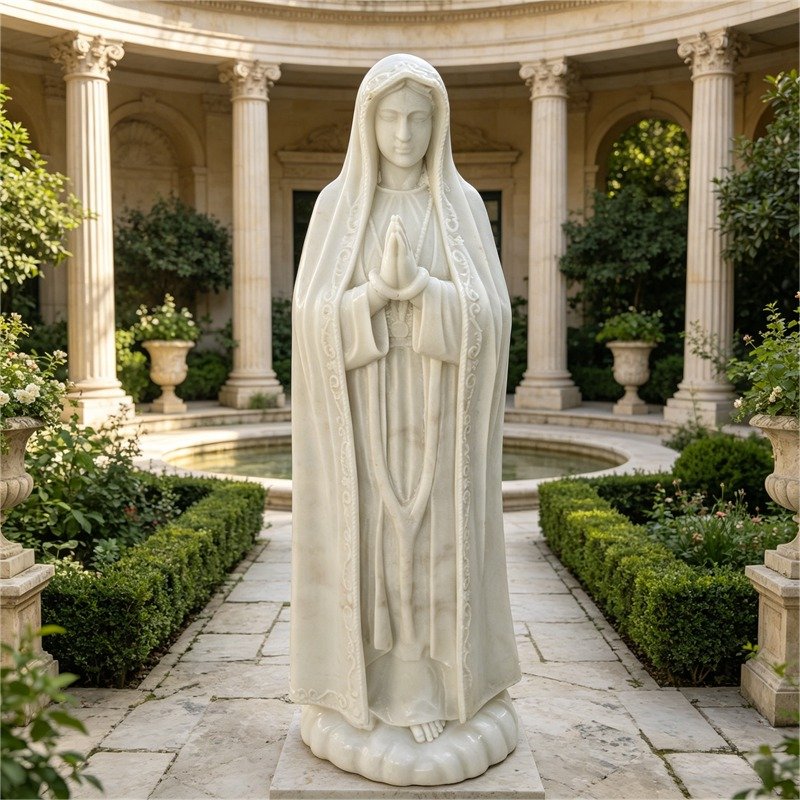
Its symbolism became even more powerful in modern Catholic devotion through its connection with Pope St. John Paul II. On May 13, 1981, the anniversary of the first Fatima apparition, he was shot in St. Peter’s Square and nearly died. He later believed that Our Lady had protected him, and the bullet was eventually placed in the crown of the Fatima statue in Portugal. For many believers, this event deepened Our Lady’s meaning as a symbol of protection, suffering, providence, and the triumph of the Immaculate Heart.
Because of this, Fatima statues often symbolize prayer and the Rosary, repentance and conversion, peace for the world, devotion to the Immaculate Heart, and perseverance in times of suffering. This gives Fatima statues a stronger sense of solemnity, mission, and public devotion.
How to Choose Between a Fatima Statue and a Lourdes Statue
Both Fatima and Lourdes refer to the same Virgin Mary, but they express different devotional messages.
If you want a statue that conveys healing, gentleness, and comfort, a Lourdes statue may be the better choice. If you want a statue that emphasizes prayer, repentance, peace, and Marian devotion, a Fatima statue may be more suitable.
It is also important to choose a reliable supplier with real production experience. Religious statues require not only quality materials and fine craftsmanship, but also a true understanding of sacred art and devotional tradition.
YouFine has more than 40 years of experience, its own factory, and extensive experience serving clients worldwide. Our head artist is a devout Catholic with deep respect for religious sculpture, which helps us create statues that are both beautiful in form and meaningful in spirit.
Final Thoughts
Our Lady of Fatima and Our Lady of Lourdes both refer to the Virgin Mary, but they reflect different apparitions, messages, and artistic traditions.
In statue form, Our Lady of Lourdes is usually associated with healing, gentleness, purity, and comfort, while Our Lady of Fatima is more often associated with prayer, repentance, peace, and solemn devotion.
Understanding these differences can help you choose a statue that is not only visually beautiful, but also spiritually appropriate for its intended use.
FAQ
What did the Virgin Mary say at Lourdes?
She famously told Bernadette, “I am the Immaculate Conception.”
Can Lourdes or Fatima statues be custom made?
Yes. They can be customized in size, material, finish, and base design.
What materials are best for religious statues?
Common options include marble, bronze, stone, and fiberglass, depending on the location and budget.
Where can these statues be placed?
They can be installed in a wide range of devotional and commemorative settings, depending on the design, material, and spiritual purpose.