Just this past Monday, my client John shared his recent news with me. Tired of the gloomy British weather, he is preparing to move to the Mediterranean. And he thanked me for the St. Joseph statue he had purchased from us, saying it seemed to help his house sell quickly.
Though his story has a touch of British humour, when I googled for practical questions—such as where a St. Joseph statue should be placed in the home—I found that many search results associated it with the well-known custom of asking St. Joseph’s help when selling a house.
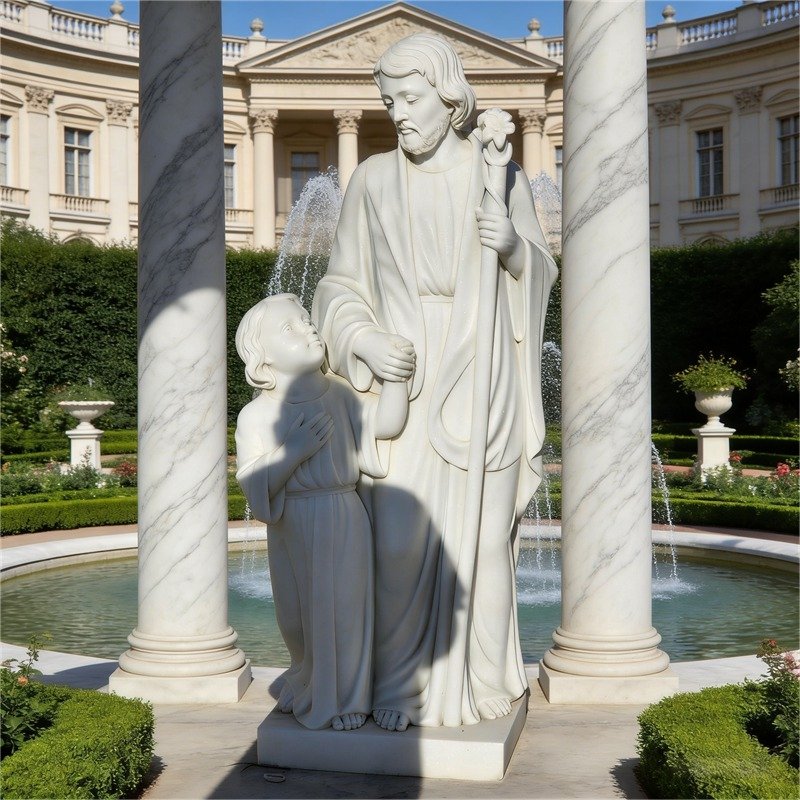
Yet beneath those practical questions lies a deeper and more meaningful one: what does a St. Joseph statue truly symbolize?
Who is St. Joseph?
St. Joseph is one of the most humble and silent figures in the Bible. Scripture tells us very little about him, and not a single spoken word of his is recorded. Yet his silence reveals the depth of his humility, his faithful role as protector, and the quiet beauty of his virtues.
He is the spouse of the Blessed Virgin Mary, the earthly guardian of Jesus, the head of the Holy Family, and a model of faithful fatherhood. God entrusted to him a unique role in salvation history: to care for Mary and to protect the Son of God during His earthly life.
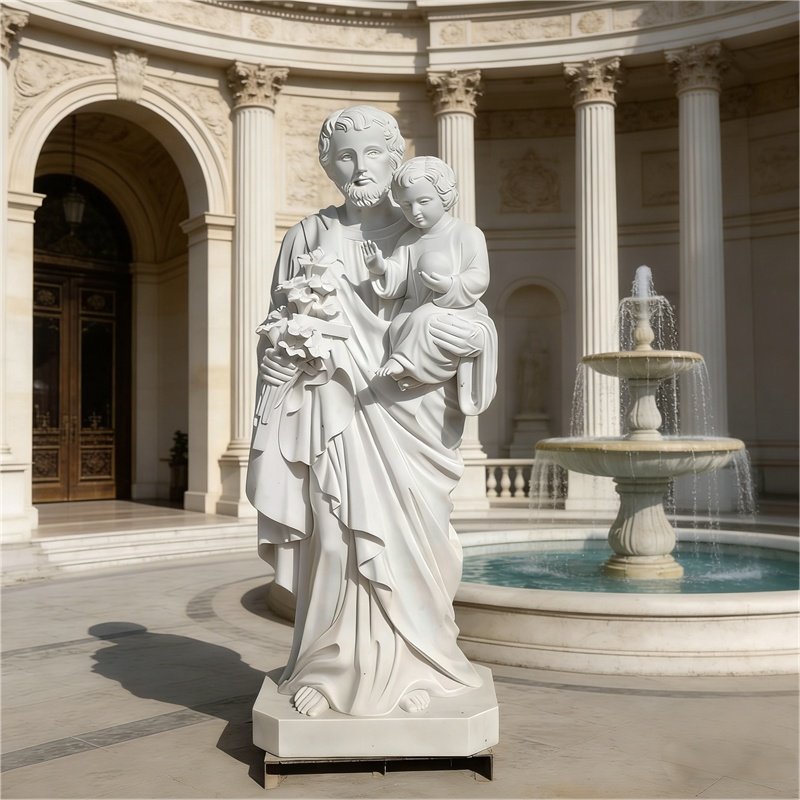
Because of this sacred mission, St. Joseph has long been honored as the patron of families, fathers, workers, and the universal Church. Though hidden in Scripture, he remains one of the most deeply loved saints in Christian devotion.
What Does St. Joseph Symbolize?
Spiritual Fatherhood and Universal Care
St. Joseph symbolizes not only fatherly care for Jesus, but also a wider fatherhood that extends to the whole Church and to all who seek his intercession. God entrusted him with the care of the Holy Family, and he embraced this mission with humility, courage, and unwavering fidelity.
His image reminds us that fatherhood is not merely biological—it is also spiritual, moral, and sacrificial. In caring for Jesus, St. Joseph showed what faithful fatherhood looks like: he protected, provided, guided, and remained steadfast in love.
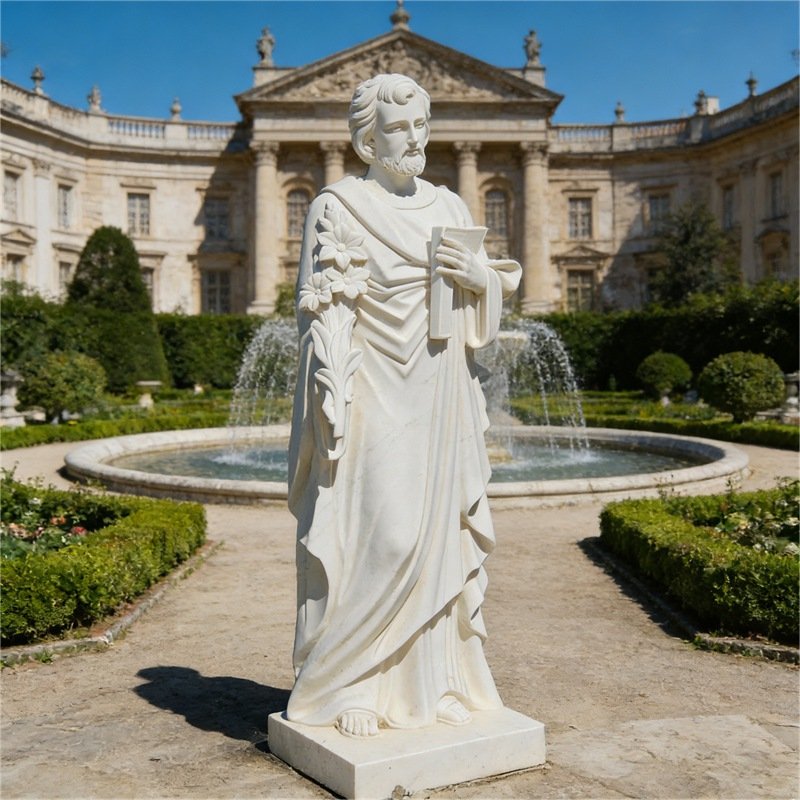
Pope Leo XIII beautifully reflects this when he describes Joseph as a man who“passed his life in labor, and won by the toil of the artisan the needful support of his family.”
This portrait grounds St. Joseph’s spiritual fatherhood in something concrete and deeply human. He was not an abstract ideal, but a faithful husband, a diligent worker, and a responsible guardian.
Humble Obedience and Sacrifice
St. Joseph also symbolizes humble obedience and sacrifice. Although Scripture records no spoken words from him, his actions reveal a man who listened deeply and obeyed promptly. When God spoke, Joseph responded. When asked to take Mary as his wife, he obeyed. When warned to flee into Egypt, he rose and went. When called to return, he did not hesitate.
His life teaches that holiness is often expressed not in many words, but in faithful action. He shows that trust in God is not passive—it requires courage, surrender, and perseverance.
Quiet Strength
Joseph was not a king seated on a throne, nor a public preacher surrounded by crowds. He was a just man, a laborer, and a guardian. Yet through ordinary work and hidden sacrifice, he fulfilled an extraordinary mission.
St. Joseph represents the kind of strength that does not seek attention. He shows that holiness can be lived in daily duties, patient endurance, and steadfast care for others.
St. Josemaría Escrivá described him as “a master of the interior life,” pointing not only to outward virtue, but also to a life deeply rooted in God.
Faithful Love and Purity
As the chaste spouse of the Blessed Virgin Mary, St. Joseph reveals a love that is reverent, self-giving, and ordered toward God. He did not seek possession, but protection. He did not insist on himself, but entrusted himself to God’s plan.
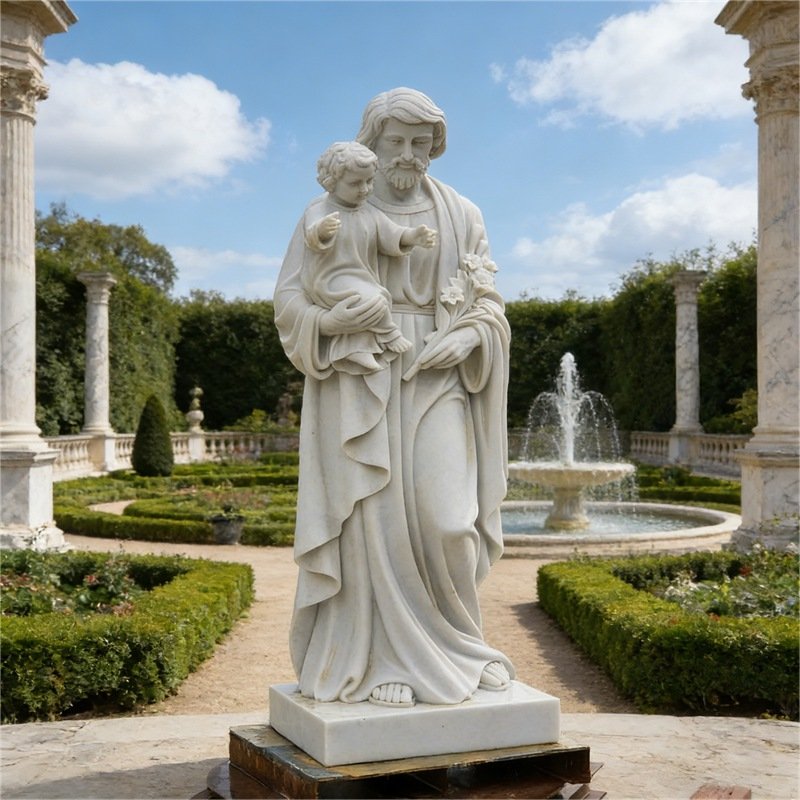
As Pope Leo XIII once remarked:
“We wonder why the Gospel makes so little mention of St. Joseph. But did it not say everything when it taught us that he was the husband of Mary?”
That single title reveals the nobility of his vocation.
Why Is St. Joseph So Special?
St. Joseph combines hiddenness and greatness in a unique way. He is silent in Scripture, yet indispensable in salvation history. He is humble, yet entrusted with the protection of Jesus and Mary. He is gentle, yet strong enough to bear responsibility for the Holy Family.
His greatness lies not in public glory, but in his closeness to Jesus and Mary and in the faithful way he carried out his vocation. In an unstable world, he is a source of peace and order. In a distracted world, he is a model of recollection. In a wounded world, he is a guardian.
Where Should a St. Joseph Statue Be Placed?
A St. Joseph statue may be placed anywhere in the home where it can be honored with reverence and prayer. Many people choose to display it in:
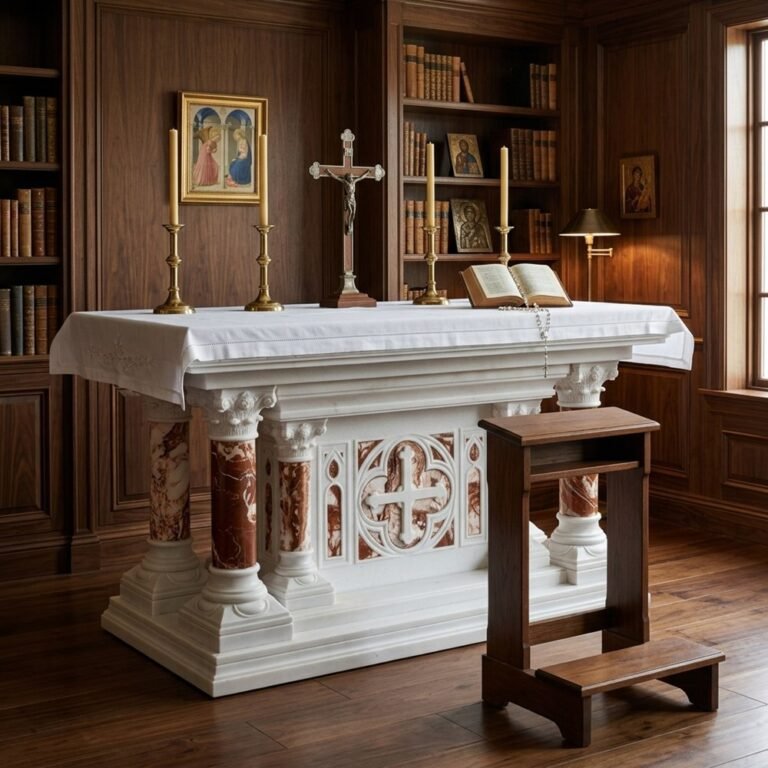
- A prayer corner or near a home altar
- The living room or entryway
- A quiet place set apart for devotion
- The yard or garden (when seeking help with housing matters)
The deeper Christian meaning is not about technique or superstition. What matters most is how you pray and how you entrust your intentions to God through St. Joseph’s intercession.
A Prayer to St. Joseph
O Saint Joseph, whose protection is so great, so strong, and so prompt before the throne of God, I place in you all my interests and desires. Assist me by your powerful intercession and obtain for me from your Divine Son all spiritual blessings. Saint Joseph, pray for me. Amen.
Final Reflection
St. Joseph embodies virtues that illuminate the path to holiness: protection, obedience, purity, humility, work, fatherly care, and intercession. Through his example, believers are reminded that true holiness is often found in quiet devotion, that love must be properly ordered, and that genuine strength emerges from faithful service.
When Christians honor St. Joseph, they recognize in him a trustworthy protector, a spiritual father, and the faithful guardian of Jesus and Mary. This is why his image continues to grace countless homes and remains cherished in the hearts of believers throughout the world.
FAQ
What does St. Joseph’s flowering staff symbolize?
It references Aaron’s blossoming rod, representing divine election, pure virtue, and his ordinary yet spiritually fruitful life.
What is the meaning of white lilies beside St. Joseph?
They stand for chastity, moral purity, innocence and his loyal guardianship of Mary’s virginity.
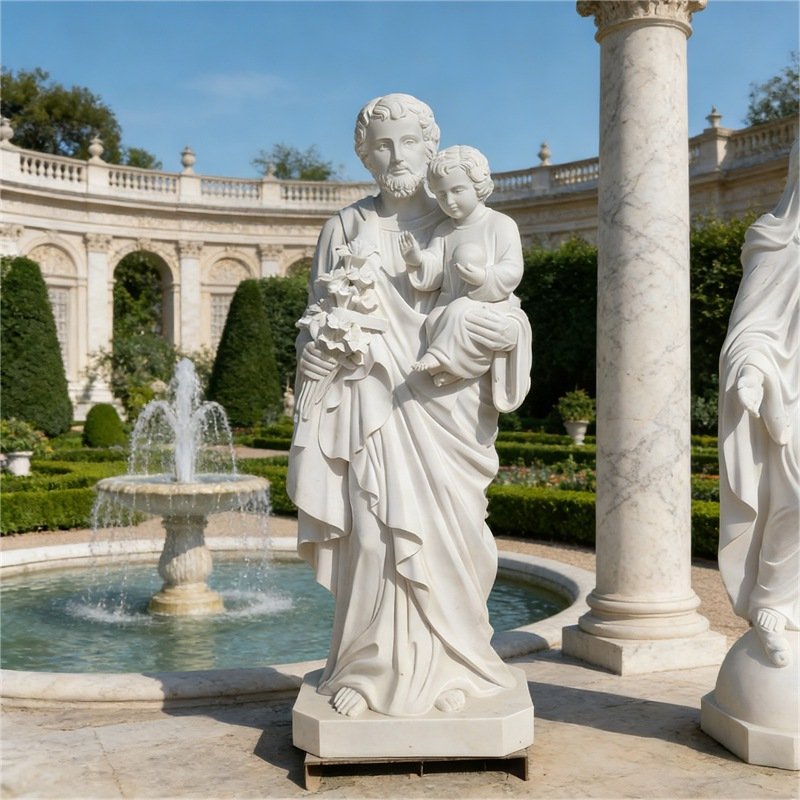
Why is St. Joseph often depicted holding infant Jesus?
To highlight his earthly fatherly vocation: protecting, providing and nurturing the Holy Family.
What do carpenter tools (hammer, saw, square) symbolize for him?
They signify honest labor, dignity of ordinary work, moral uprightness and stable care for his family.
What are St. Joseph’s two main feast days and their themes?
March 19 (St. Joseph, Husband of Mary, focus on family);
May 1 (St. Joseph the Worker, patron of all laborers).
What do turtle doves from the Presentation story represent?
They symbolize Joseph’s voluntary poverty, simplicity and trust in God over material wealth.
What does the letter “J” stand for as his symbol?
Short for Joseph, a subtle mark reminding people of his quiet, protective guardianship.
Why is the Star of David linked to St. Joseph?
It marks his Jewish Davidic lineage, his ancestral faith and the fulfillment of ancient Messianic promises.