Description
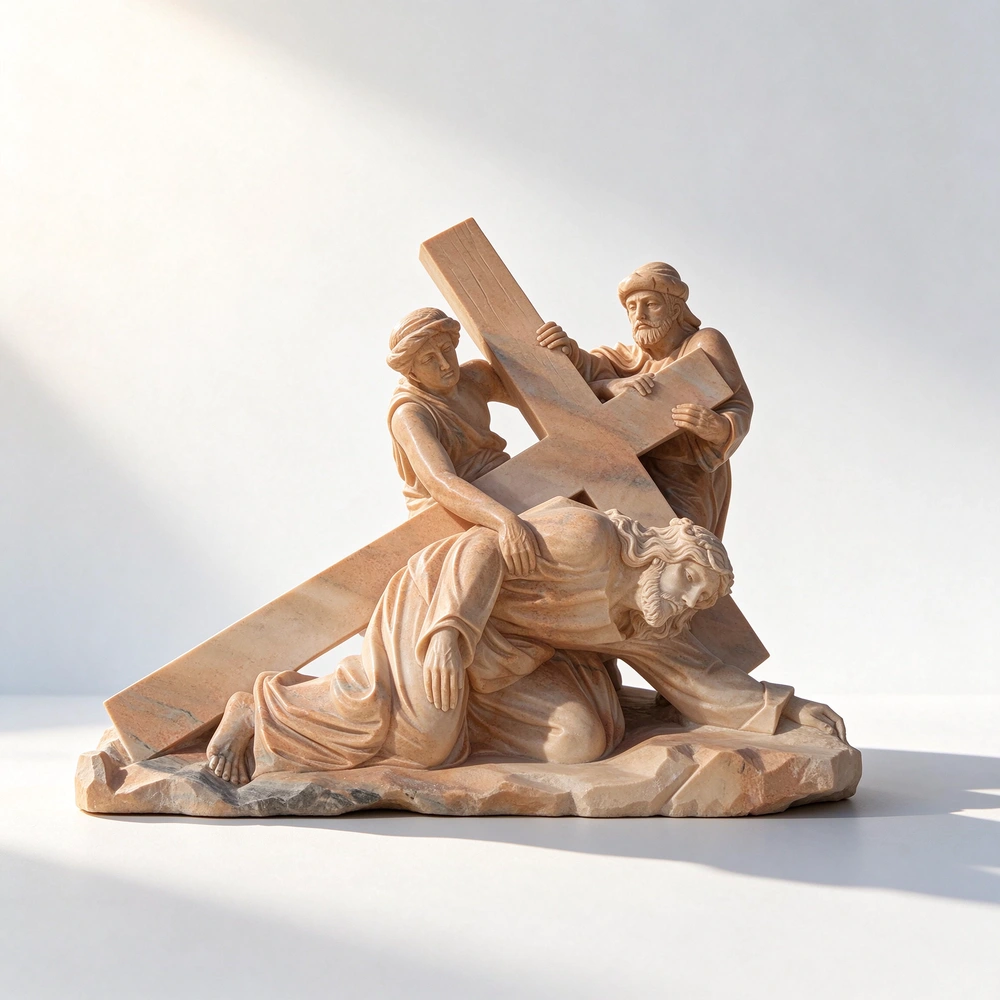
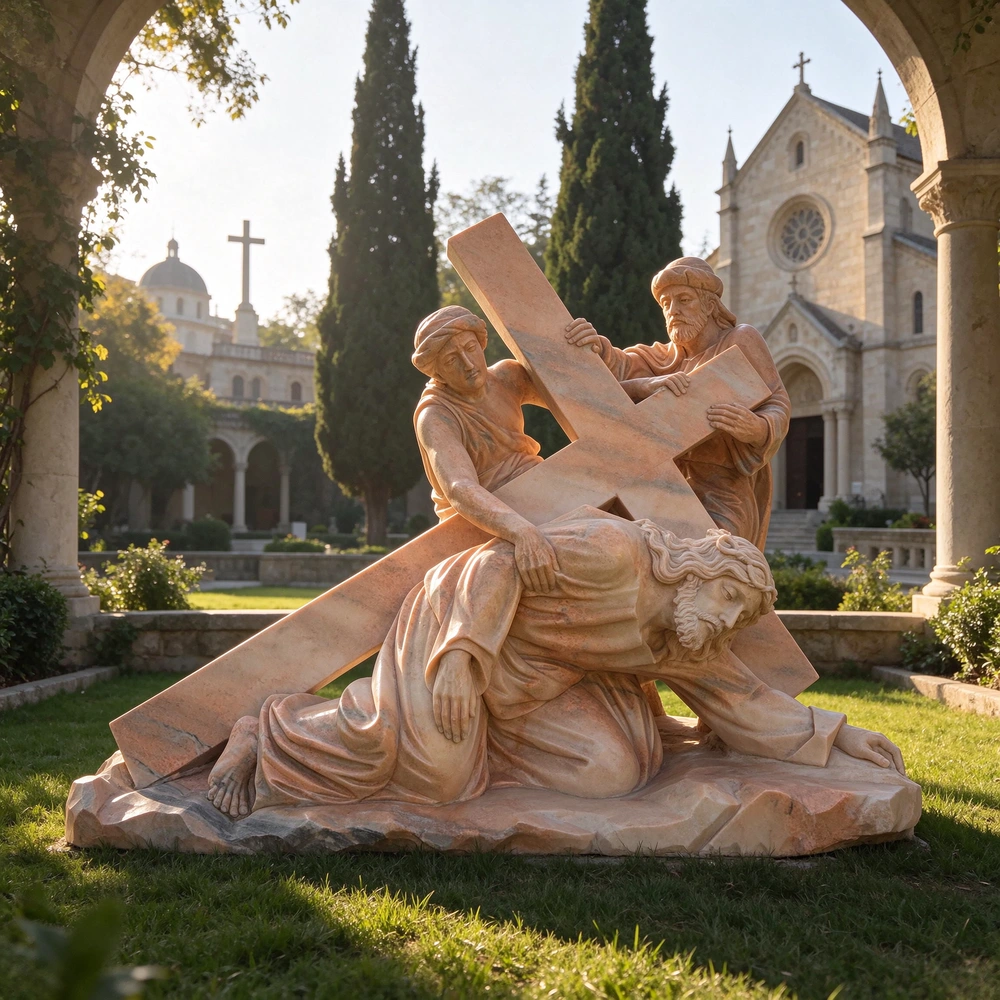
This Sunset marble sculpture of Jesus falling the second time honours the Seventh Station of the Cross — the station where the Passion stops being a procession and becomes a struggle on the ground.
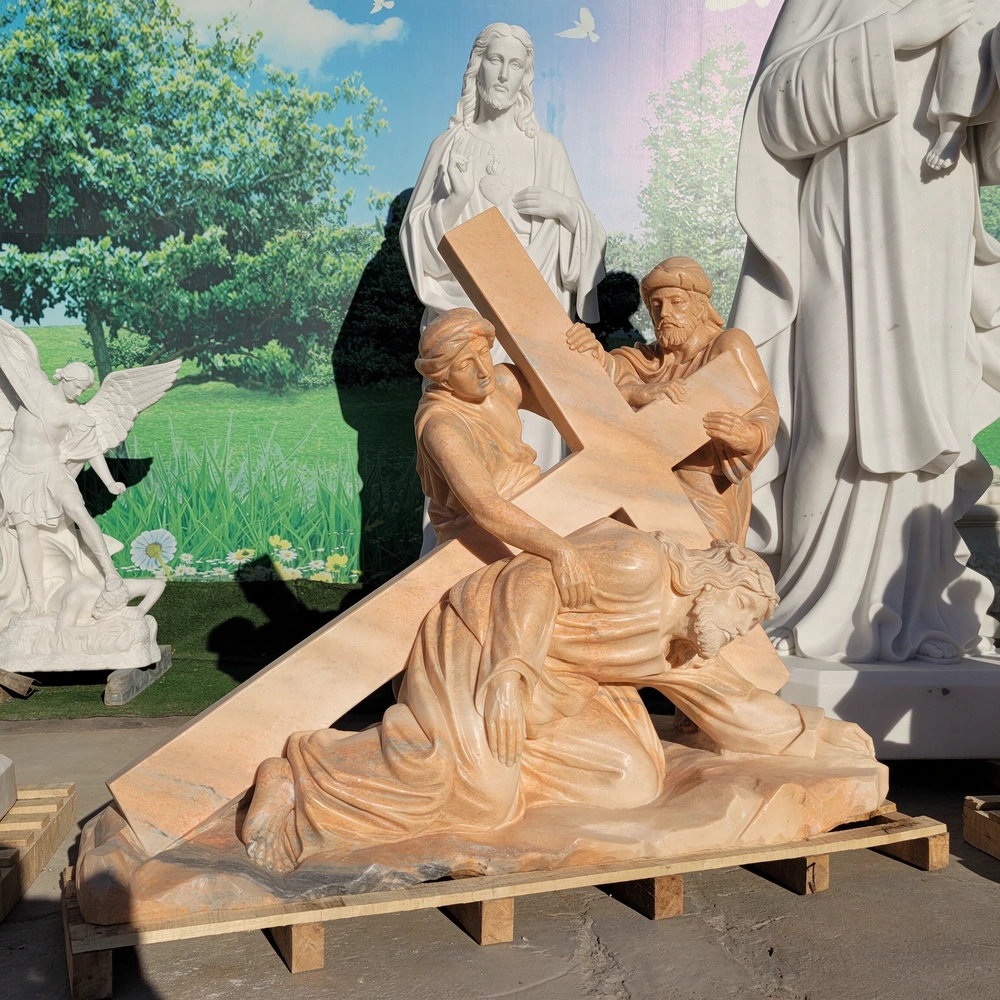
Rooted in the traditional devotional practice of the Via Crucis, formed within late-medieval Catholic piety, this sculptural group faithfully preserves the classic figurative language of Western ecclesiastical sculpture: the fallen Saviour, the beam lying across His shoulder, and the two bearers lifting it from Him.
Jesus Christ
Christ lies forward on the rocky ground, His forehead and hair pressed low, one arm stretched out with the palm flat against the stone, the other hand hanging loose. The cross rests diagonally across His shoulder and back, and the weight is no longer carried but endured. His face is turned down and away from the viewer, so that the moment of collapse is given without display.
The Bearers of the Cross
Behind Him, two men raise the timber. The younger one on the left grips the beam near Christ’s shoulder and lifts with his whole body; the older one on the right takes the far end in both hands, his face set and his arms braced. Neither is carved to draw attention: their effort is rendered with the same restrained artistry, ensuring the viewer’s gaze remains fixed upon Christ.
Our Craftsmanship
This station is carved from Sunset marble, and the veining in each block is unique: rose and amber threads run through the stone, so that a body pressed to the ground still sits in late-afternoon light rather than in shadow.
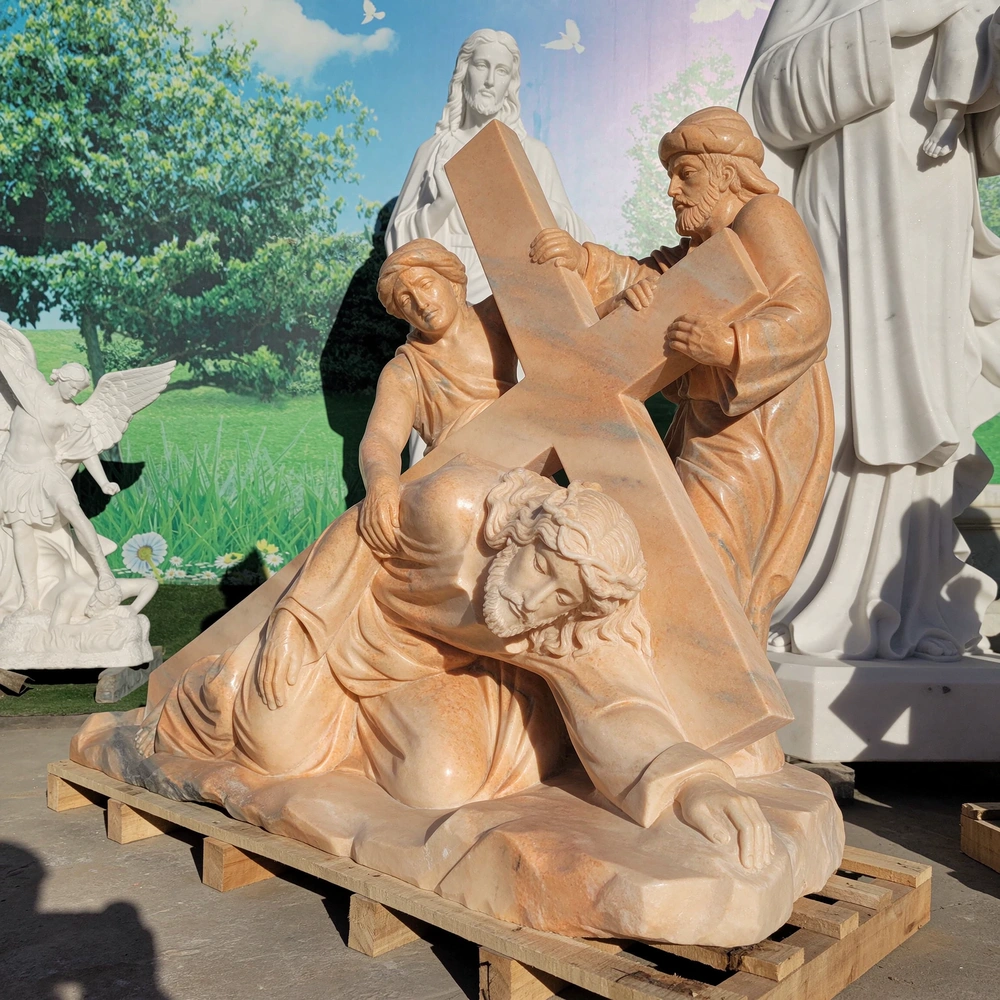
The real work is the transfer of load. Three bodies share one rocky slab, and every angle has to make weight legible: the beam lying across Christ’s back, the younger bearer lifting at the shoulder, the older man holding the far end.
Those angles are settled on a clay model before the block is opened — shoulders checked, hands checked, the points where cloth meets stone checked — until the strain reads at a glance.
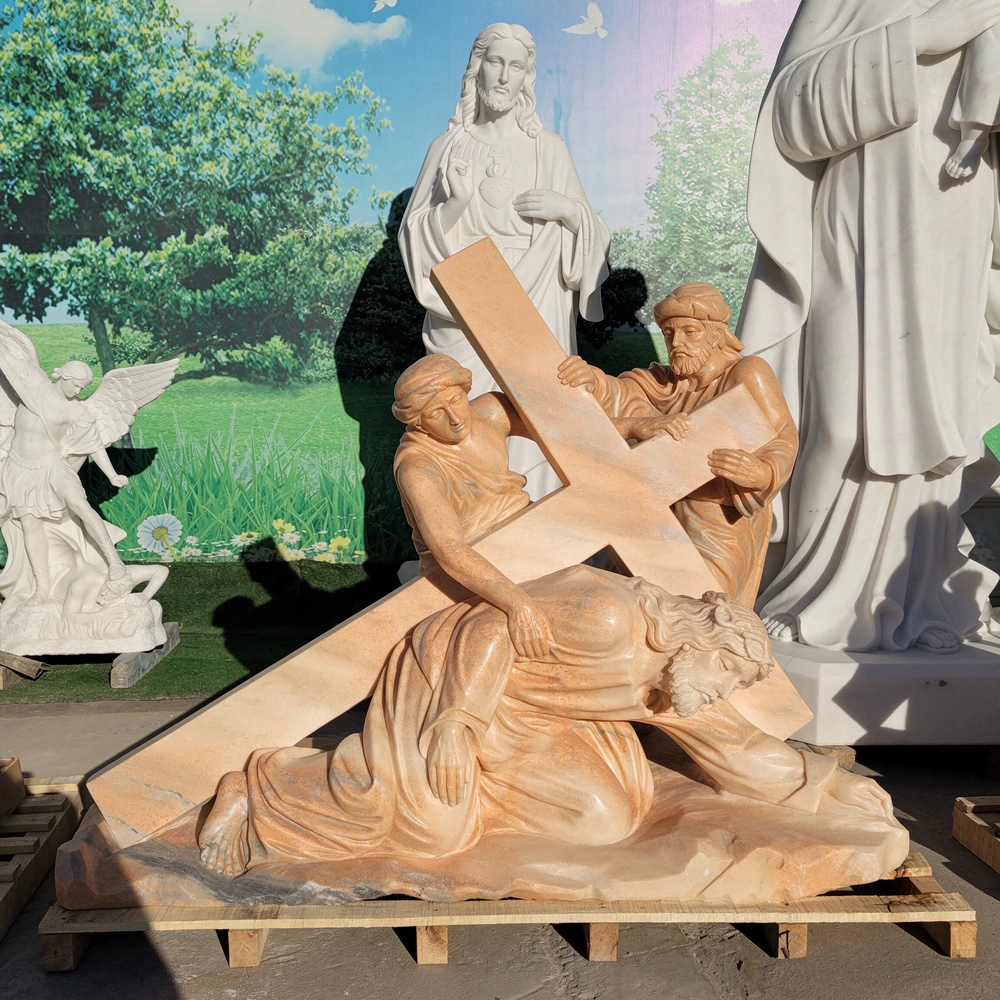
One note on sequences: in the Scriptural Via Crucis of 1991, the falls of Christ are not numbered among the stations. Tell us which version your church or garden follows, and the carving will follow it.
Ideal Placement
This is one of the fourteen Stations of the Cross — a sculpture meant to be walked past, and then stopped at.
In a complete series, it serves as Station VII and does its work in the pause a visitor takes before moving on; standing alone, it holds a garden as a single devotional focus, and for many parishes it is the station people come back to.
Its natural home is a prayer garden laid out as a full Via Crucis, in the seventh position; parish grounds, pilgrimage sites and retreat houses suit it as well, and so do chapel interiors and side chapels, narthex walls and side-aisle niches; the quieter corners of Catholic school grounds, family prayer gardens and private estates take it just as easily.
Contact us to customize size, marble selection, and surface finish for your Via Crucis project — we can match the sculpture to the Stations already standing in your garden. Our team replies within 24 hours.
Jesus, who fell and rose again, have mercy on us!