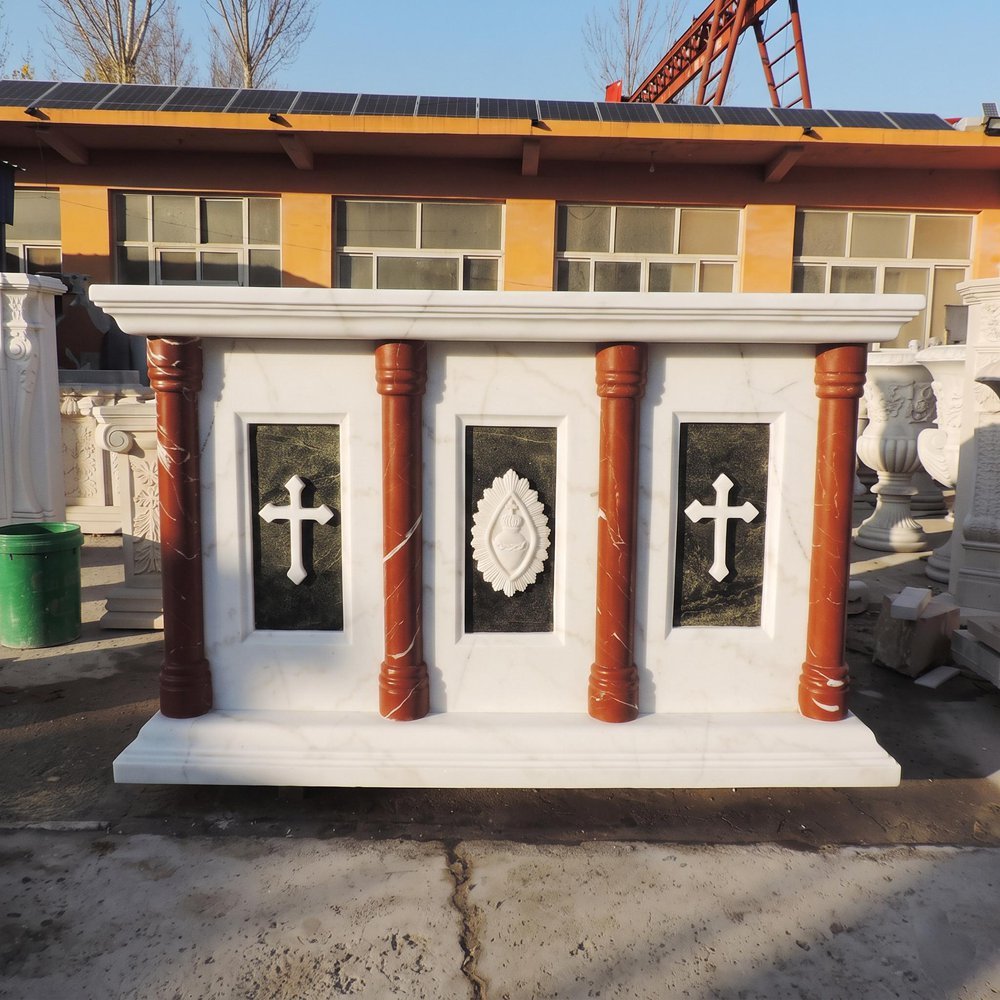
Marble Communion Table with Cross & Sacred Heart Relief

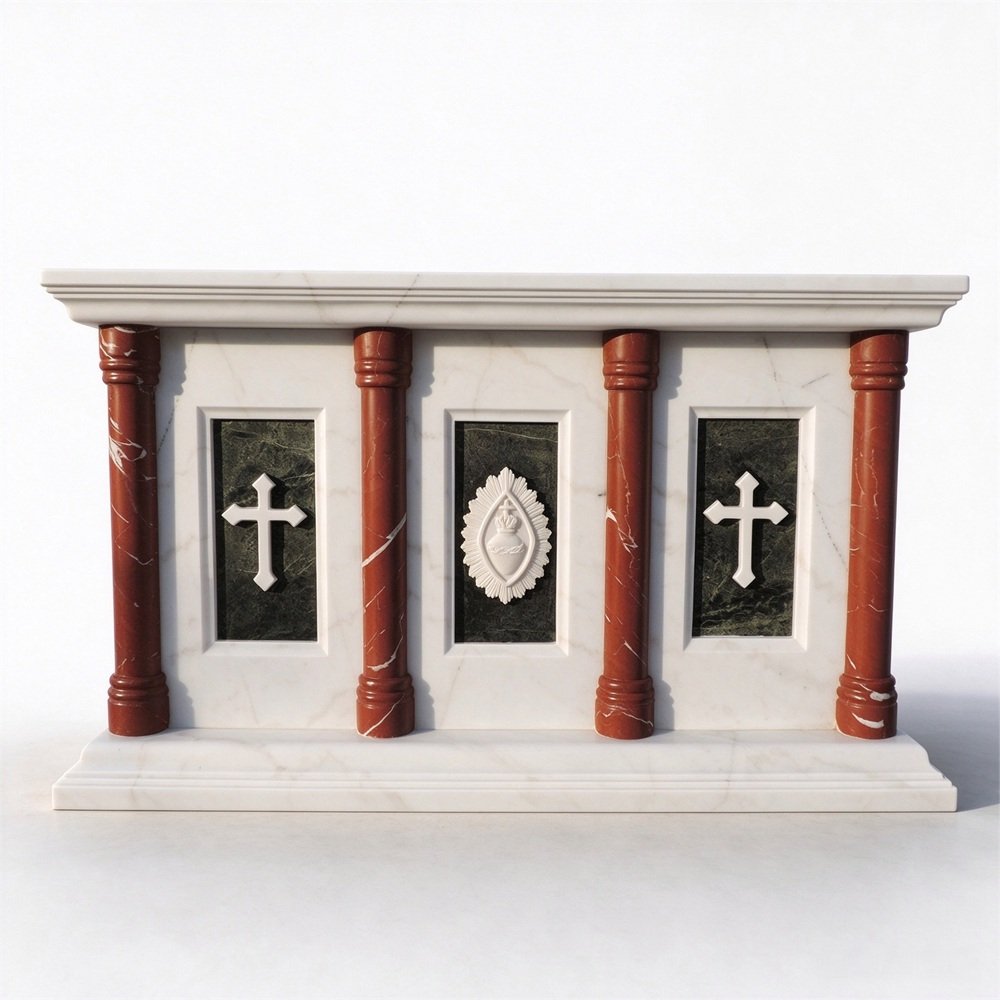
A three-panel communion table carved from white marble: two Latin crosses flank a hand-carved Sacred Heart set in a radiating aureole, framed by four red marble columns against dark green Verde Alpi panels.
Item No: YRMC-030
Size: Approx. W 1800 × D 900 × H 950 mm; every dimension is made to order according to your chancel plan
Material: High Quality Marble
Price: $1,000-$3,000
Technique: Carving

Advantage:  Factory Direct, Door to Door Delivery

Service:  Custom Design Avaiable.

Attention:  To protect our copyright, there are so many designs that we can not display on this website. Welcome to contact us for full catalogs.

Share:

Description

This marble communion table is designed for the Eucharist — lighter and more horizontal than a high altar, built to stand before the congregation rather than behind a reredos.

The body is cut from white marble with soft grey veining; the top slab projects forward with a layered ogee molding, and the stepped plinth anchors the piece to the sanctuary floor.

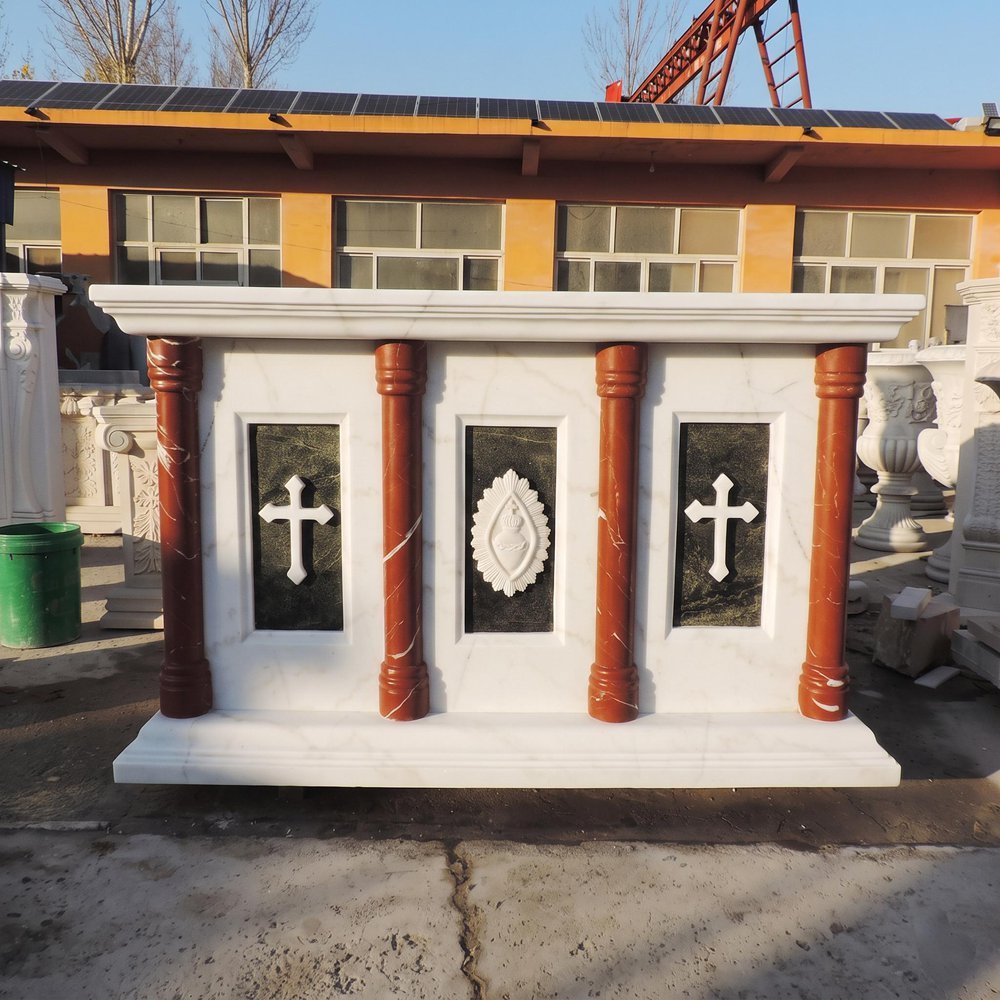
On the front face, three recessed panels of dark green marble (Verde Alpi) carry white relief carvings.
Communion Table with Cross
The left and right panels each hold a Latin cross in white marble; the center panel holds the Sacred Heart — a flaming heart surmounted by a small cross, encircled by rays and a crown of thorns — also carved from white marble, set against the dark green ground.

Four turned red marble columns (Rosso Levanto) separate the panels and frame the composition.

The three-panel arrangement — Cross, Sacred Heart, Cross — is intentionally symmetrical and reads well from a distance of 10 to 20 meters, which is the typical viewing distance in a nave. The white reliefs on dark green have high contrast, so the table remains legible even under low sanctuary lighting.

What the Sacred Heart relief means

The Sacred Heart of Jesus is a devotion reaching back to the Middle Ages and formally established through the apparitions of St. Margaret Mary Alacoque in the 17th century. The image combines three elements:

  • The heart itself — symbolizing Christ’s divine and human love for mankind, and the love that drove him to the cross.
  • The cross above the heart — the instrument of that love, reminding the worshipper that the heart’s love is proved by sacrifice.
  • The crown of thorns and the rays — the thorns mark the Passion; the rays mark the grace and mercy that flow from the open heart to all who approach it.

Flanked on both sides by a plain Latin cross, the composition is read as: the love of Christ (Sacred Heart) revealed and made present through the cross. This is why the image is so commonly placed on a communion table or altar rail — it directs the worshipper’s attention to the heart of the Eucharist, not to the furniture itself.

If your parish or tradition does not use the Sacred Heart imagery, the center panel can be re-carved as an IHS Christogram, a lamb (Agnus Dei), a chalice and host, or a plain Latin cross matching the side panels. The white body, green panels, and red columns stay unchanged.


Hand-Carved by Master Sculptors

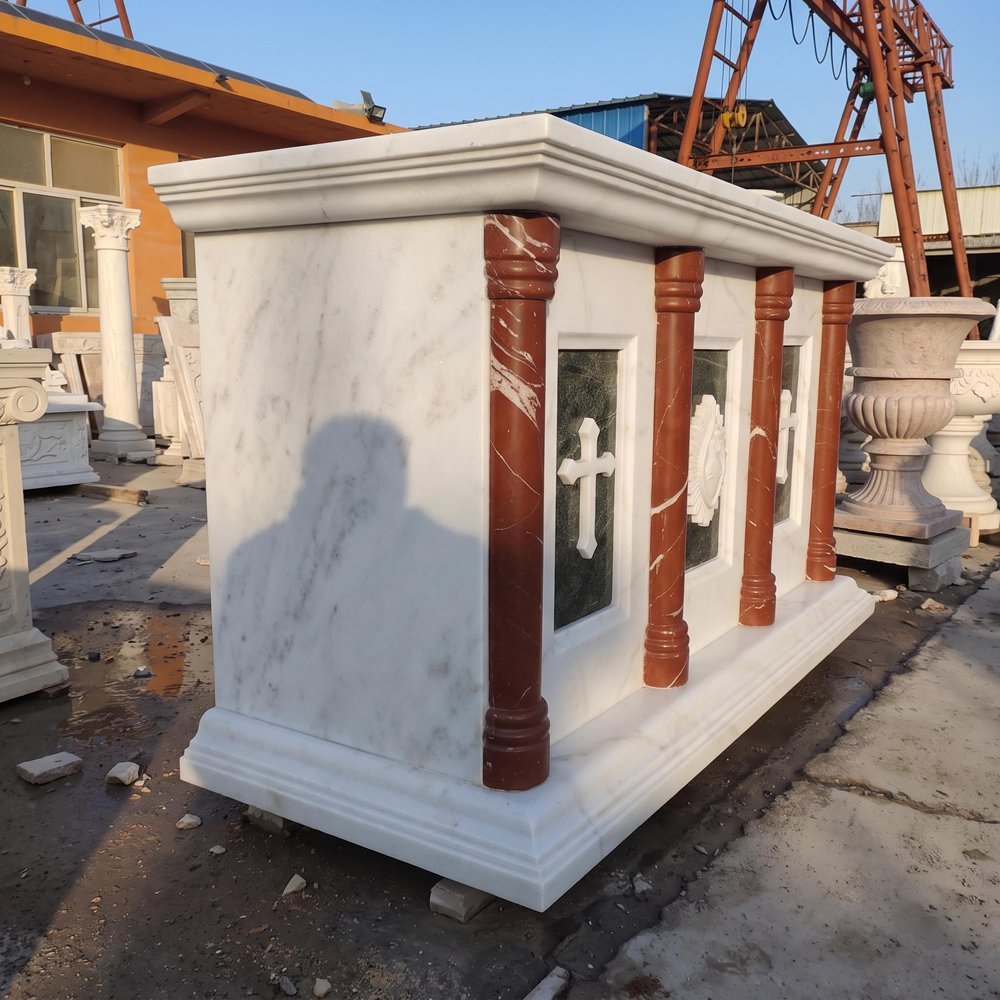
Every communion table we ship is carved by hand, not cast or resin-formed. The reliefs on the three front panels are worked directly into the marble blocks by sculptors with 15 to 30 years of experience in religious stonework.
Marble Communion Table with Cross

The turn of the heart and the sweep of the rays look alive, not like a stock catalog copy.
Our sculptor cuts each ray by hand with a pointed chisel, varying the depth so the light catches differently from every angle — this is what makes the relief read from 15 meters away in a dim nave.
The side crosses are crisp, not rounded. Latin crosses on mass-produced communion tables often have soft edges from molding. Here the arm ends and the central node are chiseled to a clean arris (sharp edge), so the cross shape stays legible from the back of the church.
Marble Communion Table with Cross
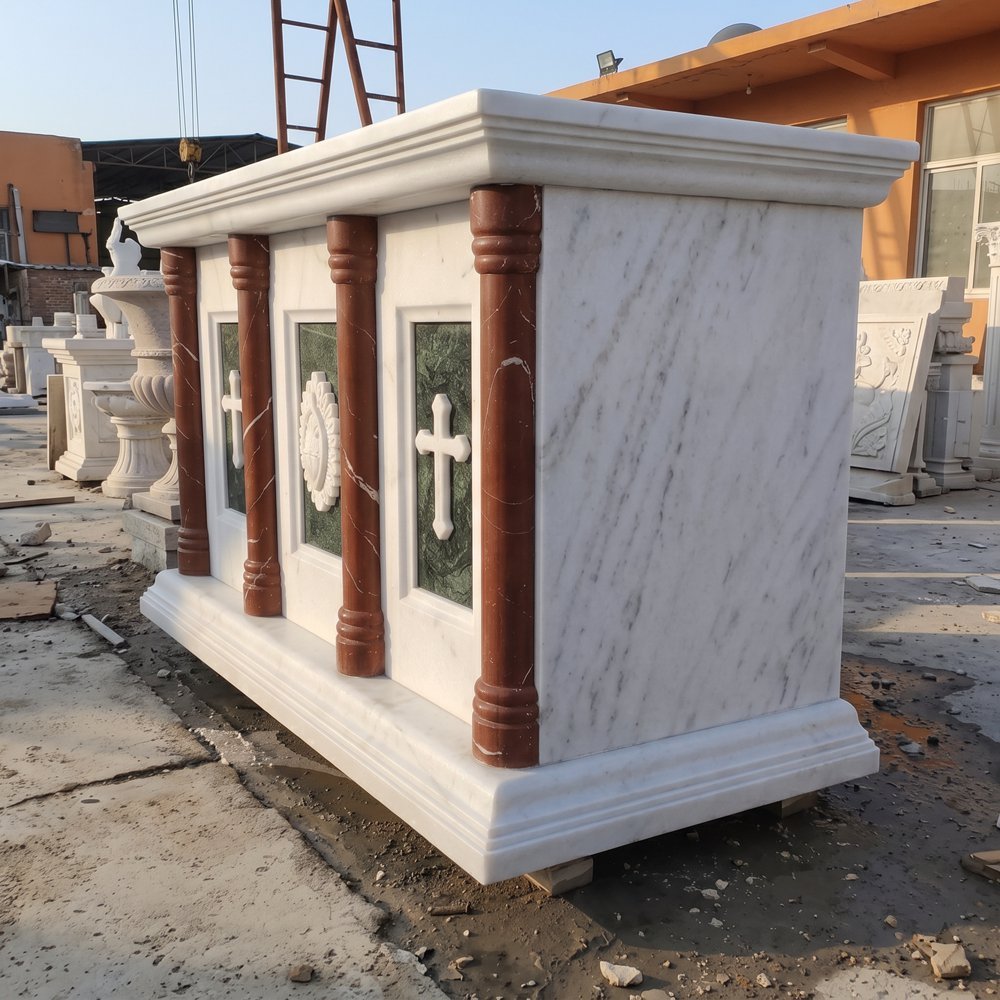
The columns are turned by hand, not extruded. The red marble shafts are turned on a lathe by hand, and the ring moldings at the top and plinth are chiseled into the stone — not glued-on resin collars. You can feel the joint between shaft and capital; it is one continuous piece of stone.

We also design and build the matching marble ambo (pulpit) in the same Gothic style and marble palette — so the altar, ambo and credence table read as one coordinated sanctuary set rather than three unrelated pieces.
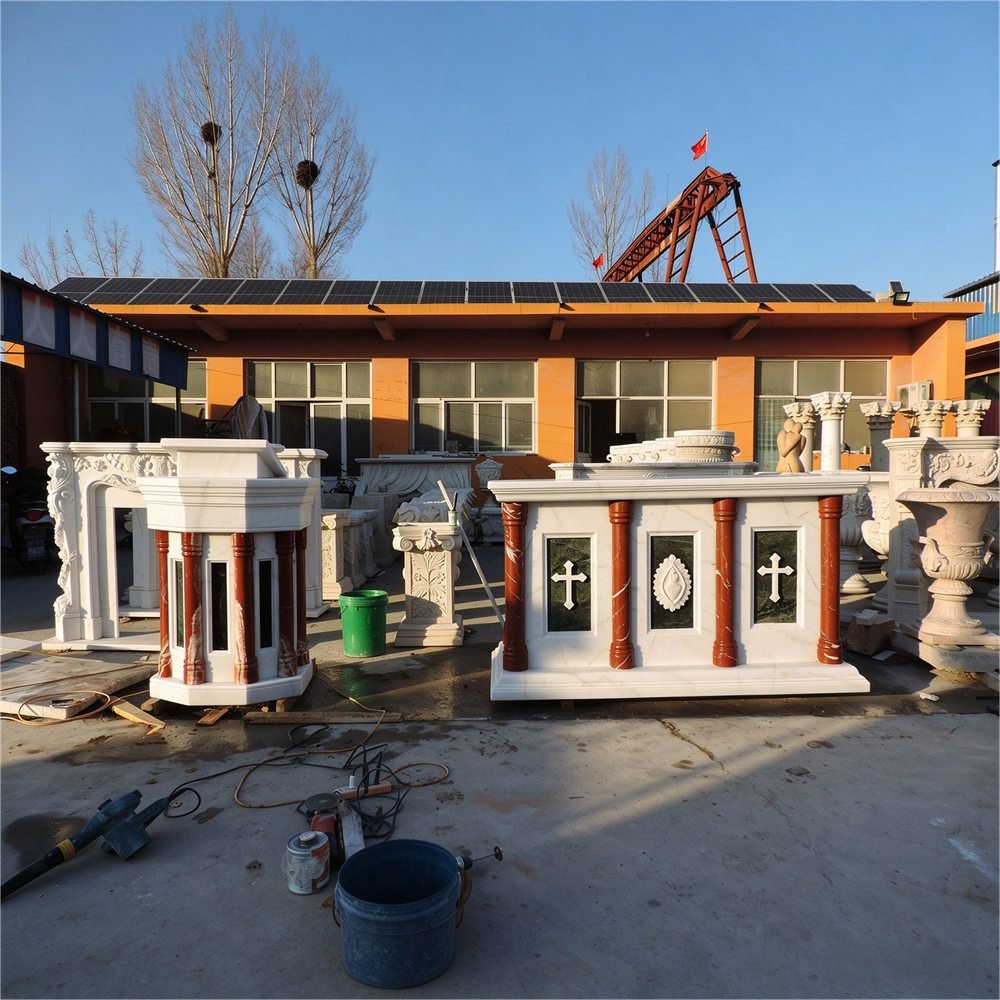
Marble Communion Table with Cross

Suitable for

This high-quality marble altar shows Jesus’ divine and human love to us; it is a suitable choice for:

  • Anglican / Episcopal church. A communion table for the chancel, used with or without a frontal. The Sacred Heart motif suits high-church and Anglo-Catholic parishes.
  • Lutheran church. A permanent marble communion table for the nave altar or chancel, replacing a wooden table.
  • Catholic chapel or side altar. Works as a secondary altar where a full sanctuary altar is not needed.
  • Chapel, school, or retreat center. Scaled to smaller worship spaces — we reduce width and height without losing the three-panel composition.
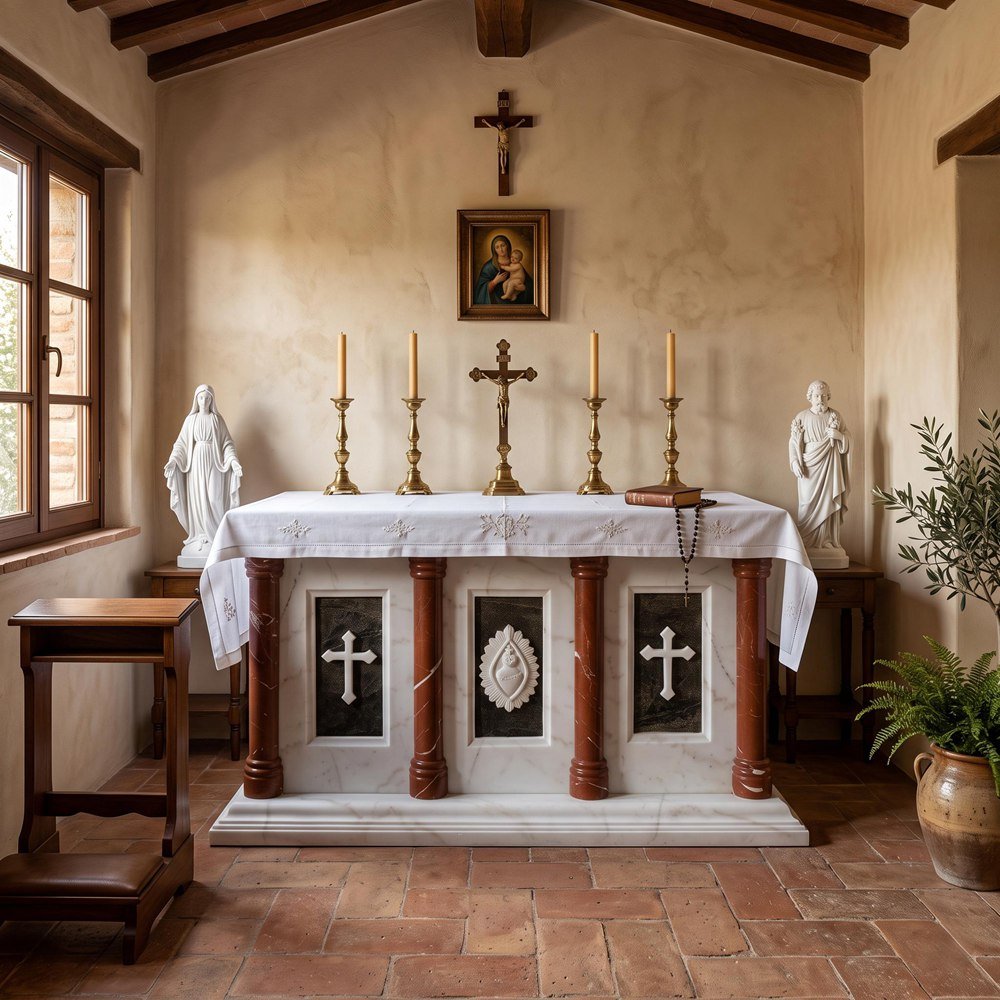
Marble Communion Table with Cross

Send us your chancel dimensions, chosen marbles and required liturgical fittings — we will reply within 24 hours 
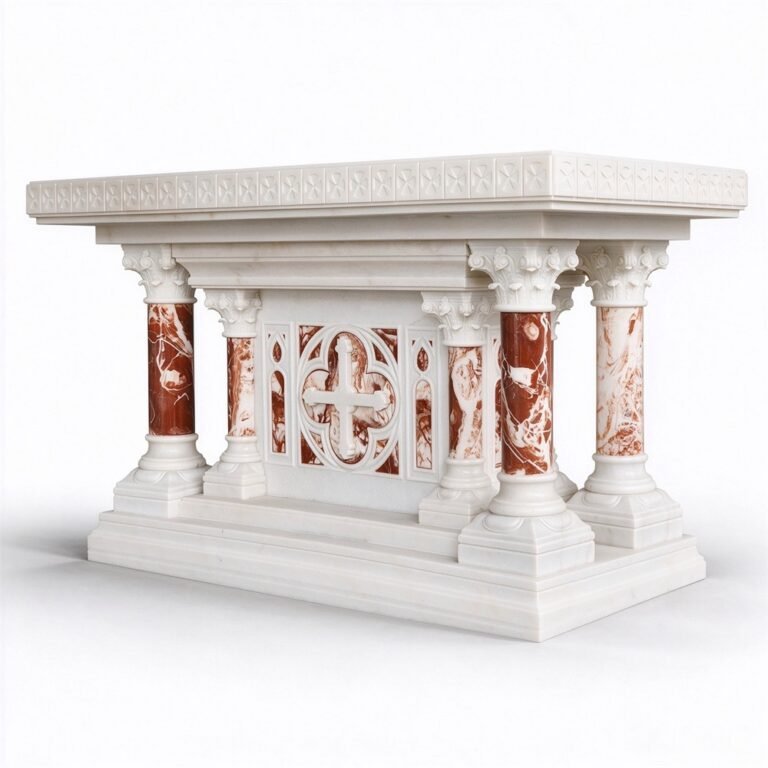
 

Marble Carving Sculpture – Technique Process
1. Design & Planning

Based on religious themes or client requests, artists create sketches and drawings to define the pose, size, and details of the statue.

2. Selecting the Marble Block

High‑quality natural marble is chosen for its color, texture, and durability, ensuring it is suitable for indoor churches or outdoor use.

3. Rough Shaping

The marble block is cut to size and roughly shaped. Artisans remove excess stone with chisels and machines to form the basic outline.

4. Fine Carving

Using finer tools, sculptors carve facial expressions, hands, drapery, and religious symbols. This is the most skill‑intensive stage.

5. Smoothing & Polishing

The surface is smoothed with abrasives and polished to reveal the natural luster of the marble and a refined finish.

6. Quality Check & Protection

Each statue is carefully inspected. If needed, small corrections are made, and a protective treatment can be applied, especially for outdoor sculptures.

Bronze Sculpture – Technique Process
1. Design & Clay Model

The process begins with drawings and then a clay or wax model of the statue. This model shows all the details and is approved before casting.

2. Mold Making

From the clay model, a mold (usually silicone and plaster or fiberglass) is created. This mold captures all the fine details of the original model.

3. Wax Casting

Molten wax is poured into the mold to create a hollow wax replica of the sculpture. Artists refine the wax surface and add or adjust details.

4. Ceramic Shell (Lost‑Wax Process)

The wax sculpture is coated repeatedly with ceramic slurry and sand to build a hard shell. After drying, the wax is melted and drained out, leaving a hollow ceramic mold.

5. Bronze Pouring

Molten bronze is poured into the ceramic shell. Once the metal cools, the ceramic shell is broken away, revealing the raw bronze sculpture.

6. Welding & Chasing

If the sculpture is cast in several pieces, they are welded together. Artisans then grind, refine, and sharpen the details (a process called chasing).

7. Patina & Surface Treatment

Chemical patinas and heat are used to achieve the desired bronze color and tone. A protective wax or clear coating is applied to improve durability, especially outdoors.

8. Final Inspection

The finished bronze sculpture is inspected, cleaned, and prepared for packing and shipping to the client.

Packaging

>> The packaging is all made of a strong wood crate plus soft fixed.
>> The thickness of the packaged wood board is 3CM (other factories are 1-2CM, which is not strong)
>> The wooden crate is at least 15 cm above the ground, which makes loading more convenient.

Shipping

>> By sea(mainly), by train, by air could be selected according to the characteristics of the product and the requirements of customers.

>> Mainly ship to Xingang in Tianjin(mainly), Dalian, Qingdao, Shanghai, Xiamen, Or Customized.

Freight

>> The shipping cost depends on the total weight and the cube of the product being shipped.
>> Different destinations have different transportation times. Please inform us in advance of urgently needed products.
>> Please send us your destination, we quote directly from the shipping company.

Maintenance of Marble Sculptures:

Marble religious sculptures should be cleaned regularly with a soft cloth and mild, pH‑neutral soap diluted in water. Avoid acidic or abrasive cleaners, wire brushes, or high‑pressure washing, as these can scratch or weaken the stone. For outdoor statues, gently remove dust, bird droppings, and pollution stains, and check periodically for cracks or loose parts so any damage can be repaired in time.

Maintenance of Bronze Sculptures:

Bronze sculptures naturally develop a patina over time, which can help protect the metal. To maintain their appearance, clean the surface gently with a soft cloth or brush and mild soap, then rinse and dry completely. For outdoor bronze statues, a thin coat of clear wax can be applied and lightly polished once or twice a year to protect against moisture and corrosion. Avoid harsh chemicals and abrasive tools that may damage the patina or surface details.

shipping

Available Global Shipping. Provide Door to Door Service.

CUSTOMIZED SERVICE

Get Custom Services with a Free Consultation.

BUYING GUIDE

Make Informed Choices with Our Comprehensive Buying Guide

Support

Need Help? Just Feel Free to Contact Us info@you-fine.com

Related Sculptures

Altar of Sacrifice with Cross Carving
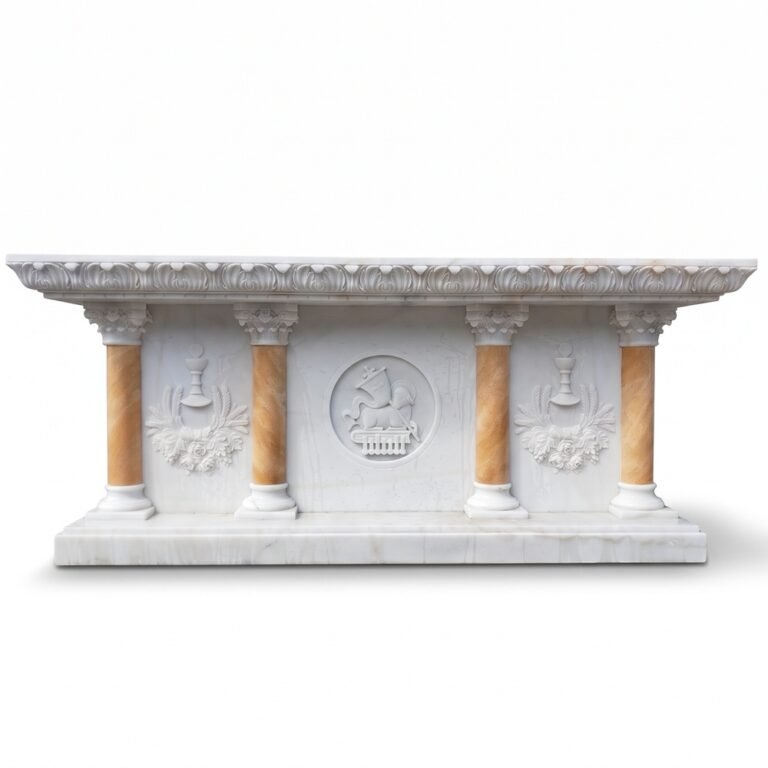
Altar table with Agnus Dei
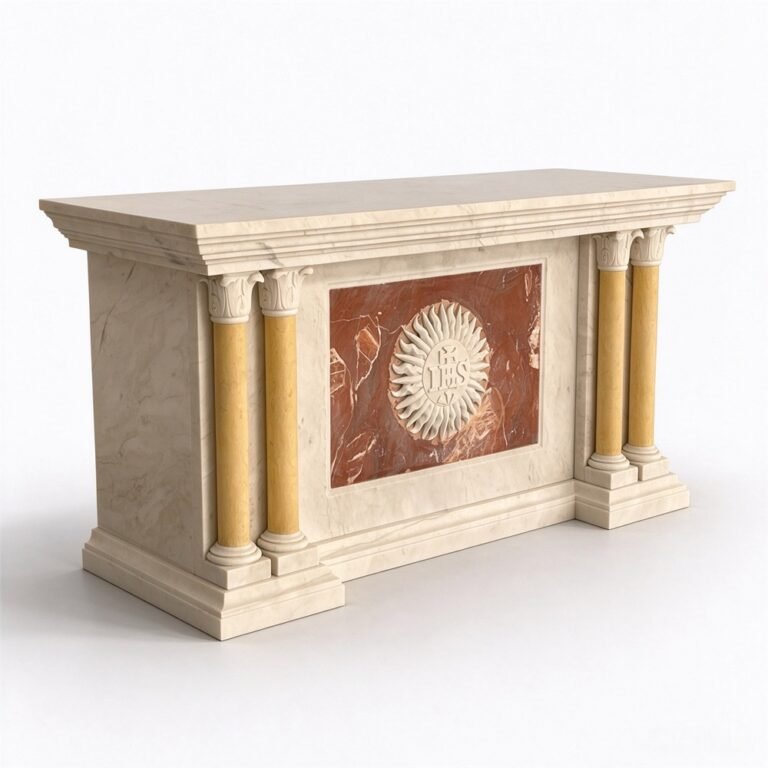
Marble Church Altar with IHS Relief Carving
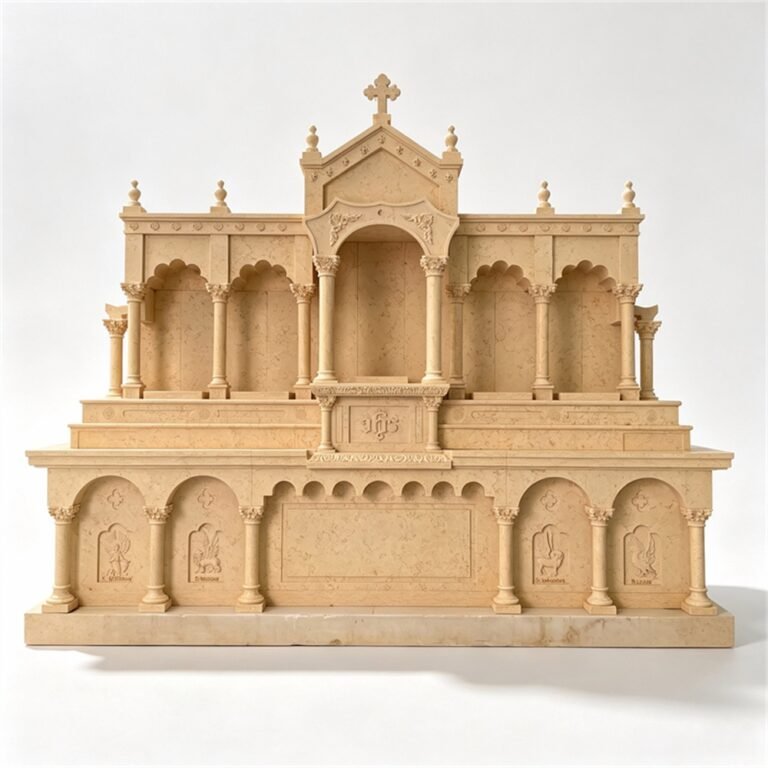
beige marble main altar
Scroll to Top

Ask For A Quick Quote

We will contact you within 8 hours, please pay attention to the email box or whatsapp. 

about message6 We only use the information provided above to contact you in relation to your inquiry. For further details, read our Privacy Policy.