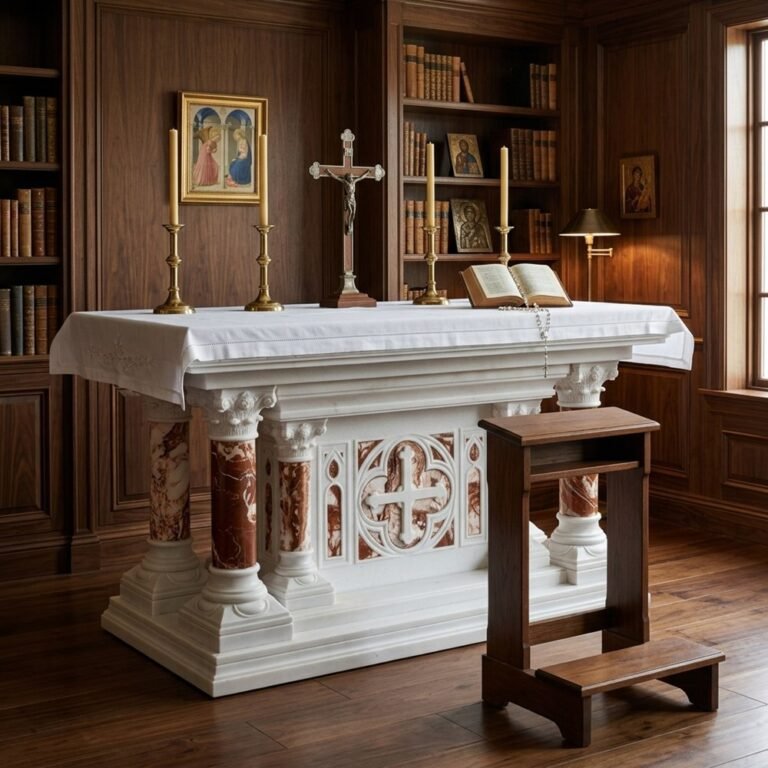
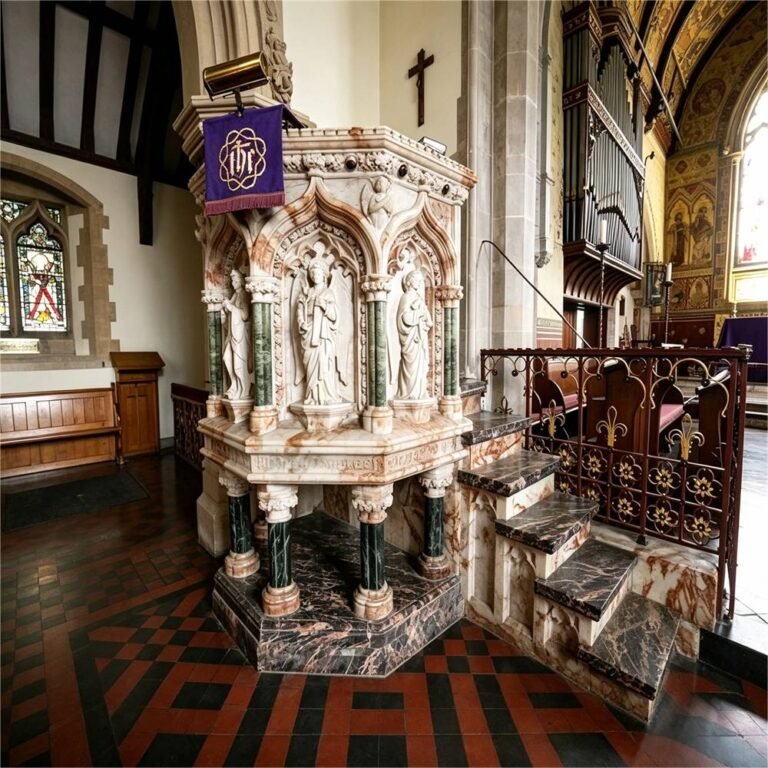
Statues are three-dimensional sacred images. The Seventh Ecumenical Council affirmed the veneration of holy images, often describing them as “windows to heaven”. When we pray before a statue of Jesus, we do not honor the wood, stone, or metal as an object in itself. Rather, the veneration passes to the one represented.
Whether you are just beginning to explore the Catholic faith, are a new convert, or have practiced for many years, you may have considered bringing a statue of Jesus into your home.If so, you may also be wondering: Where should I place a statue of Our Lord so that it is treated with proper reverence—not casually or carelessly?
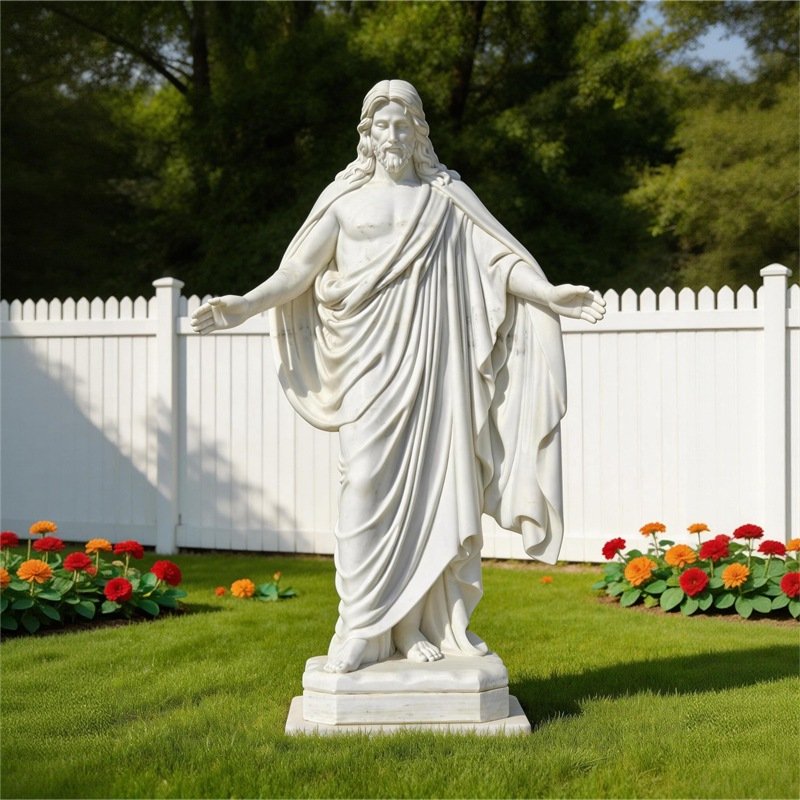
As a Catholic, and as someone who has worked with Catholic statuary for many years, I’d like to share a few practical ideas drawn from experience and from customers’ helpful feedback.
Places To Display A Statue Of Jesus
Indoors: In A Prayer Corner
Often, the best place is simply a spot in your home that is quiet, clean, and respectful—somewhere you can pray without distraction, and where the statue won’t be treated as ordinary decoration.
One of the most fitting choices is a dedicated prayer corner. In the earliest days of the Church, many Christians gathered in homes rather than grand basilicas.
Even after public churches were built, the idea of the “domestic church”—the family as a living center of faith—remained important. For this reason, many Catholics today still keep a small prayer corner at home.
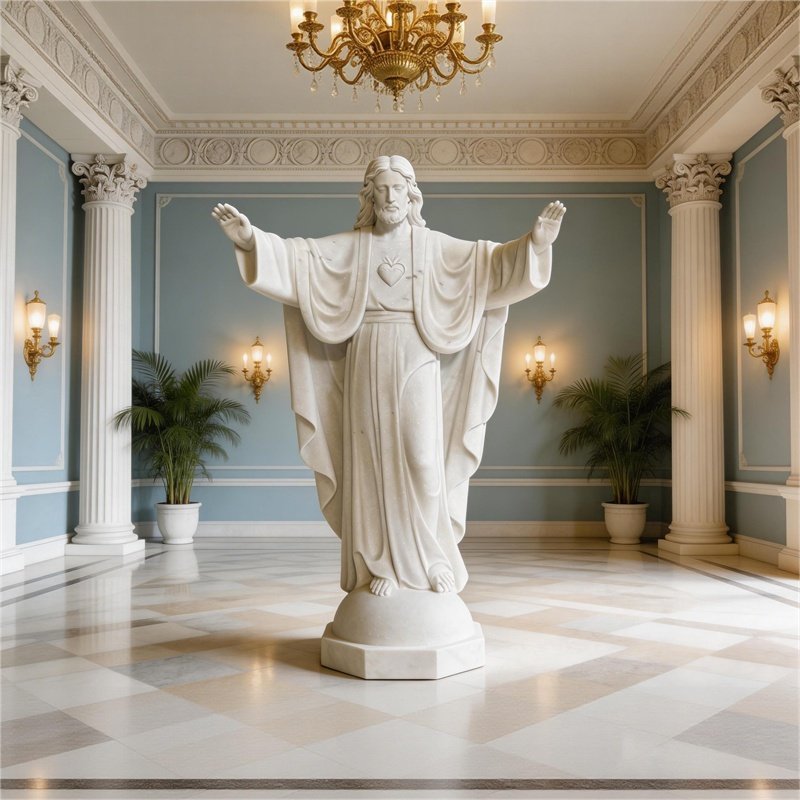
For me, my prayer corner is in the east corner of my study, so I place the statue there. It is a peaceful space where I can step away from noise and recollect my thoughts.
Each day, I go in, close the door, read Scripture before Our Lord, and pray quietly—letting the morning light remind me of the Resurrection and savoring those calm, holy moments.
Because I always believe this saying:
Besides a study, there are many other good places to set up a prayer corner and put statue of Jesus. These ideas come from my customers, and I’d like to share them with you here.
I hope they help you draw closer to Our Father, receive His grace, and find a lasting peace deep within your heart.
Here are a few indoor location ideas that many families find helpful:
•The study is a place for meditation and personal prayer, bringing inner healing and peace.
•The living room is where you lead short daily family prayers, regarding the home as a “domestic church”.
•The entryway serves as a reminder to entrust your day to the Lord and ask for God’s protection before leaving.
•The end of a hallway, set apart from daily clutter, is a small space where you pause and pray.
A few gentle guidelines:
•Choose a place that stays tidy and is not used as a catch-all surface for unrelated items.
•Avoid spots where the statue is likely to be bumped, moved often, or treated casually.
•If you like, add a small candle or lamp (used safely) to help create a prayerful atmosphere.
Outdoors: in a dignified garden or courtyard space
The Church recognizes and encourages the proper veneration of sacred iconography. Therefore, placing a statue of Jesus in a dignified and appropriate location within the home—including courtyards or gardens—serves both as a reminder for prayer and as a visible witness to faith.
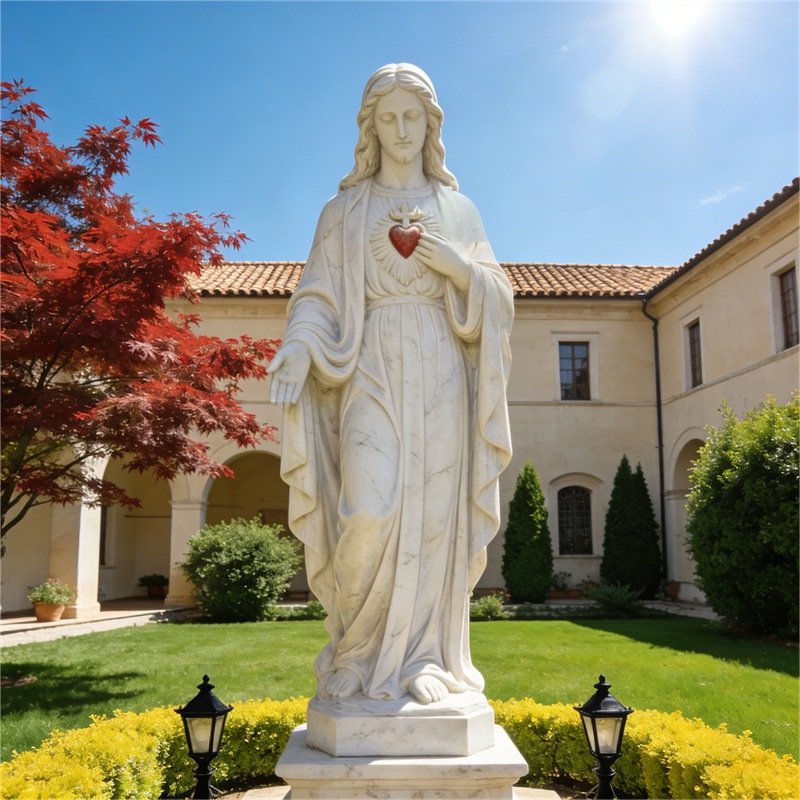
Some of my customers prefer placing the statue at the center of their courtyard or garden. This practice, while not a mandatory rule, carries profound symbolism: it highlights Jesus’ central role in family life while inviting family members and visitors to pause for reflection and devotional prayer.
Whether you place a statue of Jesus indoors or outdoors, the purpose is always the same truth: Our Lord dwells in our midst.
How to choose your Jesus’s statue?
Beautiful is the supreme principle.
God created us with senses, emotions, and habits, all of which are shaped by our surroundings. The Church understands this deeply, which is why Catholic worship is filled with tangible beauty—stained-glass windows, incense, candlelight, sacred music, and more—touching our hearts through the senses.
From this point on, choosing a sacred statue should follow the same principle. Whether it is the material or the craftsmanship, both should be considered with care.
Material: Marble & Bronze
Because Our Lord is eternal, I tend to avoid easily perishable materials for statues intended for long-term devotion.
As a Catholic and a dealer in Catholic statues, I often advise clients to choose high-quality natural marble and bronze for carving and casting statues. These materials combine durability with corrosion resistance, ensuring your statues stand the test of time.
Marble: a pure, pristine material
Marble is widely favored choice for religious statues due to its fine veins, workable hardness, and ease of carving, allowing sculptors to render delicate features and a sense of compassion with remarkable precision. When polished, marble can achieve a warm, subtly translucent surface that lends sacred figures a quiet, luminous presence.
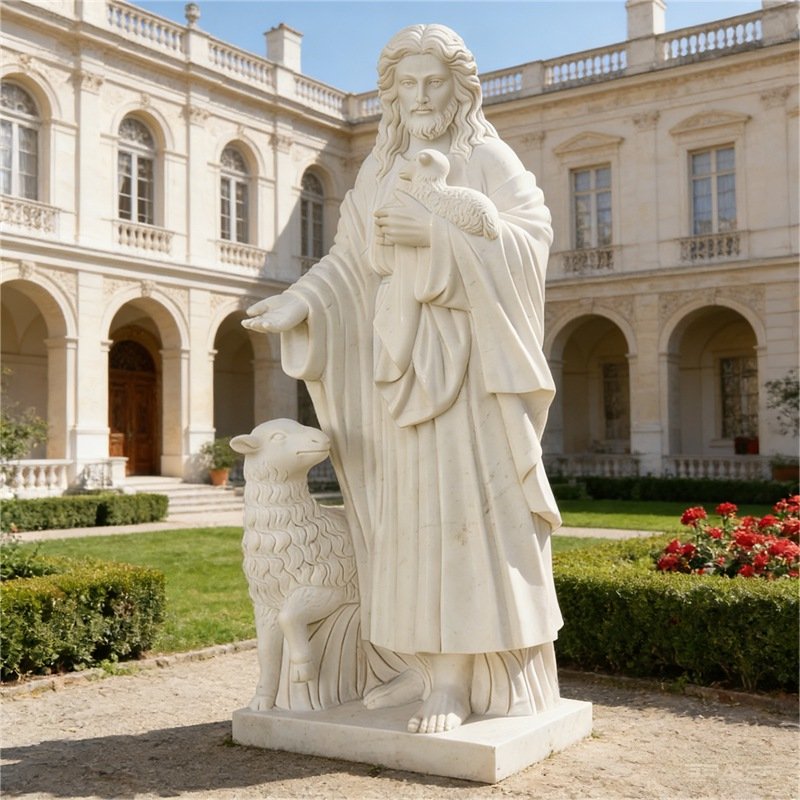
Symbolically, white marble embodies purity, sanctity, and eternity, aligning with faith’s pursuit of immortality and solemnity.
Bronze: a venerable , timeless material
Bronze combines strength, corrosion resistance, and enduring beauty, making it ideal for long-term installation in temples, churches, and other sacred spaces. Its naturally deep, rich tone conveys dignity and permanence, while patinas and other surface treatments can further heighten a sense of the sacred.
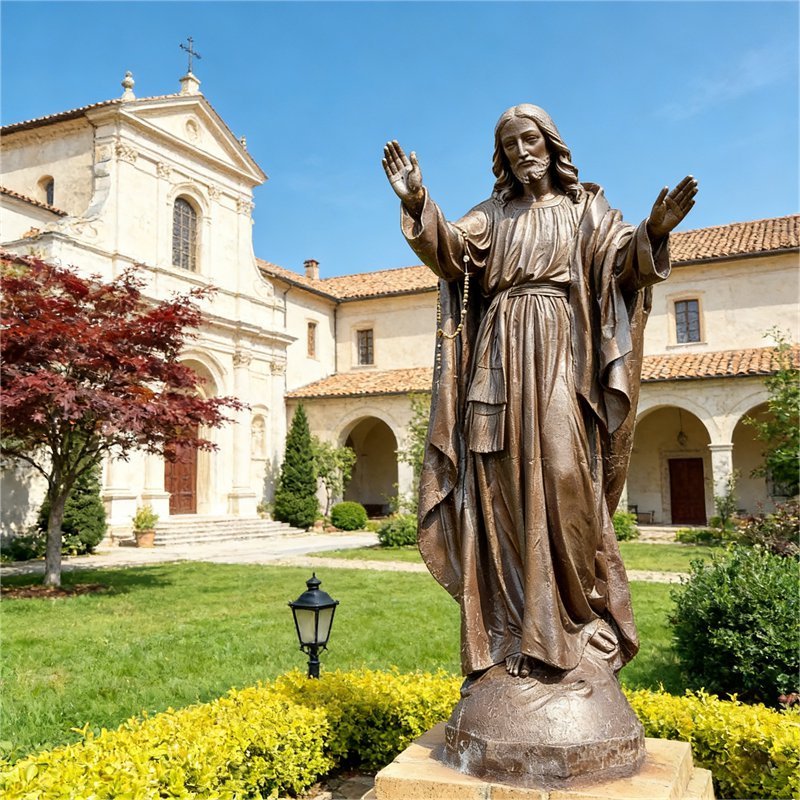
What’s more, with excellent resistance to cracking and deformation and low maintenance demands, bronze provides a compelling balance of durability, sanctity, and artistic expressiveness.
Craftsmanship: faithfulness to Catholic tradition
As a devout Catholic, I hold religious sculptures to the highest standards. I believe this work demands not only artistic skill, but also a living faith and a deep understanding of Catholic theology, tradition, and iconography.
Only with genuine reverence can an artist portray Christ with the mercy, dignity, and sense of divine presence that such images are meant to convey. I am grateful for the trust, appreciation, and recognition my clients have shown—a grace and reward bestowed upon me by the Lord.
Final Thoughts
Jesus’ statue is not merely an ornament. When placed with care and approached with faith, it can become a steady invitation to prayer—helping a home feel more like a “domestic church”,and helping the heart return to God throughout the day.
If you would like, I can also share practical guidance on size selection, pedestal/base options, placement height, outdoor installation, and cleaning/maintenance for marble and bronze.
I’d love to hear from you as well—please leave a comment to share your thoughts or your own experience of keeping a statue of Jesus at home.