When you open this blog, you might be planning a religious statue for your garden, grotto, courtyard, or another outdoor devotional space. Perhaps your statue of the Blessed Virgin Mary, Jesus, or St. Francis of Assisi is already on its way to your home. At this stage, many people feel excited but also a bit uncertain: How do I safely and properly install my large religious statue outdoors?
The short answer is this: Installing a large outdoor religious statue is not a small task.
To do it correctly, you first need to understand the material properties of your statue, then assess the site, and only after that decide on the base, foundation, anchoring, and lifting methods.
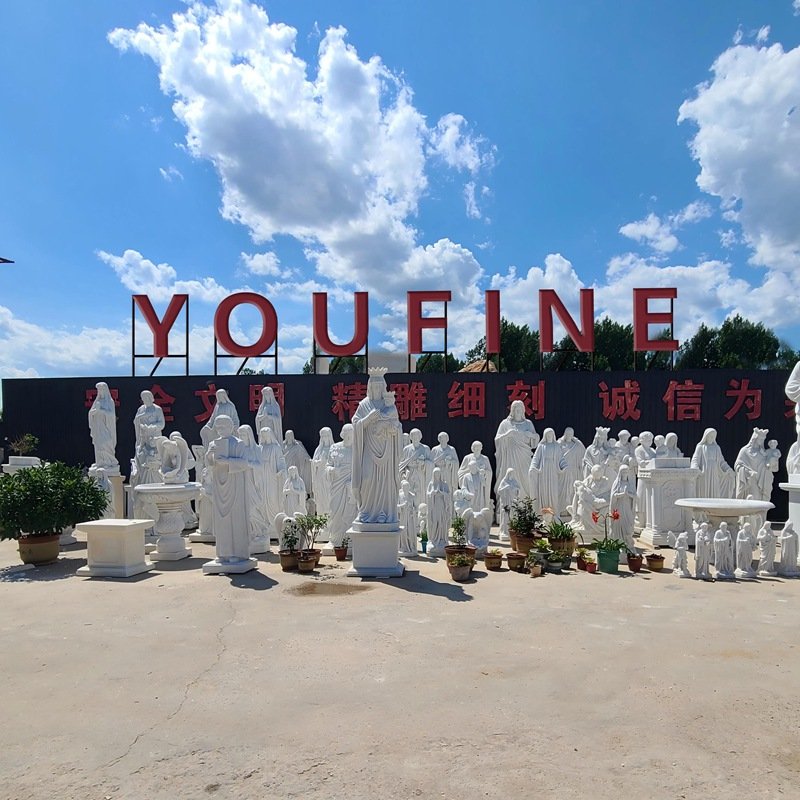
In most real-life projects, the best results come from aligning the statue material with the outdoor conditions, rather than treating installation as an afterthought.
| Key Question | Short Answer |
|---|---|
| What is the best material for a large outdoor religious statue? | Marble is usually the best choice for premium religious projects because of its sacred appearance, carving quality, and timeless beauty. |
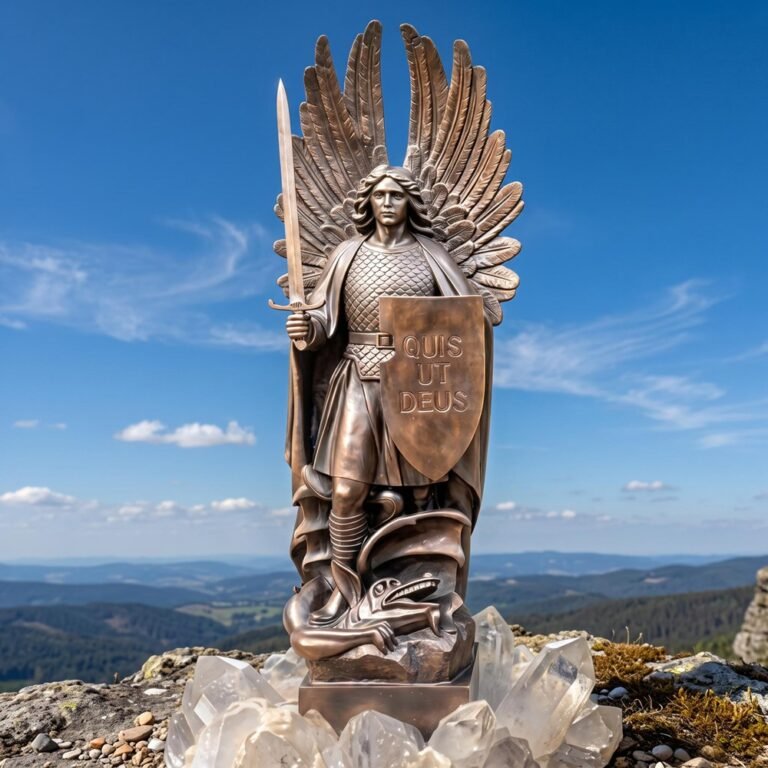
| What is the second-best material? | Bronze is the second-best choice because it suits all weather conditions, especially for larger or more exposed outdoor installations that need stronger structural performance. |
| Which statues are ideal for a Catholic garden? | Blessed Virgin Mary, Jesus,
St. Francis of Assisi, St. Fiacre of Breuil, St. Isidore, St. Maria de la Cabeza, St. Ansovinus, St. Kateri Tekakwitha, and St. Michael, etc. They are all regarded as patron saints of gardens and agriculture. |
| What tools do I need to install a large outdoor statue? |
Hard hats, safety cones and vests, gloves, steel-toe boots,high-visibility clothing, eye protection,hearing protection when needed |
| Where should the installation process start? | Based on the material of your statue, confirm the location. The site affects exposure, access, base design, drainage, foundation size, and long-term durability. |
| Why is foundation design so important? | A proper reinforced concrete footing or engineered base helps prevent tilting, rocking, cracking, settlement, and anchor failure. |
| How should the statue be fixed? | The anchoring system should match the material and structure, using methods such as stainless steel rods, bolts, epoxy-set anchors, embedded supports, or base plates. |
| What is the biggest installation risk? | Poor planning during lifting, anchoring, or site preparation can damage the statue or create long-term safety problems. |
| What happens after installation? | The statue should be cleaned, documented, inspected regularly, and maintained according to its material and outdoor exposure. |
Choose the Statue Material First
Before talking about foundations and anchor bolts, it makes sense to start with the statue itself. For most premium outdoor religious statue projects, marble is usually the first choice because of its sacred appearance, carving beauty, and long-term artistic value. Bronze is usually the second-best choice, especially for larger or more exposed locations where greater structural strength is needed.
Other materials can still be suitable for certain budgets, styles, or practical needs, but for high-value devotional projects, the order is often clear: marble first, bronze second.
Material Comparison for Outdoor Religious Statues
| Material | Overall Position | Main Advantages | Installation Considerations |
|---|---|---|---|
| Marble | Best overall choice | Timeless beauty, fine detail, strong devotional character | Heavy, fragile; requires careful handling and anchoring |
| Bronze | Second-best choice | Durable, classic look, suitable for all weather |
Heavy; may need supports; can be placed on pedestals |
| Brass | Traditional alternative | Warm tone, decorative appeal | |
| Concrete | Budget-friendly option | Cost-effective, flexible in form | Quality depends on reinforcement; moisture protection |
| Granite | High-durability option | Excellent weather resistance, very strong | Extremely heavy; requires precise preparation |
| Fiberglass | Lightweight option | Easy to transport, cost-effective | Less premium feel; consider wind resistance |
For most serious outdoor religious statue projects, the material choice is usually straightforward. Marble gives the highest sacred elegance and artistic value, while bronze is a strong premium alternative when weather exposure or structural demand is greater.
Why Marble Is Usually the Best Choice
Marble has long been seen as the most desirable material for premium religious statues. It has a softness, purity, and timeless beauty that few other materials can match. Many great sculptors, such as Michelangelo, used marble to express their understanding of the Blessed Virgin Mary, Jesus, and the saints.
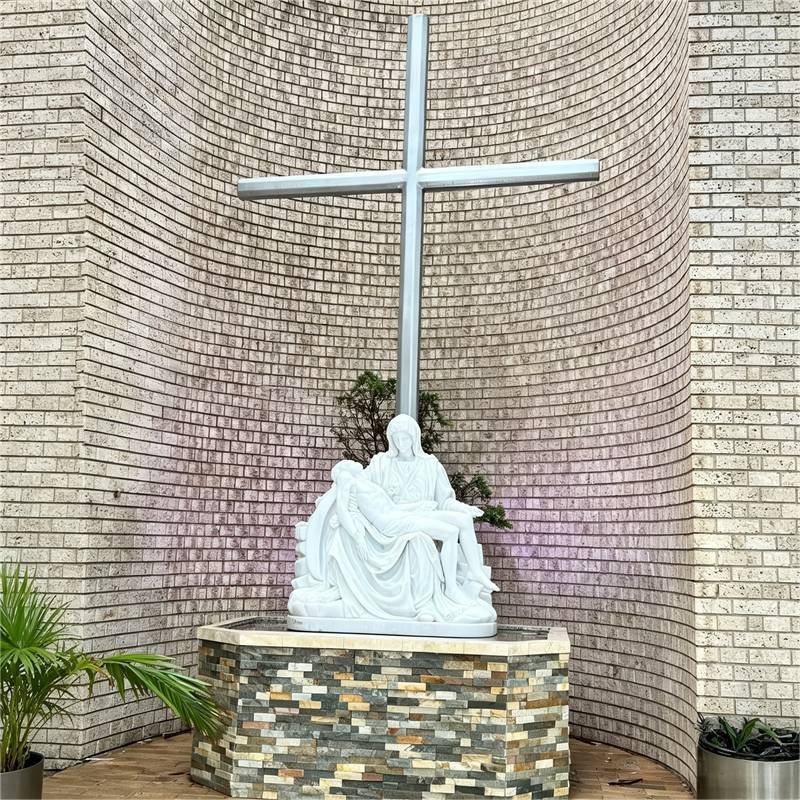
White marble especially carries a sense of purity and the divine. One of the most famous examples is Michelangelo’s Pietà, which beautifully brings together divine compassion and maternal tenderness.
There is also a simple traditional way to judge marble quality. Lightly tap a thin part of the stone with a small metal bar. A harder and denser stone often gives a clearer sound, while a dull sound may suggest weaker quality. Of course, this should be done carefully and only by someone experienced.
Why Bronze Is the Second-Best Choice
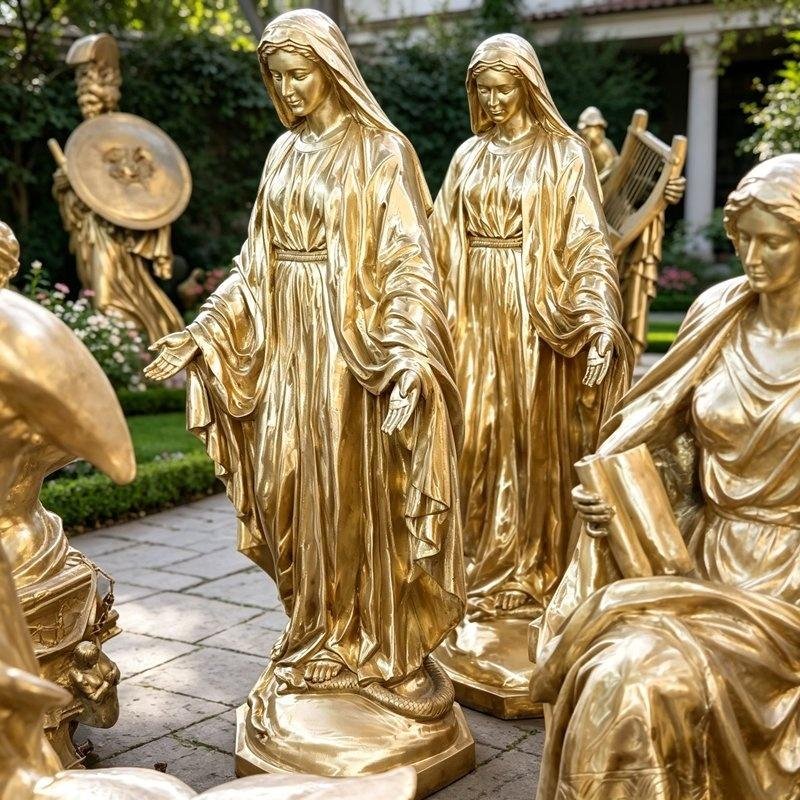
Bronze is an alloy of copper and tin, usually around 88%–90% copper and 10%–12% tin, though small amounts of other elements such as aluminum or silicon may also be added. Brass, by contrast, is an alloy of copper and zinc.
This difference matters. In outdoor use, bronze is generally harder, stronger, and more durable than brass, especially in changing climates. That is why bronze is more often chosen for large outdoor statues, memorial works, and exposed installations.
Brass still has its own appeal. It gives a warmer golden tone and can suit ceremonial or decorative religious settings very well. But if the main goal is long-term outdoor strength, bronze is usually the better material.
If you want a golden appearance but prefer the strength of bronze, there are finishing options. The statue can be treated with gilding or another surface finish to achieve a richer golden look without giving up the practical benefits of bronze.
Evaluate the Installation Site
Installation conditions determine statue size, pedestal design, foundation depth, drainage, lifting access, weather resistance and later maintenance.
Local weather and soil conditions directly affect the service life and stability of outdoor religious statues.
Statues need to resist rain, salt corrosion, strong wind, UV rays, snow and freeze-thaw damage.
Marble requires protection against acid and harsh weather; fiberglass needs reinforced fixing for stability.
The ground must safely bear the weight of the statue, pedestal, concrete base and temporary construction loads.
Check soil bearing capacity, ground stability, humidity, slope, frost areas and underground pipelines in advance.
For large statues or complex site conditions, consult a local engineer before foundation construction.
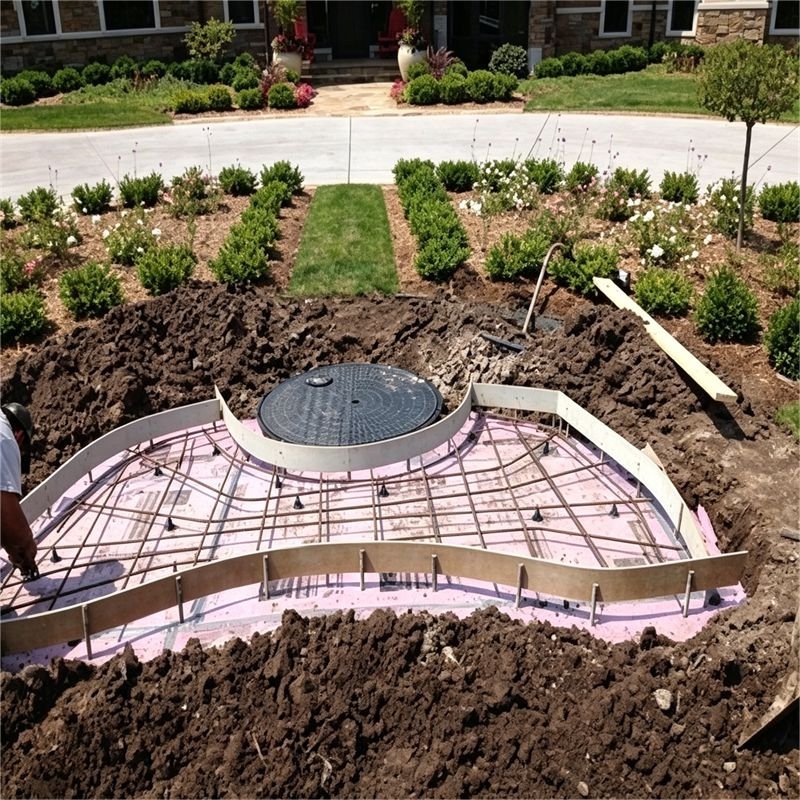
Foundation excavation must be below the local frost line (3.9–5.9 feet).
Frost depth varies by region, so all construction shall comply with local building codes.
How to Choose the Base and Foundation
Base
A good base for outdoor religious statues is important, even if it often goes unnoticed.
It should keep the statue stable, spread its weight safely into the ground, and allow easy access for cleaning.
The base can be made from different materials, such as a concrete footing with a steel plate, a stone or metal plinth for added height, or a core-drill installation that creates a clean look.
When choosing the base, consider the site type:
Lawns are easy for concrete footings。
Pavers can be removed or drilled through.
For concrete slabs, ensure they are thick enough to hold the statue.
Coastal sites need stainless steel to resist salt damage.
The space around the statue should be safe, with 900–1200 mm clear for main paths and at least 600 mm clear for low-traffic areas.
Foundation
Once the material and site are confirmed, a strong foundation must be designed to keep the statue level and secure.
The foundation’s size and depth depend on the statue’s height, weight, and local soil conditions.
It should extend beyond the base and may need to be below the frost line in cold areas.
Reinforced concrete is usually the best choice, and it’s important to allow enough curing time before placing the statue to ensure it is stable and secure.
Choose the Right Anchoring Method
Anchoring connects the statue to its base, and it needs to fit the statue’s material and structure.
In general:
- Marble needs careful drilling and controlled stress.
- Bronze often uses base plates or internal supports.
- Brass may use similar methods to bronze.
- Concrete may rely on embedded reinforcements.
- Granite may use pin anchoring like marble.
In addition, in wet or coastal areas, it’s important to use materials that don’t rust. Stainless steel is usually the best choice. For very harsh environments, 316 stainless steel is preferred.
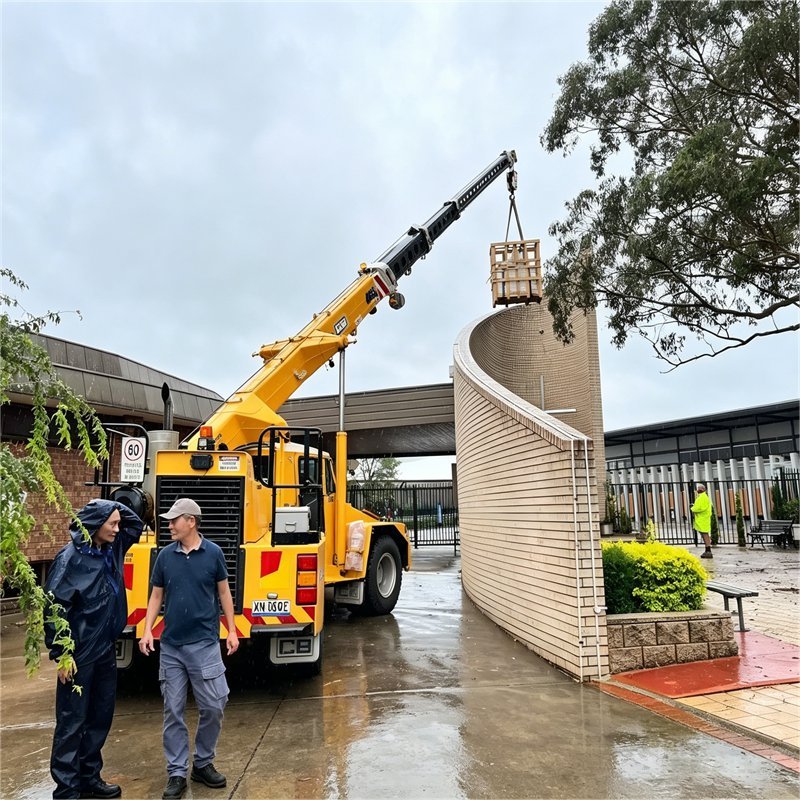
Lifting and Placement Process
Moving large outdoor religious statues requires careful advance planning.
Safety is The Top Priority
All workers must wear proper protective equipment: hard hats, work gloves, steel-toe boots, high-visibility clothing, and eye protection.
Respiratory protection is required for dusty work.
Assign a dedicated lifting supervisor to manage the whole process.
Use clear hand signals or two-way radios for communication, block off restricted zones, and keep unauthorized personnel away.
Secure and Inspect
Every lifting step should be confirmed in advance to maintain an organized, safe working environment.
Select lifting equipment according to the statue’s size, weight, material and site conditions, such as cranes, forklifts, hoists, padded lifting straps and temporary bracing.
Pay extra attention to fragile parts — especially on marble statues, including hands, halos and extended arms.Always use padded supports and lift slowly under close supervision.
Before permanent installation, place the statue temporarily on the pedestal for a test fit.
Complete the Fixing
Check anchor positioning, orientation, level balance and overall support.
Once positioned correctly, complete final installation:secure anchor rods and bolts, apply epoxy or grout, fasten all fixtures, remove temporary supports, and seal joints against moisture.
Tips: Do not over-tighten fixings on stone and marble statues, to avoid cracking or permanent damage.
Conclusion
I have showed the whole process of installing a large religious statue for you: Starting with material selection followed by site evaluation, and then finalizing the base, foundation, anchoring, lifting, and finishing plans. I hope your statue can be installed properly and remain stable and spiritually significant for centuries. If you have any questions about religious statues or their installation, please contact us for professional assistance.