Description
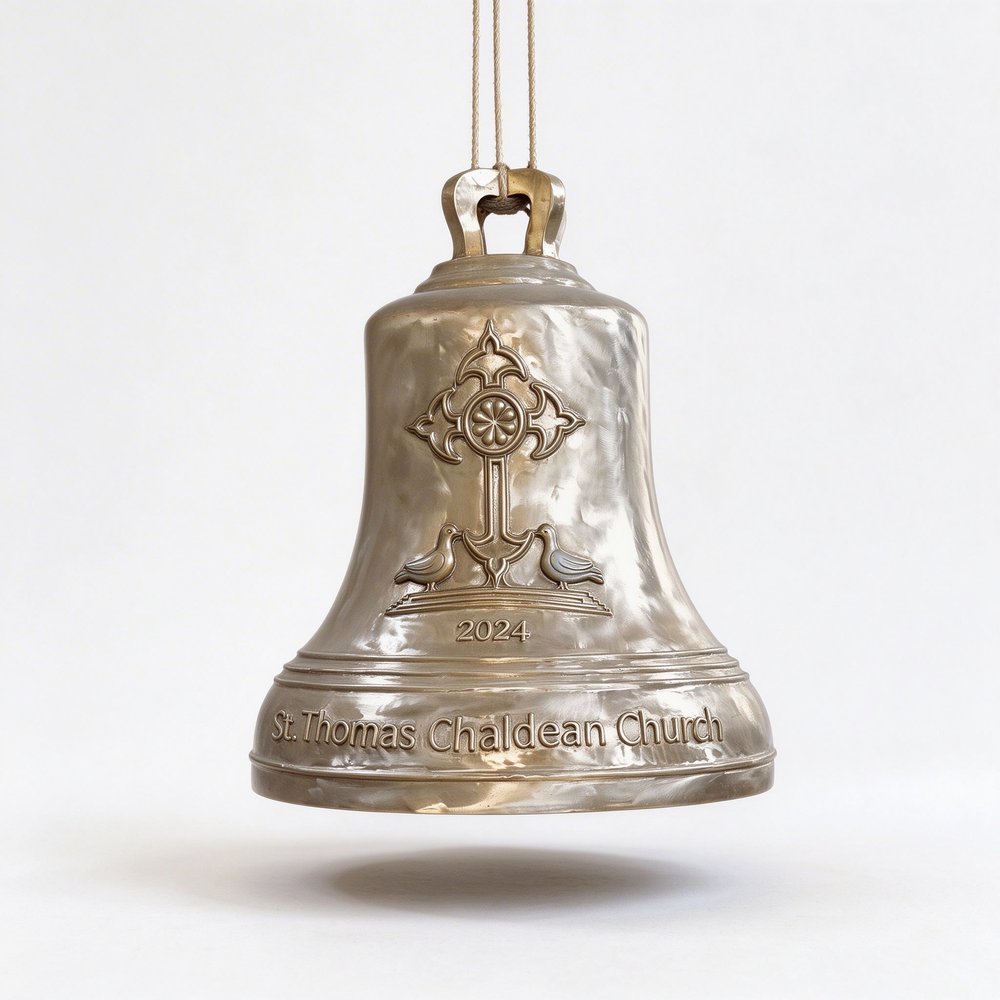
This bell is cast around two living signs: the cross at its center, and two doves standing at its foot. They are not added ornament — together they tell what a church bell is for.
The cross
The cross is not decoration on a church bell; it is the reason the bell exists at all.
From the earliest days of Christianity, bells were rung to call the faithful to prayer, to mark the hours of the divine office, and to announce the gospel across the village.
When a bell is cast, the cross is raised on its surface so that the voice of the bell and the sign of redemption travel out together into the world. On this bell, the cross takes the form of a quatrefoil — its arms ending in four-lobed curves, with a twelve-petal rosette blooming where they meet. That shape echoes the Eastern-rite and Syriac tradition of the cross as the tree of life, planted at the center of the garden; the twelve petals recall the twelve apostles, so that the whole relief reads as a small summary of the faith.
The dove
The dove carries two voices from Scripture at once.
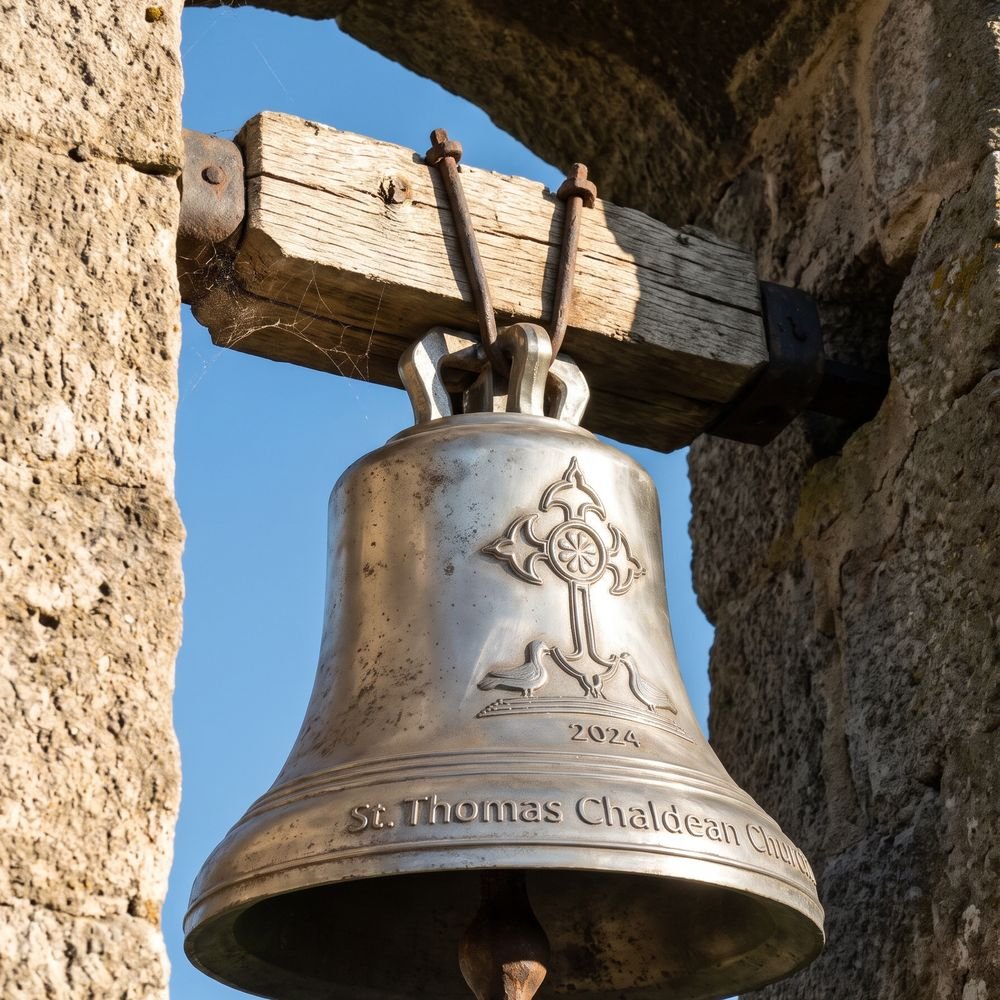
The first comes from the flood: Noah sent out a dove, and it returned with an olive leaf — the first living thing to come back to the ark, the first sign that the old world had ended and a covenant was beginning.
The second comes from the banks of the Jordan: when Christ was baptized, the Holy Spirit descended on him in the form of a dove.
On this bell the two doves stand at the foot of the cross, turned slightly inward, perched on a stepped plinth — not flying upward, but resting. That posture is deliberate. The Christian life is not only about rising; it is about sitting quietly beneath the cross and listening.
Lost-Wax Casting
We cast every bell by the lost-wax process, working the cross and dove reliefs by hand into the clay model before pouring — so the quatrefoil lobes, the rosette and the doves’ feathers come out sharp and clean, with no lost detail.
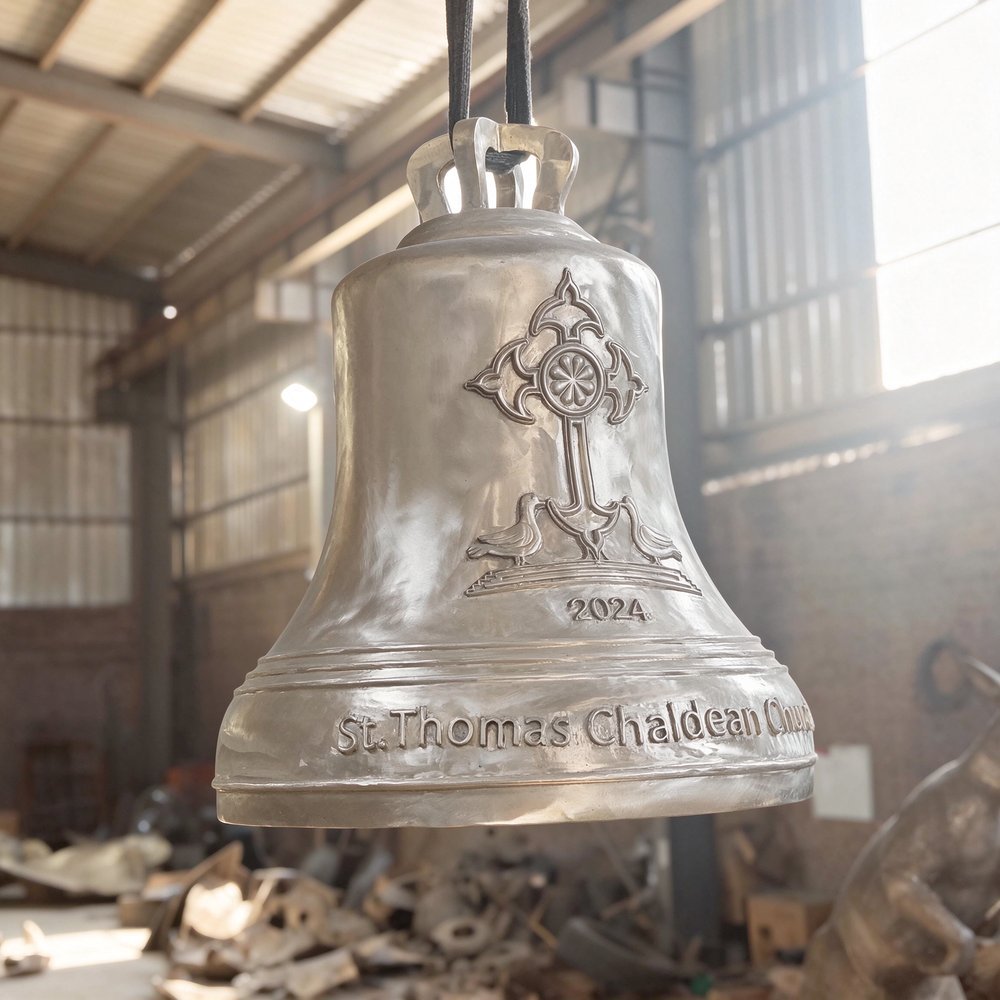
Each bell is cast as a single solid piece — no welded seams, no assembled sections. This one-piece construction is what gives the bell its deep, mellow, sustained tone; the bronze resonates as one continuous shell, so the sound carries clear and long.
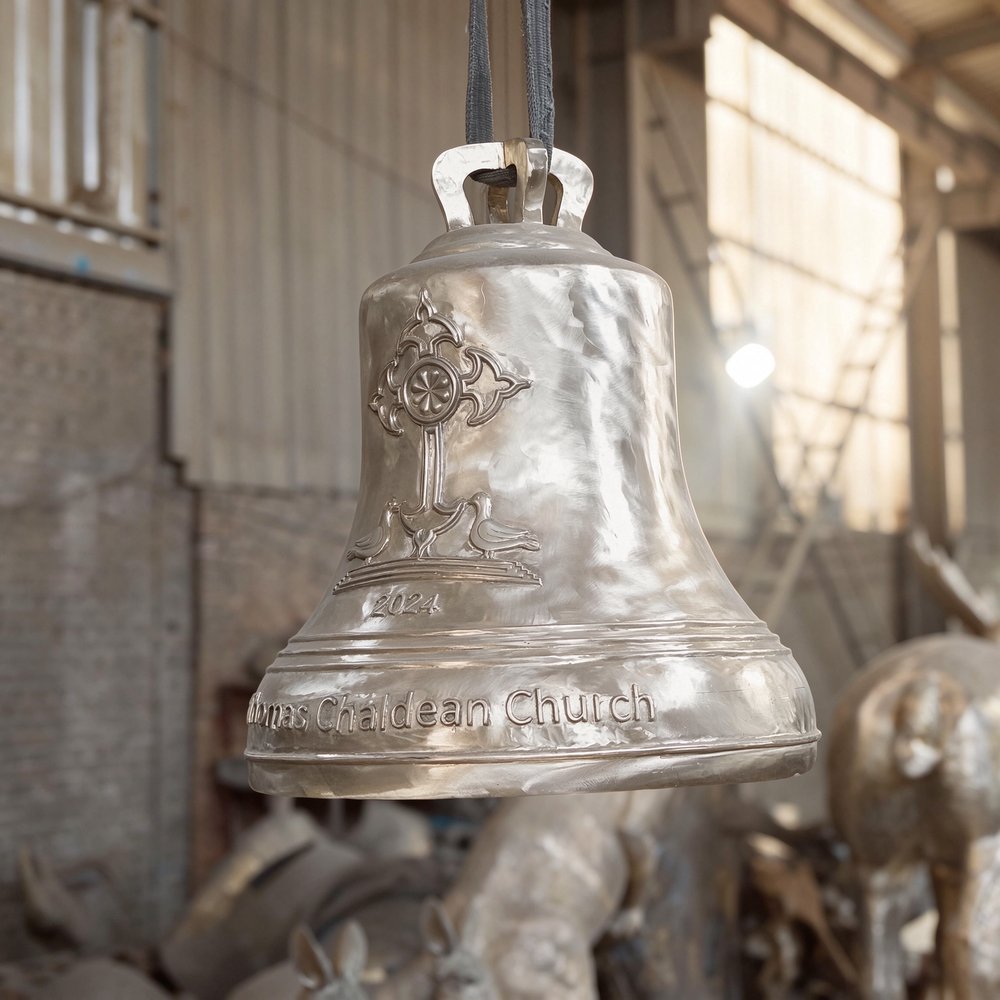
What’s more, the finish is optional. Besides this polished gilded silver-bronze shown here, we can finish the bell in a range of patinas — dark antique brown, weathered verdigris, or matte blackened bronze. We also recommend brass as an alternative material: brass is lighter in color, warmer in tone, and takes a bright polished finish beautifully.
Where It Sings
This church bell is built for tower installation. It suits a parish church, mission, school chapel or monastery. We also make smaller wall-mounted versions for shrines and grottos.
Order this custom bronze church bell with cross and doves — we will cast it to your size, inscription and finish, and send you a sound recording before it ships.