Description
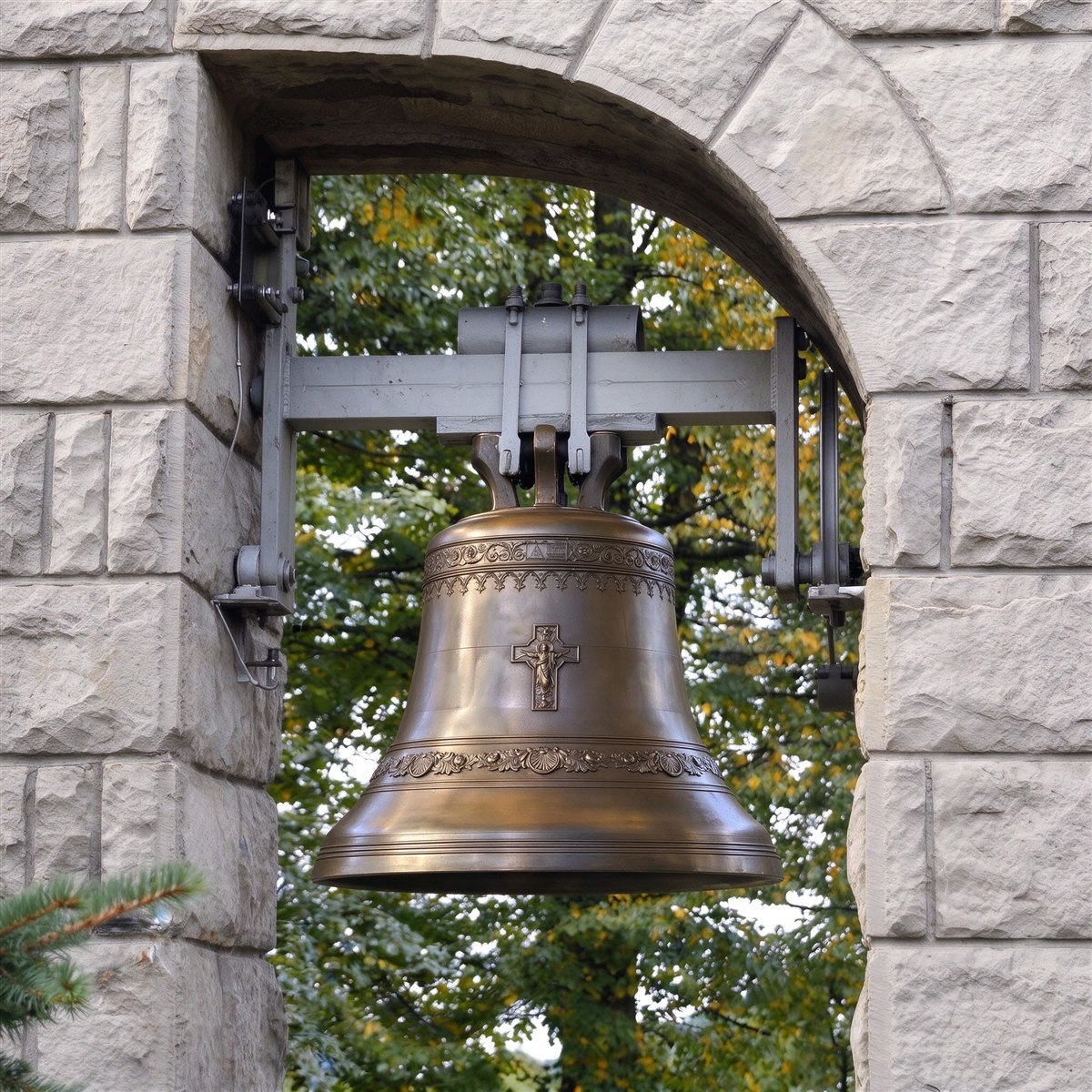
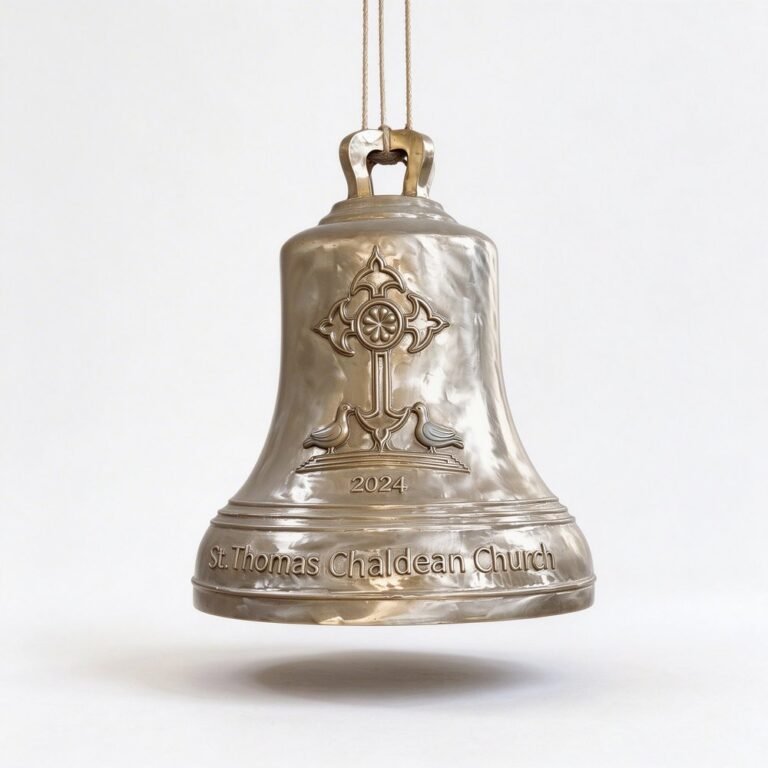
This large swinging church bell is cast in high-tin bell bronze and built for real tower service, not decorative display only. The single-piece shell is hand-chased after shake-out and finished with a warm aged-bronze patina, then sealed for year-round outdoor exposure.
Visible Relief and Architectural Details
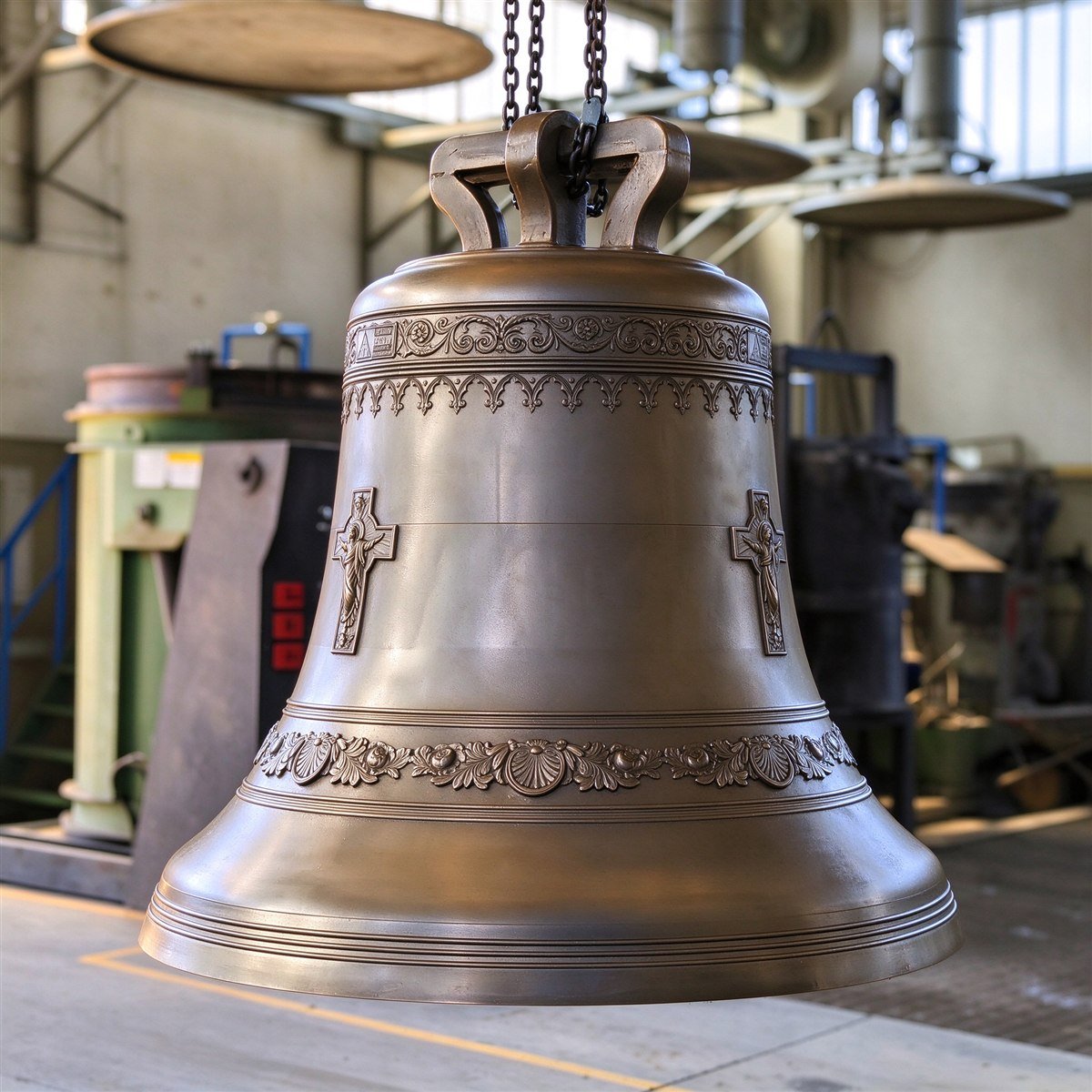
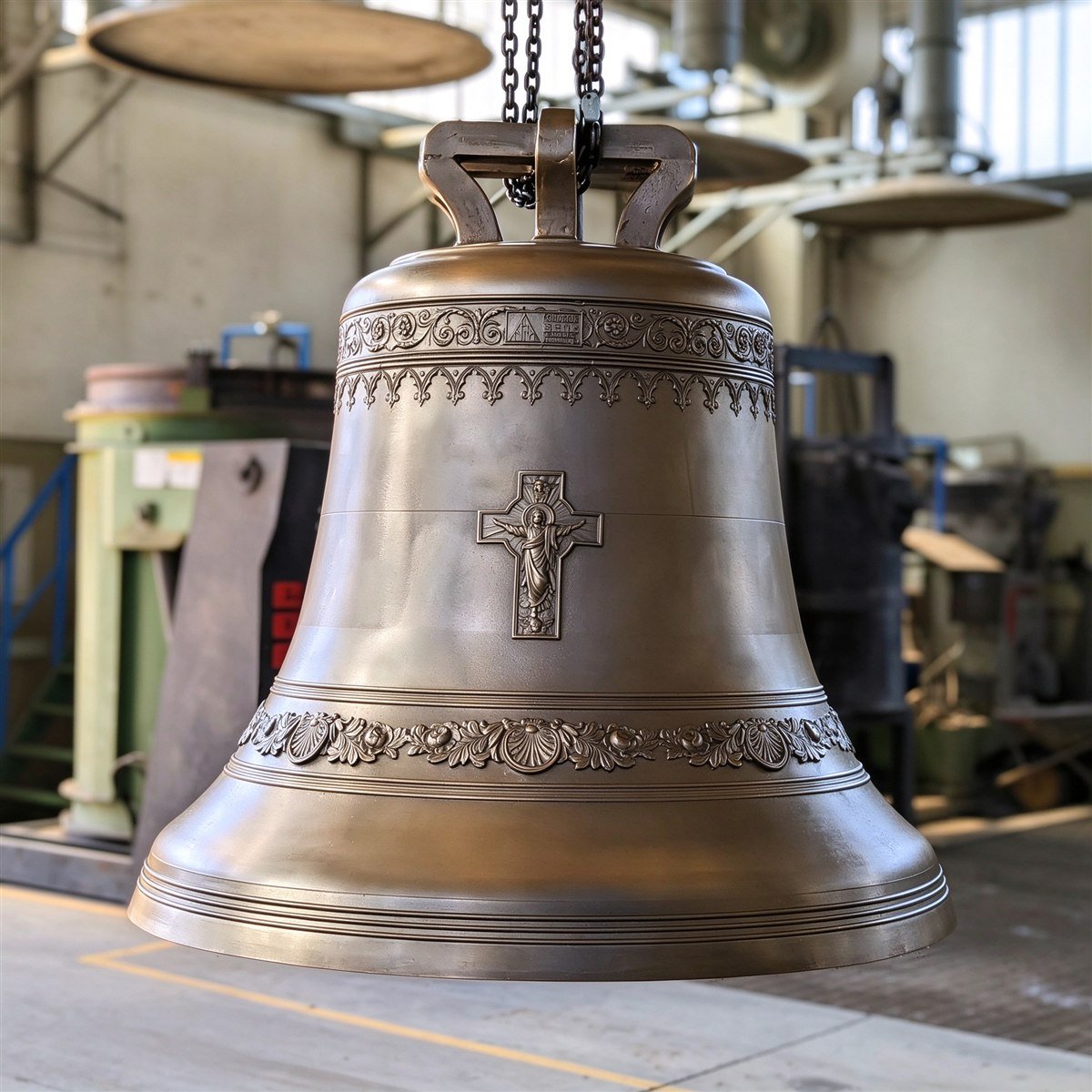
- Crucifix medallion: Christ on the cross with a radiant halo, with the foot of the cross resting on a small mound of foliage.
- Upper shoulder band: Continuous Romanesque vine scrolls with a small foundry cartouche, bordered by bead-and-reel mouldings.
- Lower skirt band: Alternating scallop shells and acanthus leaves.
- Mouth and lip: Three concentric turned mouldings give the rim a clean, heavy line.
- Crown: Cast-in yoke lug for the swinging axle. A forged steel headstock, lifting chain and mounting bolts are supplied for belfry rigging.
Standard mouth diameters range from 0.3 m to 2.5 m. Latin, Cyrillic and Greek inscriptions, patron-saint medallions, parish crests and family emblems can be chased into the blank band on request.
Our Advantage
Large swinging bells present a demanding solidification challenge. The heavy wall at the mouth receives the hardest impact and carries the strongest vibration, yet it can feed poorly as the metal cools. If the mold and feeding system are not carefully designed, hidden shrinkage cavities or porosity may form inside the rim and compromise service life and tone.
For large bells, we use an inverted, crown-down molding arrangement so the heavy mouth region sits nearest the risers:
- Crown down, mouth up: The bell lug is set into the bottom flask and the mouth face sits at the top. Mold layers are assembled upward and checked for roundness.
- Suspended core: The core armature is lowered into the cavity and sand-filled in place. Internal venting channels help gases escape during pouring.
- Stable core and top-flask unit: The combined arrangement holds the core position during pouring and reduces seam misalignment.
- Stepped rain-type gating: Horizontal runners and multiple ingates distribute metal through each mold layer, while risers around the mouth feed the thick rim region.
Benefits of the Method
- Directional feeding toward the risers at the heavy mouth region.
- Reduced risk of shrinkage cavities and porosity in the impact zone.
- Cleaner outer surfaces with less grinding and corrective work.
- More consistent tone from a sound, dense rim.
- Shorter production time for large custom bells by reducing chill fitting and rework.
Suitable Locations
This bronze church bell is designed for churches, chapels and sacred towers, including parish churches, cathedrals, monasteries, cemetery gates, memorial campaniles, school and university towers, and outdoor prayer gardens. The crucifix relief suits Catholic, Anglican, Orthodox and Protestant congregations.