The Stations of the Cross have always meant something deep to me.
They show us the suffering and sorrow of that final day — the road Jesus walked before the cross. Through each station, we glimpse a small part of what He bore for us. For me, and for every devoted Christian, the Stations are a pilgrimage. A reminder of what it means to carry our own cross toward heaven. A spiritual textbook that teaches us how to live in peace on this earth.
When I was at our YouFine Factory, shooting fourteen marble-carved Stations of the Cross for one of our clients.
Camera in hand, I moved slowly from one station to the next.
Then something shifted.
The workshop fell silent. Stone dust hung in the air. Cool light spilled across the sacred figures.
And in that stillness — I was no longer in China.
I was back on that street in Jerusalem where I had once walked on March 29, 2024. Good Friday.
The wind was cool and restless as I passed through the Lion Gate. Before me, crowds lined both sides of the street in quiet reverence. A rush of emotion swept over me — something between awe and recognition — as if my heart whispered: This is where I was meant to be.
I joined the stream of worshippers and walked the Way of the Cross, the words of Matthew 27 rising in my memory, my steps slow and deliberate. I tried, in my small and imperfect way, to imagine what Jesus felt. What He carried. What He endured.
From that day forward, I understood — truly understood — why the Stations of the Cross hold such profound importance in the Catholic faith.
And standing in that factory, looking at fourteen scenes of the Passion rendered in white marble with breathtaking care, I understood something else: this is exactly why art exists. To carry memory. To close distance. To make the ancient feel present — and the sacred, touchable.
What Are the Stations of the Cross?
Simply put, the Stations of the Cross are a narration of the sorrowful path Jesus walked before His crucifixion. Also known as the Via Dolorosa — the Way of Sorrows — they are a series of 14 stations depicting His suffering on the day of His crucifixion, each accompanied by prayers and reflections.
Along a designated path, 14 station are arranged in numbered order. Worshippers move from station to station — individually or in procession — pausing to pray and meditate at each one.
These devotions are most common during Lent, especially on Good Friday. The practice involves standing, kneeling, and genuflection — physical acts woven together with the Christian themes of repentance and mortification of the flesh.
These are not simply scenes of pain. Each station is a doorway. Step through it, and you find grace.
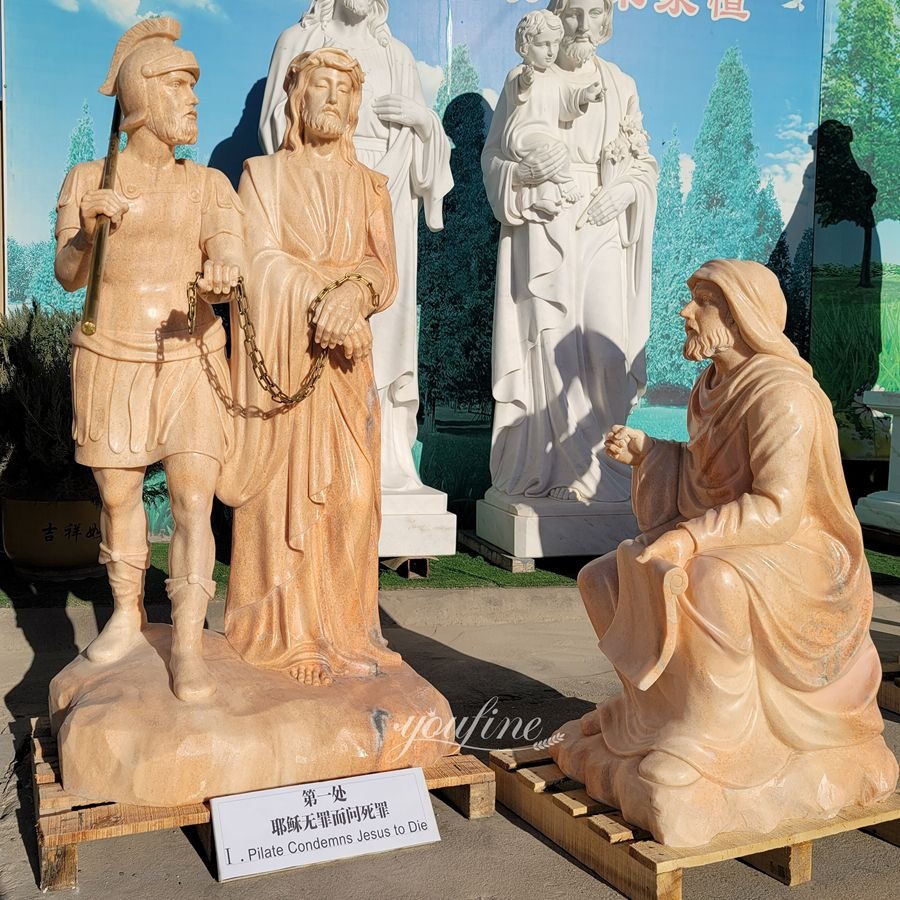
Station 1 — Pilate Condemns Jesus to Die
Jesus stood before Pilate, hands bound, wearing a crown of thorns. He accepted the unjust verdict in silence.
That silence was not weakness. It was the most profound act of love in human history — a willingness to become the scapegoat for every sin ever committed. Our salvation began here, in that courtroom, with that silence.
Jesus endured injustice so that we might learn to respond to hatred with love.
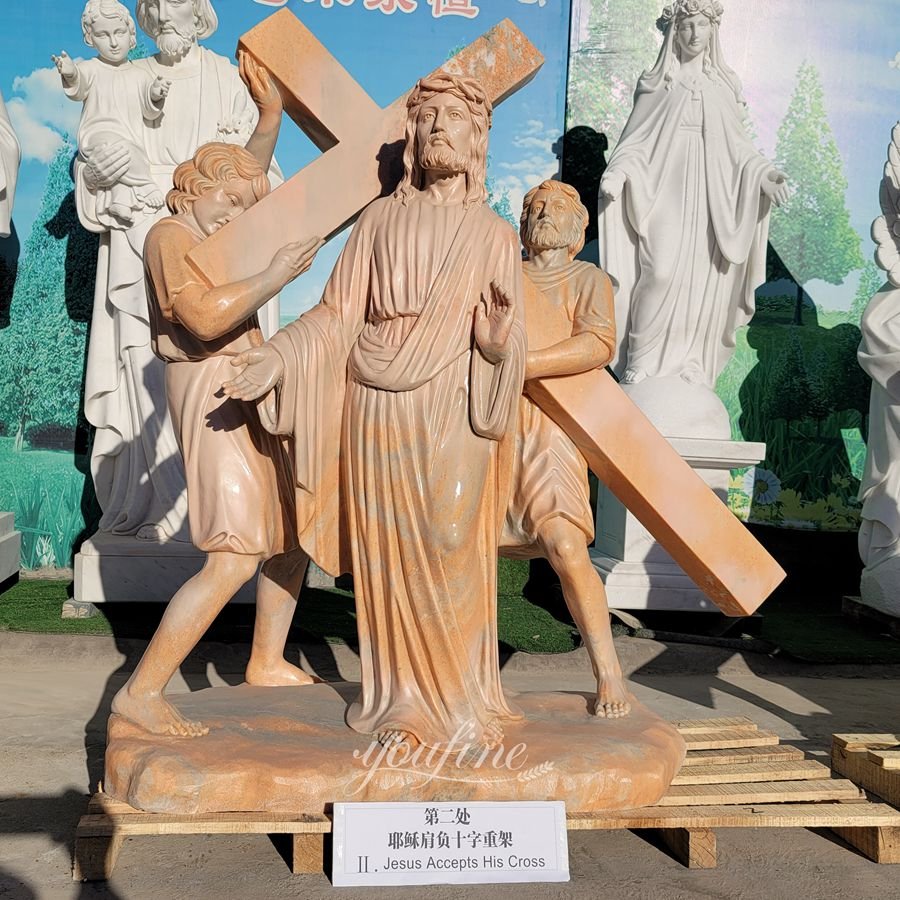
Station 2 — Jesus Accepts His Cross
Forced to carry the cross to Golgotha, Jesus opened His arms and looked up to the sky. Mocked. Persecuted. And yet still praying: “Father, forgive them, for they do not know what they are doing.”
In daily life, forgiveness is hard. It costs something. But when we remember that Jesus accepted His cross without bitterness — can we not find, in our own small struggles, a little more humility?
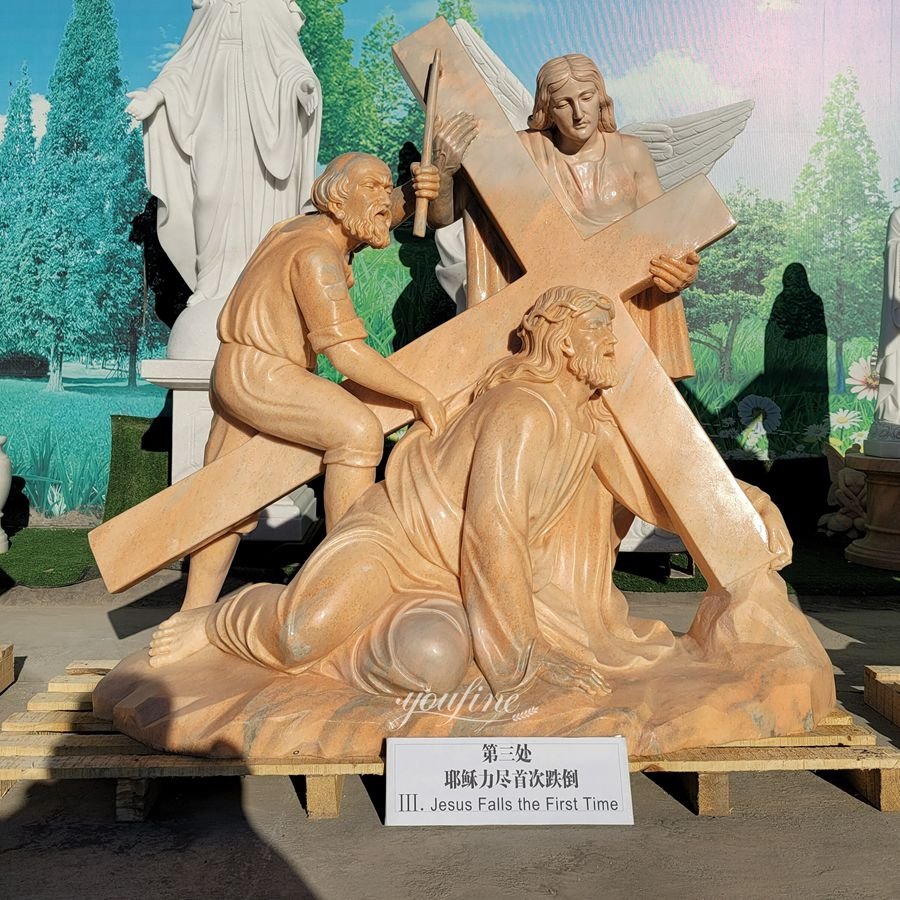
Station 3 — Jesus Falls the First Time
The crown of thorns cut into His head. The weight of the cross brought Him to the ground.
Seeing Jesus lying on that road — I burst into tears every time. How fortunate we are, to be freed from the burden of sin because of what He bore.
Station 4 — Jesus Meets His Afflicted Mother
This station always makes my eyes wet.
I think of my own mother. Socially, I am an adult. But before my mother, I am still — and always will be — her child. When I face injustice, when I am mocked or deceived, I hold back my tears in front of the world. But the moment I see my mother’s face, the walls come down.
For Jesus, the soldiers mocked Him. The crowd abandoned Him. And yet — His mother was still there. Reaching out her hand. Weeping for Him.
This station speaks a quiet, unshakeable truth:
Though the whole world betrays you, your mother remains — waiting for you to rise again.
Mary’s grief here is not despair. It is love that refuses to look away. It is obedience and humility to God, even when obedience breaks your heart.

Station 5 — Simon Helps Jesus Carry the Cross
Simon of Cyrene was pushed by soldiers into service. He did not volunteer. He was pulled in.
And yet — he became part of salvation.
On the road to redemption, we are all sometimes Simon. Reluctant. Uncertain. But called nonetheless. The question is whether we will carry the cross or drop it.

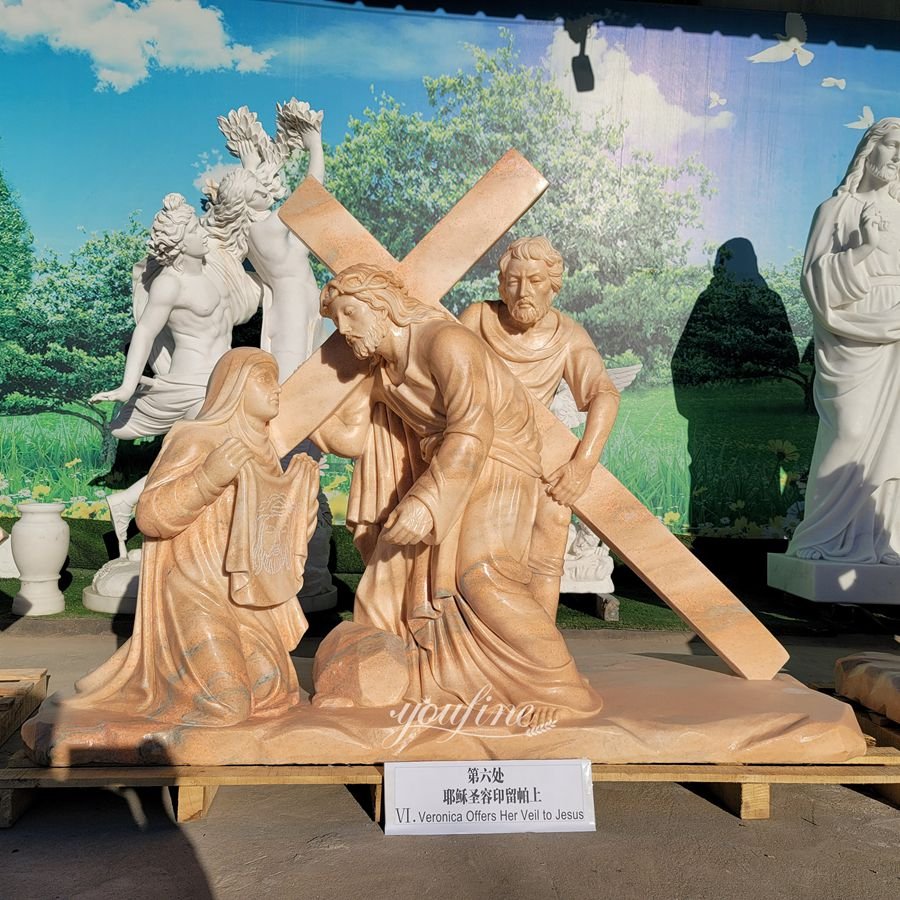
Station 6 — Veronica Offers Her Veil to Jesus
Veronica stepped forward from the crowd and wiped the sweat from Jesus’ face. A small act. A quiet act.
When she took back the veil, the holy face of Jesus was miraculously imprinted on its surface.
As long as we have a pious heart, even the smallest action can be loved by God. We do not need grand gestures. We need honest ones.
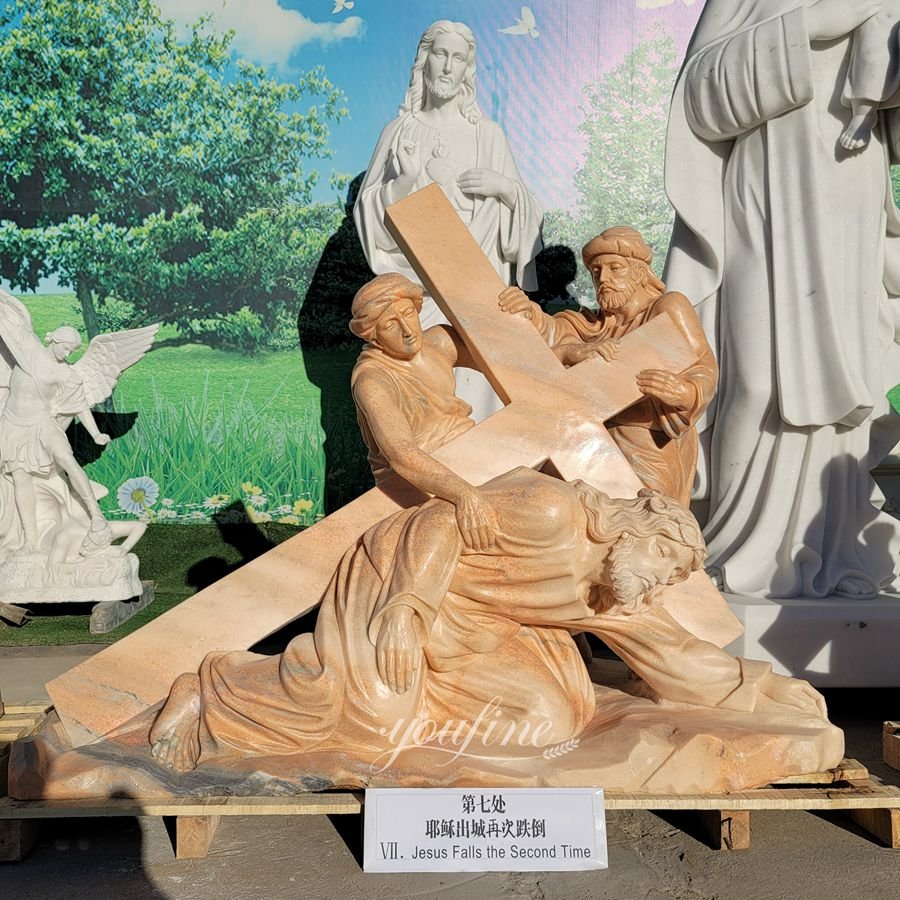
Station 7 — Jesus Falls the Second Time
He fell again. After everything — the scourging, the thorns, the weight of the wood — He fell a second time.
But He rose again.
This station is for everyone who has failed more than once. Who has gotten up, tried again, and fallen again. The path of faith allows for falling. It never demands perfection. It only asks that we never give up.
Station 8 — Jesus Speaks to the Women of Jerusalem
The women wept for Jesus as He passed. And He turned to them and said: “Daughters of Jerusalem, do not weep for me; weep for yourselves and for your children.”
Even in His own agony, He was thinking of others.
When we pray, this station reminds us: repent for our own sins first. Pray for the souls of others. Do not make our devotion a performance — make it a reckoning.

Station 9 — Jesus Falls the Third Time
Bruised. Exhausted. He fell on the stone a third time.
And this is the station that undoes me most quietly. Because Christ’s fall was not failure. It was love — a love that descends to the lowest point so that it can lift us from ours. When our souls resonate with this fall, that is when His love is truly with us.

Station 10 — Jesus Is Stripped of His Garments
Soldiers stripped Him of His clothes. He was left with nothing.
And yet — in that nakedness, He accepted all the sins and ugliness of mankind. Every shame. Every secret. Every wound we have ever tried to hide.
He took it all.

Station 11 — Jesus Is Nailed to the Cross
Iron nails through His wrists. Through His ankles. Fixed to rough wood.
Whenever I think of this station, I cry and repent. He shed His blood so that we could be justified freely. And our response — the only worthy response — is to offer our own lives as a living sacrifice.

Station 12 — Jesus Dies Upon the Cross
“It is finished.” — John 19:30
Our sins were so heavy that only His death could pay for them. He obeyed completely. He gave His soul entirely into God’s hands. And then He was gone.
We should bow before this station in awe. In gratitude. In silence.

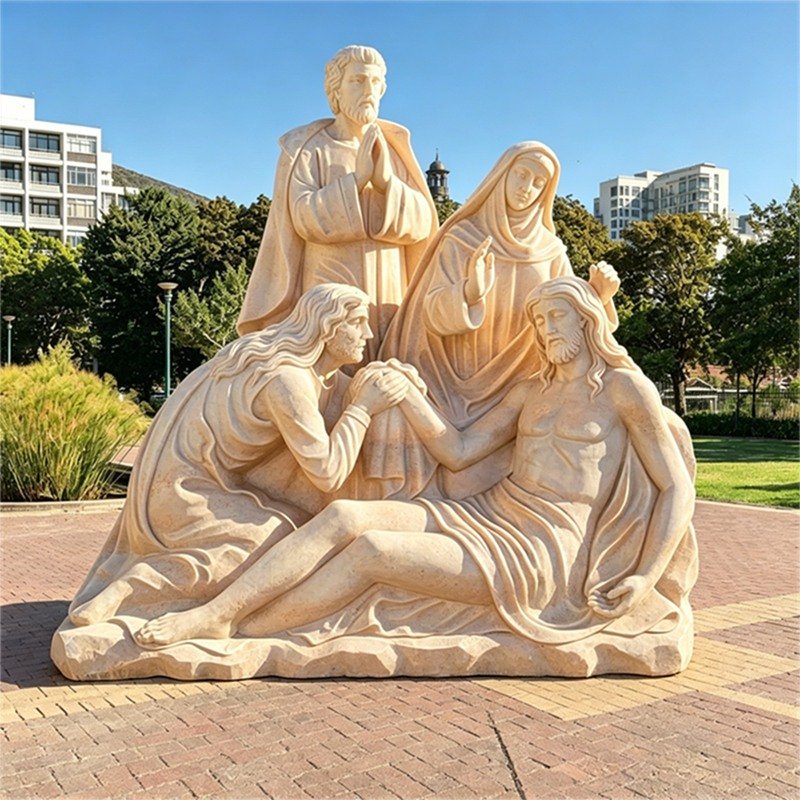
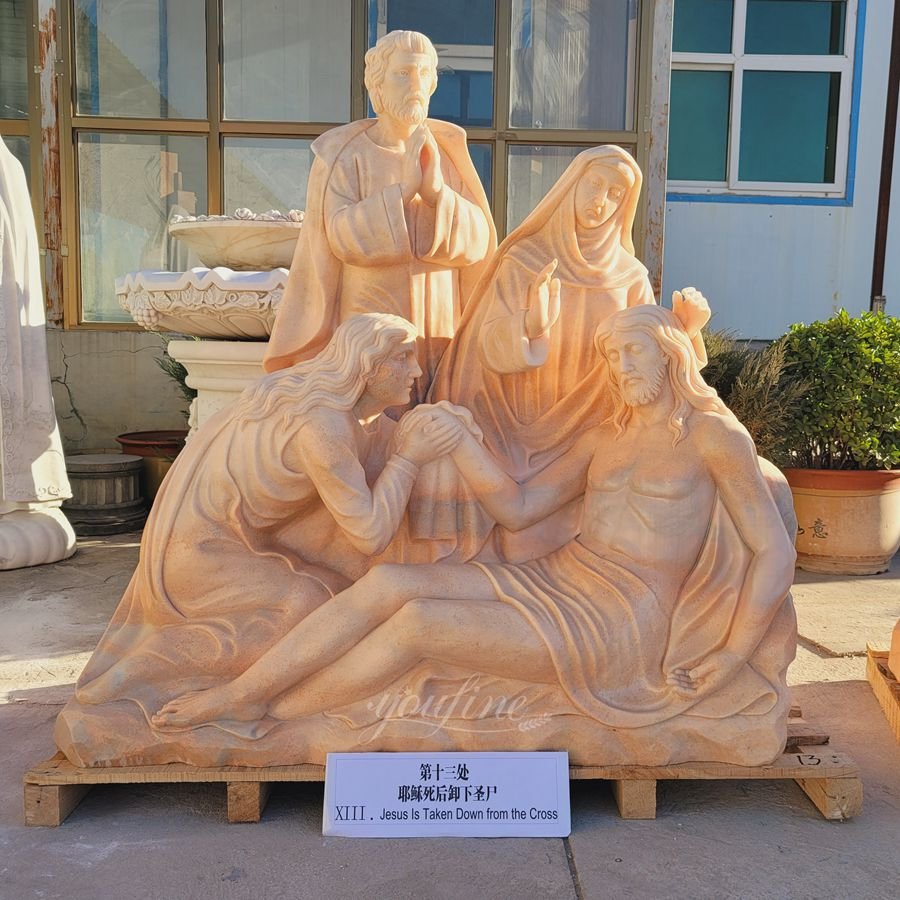
Station 13 — Jesus Is Taken Down from the Cross
Honestly, when I came to this station, I felt an ache in my own body.
His body — limp, broken — laid into His mother’s arms. I felt something close to suffocation. That particular exhaustion when you have given everything, and there is nothing left to give.
And what humbled me most: what we suffer in our lives is not even a fraction of what He bore for us. By imagining — even imperfectly — the depth of His sacrifice, my veneration of Jesus deepened in a way no sermon had ever quite achieved.
This is the power of the Stations of the Cross. It does not ask you to understand theologically. It asks you to feel.
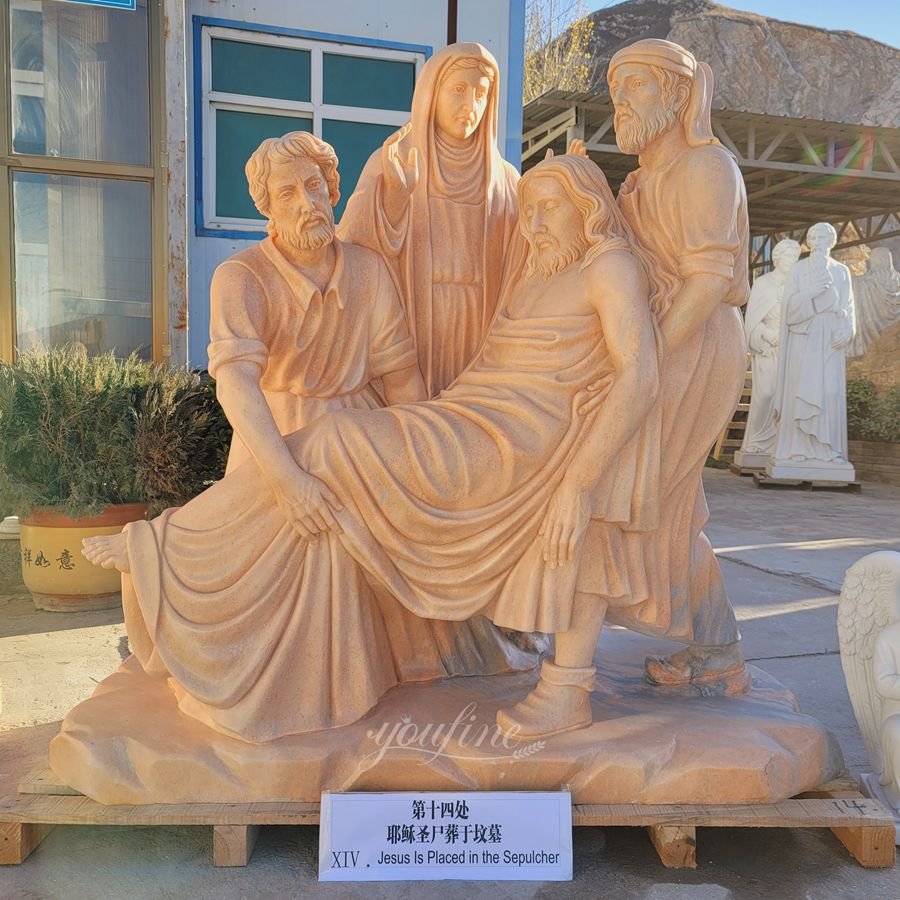
Station 14 — Jesus Is Placed in the Tomb
His body was wrapped in a shroud. Placed in a tomb. A great stone rolled across the entrance.
Silence.
But we who know the rest of the story — we know that silence was not the end. It was the pause before the greatest morning in human history.
How Do People Order These Sculptures?
Words can only take you so far. So let me show you some cases from my clients.
Why Do People Order a Complete Set?
One of our clients — a Catholic church in the United States — commissioned a full set of fourteen Stations of the Cross from YouFine, carved in white marble. Each figure was custom-sized to fit the proportions of their sanctuary walls. Mounted in sequence along the nave, the complete set created a permanent Via Dolorosa — so that worshippers could walk the full journey of the Passion without ever leaving the building.
When the installation was complete, the pastor wrote to us:
“Our congregation stood in silence for a long time after the final station was placed. Several people were in tears. These are not decorations. They are presences.”
That word stayed with me.
Presences. Not objects. Not art pieces. Presences.
And that is exactly the answer to the question.
When all fourteen are present — as I experienced in Jerusalem, beginning at Pilate’s courtroom and walking, step by step, all the way to the tomb — something happens that no single sculpture can achieve alone. The space becomes a road. The church becomes Jerusalem. The viewer becomes a pilgrim.
That is what YouFine’s craftsmen carve into every figure — not just anatomical detail, but emotional weight.
The grief in Mary’s hands. The exhaustion in Jesus’ posture. The stillness of the tomb.
Each sculpture is finished by hand, reviewed for theological accuracy, and shipped with the care that sacred objects deserve. Because these are not products leaving a factory.
They are presences, finding their way home.