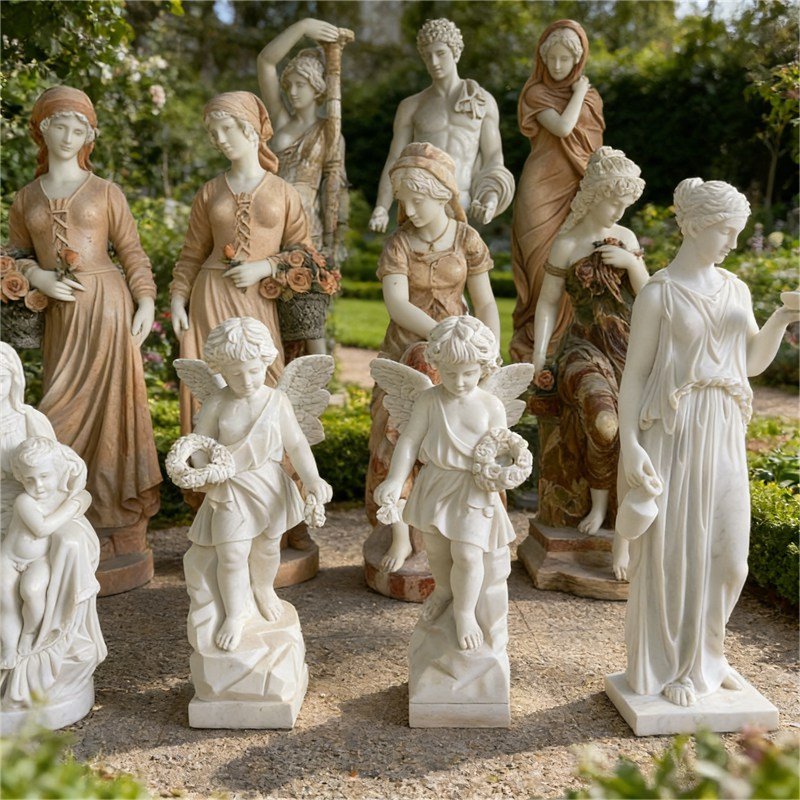
From the idealised figures of ancient Greece to the masterworks of the Renaissance, marble has remained one of the most preferred materials in the area of sculpture. Its appeal lies in its beauty and its balance of carvability, durability, polishability and timeless prestige.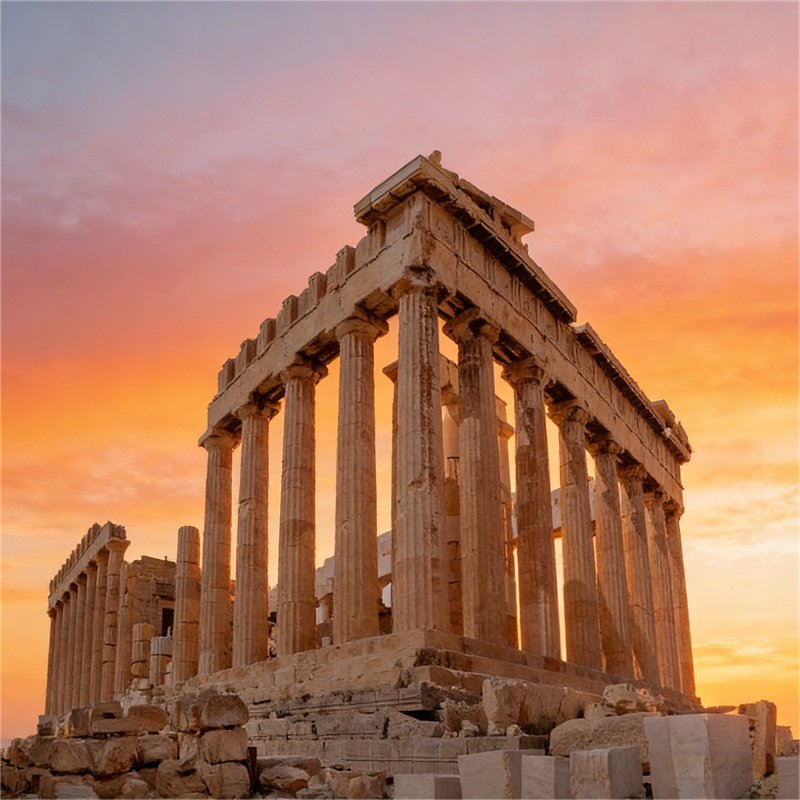
In this blog, I will explore why marble is a good material and, with your help, I hope to provide a comprehensive understanding of its properties.
The Historical Origin of Marble
For millennia, marble has been used in sculpture. In ancient Greece, marble was discovered to be ideal for sculpting the human form by artists. Celebrated quarries such as Paros and Penteli supplied this stone, which was renowned for its fine grain. Thanks to this, artists were able to create graceful anatomy, flowing drapery and expressive faces with remarkable precision.
The Romans embraced this tradition and expanded upon it. Marble busts and statues were used to depict emperors, philosophers, military leaders and mythological figures.
In public spaces, temples and villas, marble became a symbol of power, intellect and beauty.
During the Renaissance, marble gained even greater prestige.
Artists such as Michelangelo demonstrated marble’s extraordinary charm through masterpieces such as David and Pietà.
In short, marble has remained closely associated with artistic excellence, cultural heritage and monumental beauty.
Why Is Marble a Good Material for Statues?
Easy to Carve,Strong Enough to Last
One of marble’s greatest advantages is its ability to balance softness and strength, making it a highly versatile material for a variety of applications.
It is easier to carve than harder stones such as granite or basalt, yet it is durable enough to support delicate features and survive for centuries with proper care.
When it comes to carving fine details, marble is a more predictable material than many other types of stone.
This is especially true when it comes to features such as facial bones, fingers, hair, and drapery.
Exceptional details
High-quality marble has a fine, relatively uniform veins. This makes it especially suitable for sculptures that require subtle transitions and intricate detail. Portrait busts, religious figures, mythological subjects and human anatomy all benefit from marble’s ability to hold refined carvings.
For sculptors, this means that marble can capture both realism and elegance. For clients, this means that the final sculpture can appear more expressive and lifelike, and be more artistically sophisticated.
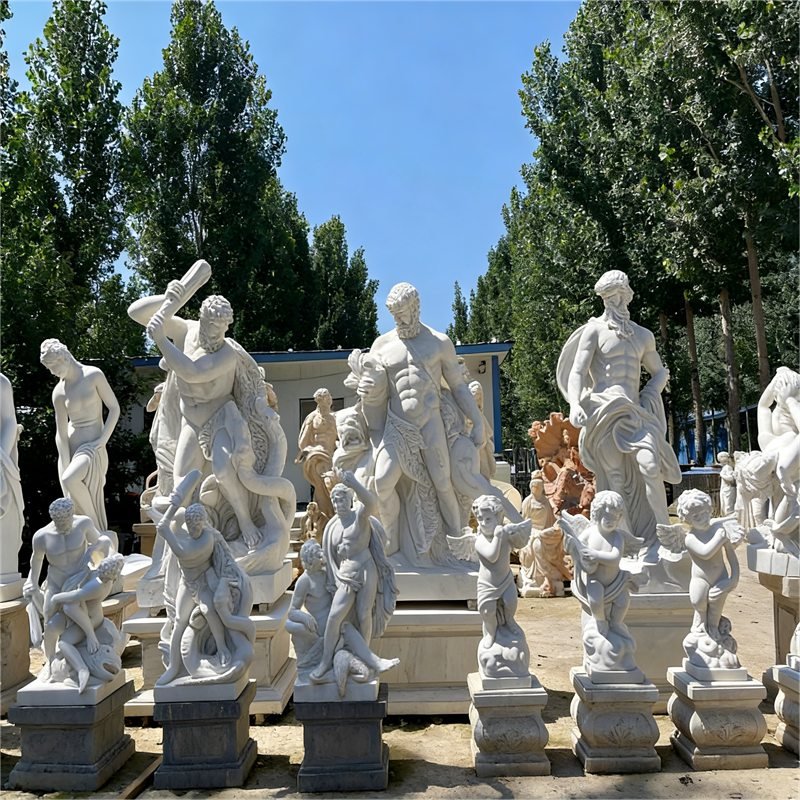
For example, in Michelangelo’s Pietà, the subtle rendering of skin, drapery, and facial expression gives the sculpture a remarkably lifelike quality, while conveying Mary’s deep sorrow as she cradles Jesus.
Polish and refraction
Marble responds exceptionally well to polishing. A skilled sculptor can bring the surface to a smooth, elegant sheen that enhances the stone’s depth, softness, and visual richness. Whether the design is classical, religious, commemorative, or contemporary, a polished marble surface gives the sculpture a refined and enduring beauty.
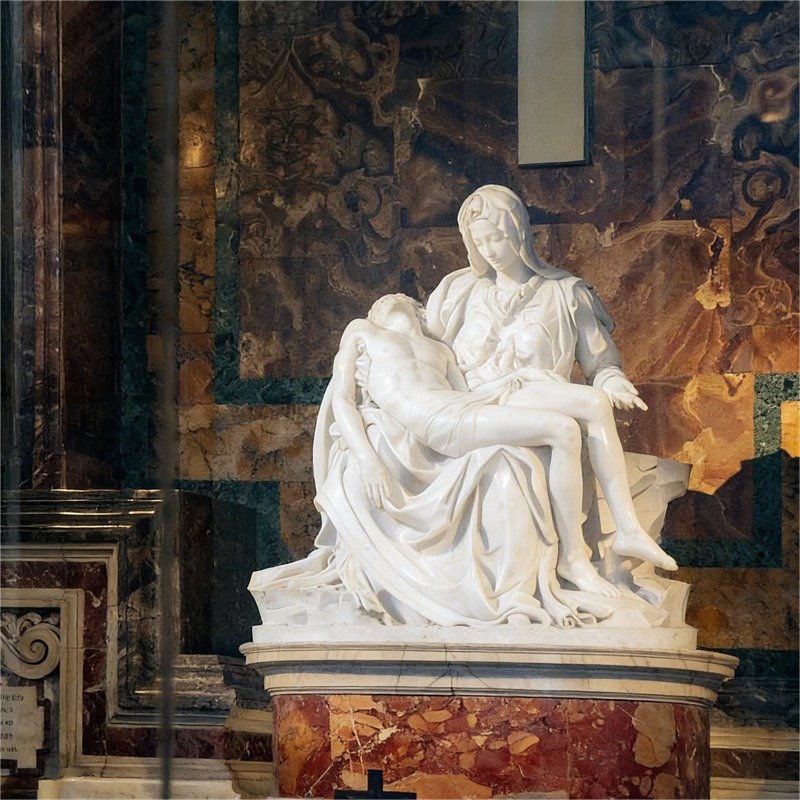
Michelangelo’s Pieta is a remarkable example of this effect. The sculpture’s delicately finished surface once allowed light to move gently across Mary’s features, enhancing its realism and emotional power. In our own practice, we carefully select high-quality natural marble so that each sculpture can fully express the beauty, depth, and artistic potential of the material.
Durable and Timeless
Many of the world’s most famous marble sculptures have survived for centuries. This longevity is one of the strongest reasons marble remains so highly valued. When used in suitable environments and maintained properly, marble can retain its beauty for generations.
For collectors, institutions, religious spaces, and private clients, marble offers both aesthetic beauty and symbolic value. It connects a contemporary sculpture to a long tradition of fine art and craftsmanship.
Compared with Other Stones
Many types of stone can be used for sculpture, but marble offers one of the best overall balances between beauty and practicality.
Marble vs. Granite
Granite is extremely strong and weather-resistant, but it is much harder to carve. It is better suited to large monuments and simpler forms than to highly detailed figurative sculpture.
Marble vs. Sandstone
Sandstone has been widely used in architecture and large-scale carving, but its grain is generally coarser than marble. It does not usually achieve the same level of detail or polish.
Marble vs. Limestone
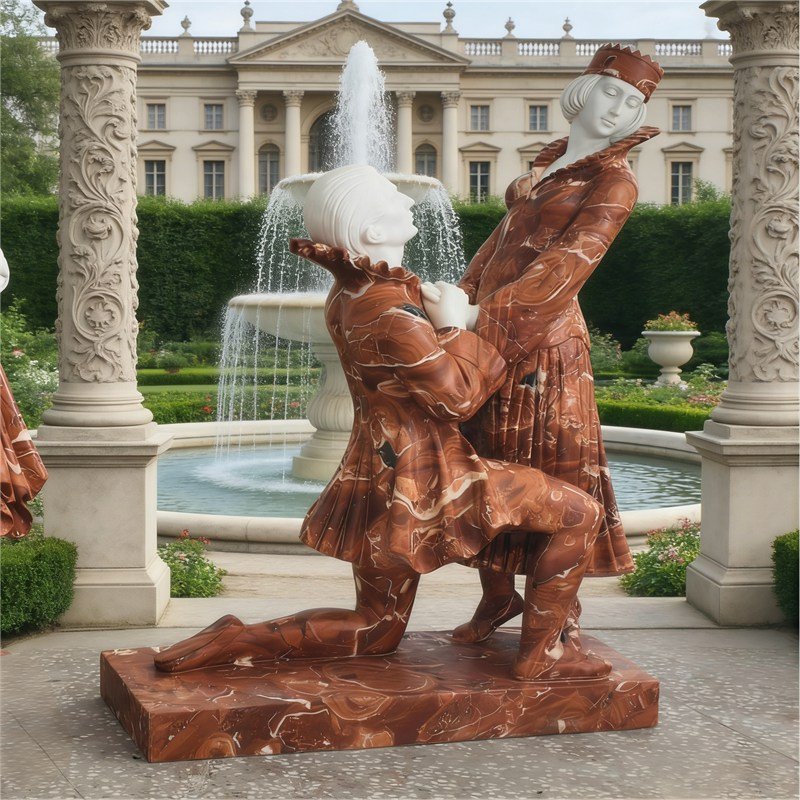
Limestone is softer and easier to shape, but it lacks the polish, translucency, and refined finish that make marble so distinctive.
Marble vs. Alabaster
Alabaster can be carved beautifully and has a warm translucency, but it is much softer and less durable than marble. It is more suitable for smaller indoor works.
Marble vs. Soapstone and Serpentine
These stones are easy to carve and useful for smaller sculptures, but they do not offer the same classical elegance, structural strength, or long-term prestige as marble.
In short, marble remains one of the best choices for clients and sculptors who want fine detail, visual softness, and lasting value in a statue.
The Meaning of Marble in Sculpture
Marble is admired not only for its physical beauty, but also for what it represents.
Purity and Holiness
White marble has often been used in religious and commemorative art because it suggests purity, serenity, and spiritual elevation.
Permanence and Memory
Because marble can endure for centuries, it naturally symbolizes permanence, legacy, and remembrance. This is one reason it is often chosen for memorials, monuments, and portrait busts.
Strength and Dignity
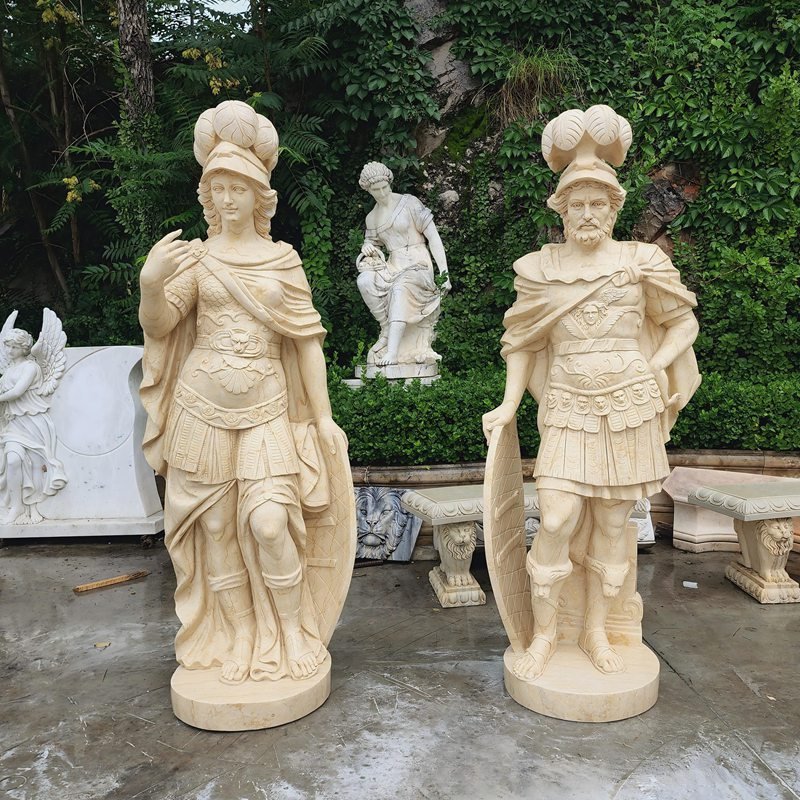
Marble statues have long been used to express authority, confidence, and noble character. From Roman emperors to Renaissance heroes, marble has conveyed a sense of enduring strength.
Why Marble Remains a Good Choice for Custom Statues Today
Even in the age of digital modeling and modern carving tools, marble remains one of the most desired materials for custom sculpture. Contemporary artists and workshops now combine traditional hand-carving techniques with modern technology to achieve even greater precision while preserving the unique artistic qualities of natural stone.
For clients, marble offers a rare combination of luxury, craftsmanship, and permanence. It is suitable for portrait busts, religious figures, memorial statues, architectural ornament, and private commissions. Whether the desired result is classical or contemporary, marble gives the finished work a sense of value and timeless presence.
Final Thoughts
Marble is a good material for statues because it combines fine detail, workability, polishability, durability, and unmatched beauty in one stone. Its slight translucency gives sculptures a lifelike softness, its strength provides lasting structure, and its long artistic history gives every marble statue a sense of cultural depth and prestige.
That is why marble has remained the preferred material for sculptors from ancient Greece and Rome to the present day. If you are commissioning a custom statue and want a material that is elegant, enduring, and artistically distinguished, marble is one of the finest choices available.
If you are considering a custom marble statue, choosing the right material is the first step toward creating a sculpture that will stand the test of time.If you still have problems about how to choose a high-quaily natural marble for your statue, feel free to contact us . Our professional service will never let you down.