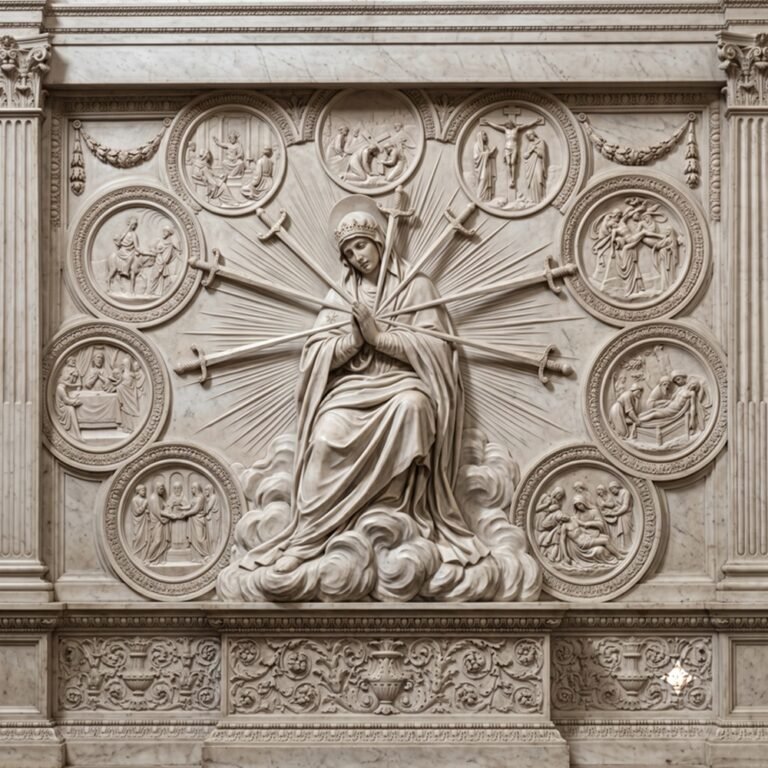
The Stations of the Cross—also known as the Way of the Cross or Via Crucis—are among the most enduring devotional elements found in Christian churches. For many parishioners, these fourteen scenes are not merely artwork along a wall; they become a sacred landscape for repeated prayer, reflection, and spiritual formation.
Selecting the right set for a sanctuary or garden is a profound act of stewardship, balancing artistic beauty with liturgical function and long-term durability.
For a church procurement committee, the challenge is to recommend a solution that remains visually clear under specific lighting, pastorally coherent for all generations, and consistent in quality even if the project is completed in phases. This guide explores the practical criteria—materials, form, and environment—that define a successful commission.
Defining the Setting: Indoor Sanctuary vs. Outdoor Pilgrimage
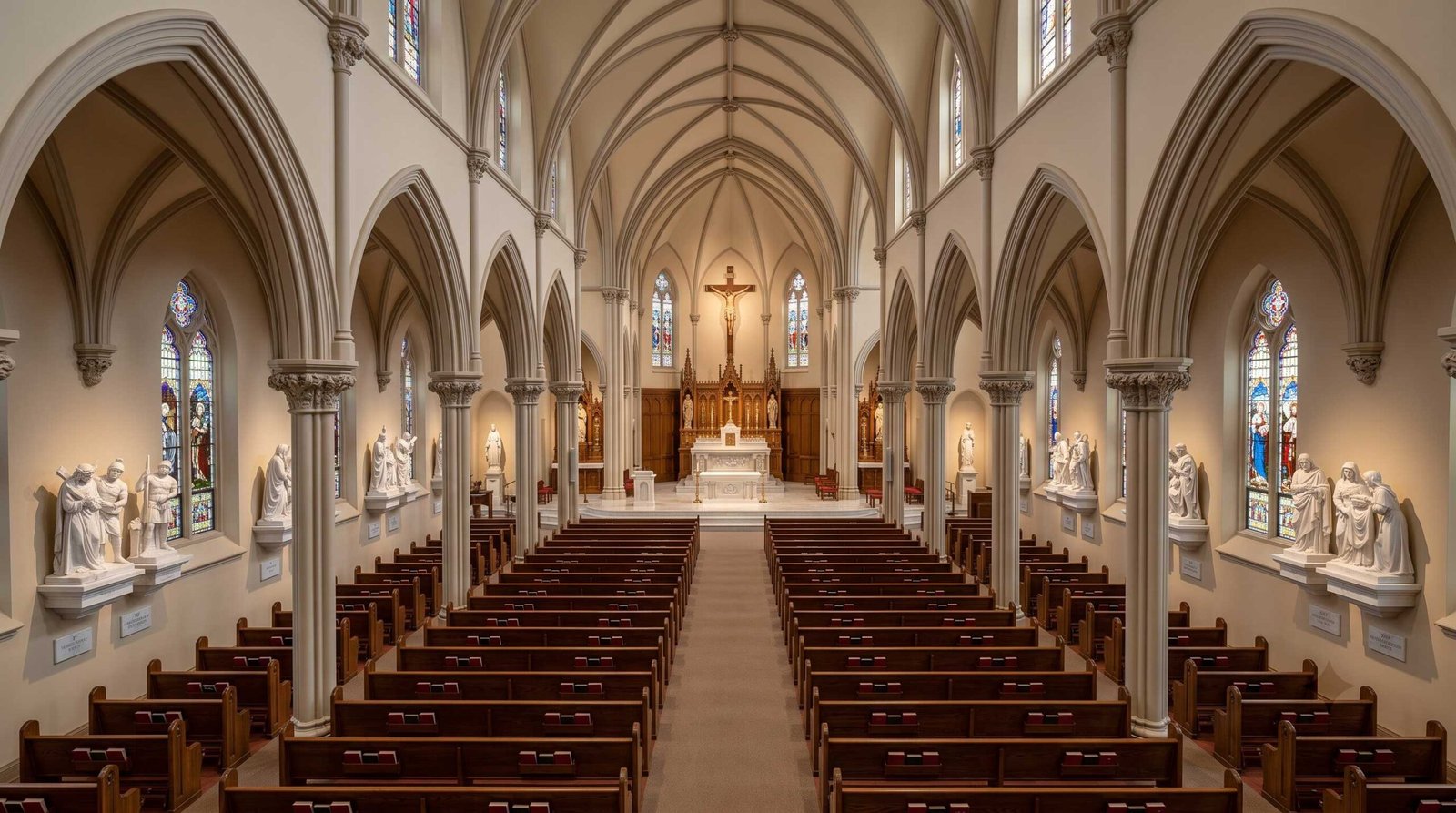
The single most important decision is the environment. Indoor stations are viewed in controlled lighting, often from across a nave, and are protected from the elements. They benefit from refined detail, subtle marble veining, and a calm, reverent presence that complements the interior architecture.
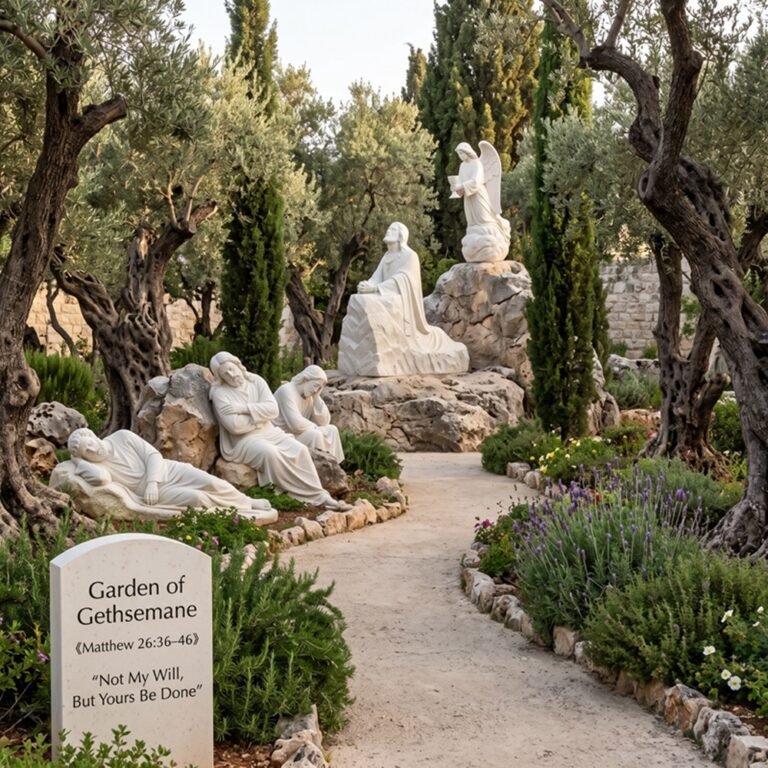
In contrast, outdoor stations must command a presence against the vastness of nature. They are viewed in changing natural light and must withstand rain, snow, and freeze-thaw cycles. Outdoor scenes benefit from stronger contrast and bolder forms that age gracefully in the open air. Whether you are furnishing a small chapel or a sprawling pilgrimage path, the spatial reality dictates the scale and material choice.
Materiality: The Luminous Clarity of Marble and Bronze
When church art must last for generations, marble and bronze remain proven materials in sacred settings. Each contributes differently to visibility, atmosphere, and durability—all of which directly shape how the Stations of the Cross function during prayer.
Marble: quiet clarity and reliable detail
Marble is valued for its durability and its ability to hold refined carving detail. Its subtle veining creates a calm, uniform texture without visual distraction. In candlelit interiors, white marble can appear softly luminous, helping the figures stand forward with a reverent, devotional presence.
For committees, white marble also supports long-term consistency: it integrates naturally with many church interiors and maintains visual stability over time.
We recommend sunset red marble (sometimes called rosso marble), especially for parishes seeking a stronger emotional presence. Sunset red marble is recognized for its warm, dramatic veining—tones of red, orange, and cream that resemble a sunset sky. In the Stations of the Cross, that warmth supports a penitential atmosphere and reinforces the emotional weight of the Passion.
In outdoor settings, sunset red interacts naturally with changing daylight and seasonal shadows, helping each station feel like part of a coherent prayer path.
“In a recent outdoor commission, a parish installed a complete set of fourteen Stations of the Cross in sunset red marble with bronze figures along a prayer walkway. The committee noted two practical outcomes:
• The warm veining created a consistent visual identity across all stations, so the devotion felt continuous rather than fragmented.
• Because the principal scenes were designed with strong sculptural presence, the stations remained readable as visitors approached and viewed them from different angles throughout the day.”
This case illustrates how sunset red marble can support both devotional continuity and long-term clarity when the design and installation are planned as a system.
Bronze: expressive figures and lasting performance
Bronze is particularly well suited for principal figures—Christ, Mary, Simon of Cyrene, and Veronica—because sculptural modeling captures human expression and bodily movement. Bronze can also develop a patina over time. When properly finished and installed, it performs reliably in both indoor and outdoor conditions.
Many churches value bronze because it remains legible under different lighting angles: facial planes and drapery folds catch light in ways that enhance readability during prayer.
Choosing the Form: Plaque, High-Relief, or Statue?
The most critical design choice lies in the form. The way a scene is sculpted determines how it interacts with light, space, and the worshipper. We offer three distinct approaches, each suited to different architectural needs and devotional goals.
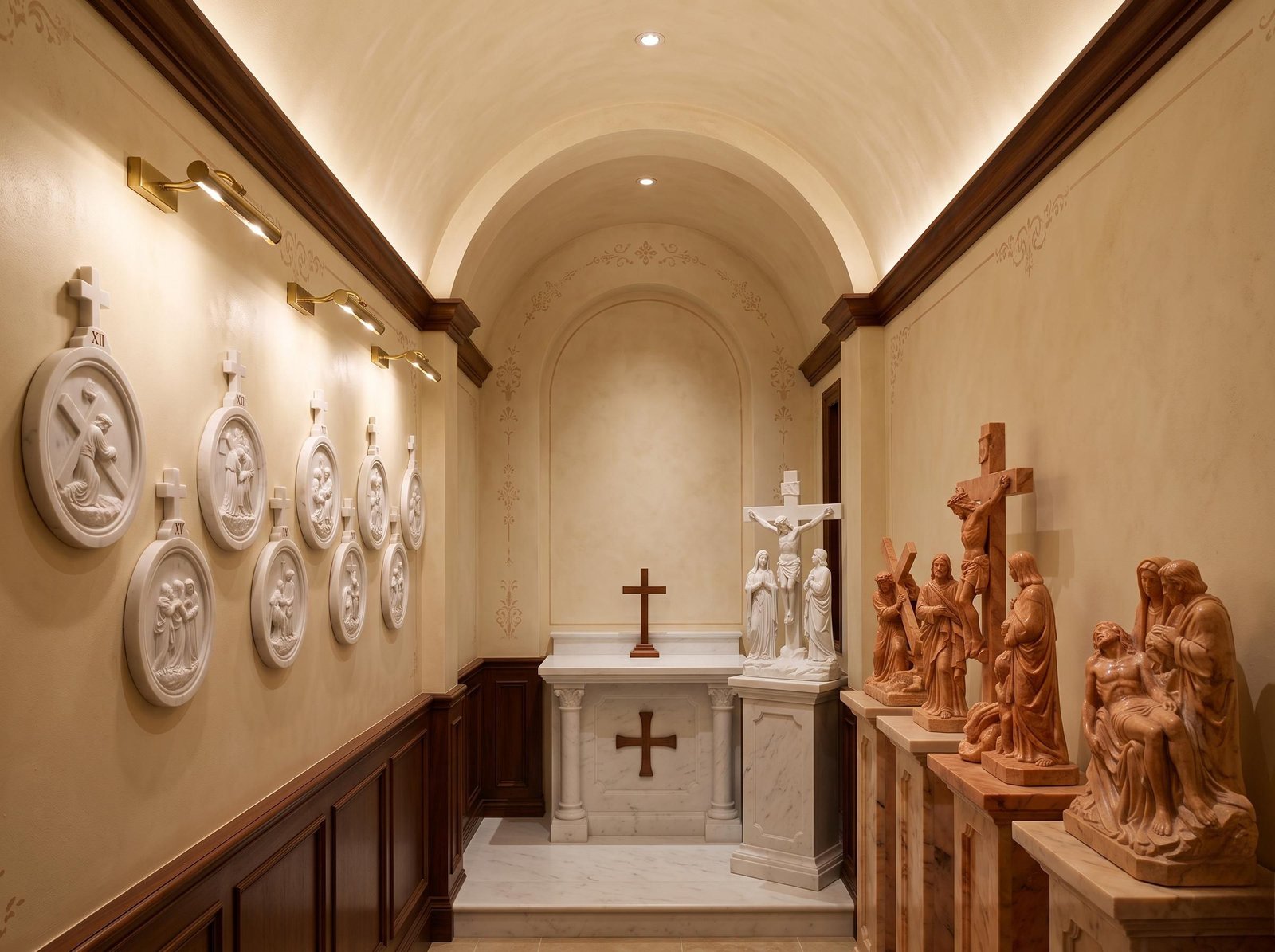
Wall Plaques: The Elegant Narrative (Low-to-Medium Relief)
The Form: Classic relief panels where the scene is delicately carved into a flat surface. The depth is subtle, focusing on fine lines and intricate background details.
Best For: Smaller chapels, narrow corridors, or modern sanctuaries with a minimalist aesthetic.
Advantage: They offer a clean, unobtrusive look that integrates seamlessly into the wall. Because they are lighter and flatter, they are ideal for spaces where circulation area is limited.
High-Relief Fusion: The Dramatic Encounter
The Form: A masterful integration where the background remains in relief, but the principal figures—Christ, Mary, Simon—project boldly outward, becoming almost three-dimensional.
Best For: Standard parish churches and cathedrals where the stations must be “read” from a distance (15–30 feet).
Advantage: Maximum visibility. The projecting figures catch the light and cast deep, soulful shadows, ensuring the narrative remains vivid even in dim, candlelit environments. It creates a “living presence” that draws the worshipper into the scene.
Freestanding Statues: The Monumental Journey
The Form: Fully three-dimensional, life-sized or near-life-sized figures that can be viewed from 360 degrees. Each station becomes a standalone sculptural group.
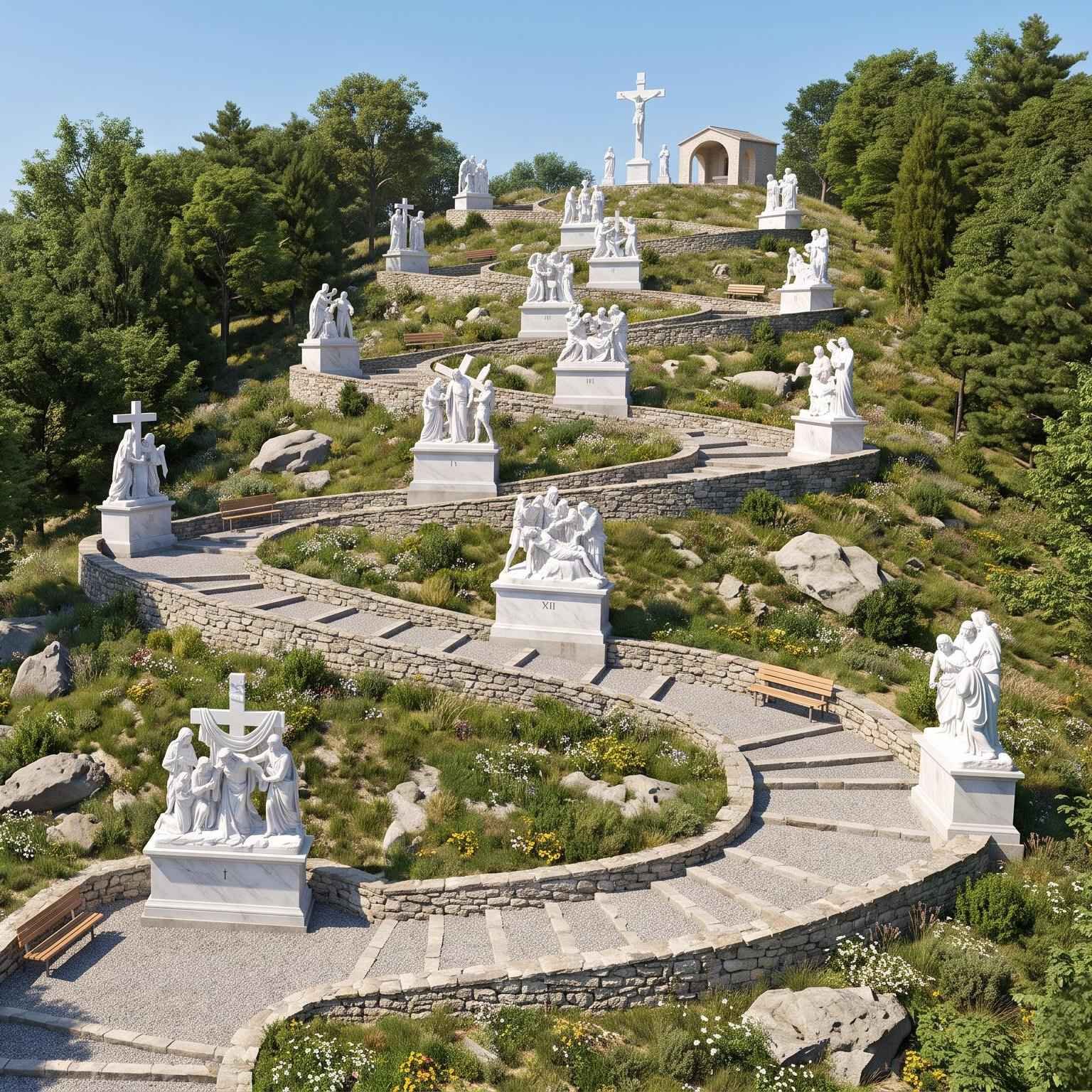
Best For: Large outdoor pilgrimage paths, sacred gardens, or exceptionally grand basilicas with dedicated alcoves for each station.
Advantage: Total immersion. A statue group allows the pilgrim to physically walk around the scene, becoming a silent witness to the Passion. It offers the most powerful, monumental presence and becomes a permanent landmark of faith in a landscape.
Form & Scale: A Strategic Guide
Selecting the right form also dictates the necessary scale. Use this guide to balance your space with the appropriate sculptural depth:
| Form Type | Recommended Width/Height | Ideal Environment | Visibility Distance |
|---|---|---|---|
| Wall Plaque | 12–18 inches | Small Chapels / Corridors | 5–15 feet |
| High-Relief | 18–36 inches | Standard Parish / Cathedrals | 15–40 feet |
| Statue Group | 48–72+ inches (Height) | Outdoor Paths / Gardens | 40+ feet |
Key Technical Considerations
- Lighting Interaction: High-Relief thrives on directional spotlighting which amplifies the drama. Plaques prefer soft, even lighting to reveal fine details. Statues rely on shifting natural light of the sun to redefine their forms throughout the day.
- Mounting & Clearance: While Plaques sit flush against the wall, High-Relief stations require 6–12 inches of clearance for their projecting elements. Statues require a structural pedestal and a dedicated footprint to allow for 360-degree appreciation.
Whether you choose the understated elegance of a Plaque, the dramatic depth of High-Relief, or the monumental power of a Statue, our master sculptors ensure a seamless transition from raw stone to sacred art—a “visual liturgy” that guides the soul through the mystery of the Cross.
Creating the Sacred Environment: Indoor vs. Outdoor
The Stations of the Cross are more than individual artworks; they are a liturgical journey. The setting—whether a quiet nave or a winding garden path—must be designed to support contemplation and prayer through a deliberate blend of material, light, and space.
The Indoor Sanctuary: Intimacy and Light
- Material Harmony: White marble offers a serene, ethereal presence, while Sunset Red marble adds warmth to darker wood or stone interiors.
- The Drama of Light: Indoor stations thrive on targeted lighting. Dedicated spotlights positioned to catch the High-Relief contours create deep, soulful shadows that make the figures feel present and alive.
- Rhythm of Prayer: Stations should be centered at eye level (approx. 5’6″) with consistent spacing. This creates a visual cadence that guides the faithful effortlessly through communal prayer.
The Outdoor Pilgrimage: Nature and Journey
- Landscape Integration: Sunset Red marble provides a striking contrast against green foliage. Mounting stations on matching marble pedestals raises the narrative to eye level, commanding attention against the vastness of nature.
- The Path of Faith: A successful outdoor site incorporates winding paths, resting benches, and symbolic plantings (like olive trees or lilies) to create a multi-sensory pilgrimage experience.
- Weathering with Grace: Using cast bronze and deep-sealed marble ensures the stations withstand the elements, becoming a permanent landmark of faith that ages beautifully over decades.
Vision and Continuity: The Anchor Station Strategy
Commissioning a full set of fourteen stations is a significant undertaking. Whether a project is completed all at once or built incrementally over several years, visual and devotional coherence is paramount.
A Unified Identity
We utilize a consistent system of Roman Numerals (I–XIV) and gilded titles. This provides a universal language that ensures the sequence remains clear for all generations, regardless of their native tongue.
The “Anchor Station” Strategy
For communities building their set over time, we recommend beginning with an “Anchor Station”—often Station XII (The Crucifixion). By establishing the material framework (marble color and bronze finish) with the first piece, we guarantee that every subsequent station added years later will be a perfect aesthetic match.
Professional Stewardship
A credible commission includes a Design Record. We maintain the specific parameters of your project—from facial modeling styles to foundation specifications—ensuring that the fourteenth station carries the same soul and craftsmanship as the first.
By balancing sculptural depth with strategic environment design, we create a “visual liturgy” that draws the soul into the mystery of the Cross, providing a sanctuary for prayer that will endure for generations.
Conclusion
Choosing Stations of the Cross for a church—whether indoors along the nave or outdoors in a garden, whether in luminous white marble or warm sunset red, whether all fourteen at once or phased over years—is a decision that shapes prayer life, teaching, and sacred space for many years.
The best set is not defined only by artistry—it is defined by readability, durability, and a coherent system that can grow with your community’s needs. By carefully planning materials, form, scale, and installation requirements—and by selecting a supplier who supports long-term continuity—your church can ensure that the devotion remains a living spiritual presence for worshippers today and for generations to come.
If you would like to discuss a site-specific installation plan or review sample design approaches in marble and bronze for your setting—including our sunset red marble fourteen-station design—request a consultation and provide your location photos and intended mounting area.