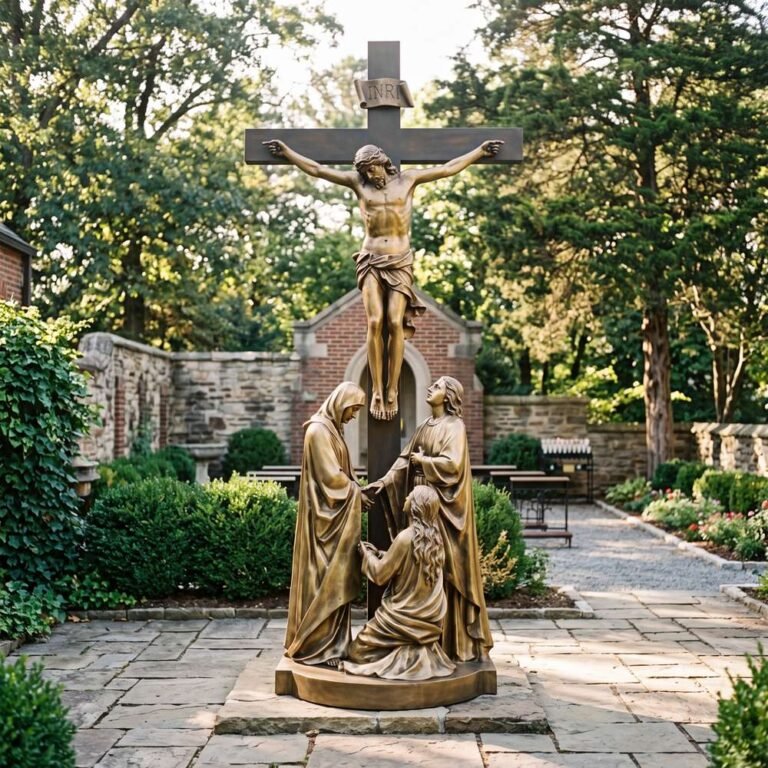
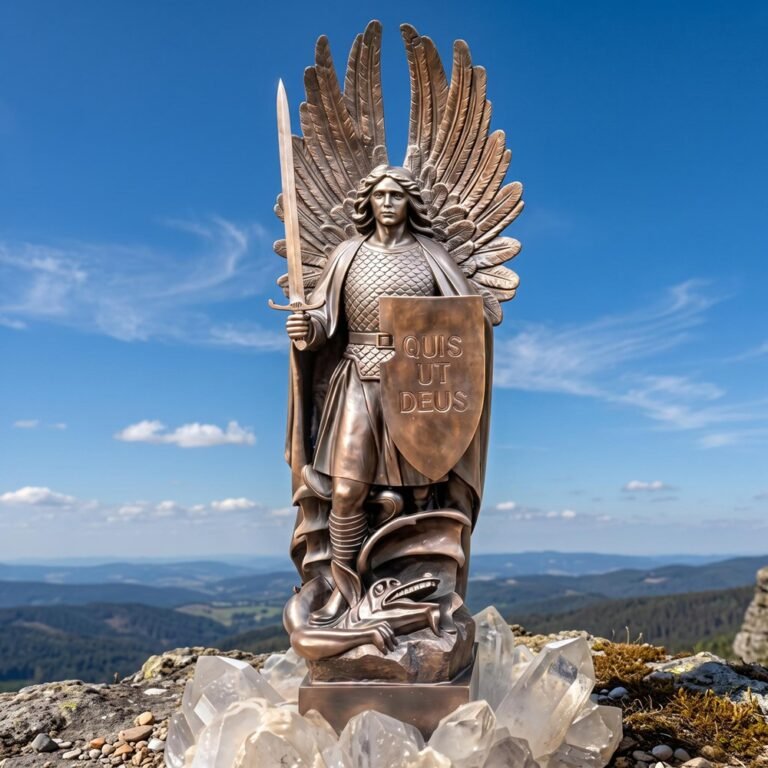
Saint statues are very popular among Catholics — they reflect the faithful’s different devotional pursuits and a shared longing to preserve what is sacred. Whether it’s a hand-carved marble St. Benedict standing guard in a monastery garden, a white marble Our Lady of the Rosary in a family prayer corner, or a lost-wax bronze St. Anthony of Padua on a parish plaza, a saint statue is usually bought to last — for decades, for generations, sometimes for centuries.
So how long will it actually last? The honest answer depends mainly on two things: the material it is made of and whether it lives indoors or outdoors. A bronze saint can survive outdoors for a thousand years or more; a marble saint can last centuries in the right conditions, but far less if it is left unprotected through harsh winters. This guide breaks down what to expect from each material, how weather affects them, and how to make yours last as long as possible.
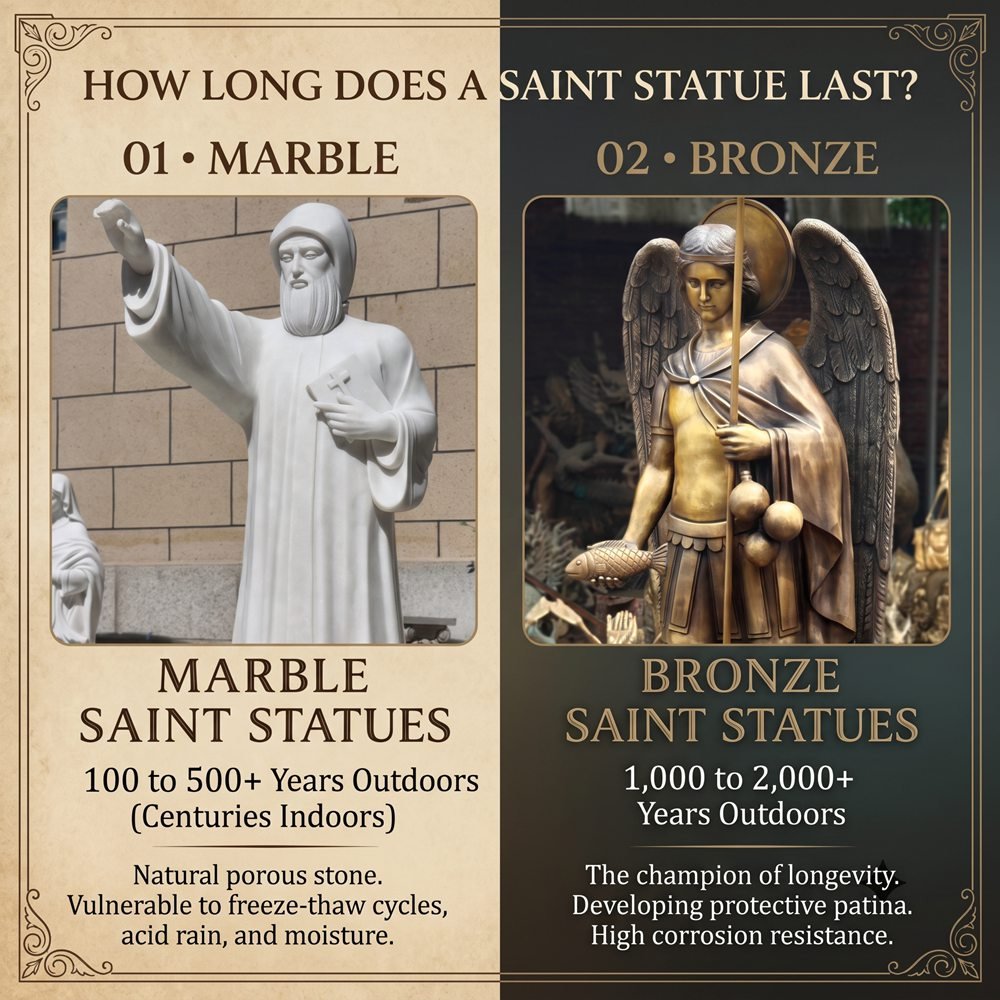
How Long Does a Marble Saint Statue Last?
An outdoor marble saint statue typically lasts 100 to 500+ years — though harsh climates or polluted areas can reduce that to 50 to 100 years — and considerably longer in mild, dry climates without repeated freezing. Indoors, or in a sheltered, well-maintained setting, marble can last centuries, even thousands of years.
One important distinction: those lifespans refer to genuine, solid natural marble — stone quarried from the earth and carved, not molded. Many low-cost “marble” statues are actually made from crushed marble powder bonded with resin (often called reconstituted or bonded marble). They are cheaper and lighter, but they do not inherit the longevity of real stone: under outdoor sun, moisture, and freeze-thaw they can fade, craze, and break down in a fraction of the time — closer to cast stone (30–50 years outdoors) than to natural marble, which weathers slowly over centuries. If a long life is your goal, ask your supplier directly: is this statue hand-carved from solid natural marble, or molded from bonded powder? The answer tells you which lifespan you are really buying.
Popular marble Saint statues — Mary and the Child Jesus, St. Francis of Assisi with animals, St. Michael the Archangel defeating Satan, St. Joseph with the Child Jesus, St. Benedict with his crozier and chalice, St. John the Baptist pointing to the Lamb, Moses holding the tablets — are carved to be kept close, in chapels, grottos, gardens, and homes. And it’s exactly where they’re kept that decides how long they live.
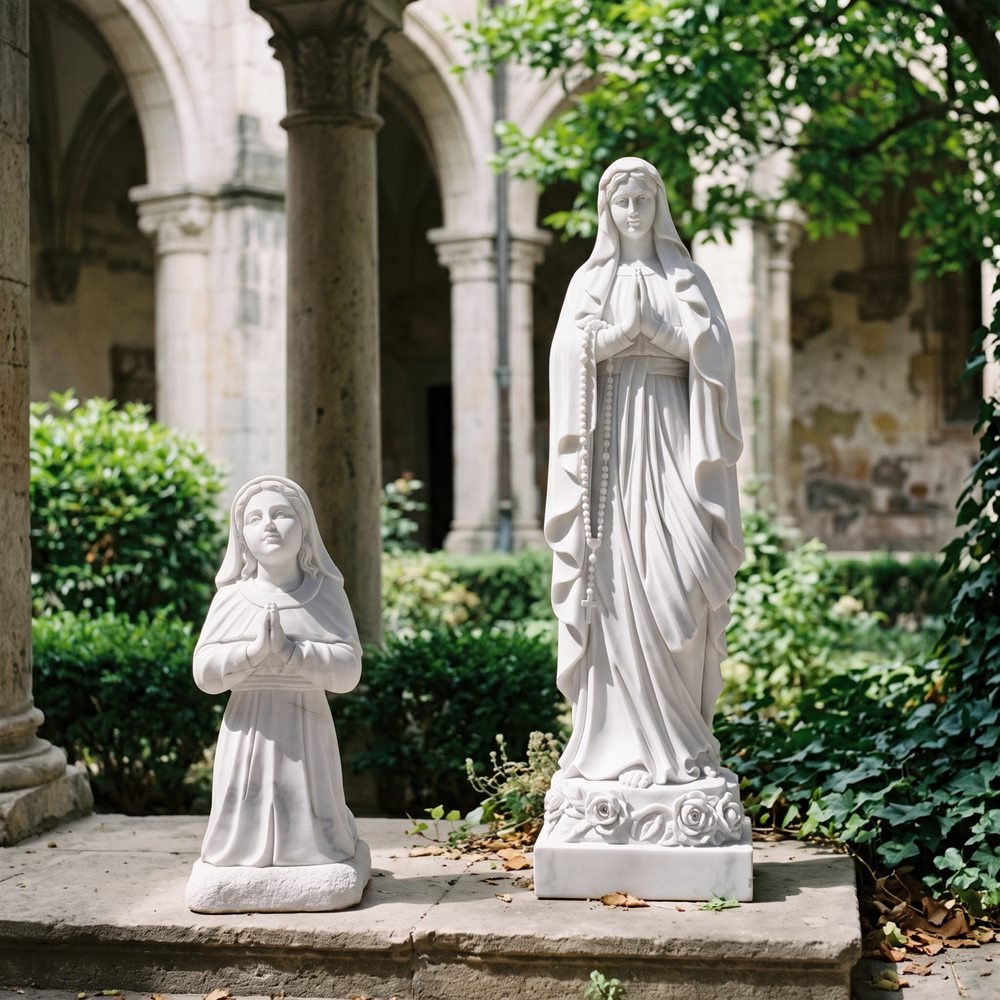
Marble is a natural, porous stone, and that porosity is both its beauty and its weakness. Over time, it can be affected by:
- Atmospheric contamination and acid rain, which slowly dull and discolor the pure white surface
- Constant touching, which wears and discolors areas within reach of visitors’ hands
- Candle smoke and incense, which can leave stubborn staining — marble is often the worst affected of all sculpture materials
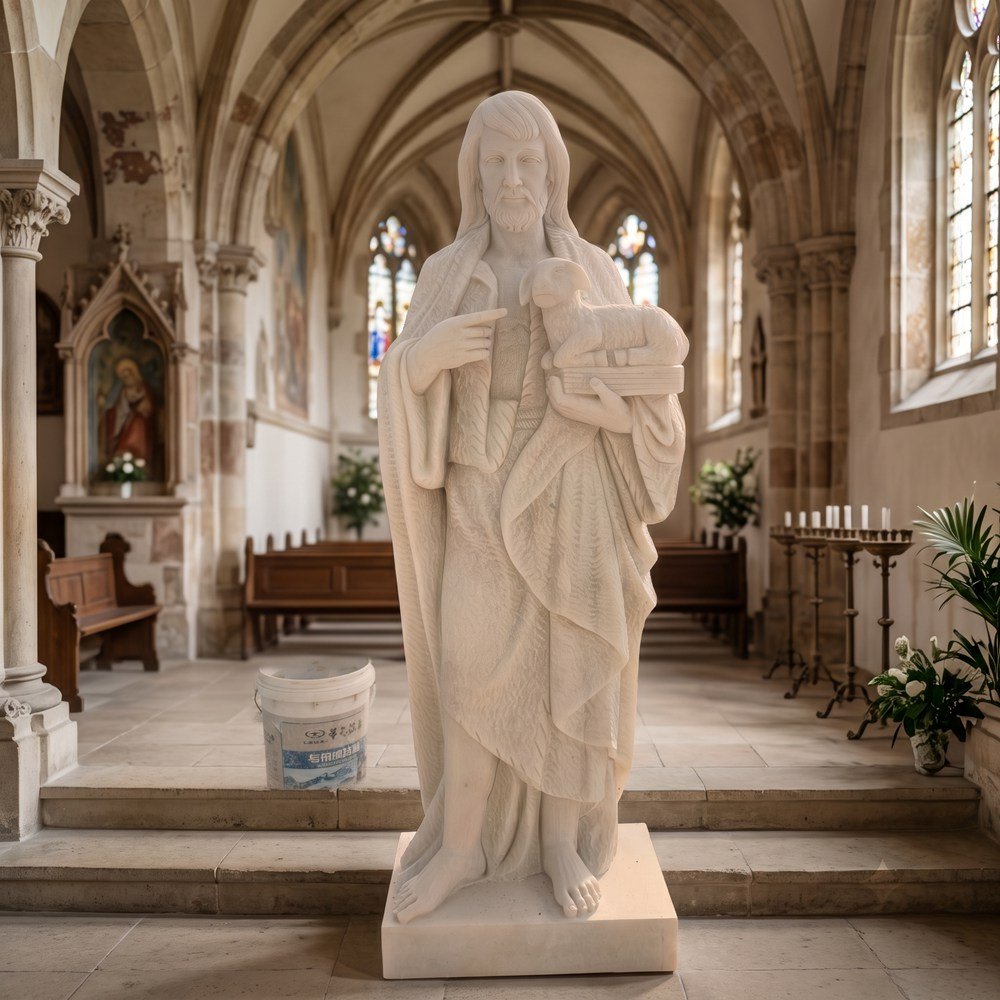
When a marble statue is damaged, the most important rule is: don’t repair it with household glues or amateur methods. Adhesives sink into the stone’s pores and create embedded, acidic stains along the break, which is both visually damaging and structurally unstable. Stone sculpture should never be cleaned with liquid and should only be maintained by professionals. If a piece breaks, contact a conservation professional or your sculptor as soon as possible — broken parts can often be re-adhered, and missing pieces can sometimes be recreated.
How Long Does a Bronze Saint Statue Last?
Bronze is the champion of longevity. A well-cast bronze saint statue will last 1,000 to 2,000+ years — in fact, ancient bronzes from two millennia ago are still intact in museums today.
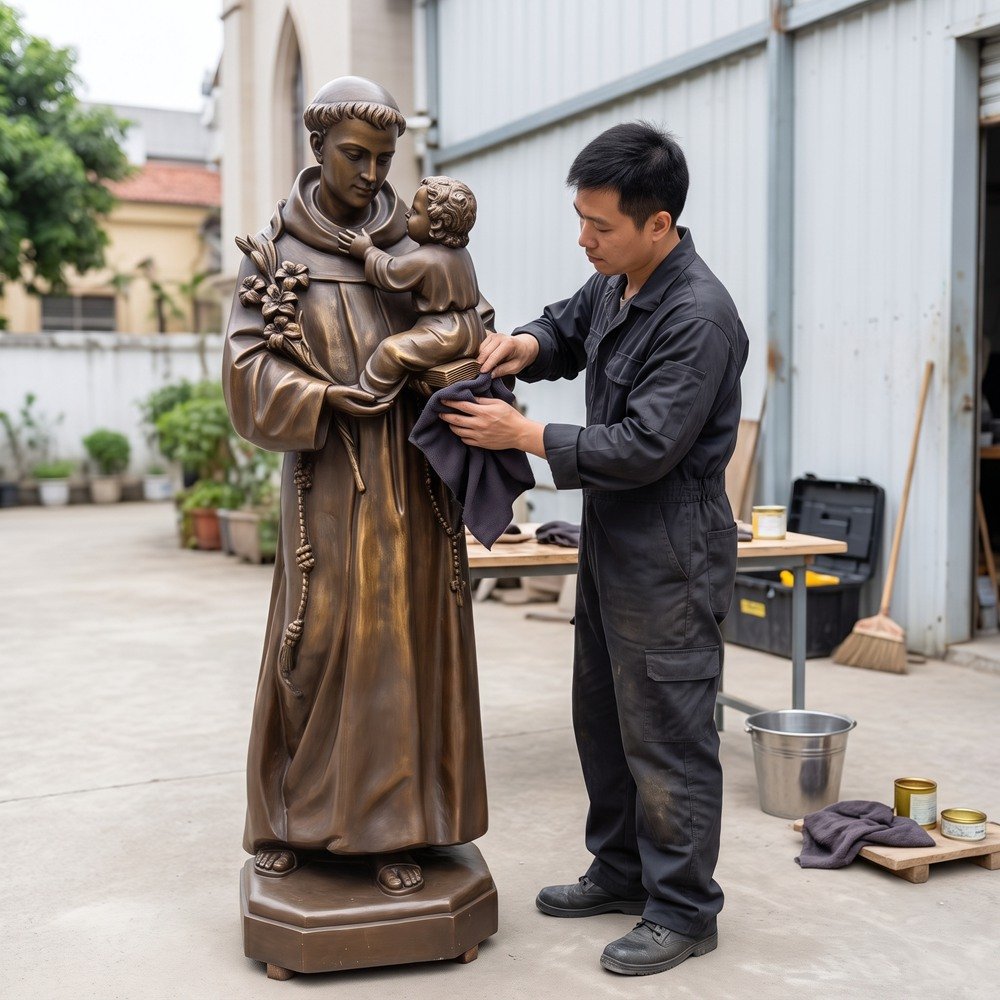
Saints cast in bronze — a St. Anthony of Padua holding the Child Jesus with a lily and book, a St. Padre Pio in his Capuchin habit with the stigmata bandages and rosary, Archangel Raphael with his staff and fish, a crowned St. Catherine of Alexandria with the martyr’s palm — are usually made by the lost-wax method, producing a hollow bronze shell with a controlled, even wall thickness.
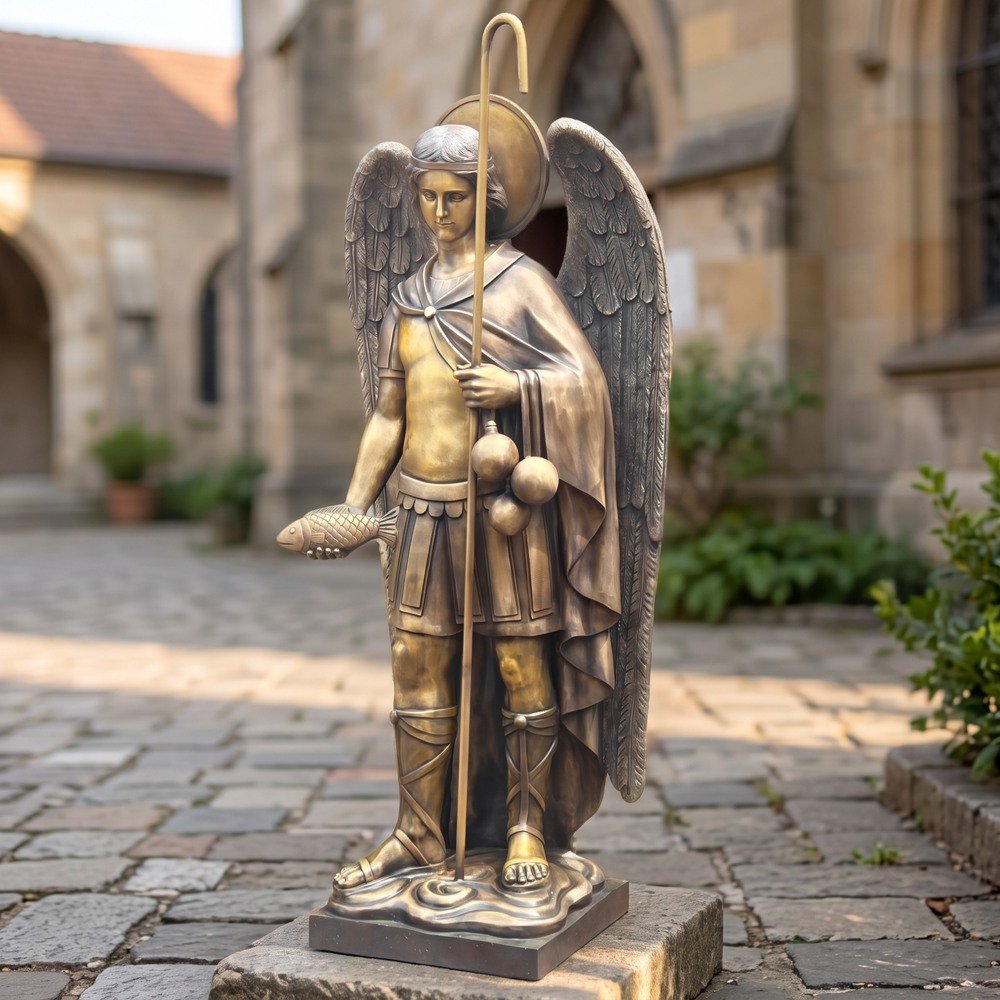
Copper content and alloy. Sculpture bronze is mostly copper, alloyed for strength and color. Silicon bronze and tin bronze are the two classic foundry alloys and the best choices for outdoor saints; brass (copper + zinc) is brighter and yellower, better suited to indoor settings; red copper (nearly pure copper) is beautiful but softer and develops its patina faster. As a rule, the higher the copper content, the more corrosion-resistant and durable the statue.
Wall thickness. For outdoor pieces, the standard is 5–8 mm — and in harsh climates (extreme freeze-thaw winters, coastal salt air, or heavy pollution) we recommend casting at a full 8–10 mm, so the shell can carry its own weight and resist impacts, freeze-thaw cycling, and corrosion for decades. Monumental pieces are often thicker still, with internal reinforcement.
The patina — and the wax that protects it. The patina is the metal’s natural armor, but it isn’t self-sufficient: a regular coat of protective wax keeps it stable and seals the surface against moisture and salt.
Exposure. A bronze that stands beside the sea, in a polluted city, or in a hard freeze-thaw climate works much harder than one in a sheltered garden. Placement, drainage, and yearly care decide how gracefully those centuries pass.
One caveat: gilt (gold-leafed) bronze can lose its gilded surface over time, leaving the metal underneath more exposed. And while bronze doesn’t rust, it isn’t maintenance-free — it benefits from occasional care, which we cover below.
How Climate Affects an Outdoor Saint Statue
An outdoor statue faces a much harder life than an indoor one. The main enemies are:
Rain and moisture — the single biggest factor for porous materials
Freeze-thaw cycles — water seeps into tiny pores or cracks, then freezes and expands, splitting the material from within. This is the main threat to marble, stone, and concrete in cold climates
UV sunlight — fades and cracks painted or coated surfaces
Pollution and acid rain — discolors light stone and attacks finishes
Salt air — in coastal areas, salt and moisture accelerate corrosion on metal surfaces
How these affect each material:
| Material | Typical outdoor lifespan | Main outdoor threats |
|---|---|---|
| Bronze | 1,000–2,000+ years | Coastal salt, loss of protective wax coating |
| Marble / natural stone | 100–500+ years (50–100 in harsh climates) | Freeze-thaw cracking, acid rain, pollution discoloration |
| Concrete / cast stone | 30–50 years | Moisture seepage, freeze-thaw cracking (sooner without a sealer) |
| Fiberglass / resin | 3–10+ years | UV fading and cracking of the painted surface |
| Wood | Rapid degradation outdoors | Rot, moisture, insects |
| Plaster/chalk | Not suitable outdoors | Moisture dissolves and chips it quickly |
In practice, this means: a bronze St. Padre Pio on a coastal church lawn will need a little extra wax care, but will outlast generations of parishioners. A white marble Madonna in a freezing northern garden is the one to watch — without sealing or shelter, winter moisture can crack her from within. Bronze is notably resilient to freezing and weather extremes, which is why it’s the standard choice for public monuments. For fiberglass, UV-resistant paints and clear coats need refreshing every 3 to 5 years.
How to Make Your Saint Statue Last Longer
No matter the material, the right care dramatically extends a statue’s life:
- Choose the placement wisely. A sheltered position — under an eave, against a wall, out of direct sprinkler spray — removes most of the damage an outdoor statue faces. Make sure water can drain and doesn’t pool on horizontal surfaces.
- Clean each material the correct way. Marble and stone should never be cleaned with liquid — leave routine maintenance to professionals. Bronze can be gently cleaned with mild soap and water, then re-waxed. Wooden statues should only be dusted with a light, soft, dry cloth, without pressure.
- Seal and weatherproof porous materials. For marble, cast stone, and concrete used outdoors — including that marble St. Benedict or Our Lady of the Rosary in the garden — a good sealer dramatically slows moisture absorption and freeze-thaw damage. Reapply it on the schedule the product recommends.
- Protect bronze with wax. Outdoor bronze — the St. Anthony on the rectory steps, the Archangel Raphael at the cemetery gate — should be cleaned and re-waxed about 1–2 times per year in normal environments, and 3–4 times per year in high-pollution or coastal areas. The wax layer is what keeps the patina stable and the metal protected.
- Repair professionally, never with DIY glues. If anything breaks, keep every broken piece — however small — and contact a professional conservator or your foundry. Amateur repairs cause more damage than the original break, while professionals can restore pieces sensitively to keep the statue’s artistic and spiritual value.
A Year-Round Care Checklist: How to Extend Your Statue’s Life
A few minutes of care at the right time of year does more for a statue’s lifespan than almost anything else — the same discipline that keeps church bells and stained glass alive for centuries.
Every few months — for outdoor statues
- Clear away leaves, moss, and bird droppings before they trap moisture against the surface.
- Check that water never pools on shoulders, robe folds, or the base. Standing water is the starting point of most stone damage; make sure the statue has good drainage.
- If you have lawn sprinklers, angle them away from the statue — treated water stains and can corrode even bronze over time.
- For bronze, a gentle rinse with mild soap and water, then renew the protective wax layer.
Before winter — for cold climates
- Seal porous materials (marble, cast stone, concrete) before the first frost. A good sealer is the single most effective protection against freeze-thaw cracking.
- Move smaller pieces to a sheltered spot or indoors; cover larger ones with a breathable cover.
- In freezing regions, a marble saint left fully exposed is the one most at risk — the same freeze-thaw cycle that cracks roads will crack stone from within.
Indoors — the quiet habits that count
- Keep wooden statues in a stable temperature and humidity; rapid changes cause the surface to crack and flake.
- Don’t place candles or incense directly beside marble statues — smoke staining is effectively permanent, and marble is the material most affected.
- Keep hands off: even gentle touching wears marble down over decades. A sign or barrier may be worth it in high-traffic areas.
Every few years — professional check
- Have a conservator or your sculptor inspect seams, anchors, and the patina layer on outdoor bronze.
- Never attempt repairs with household glue — it sinks into stone pores and leaves permanent acidic stains. Keep every broken piece, however small; professional re-adhesion is almost always possible.
| Material | Routine care | Frequency | Key notes |
|---|---|---|---|
| Bronze | Gentle wash + wax | 1–2×/year (3–4× in polluted or coastal areas) | The wax layer is what protects the patina |
| Marble / stone | Professional cleaning only; seal outdoor pieces | Re-seal per product schedule; always before winter in cold climates | Never clean with liquid; never use DIY glue |
| Wood | Dust with a soft, dry cloth | As needed | Keep temperature and humidity stable |
| Fiberglass / resin | Wash; refresh UV-resistant clear coat | Every 3–5 years | Fading and cracking are the first warning signs |
FAQ
Can a marble saint statue stay outside in winter?
Yes, in temperate climates with proper protection — but in freezing climates, marble is genuinely vulnerable. When water gets into the stone’s pores and freezes, the expansion can crack it from within (freeze-thaw damage). If your winters are cold, choose a sealed, weatherproofed installation, place the statue under cover, or bring it indoors for the harshest months. In mild, frost-free climates, a well-sealed marble statue — like a garden St. Benedict — can live outdoors for centuries.
How long does a bronze saint statue last outdoors?
1,000 to 2,000+ years. Bronze doesn’t rust — it develops a protective patina that shields the metal and only grows more beautiful with age. It’s the most durable material available for outdoor statues.
Do bronze saint statues need maintenance?
Yes, but only light maintenance: a gentle clean and a fresh coat of protective wax about once or twice a year (more often in polluted or coastal areas). This keeps the patina stable and prevents corrosion. Well-waxed bronze can survive outdoors essentially indefinitely.
Which is better outdoors, marble or bronze?
For outdoor use, bronze is the better choice in almost every case. It lasts 1,000+ years versus 100–500+ years for marble, handles freezing and harsh weather without special care, and requires only annual waxing. Marble is chosen for its classic white appearance and belongs in sheltered or indoor settings, or in mild climates where it can be carefully sealed and maintained.