Sacred archangel statues are more than home decor for Catholic families.
They serve as tangible visual prayer aids to anchor household devotion, for home altars, indoor prayer corners or private garden shrines. Many modern spiritual resources mention lists of seven archangels.
Yet for Latin‑rite Catholic home devotion, we ground our practice in the three archangels explicitly named in canonical Scripture: St. Michael, St. Gabriel and St. Raphael.
This guide explains who these archangels are, the key distinction between scriptural and apocryphal archangel traditions, each saint’s role and symbolic imagery, and step‑by‑step advice to help you select a suitable archangel statue for your Catholic home. You will also learn simple ways to use your statue for sincere family prayer.
What Are Archangels?
Angels are pure, spiritual, immortal beings created by God, endowed with intelligence and free will.
The word “angel” refers to their office: God’s messengers and servants. Archangels hold a higher rank in the heavenly hierarchy, entrusted with critical divine missions touching human lives and salvation‑history.
Sacred Scripture hints at a larger company of high heavenly beings.
In Tobit 12:15, Raphael states “I am one of the seven angels who stand in the glorious presence of the Lord”.
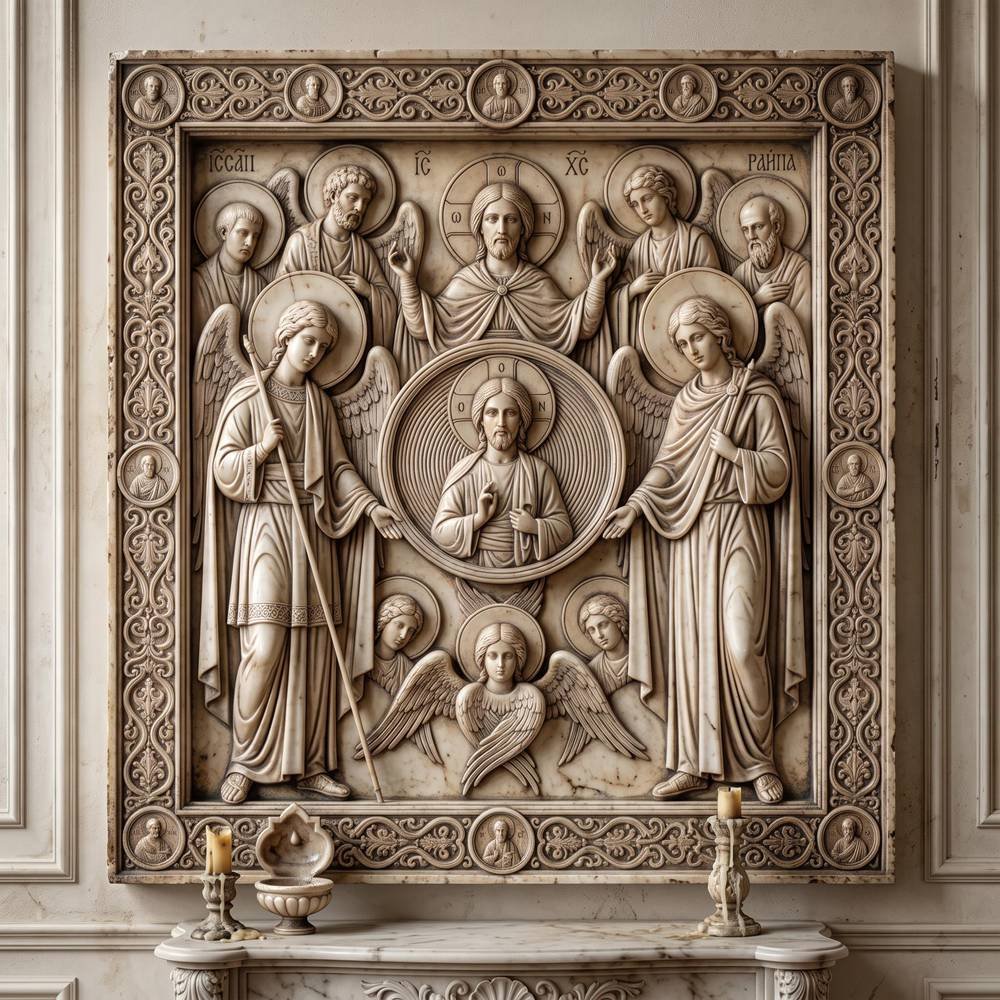
Revelation 8:2 also speaks of “the seven angels who stand before God”.
Even so, only three archangels receive personal names in canonical Latin‑rite Catholic Scripture.
Names such as Uriel, Chamuel, Jophiel, Zadkiel come from apocryphal texts like the Book of Enoch, outside the official Catholic biblical canon. Eastern Orthodox Christianity honours a traditional list of seven named archangels; an eighth figure, Jeremiel, is occasionally included in some local traditions. These additional names are not used in Latin‑rite public liturgy.
Why Catholics Venerate Only Three Named Archangels
At the Synod of Rome in 745 AD, Pope Zachary ruled against formal public worship of angels whose names derive only from apocryphal writings. This pastoral measure protected believers from superstition and unproven speculative teaching, since we cannot confirm if those invented names belong to real holy spirits.
Only St. Michael, St. Gabriel and St. Raphael have personal names in Catholic canonical Scripture: Michael and Gabriel appear in the Book of Daniel and the Gospel of Luke. And Raphael appears in the deuterocanonical Book of Tobit, included within the Catholic Bible.
In short,for private home reflection: Thinking about wider seven‑archangel traditions is not strictly forbidden. Still, these apocryphal archangels have no official feast days in Latin‑rite practice and are not intended for formal household devotional focus. Michael, Gabriel and Raphael share their common feast day on September 29.
Profiles of the Three Scriptural Archangels for Catholic Home Devotion
Each archangel carries unique patronage and well‑recognised iconographic symbols you will see on home‑devotion statues.
St. Michael — the protector (sword, shield, warrior)
Name meaning: “Who is like God?”
St. Michael is the warrior‑prince of the heavenly hosts, defeating Satan and fallen angels as recorded in Revelation 12:7‑9.
He is patron of household protection, spiritual courage, first responders and the dying. As Richard Webster writes, you may call on St. Michael during moments of crisis with sincere heartfelt prayer — no complicated rituals required.
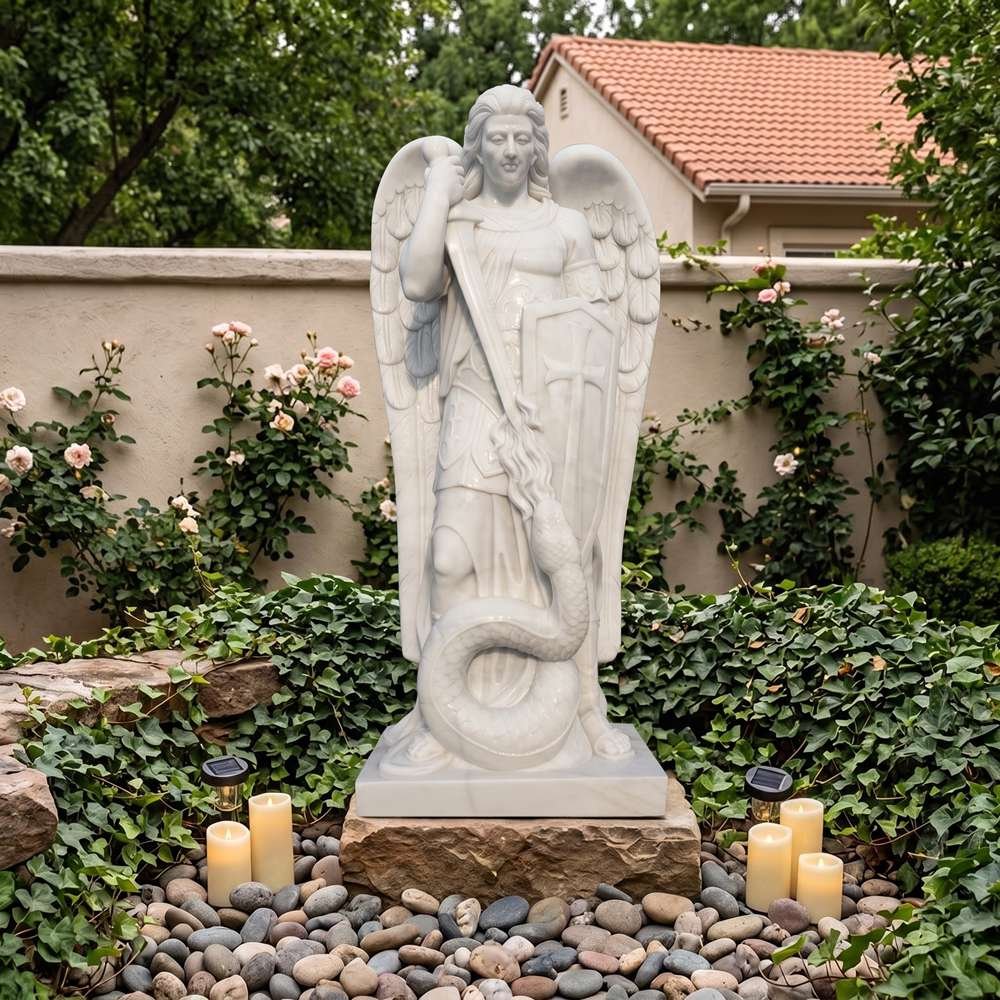
Key statue symbols: ‑ Sword: divine victory over evil ‑ Shield: heavenly protection for your whole household ‑ Often shown trampling the serpent or dragon representing evil.
Great choice if your family seeks safety, spiritual defence and courage against temptation. Life‑size bronze St. Michael is a top pick for private garden shrines.
St. Gabriel — the messenger (trumpet, lily, Annunciation)
Name meaning: “Strength of God”
St. Gabriel is God’s chief messenger angel. He interprets prophetic visions, foretells the birth of John the Baptist, and delivers the Annunciation to the Virgin Mary in Luke 1:19.
Key statue symbols: ‑ White lily: symbol of purity tied to the Annunciation ‑ Trumpet: divine announcements and God’s revelation.
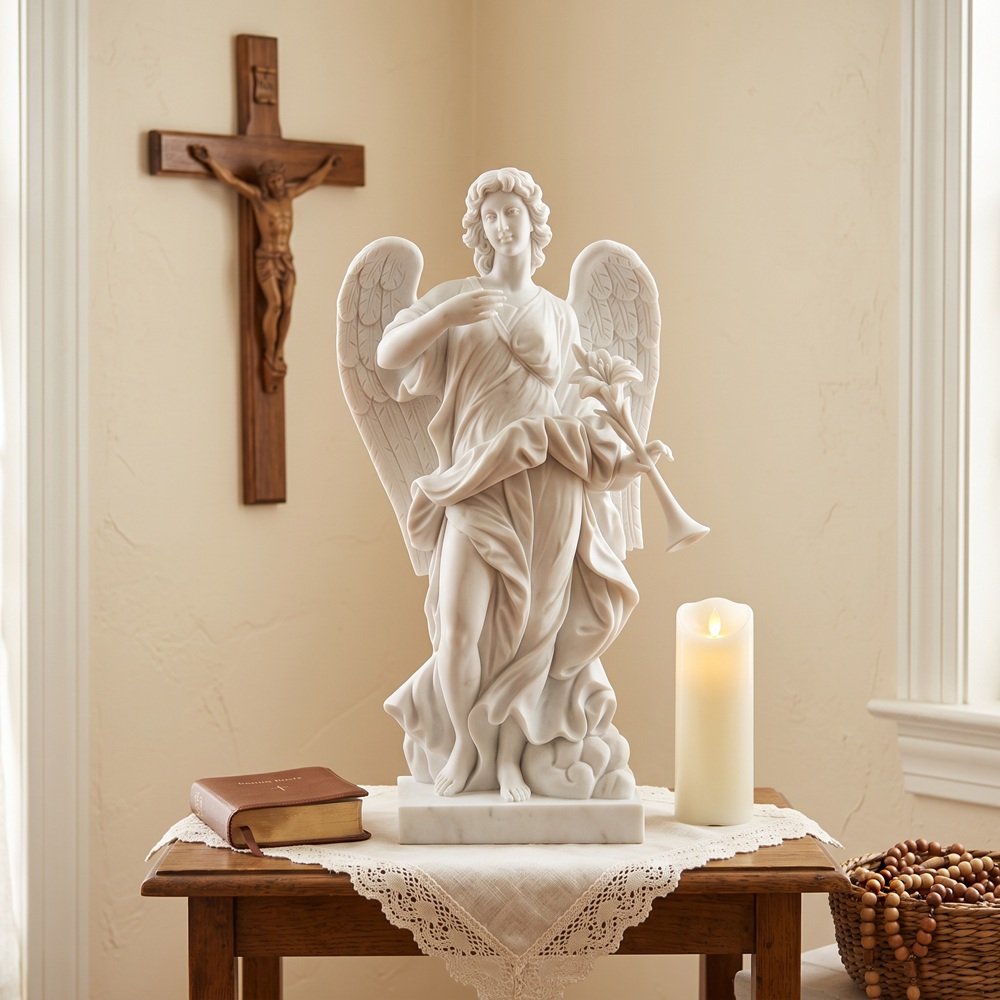
Select St. Gabriel for your home when your family desires discernment, clarity over major life decisions, and openness to God’s will.
St. Raphael — the healer & companion (fish, staff, Book of Tobit)
Name meaning: “God heals”
St. Raphael appears in the Book of Tobit, travelling disguised as a human companion. He brings healing, casts out evil spirits and restores sight to Tobit’s blind father (Tobit 12:15). He is patron of physical and emotional healing, caregivers, travellers and marriage harmony.
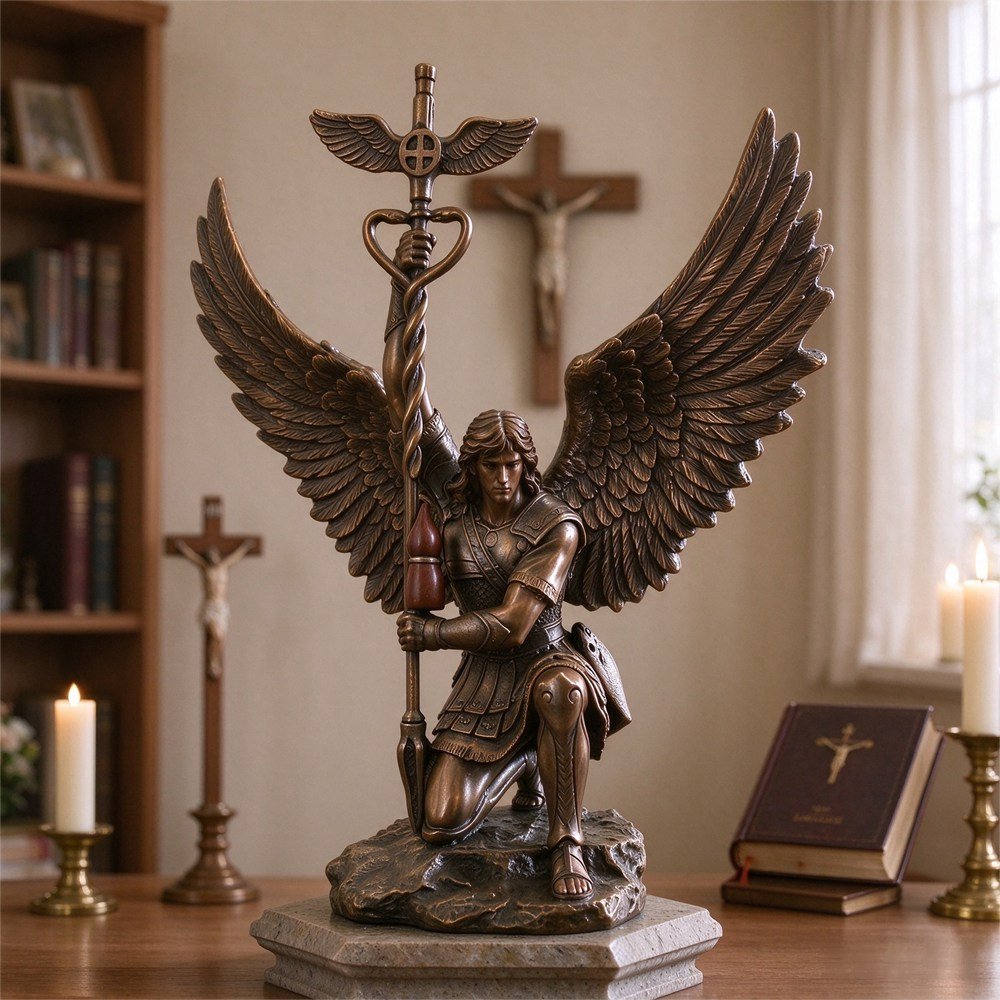
Key statue symbols: ‑ Fish: referencing the miraculous healing story in Tobit ‑ Traveller’s staff: companionship, safe journeys and life guidance.
Invoke St. Raphael in family prayer for sickness, comfort for suffering loved ones, safe travel and blessing upon family relationships.
How to Choose the Right Archangel Statue for Your Catholic Home
Whether you plan an indoor home altar, bedroom prayer nook, or an outdoor garden shrine for life‑size sculptures, your statue exists first as a devotional aid, not simple home decor. Follow these key considerations for your household.
Pick the archangel matching your family’s prayer intention
Align your statue with the main needs and prayers of your household: ‑
St. Michael: household safety, spiritual protection, courage in trials. Works well for entry areas and garden shrines. ‑
St. Gabriel: discernment, family life decisions, listening to God’s will. Perfect for indoor prayer corners.
St. Raphael: physical‑emotional healing, comfort for the sick, marriage and safe travel. Ideal for home altars.
In short, your statue serves as a visual anchor for quiet prayer. Sit or stand before it, still your wandering thoughts, and voice your intentions in simple, heartfelt words, concluding with gratitude. No elaborate ceremonies are required. Statues function solely as prayer aids: Catholics venerate the heavenly intercessor they represent, never the physical artwork itself.
But we should know that statues of Uriel, Chamuel, Jophiel, Zadkiel are sold in some spiritual‑goods stores, rooted in apocryphal traditions. They are not recommended for formal Catholic home‑altar devotion. If you purchase them for casual private reflection, please understand this important theological distinction.
Select material suited for your home’s placement
Material selection
Lost‑wax cast bronze: Extremely weather‑resistant. Best‑suited for fully‑exposed private garden shrines, courtyards and life‑size outdoor home installations.
Practical buying insight: Higher copper content does not always guarantee better quality. Our standard bronze alloy uses roughly 90 % copper mixed with tin or silicon to gain hardness, casting stability and durability — this is the proven industry formula for religious sculptures. Red copper is available as a premium upgrade for high‑budget projects. Multiple custom patina finishes are offered, and bronze needs only minimal maintenance.
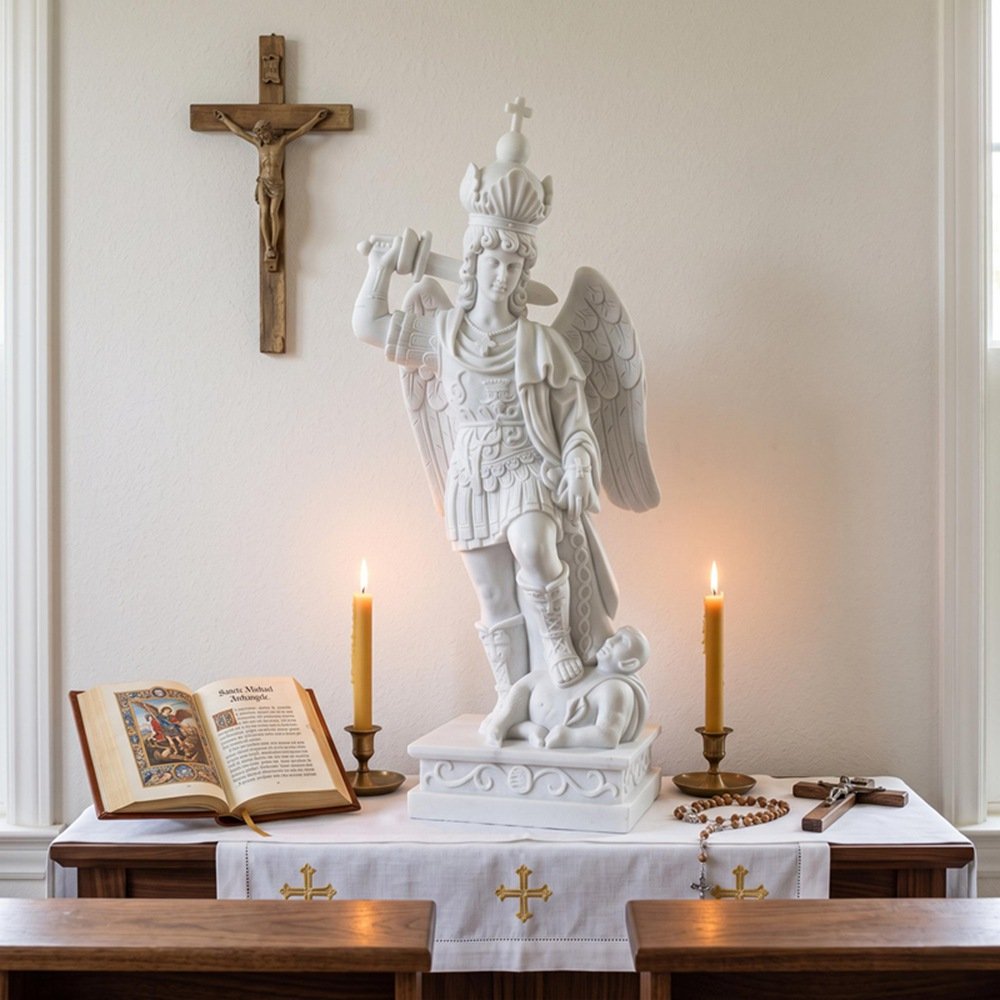
Hand‑carved marble: Beautiful luminous natural stone with fine hand‑carved details. Only for indoor spaces or semi‑sheltered covered patios.
I recommend Catholic‑home buyers select 100 % solid natural marble. I advise avoiding composite or reconstructed stone for your devotional statue. Unprotected outdoor exposure will gradually erode marble through freeze‑thaw cycles, heavy rain and harsh sunlight. I do not recommend placing marble statues in fully‑open gardens.
Choose proper size for your house or garden
Table‑top small statues: Excellent for bedroom shelves, indoor home altars and compact prayer corners, made for daily personal and short family prayer.
Life‑size statues: Demand careful home‑space evaluation. Indoors you need high ceilings, solid load‑bearing floors and at least one‑metre of unobstructed space in front to pray. If your house lacks enough indoor room, place your life‑size bronze statue in a private garden shrine. Always use a solid stone or concrete plinth to bring the figure to natural standing eye‑level. Monumental large statues: Primarily built for churches, institutional grounds and large public courtyards, less common for ordinary private Catholic homes.
Additional practical tips
Please take time to inspect sculptural details: double‑check that key symbols — sword and shield for St. Michael, lily for St. Gabriel, fish and staff for St. Raphael — align with your devotional priorities.
I also encourage you to measure your intended spot before you place your order. This simple step helps you avoid picking a statue that overwhelms your room, or one that looks undersized out in a spacious garden.
When setting up your indoor home altar, place a crucifix at its spiritual heart. Do keep in mind that the archangel statue works only as an intercessory prayer aid.
Try to keep this sacred space neat and free of everyday household clutter. For fire safety, go with solar‑powered electric candles whenever you position them near curtains.
If you are creating an outdoor garden shrine for a life‑size bronze statue, set a weather‑safe crucifix nearby. Stick with solar candles here too, and keep the area clear of garden tools and debris.
You might also build soft, approachable family‑prayer rhythms around it: gather briefly before the statue, make the sign of the cross, lift up your household in sincere prayer, and bring your quiet time to a close with gratitude.
Closing Thought
For Catholic families, archangel statues can enrich home‑based faith life, helping adults and children turn to heavenly intercessors in daily prayer. While popular spiritual sources list seven archangels, Latin‑rite Catholic household devotion centres on the three scripturally‑named archangels: St. Michael, St. Gabriel and St. Raphael.
Whether you choose a small table‑top figure for your indoor prayer corner or a life‑size bronze statue for your private garden shrine, treat your statue as a prayer aid. Let it draw your family’s hearts toward heaven as you seek the archangels’ intercession for your household’s joys, struggles and deepest needs.