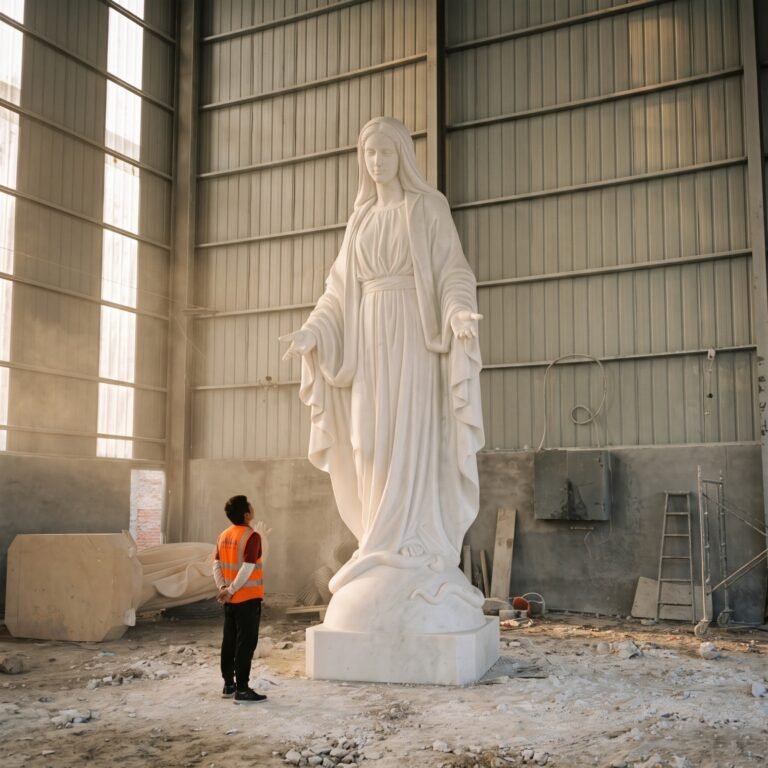
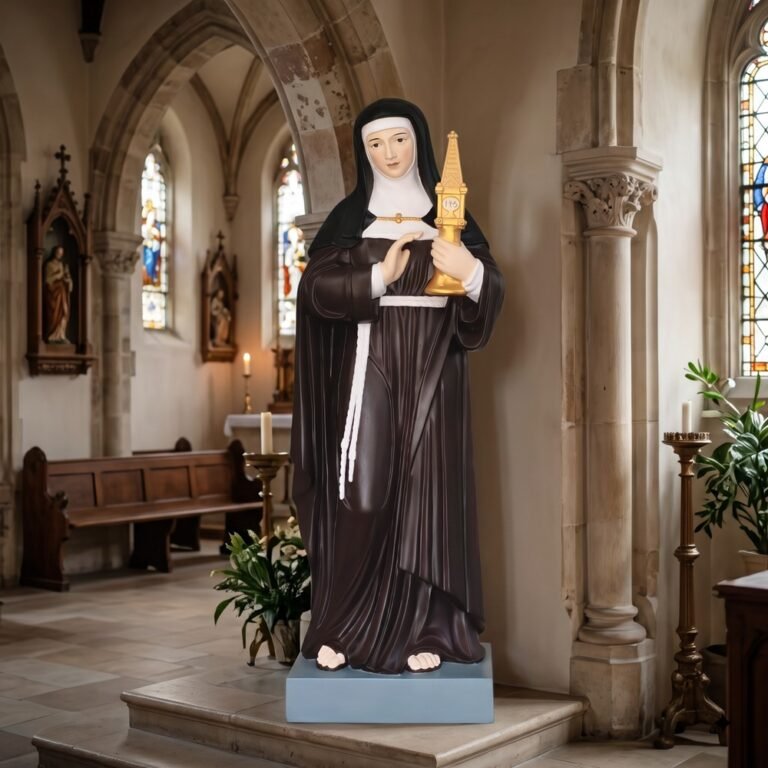
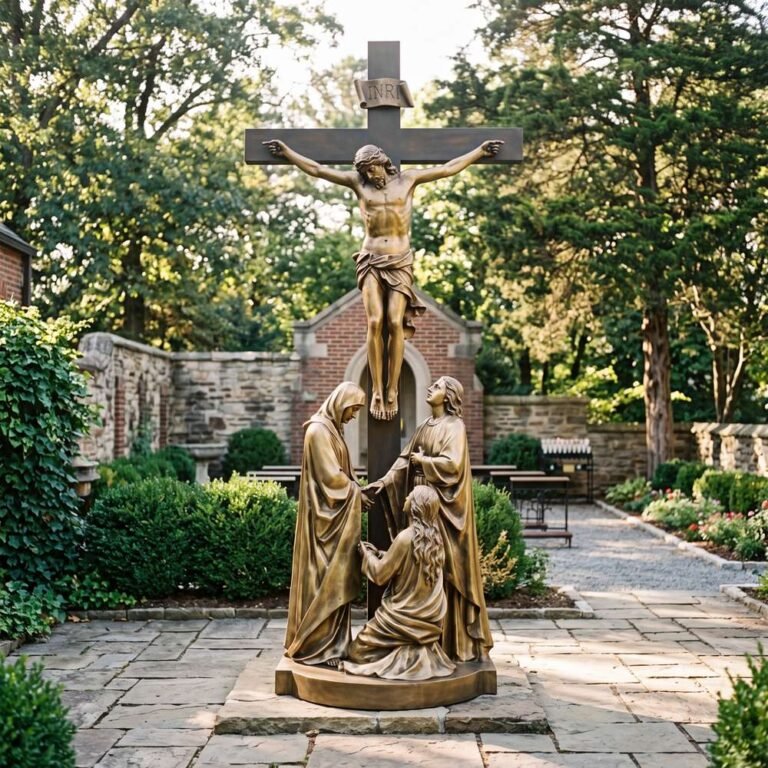
If you have ever ordered a bronze crucifix, a bronze saint statue, or a bronze relief panel for a church — and then opened the container only to find something that feels too light, rings like plastic, or has flaked paint — you already know the problem.
Some sculptures described as “bronze” are cast metal, while others are bronze-powder resin or coated products. At YouFine, we help clients compare religious sculpture specifications. This guide explains the material distinctions, why hollow construction matters, and what evidence to request before shipping.
What Is Real Bronze Sculpture?
Bronze is not one metal. It is a family of copper-based alloys — copper-tin statuary bronze, silicon bronze, and others.
There is no single “80% copper” rule, and historical bronzes vary widely in composition.
On a purchase order, the word “bronze” by itself tells you almost nothing. Brass is mostly copper and zinc, not bronze. A plated surface is not a bronze body. Both can be honest products, and both can be quoted to you as “bronze.”
What are the differences among these various “bronze” on the table — and which names are honest? Here are answers:
Tin bronze (statuary bronze).
Copper alloyed with tin. The classic sculpture alloy, and what most people mean when they say “bronze.” Fresh from the mold it reads coppery to golden. It casts cleanly, takes robe folds and facial planes, and accepts patina beautifully. This is the alloy you want named on the order.
Silicon bronze.Copper alloyed with silicon instead of tin. Still a true bronze, often golden, and a common choice for outdoor work because it stands up to weather. But “silicon bronze” is not one fixed recipe — ask for the grade.
Aluminum bronze. Copper alloyed with aluminum, sometimes iron or nickel. Naturally yellow-gold, hard and strong, used where corrosion resistance matters. A dark surface color does not by itself prove this alloy.
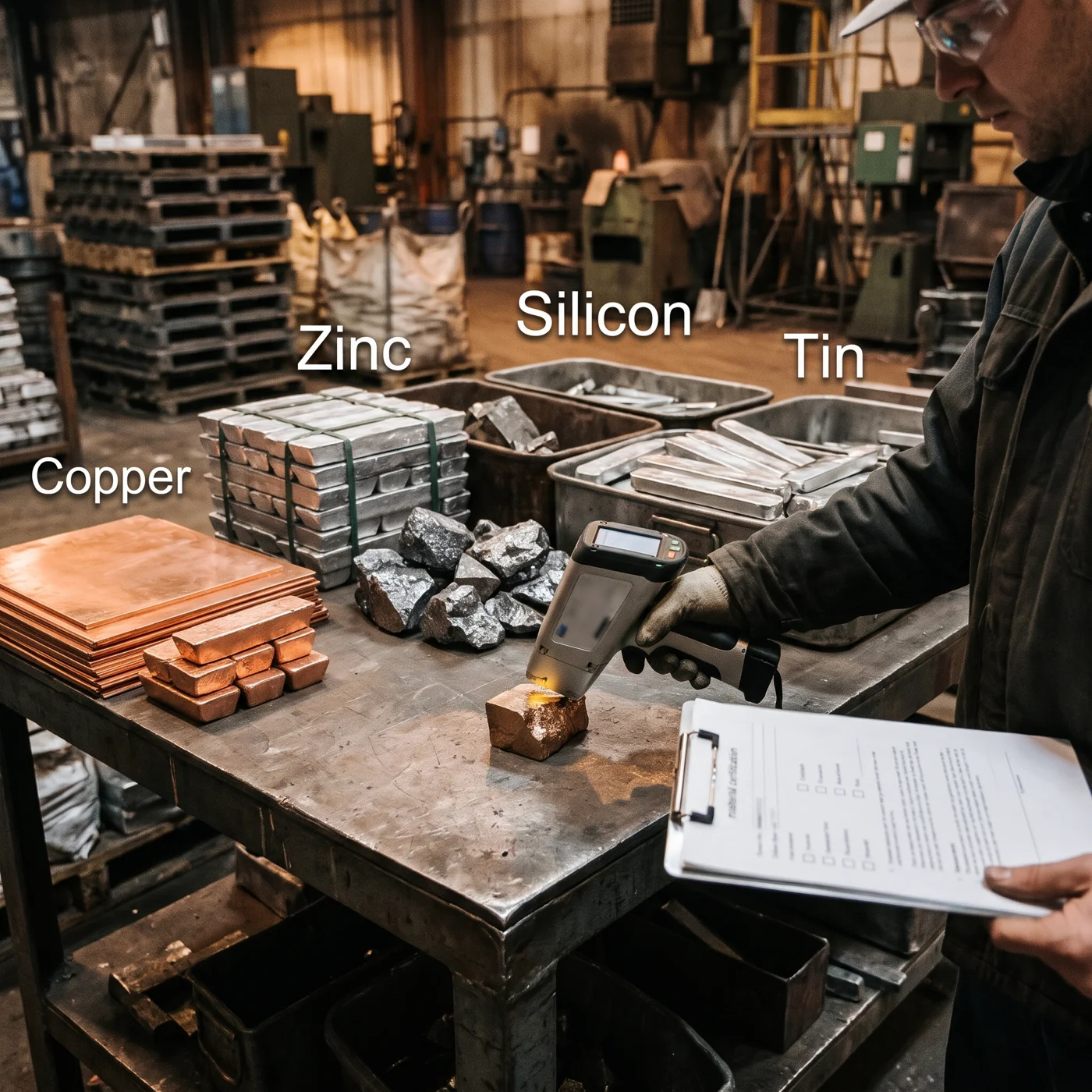
Manganese bronze. This is the name to watch. Most “manganese bronze” on the market is actually a copper-zinc brass with a touch of manganese — not a tin bronze at all. Ask for the full composition.
Brass. Copper and zinc, sometimes lead for machining. Honest, workable, often cheaper — but it is brass, not bronze, and it should be quoted as brass.
Red copper (pure copper). Nearly pure copper, pinkish-reddish. Used for repoussé and formed work, and sometimes cast. It is not a bronze.
On the order, the word that protects you is the alloy designation, not the word “bronze.” Silicon bronze and statuary bronze are both real — but they are different metals, at different prices, with different surfaces. Brass and red copper are not bronze at all. If a quote says only “bronze,” ask one question: which one?
And you also can ask your religious statue supplier for photographs of the raw casting — fresh from the mold, ground and polished but still uncolored.
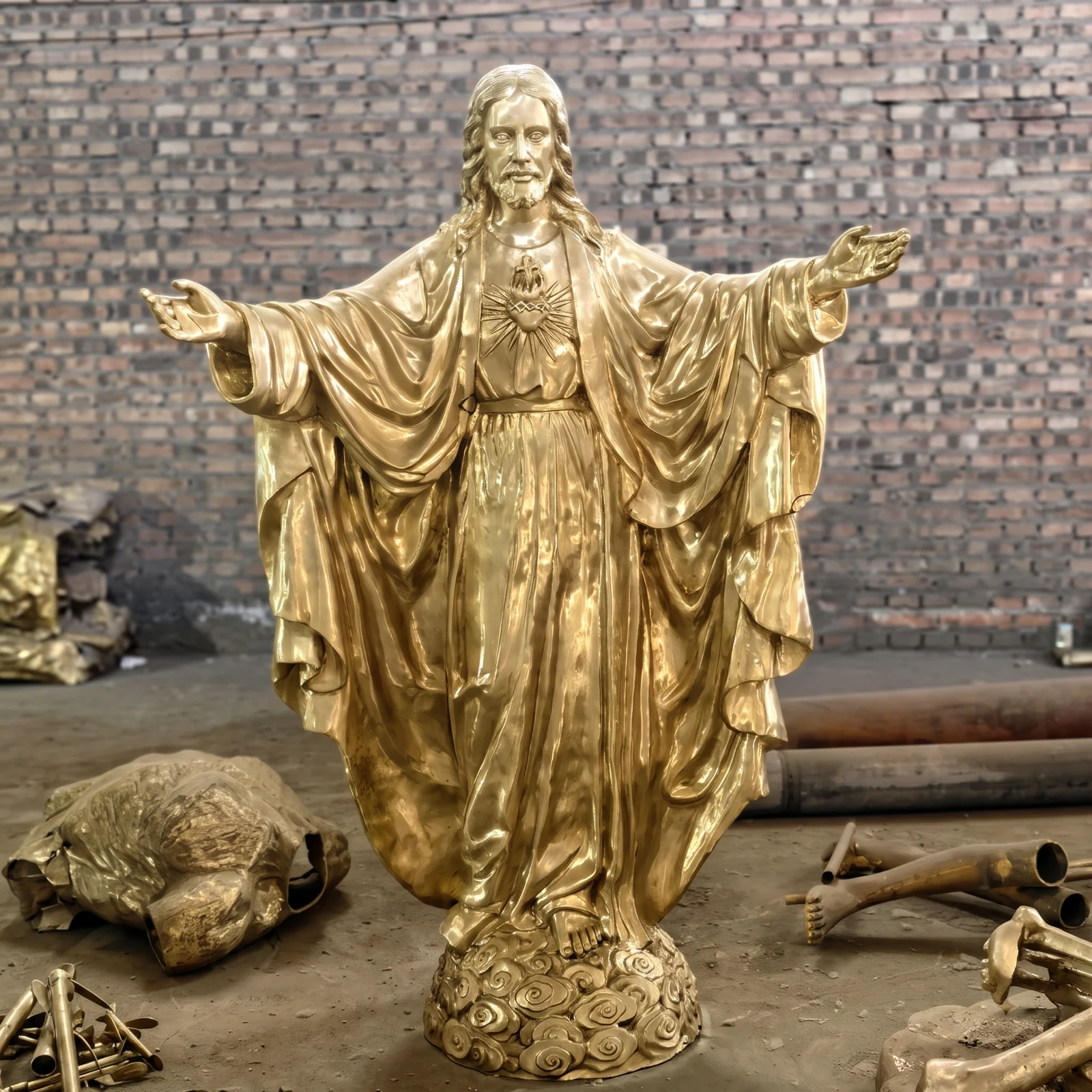
In that state, the surface shows the alloy’s natural face: tin bronze reads coppery to golden, silicon bronze golden, aluminum bronze yellow-gold, red copper pinkish. Color alone will not certify the composition, but it narrows the answer within seconds, and it lets you compare the metal in the photo with the alloy written on the order. A foundry casting real bronze has these photos already — they are taken between grinding and patination as a matter of course.
So it is not weird that your bronze religious statues come in different colors, and they are all made from real bronze.
But it can go worse than that. Resin and coated work, honestly sold, are fine. The trouble is the supplier who quotes them to you as cast bronze on purpose — the price gap is the whole point.
How to Tell Cast Bronze, Bronze Resin, and Bronze-Coated Apart
In this section, I will share what we have learned on the foundry floor — the knowledge and the practical checks to help you. When you solicit quotes for a bronze Sacred Heart, a bronze Saint Francis, or a bronze Stations of the Cross relief, you will meet three products under three confusing names. This is how we separate them.
Cast Bronze
The usual route is lost-wax, cire perdue: clay model → silicone mold → wax positive → ceramic shell → wax melted out → molten bronze poured → shell broken away → sections welded, ground, chased, patinated.
What it weighs depends on size, wall thickness, base and internal bracing. Ask for the net weight of your own design — there is no catalog number for “a life-size bronze,” and any supplier who quotes one without your drawing is guessing. Tapped, it should answer like metal, though a figure braced with internal steel sounds deader than a free shell. It reproduces tunic folds, feathers and facial planes beautifully. Resin reproduces detail just as well, so fine carving is never the way to tell them apart.
Why One Alloy Can Still Arrive in a Different Color
This is the question we hear most: “You sent a photo of a golden Christ in the workshop, but I ordered a dark antique statue. Why don’t they match?”
Two layers are at work. The first I have mentioned above. A raw casting, fresh from the mold, ground and polished but not yet colored, shows the natural face of the metal — and bronze is not one color. Tin bronze runs coppery to golden. Silicon bronze is golden. Aluminum bronze is yellow-gold when clean. Much of what is sold as “manganese bronze” is actually copper-zinc. Red copper is pinkish.
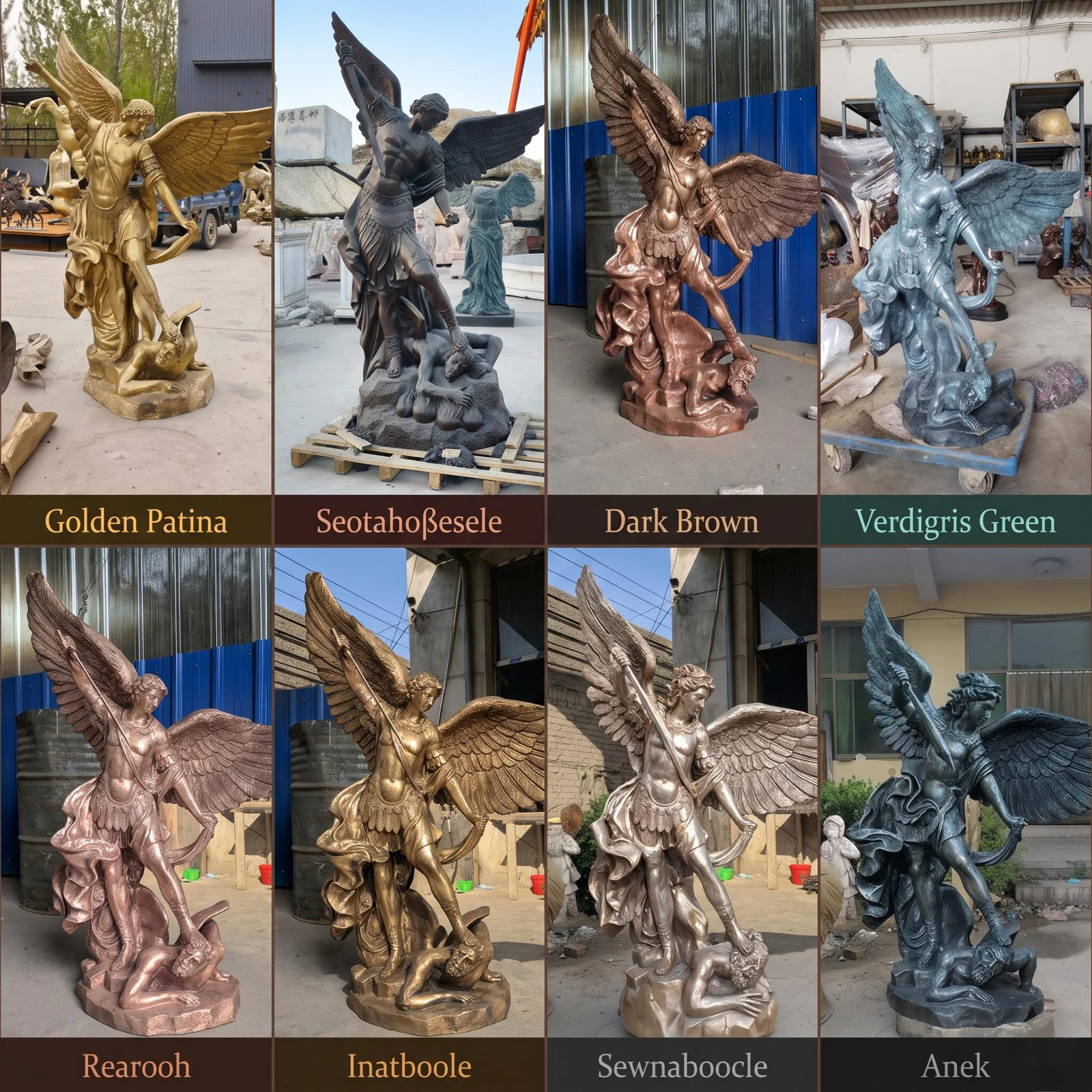
The second layer is the patina on top. Once the alloy is chosen, the finish changes the surface: mirror polish, warm antique brown, dark bronze near-black, verdigris green for outdoor work, red copper or rose, silver-grey for modern church interiors. The same alloy takes all of them. Confirm in writing whether the effect is chemical patination, polishing, plating, paint, or a mix.
One caution. Real chemical patina alters the metal surface and can be uneven. Painted-on “antique bronze” is a coating. But paint is also used deliberately over genuine bronze, so a uniform surface proves nothing either way. Compare the delivered piece against the approved sample, and read the finish description.
Bronze Resin
This is resin mixed with bronze powder, cast in molds. No molten bronze is involved. The powder may run through the whole resin, or sit only at the surface.
It is lighter than real bronze — and the manufacturers know it. They fill the inside with stone dust or plaster until the piece feels heavy in your hands. Do not trust “it feels heavy.” The surface can even be polished and chemically patinated, because the exposed powder reacts with patina solutions. That is why a metallic-looking, slightly greened surface does not prove a bronze body.
Cold-cast bronze is a legitimate product when it is described honestly. The trouble starts only when it is quoted to you as cast bronze.
Bronze-Coated
Fiberglass, resin, or another metal can carry plating, a metal-filled coating, or metallic paint. These are three different systems, and the quote should name both the substrate and the surface.
A coating can wear, chip, or separate, and the repair depends entirely on what is underneath. Inspect only existing accessible spots — a base edge, the back. Never scratch the finish to “check.” Scratching damages an honest statue and proves nothing about a dishonest one.
In short, cast bronze is poured, not built up. Bronze resin is a resin body with metal powder mixed in. Bronze-coated is another material wearing a bronze-colored skin. If a quote says only “bronze,” ask which of the three it really is.
Is a Hollow Bronze Statue Really Made of Bronze?
The answer is yes. A hollow bronze statue can be genuine cast bronze. Hollow describes the construction; bronze describes the material. Solid is not automatically better.
You may wonder: doesn’t casting a statue hollow shorten its life? It does not. The life of the piece depends on the wall thickness, the internal structure, and whether it is installed correctly — not on whether it was cast solid or hollow.
Here is why hollow is normal. Molten bronze shrinks as it cools. A thick, solid section needs careful casting design to avoid shrinkage defects, and a large solid figure would be enormously heavier — lifting, freight and foundation costs multiply. That is why large figures are cast as shells, with a designed wall thickness, internal bracing and mounting points.
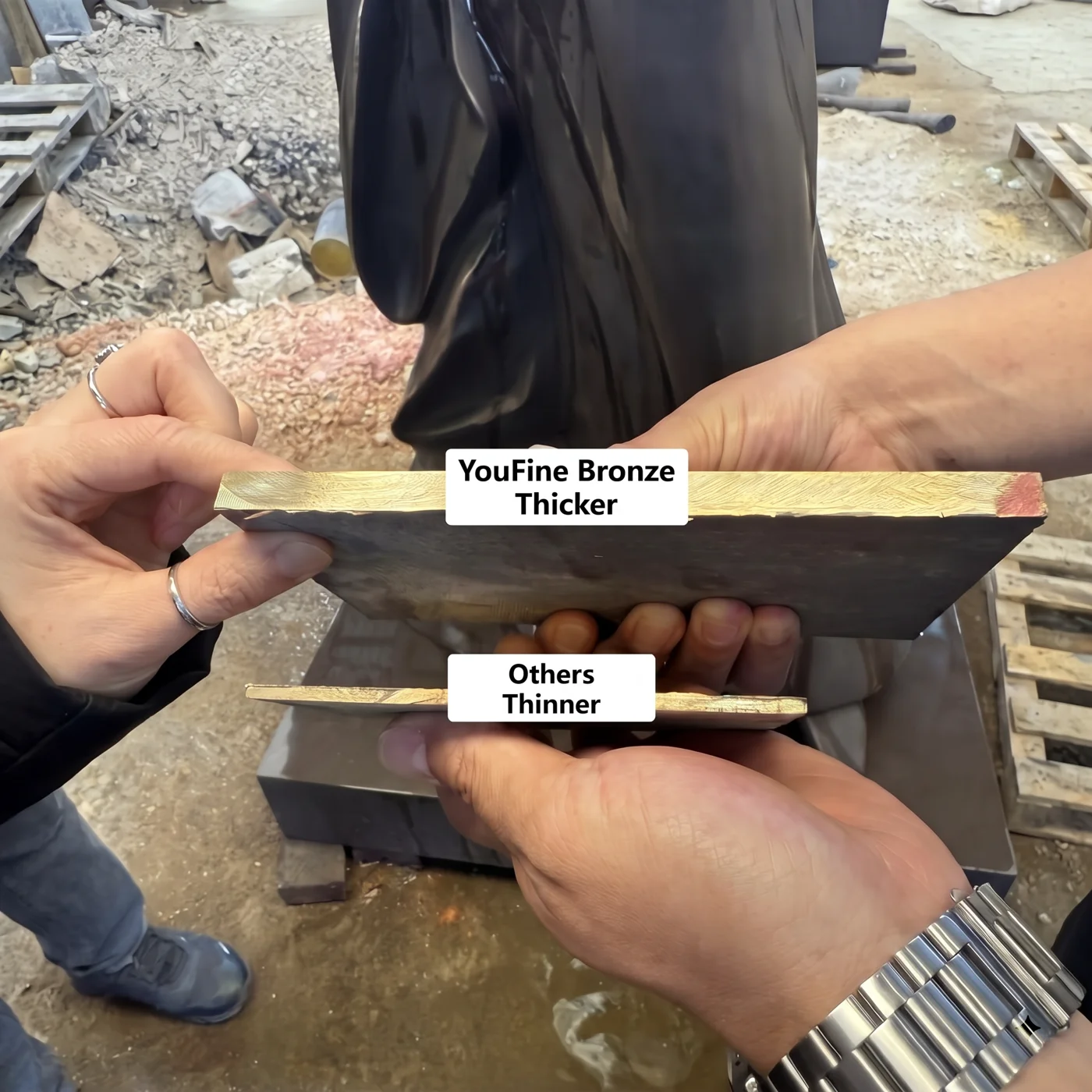
Small figures may be solid or hollow, depending on the design and the process. There is no universal cutoff size. For medium and life-size work, ask for the specified wall thickness and how it is checked.
Strength is a matter of the whole design — alloy, casting quality, section thickness, joints and supports. One last thing worth saying: controlled recycled feedstock is not inferior by default, and monumental cladding is a different product from a freestanding church casting. They should not be quoted as if they were the same thing.
How Can You Check the Material Before Shipment?
Whether you are standing in the foundry or watching on a video call, the goal is the same: confirm the piece in front of you is actually your commissioned bronze before it leaves the factory.
In Person
If you visit the foundry or sign off in person, keep three rules:
Do not strike the surface with a coin or a wrench. Sound is only a clue — shape, wall thickness and internal bracing all change it.
Use a magnet, cautiously. Bronze is nonmagnetic. But steel braces inside the statue will pull the magnet, and so will nothing at all — resin is nonmagnetic too. Neither result settles the question.
Look at an existing exposed spot. A base edge or the back may show construction details. Not every casting offers one, and its color will not identify the alloy. Do not scratch the finish.
These observations tell you what questions to ask. The answers come from the written specification and the material records.
By Video
Most buyers cannot fly to the foundry for every order. A live video documents the real piece — but it is not a substitute for material records. Ask the supplier to do three things:
- identify the piece continuously — order reference, full views, close-ups — so the inspection is tied to your commission;
- show the base, back, joints and mounting points against the agreed design;
- show the scale and tape readings, state the net weight separately from packing weight, and hand over material records traceable to the casting batch.
One math lesson we give every client. Do not divide the statue’s weight by height × width × depth. Those numbers describe a box of air around the sculpture, not the volume of metal. A hollow, irregular bronze figure has a low weight-to-box ratio, and that is perfectly normal.
For high-value orders, or any discrepancy you cannot resolve on video, agree on independent inspection. XRF testing reads surface composition, but coatings and corrosion affect the reading. A useful report identifies the item, the spots tested, the method, and its limits.
The Bottom Line
A cast bronze religious sculpture — saint, archangel, Madonna, relief — has a bronze body, solid or hollow. Verify it through the written specification, item-specific material records and sensible inspection. Not through tapping, weighing, color judgment, or scratching.
If you are comparing quotes, send us the design, the dimensions, the installation location, and the material you have specified. We will tell you what to ask for — and what evidence to require — before shipment.