The most reliable way to verify a bronze religious sculpture is to combine a written material specification, traceable production records and, when needed, independent material testing. Color, weight, a magnet or a tapping sound cannot prove the material on their own.
Whether you are buying a bronze Jesus statue, a saint figure or church relief panels, first establish what the supplier means by “bronze.” Cast bronze, bronze-powder resin and bronze-colored coatings are different products. Each should be described accurately in the quotation and order agreement.
What Is the Difference Between Cast Bronze, Bronze Resin and a Bronze-Colored Finish?
| Product description | What it means | What to ask before ordering |
|---|---|---|
| Cast bronze | The sculptural body is cast from a copper-based bronze alloy. It may be hollow or solid, depending on its design. | Alloy designation or composition, construction details, net weight and finish specification. |
| Bronze resin / cold-cast bronze | Resin containing bronze powder, sometimes concentrated in a surface layer. It is not a bulk bronze casting. | Resin system, metal-powder content or surface construction, intended environment and care requirements. |
| Plated or metal-coated sculpture | A different substrate carries a metallic surface layer. | Substrate, coating material and thickness, repair options and outdoor suitability. |
| Bronze-colored painted sculpture | Paint creates the appearance of bronze over another material. | Substrate, paint system, maintenance instructions and intended use. |
Bronze resin and coated sculptures are not automatically fraudulent. The concern is whether a product sold as cast bronze actually matches that description. A well-made resin devotional figure and a cast bronze church monument serve different budgets and requirements.
Do not assume that all products described as “bronze-coated” use the same construction. Ask the seller to distinguish metal plating, a metal-filled coating and ordinary metallic paint.
What Alloy Should a Bronze Religious Statue Use?
Bronze is a family of copper-based alloys, not one universal 80% copper recipe. Traditional tin bronzes and silicon bronzes can have different compositions. A copper percentage alone is not a complete material specification or a measure of finished sculpture quality.
For example, the Copper Development Association lists a minimum copper content of 94% for C87300 silicon bronze. This illustrates why an 80% copper threshold cannot separate genuine bronze from other materials. See the C87300 alloy specification.
Ask your supplier to identify the actual alloy used for your order. If the quotation gives a composition rather than a recognized designation, request the relevant element ranges and supporting documentation.
Also clarify which components the specification covers. The bronze body, base, mounting bolts and internal support may use different materials. A sculpture described as cast bronze may legitimately contain structural components made from another metal, provided that construction is disclosed and suitable for the project.
Is a Hollow Bronze Statue Genuine Bronze?
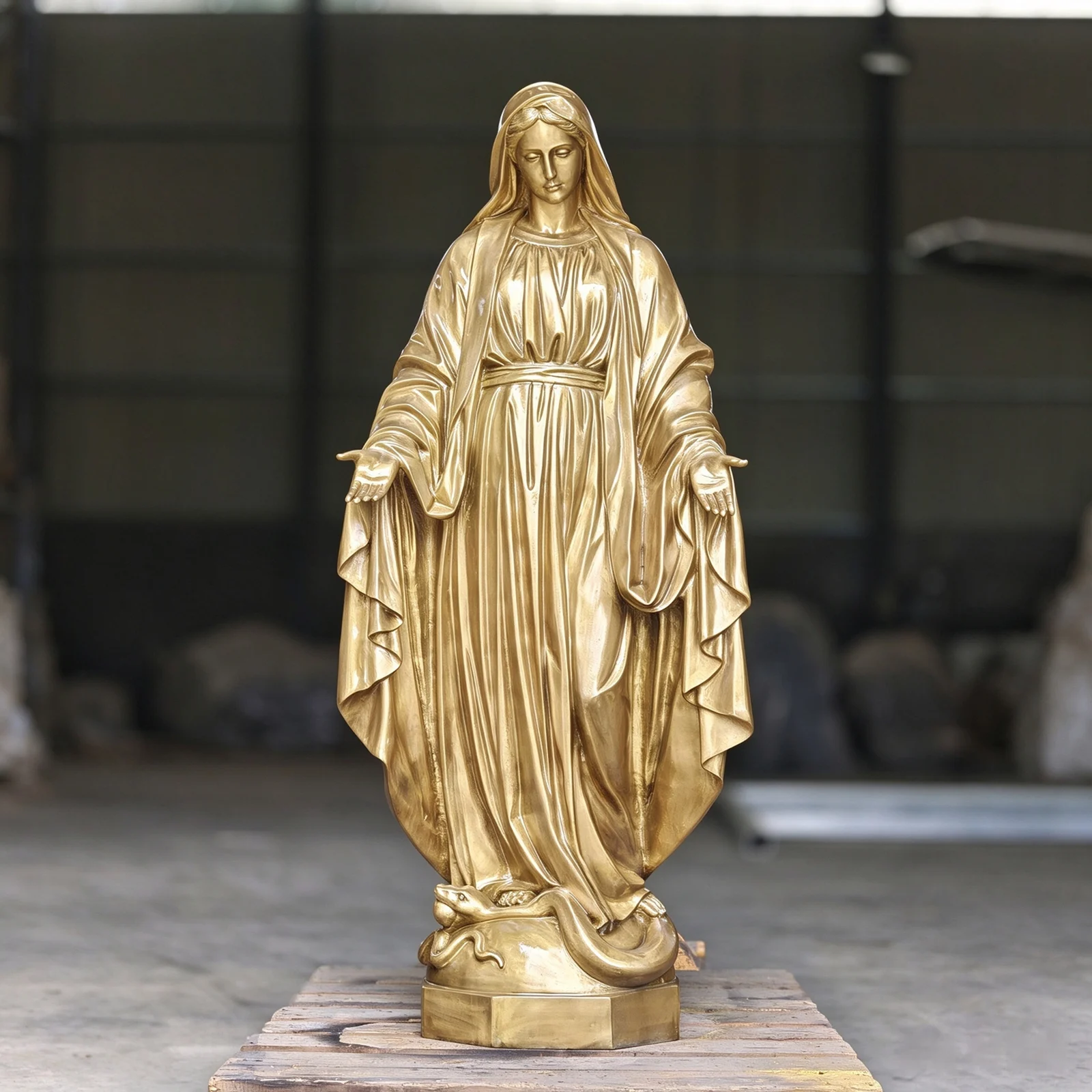
Yes. A hollow bronze body can be genuine cast bronze. “Hollow” describes its construction; “bronze” describes its material.
Many large sculptures are cast as shells, sometimes in sections that are subsequently joined and finished. Small pieces may be solid. Neither construction establishes authenticity by itself.
There is no single wall thickness that suits every religious sculpture. Dimensions, projecting arms or wings, supports, mounting arrangements and the installation environment all affect the design. For a large outdoor commission, request project-specific construction and installation information rather than relying on a generic thickness chart.
Accessible interior photographs can help document construction, but they are not a material certificate. Visible welds, rough casting surfaces or internal supports may be useful evidence; their absence is not proof of a fake. A smooth or flat back on a relief panel does not establish that it is resin.
Can You Identify Bronze by Color, Sound or a Magnet?
These observations can raise questions, but none is a conclusive identification method. Avoid tests that could damage the sculpture or its finish.
| Check | What it can help you assess | Why it cannot prove authenticity |
|---|---|---|
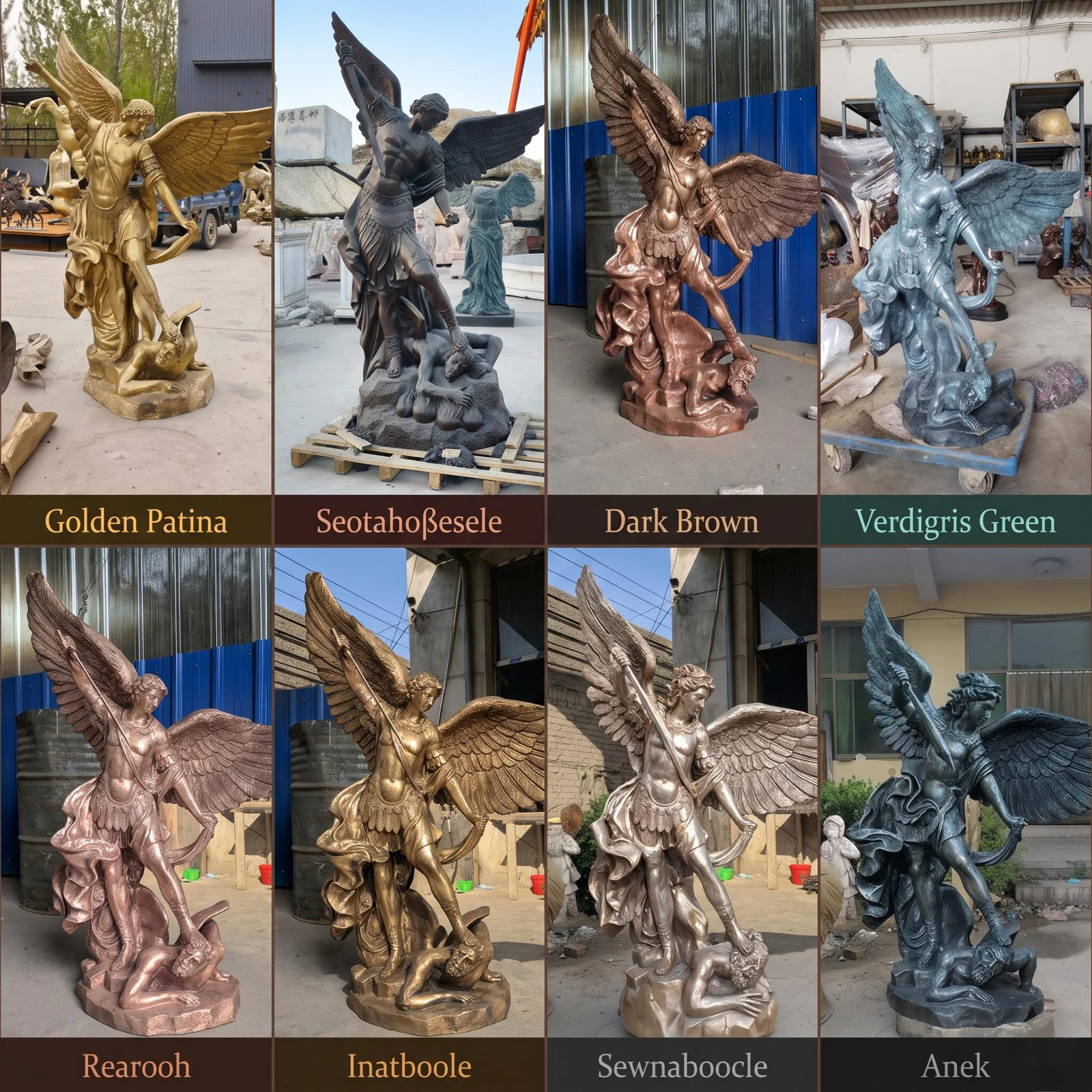
| Surface color and patina | Whether the finish matches the approved sample. | Different materials and treatments can produce similar appearances. |
| Weight | Whether the delivered item is consistent with the stated net weight and construction. | Hollow shapes, bases, supports and fillers can change total weight substantially. |
| Magnet response | Whether a magnetic component may be near the test location. | Steel hardware or internal supports may affect the result; many non-bronze materials are also nonmagnetic. |
| Tapping sound | A limited clue about the object’s construction. | Shape, wall thickness, supports and damping affect sound. A clear ring is not guaranteed. |
| An existing exposed area | A view beneath the decorative surface, if safely accessible. | Appearance alone does not establish alloy composition or the material throughout the object. |
Do not strike the sculpture with a wrench or scratch through its patina to look for a particular color. If further examination is necessary, agree on a suitable method with the supplier or an independent specialist.
Why the “Weight Divided by Height × Width × Depth” Test Does Not Work
The outer dimensions of a statue describe a surrounding box, not the volume of metal in the sculpture. That box includes air around the figure and, for a hollow casting, air inside it.
Dividing the statue’s weight by that box volume therefore does not give the density of its alloy. A low result does not prove that a sculpture is resin. Use net weight as a consistency check against the agreed specification, not as a standalone density test.
What Should You Request Before the Sculpture Ships?
Request evidence tied to your specific order, not only general workshop photographs or an unrelated sample certificate. A useful pre-shipment review covers the following:
- Written material description. Confirm whether the body is cast bronze, bronze resin, plated or painted. Record the alloy specification where applicable.
- Order identification. Ask for an order reference or other clear identifier in inspection records so that photographs and reports can be connected to your sculpture.
- Production photographs. Request relevant stages of casting, assembly and finishing. Images should document the commissioned piece rather than simply illustrate the general process.
- Dimensions and net weight. Confirm how height is measured, whether the base is included, and whether the weight excludes the shipping crate.
- Accessible construction details. Where practical, review the base, back, mounting points and internal supports without dismantling or damaging the work.
- Finish approval. Compare overall and close-up views with the approved finish sample. Explain expected hand-applied variation before acceptance.
- Installation and care information. Confirm the supplied fixings, foundation or support requirements, handling arrangements and maintenance guidance.
- Inspection terms. Agree on acceptance criteria, any independent inspection and the procedure for resolving a material mismatch before final payment.
A live video inspection can help connect these records to the finished item. Ask the supplier to show the sculpture continuously, identify the order and demonstrate agreed measurements. Video is useful documentation, but it does not replace laboratory testing when the alloy itself remains in dispute.
When Is Independent Material Testing Worth Considering?
For a high-value commission, inconsistent documentation or a disputed material description, consider an independent inspector or materials laboratory.
X-ray fluorescence, commonly called XRF, can help identify elemental composition at the examined surface. However, coatings and corrosion layers can complicate interpretation. The Getty publication on bronze micro-XRF analysis explains how altered surface layers can differ from the underlying alloy.
Ask the specialist to choose appropriate locations and explain what the results establish. A surface reading should not automatically be treated as proof of the material throughout the sculpture. Reports should identify the examined item, locations, method and limitations.
For antique works, material identification is also separate from attribution and age. Confirming a bronze alloy does not establish the artist, date or provenance.
How Long Will a Bronze Statue Last Outdoors?
Outdoor durability depends on the alloy, casting quality, structural design, environment, surface protection and maintenance. There is no universal lifespan for every bronze statue or every resin alternative.
Bronze can develop a patina and can also suffer corrosion. Coastal exposure, trapped moisture and contact with other materials may require additional consideration. Ask for care instructions suited to the location rather than assuming that bronze is maintenance-free.
The Canadian Conservation Institute’s metal-care guidance describes corrosion risks and the distinction between stable surface changes and active deterioration.
When comparing proposals, evaluate material, construction, finish, packing and installation scope together. A lower price alone does not prove substitution, just as a higher price does not guarantee quality.
Frequently Asked Questions
Does “Solid Bronze” Mean the Statue Has No Hollow Interior?
The phrase can be ambiguous in sales descriptions. Ask whether the seller means a bronze body rather than bronze resin, or a literally solid casting. Put the agreed construction in writing.
Is Cold-Cast Bronze the Same as Foundry-Cast Bronze?
No. Cold-cast bronze generally describes a resin composite containing bronze powder. Foundry-cast bronze uses molten metal. Ask for an explicit material description rather than relying on the word “bronze” alone.
Can a Real Bronze Statue Have a Painted or Plated Finish?
Yes. The substrate and its finish are separate specifications. A particular surface treatment does not by itself establish what the underlying body is made from.
Does a Material Certificate Guarantee the Entire Sculpture Is Bronze?
Not by itself. Check what was tested and whether the certificate is traceable to the relevant batch or item. Clarify whether it covers the sculptural body, a sample, or another component.
Planning a Bronze Religious Sculpture?
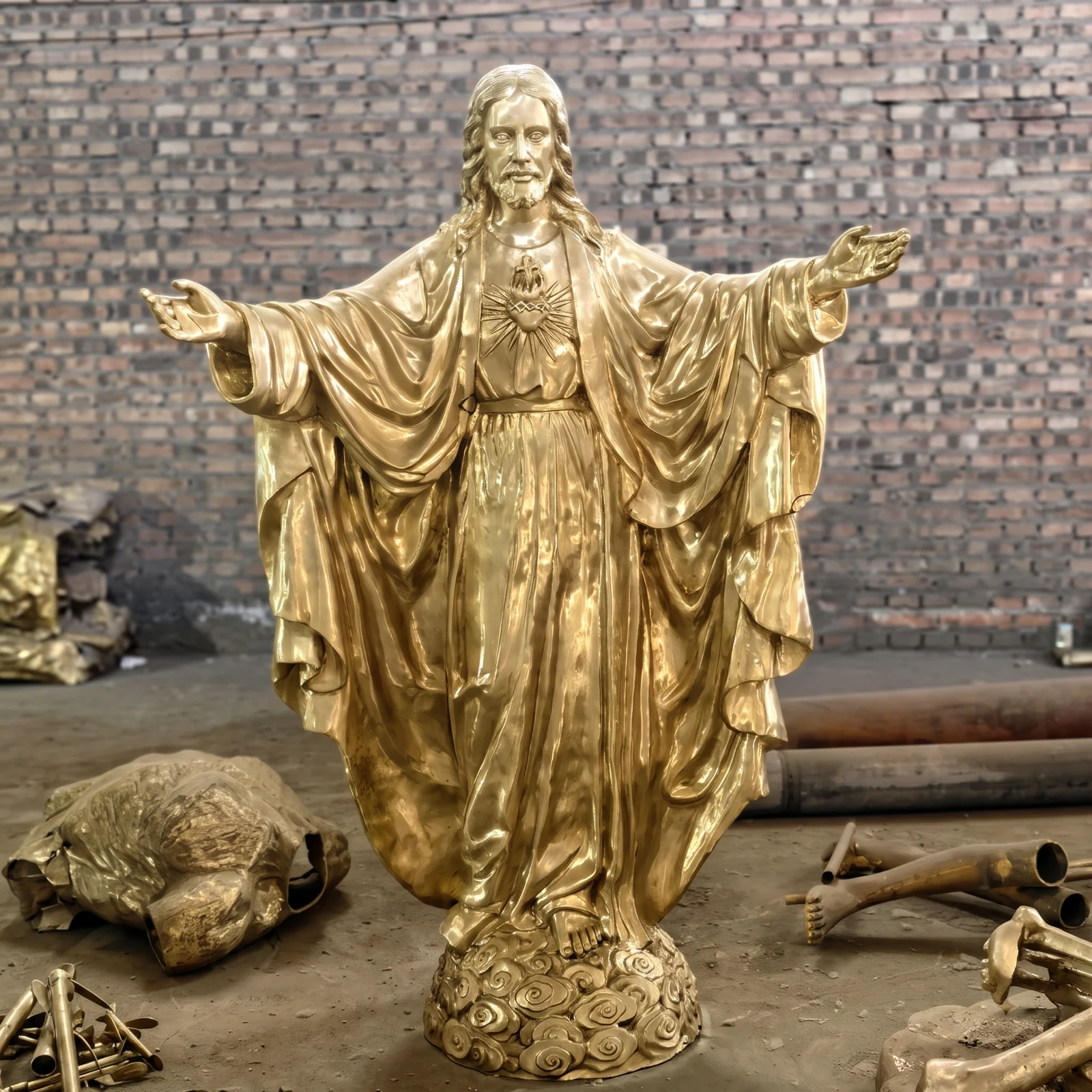
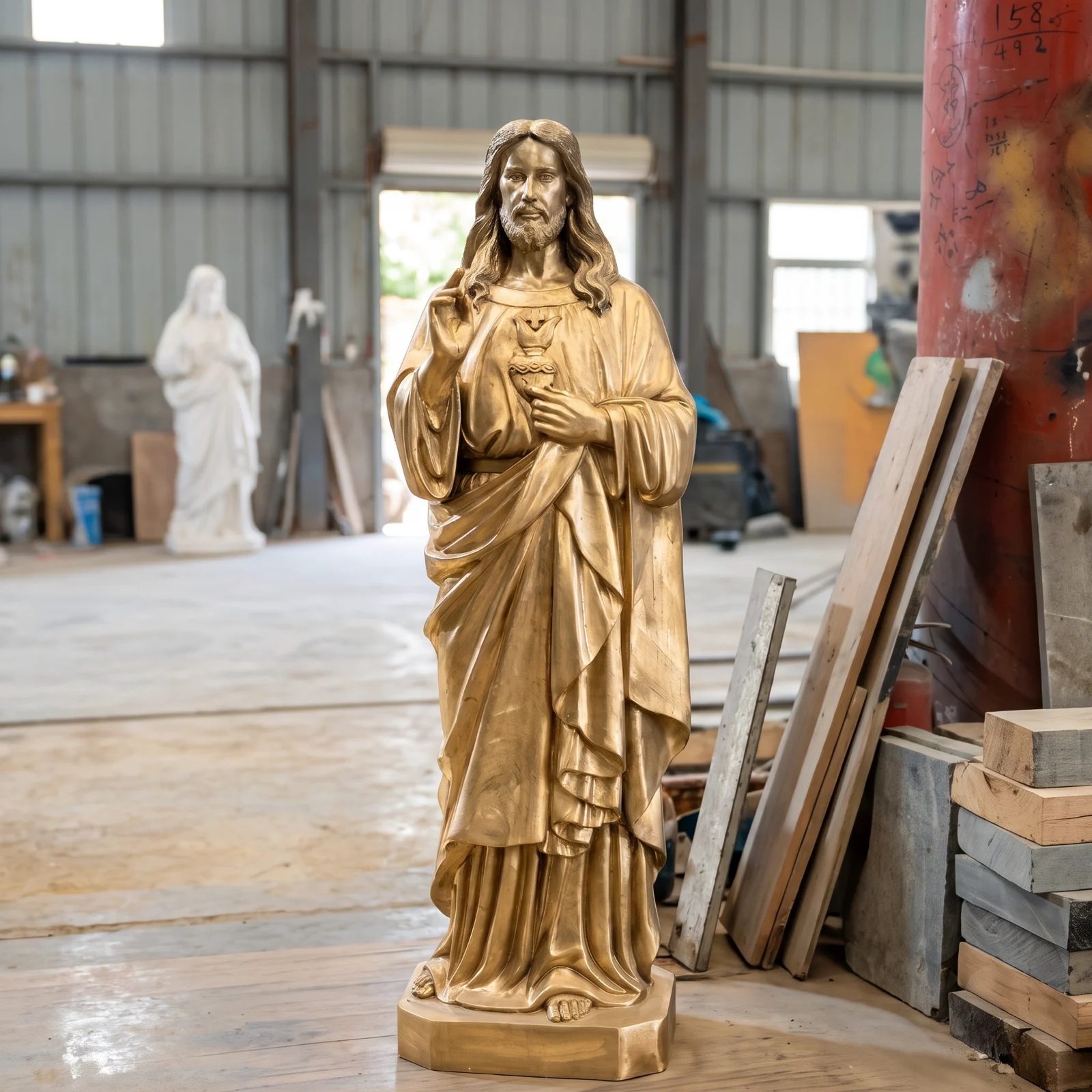
Explore bronze Jesus statues or bronze Virgin Mary statues to compare designs for your project.
When requesting a quotation from YouFine, include the proposed design, height, installation location and preferred finish. Ask for a written material and construction specification, and agree on the inspection evidence before placing the order.