For nearly two thousand years, Christian sculptors have transformed stone, bronze, and wood into prayers made visible. Standing before these masterpieces, you don’t just see art—you feel something shift inside you. Your breath catches. Time slows. These are not mere objects to admire from a distance; they are encounters with the sacred, moments when the boundary between the earthly and the divine becomes thin as a veil carved from marble. This journey through time reveals the most impressive Christian sculptures ever created—works that still have the power to move us to tears, to prayer, and to wonder.
Late Medieval
The Well of Moses (Le Puits de Moïse)
The Well of Moses isn’t actually a well—it’s a hexagonal base that once supported a monumental crucifixion scene. What remains today is extraordinary enough: six life-sized Old Testament prophets standing guard around what was meant to be the base of Calvary itself.
Claus Sluter (c. 1355/60–1405/06), born in Haarlem in the Netherlands, became the chief sculptor for Philip the Bold, Duke of Burgundy. During the 14th century, Netherlandish Renaissance sculpture remained largely an architectural accessory, continuing Gothic traditions. Known sculptors were fewer than painters. But Sluter was exceptional.
What makes this work revolutionary is Sluter’s unprecedented realism. These are not idealized, serene medieval figures—they are individuals. Moses is a powerful, aged leader with a magnificent beard that seems to flow like water, holding the tablets of the Ten Commandments with solemn dignity, his head slightly bowed as if in deep contemplation.
Jeremiah appears lost in sorrowful meditation. David wears spectacles—a contemporary 15th-century touch that must have startled viewers. Each prophet is dressed in heavy, deeply carved robes that fall in natural, complex folds.
Originally, the prophets were painted in lifelike colors, their robes gilded, creating an almost overwhelming sense of presence. Sluter also created 40 mourning figures (each 41 cm high) for the Duke’s tomb (1391–1397), each with distinct expressions and postures—a testament to his extraordinary realistic carving skills.
Renaissance
Pietà
Michelangelo was only twenty-four years old when he completed the Pietà, yet he created what many consider the most perfect sculpture in Christian art. The scene is heartbreaking in its simplicity: Mary cradles the dead body of her son Jesus across her lap, just removed from the cross.
The technical mastery is breathtaking. Michelangelo carved both figures from a single block of flawless Carrara marble—no joints, no additions, just pure stone transformed into flesh. Christ’s body is rendered with anatomical perfection: every muscle, every vein, every detail of his crucified form is present yet peaceful in death. His right arm hangs with the weight of genuine lifelessness.
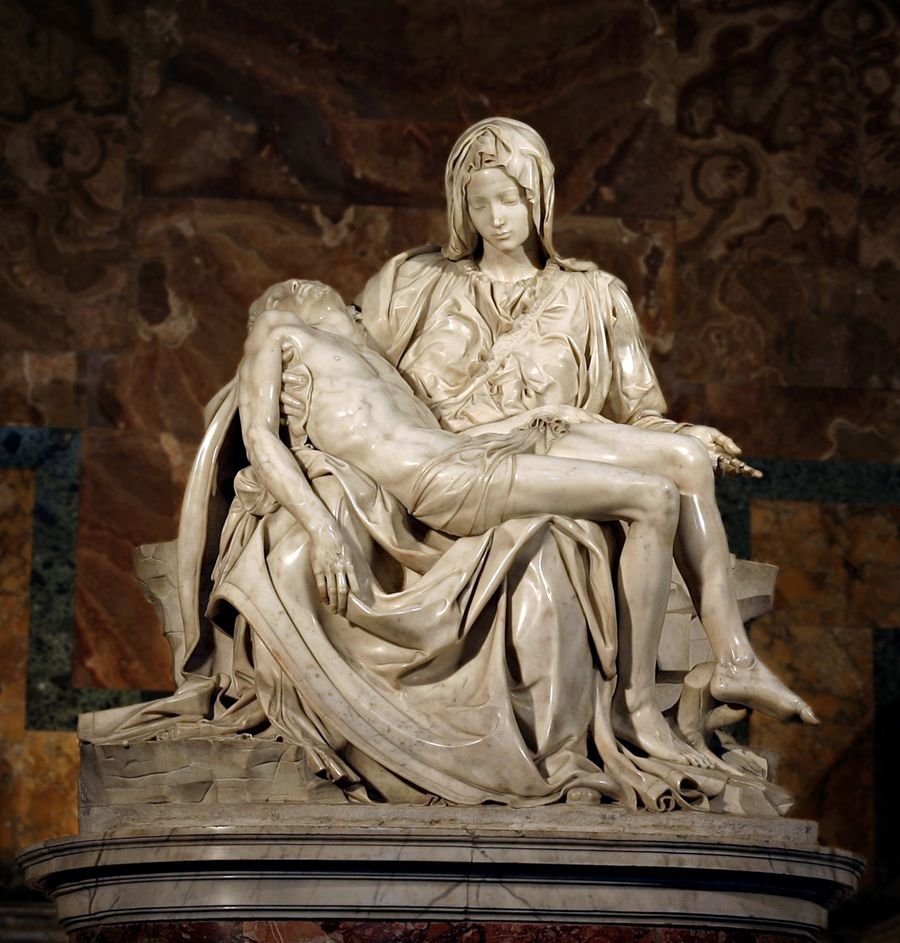
Mary’s face is the sculpture’s emotional center. She is young—impossibly young to be the mother of a thirty-three-year-old man. Michelangelo explained this choice: Mary’s purity kept her eternally youthful. Her expression is not one of wild grief but of profound, almost transcendent sorrow. Her left hand is open in a gesture that seems to present her son to the world, to ask the eternal question: “What have we done?”
The drapery is a miracle in itself. Mary’s robes flow in deep, complex folds that pool around her and cascade down the rock she sits upon. The fabric looks soft, touchable—you forget you’re looking at stone. The polish Michelangelo achieved makes the marble seem to glow from within.
The Pietà has survived five centuries, an attack with a hammer in 1972 (now fully restored), and the weight of millions of prayers. It remains the masterpiece by which all other Christian sculptures are measured.
St. Bartholomew Flayed
When you step into Milan, you’re immediately drawn to the city’s heart—the Milan Cathedral. After six centuries of construction, blending architectural styles from different eras, it has become a miracle of architectural history. The sculptures and figures on the exterior walls are numerous and exquisitely detailed, vividly depicting biblical stories and historical moments—each one a masterpiece.
In this ocean of sculptures, one stunned me. Located deep inside the cathedral, to the right of the altar, stands “St. Bartholomew Flayed,” created in 1562. This work is considered one of the most famous art treasures in the cathedral. The sculpture depicts a middle-aged man, naked, muscular, bald, with piercing eyes. He holds something in his hand—what appears to be a long piece of cloth.
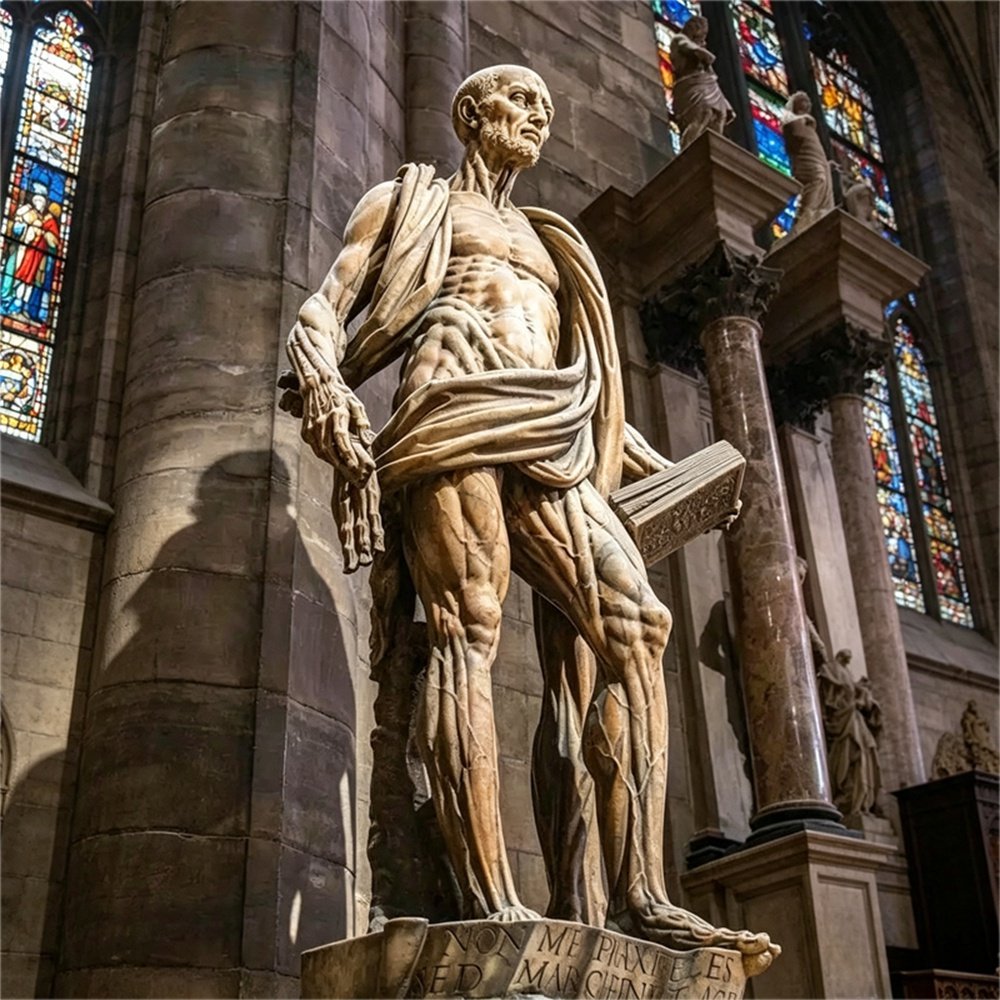
At the base of the statue is carved the creator’s name—Marco d’Agrate. And this naked man is Bartholomew, one of Jesus’s disciples.
This is not a sculpture for the faint of heart. Marco d’Agrate created one of the most anatomically precise—and disturbing—works in Christian art history. St. Bartholomew, who according to tradition was martyred by being flayed alive, stands before us holding his own skin draped over his shoulder like a toga.
The technical achievement is staggering. D’Agrate carved every muscle, tendon, and vein of the human body with scientific accuracy. This is an écorché figure—a flayed anatomical study—but elevated to the realm of sacred art. Bartholomew’s face is serene, almost peaceful, despite the horror of what has been done to his body.
The skin itself is a masterpiece within the masterpiece. It drapes naturally, showing the hollow of the face, the empty hands, the folds and wrinkles of human hide. You can see where it was separated from the body.
D’Agrate was so proud of this work that he carved an inscription on the base: “Non me Praxiteles sed Marcus finxit Agrates” (I was made not by Praxiteles but by Marcus Agrate)—comparing himself to the greatest sculptor of ancient Greece.
Baroque
St. Cecilia
The current basilica was rebuilt in the 9th century and houses a marble statue of St. Cecilia by late Renaissance sculptor Stefano Maderno (1600). In 1599, St. Cecilia’s tomb was opened, and this sculpture is said to be based on the saint’s body as it appeared when the tomb was opened, skillfully depicting the scene of her martyrdom by beheading.
In 1599, during renovations of the Church of Santa Cecilia in Trastevere, workers made an astonishing discovery: the perfectly preserved body of St. Cecilia, martyred in the 3rd century, lying in a cypress coffin exactly as she had been buried 1,300 years earlier. The young sculptor Stefano Maderno was called to document what he saw before the body deteriorated upon exposure to air.
What Maderno created is one of the most moving sculptures in Christian art—a work of profound stillness and peace. St. Cecilia lies on her side, her body gently twisted, her head turned away, her neck showing the wounds from the three axe blows that failed to kill her (she lived for three days after the attack, singing hymns). Her hands are positioned in a gesture indicating the Trinity: three fingers extended on one hand, one on the other.
The sculpture is remarkably intimate. Cecilia looks as if she’s sleeping, not dead. Her robes are carved with incredible delicacy, the fabric clinging to her body in soft folds. There’s no drama here, no theatrical gesture—just quiet, eternal rest.
The Ecstasy of St. Teresa of Avila
“The Ecstasy of St. Teresa” was completed during a low point in Bernini’s life. He was responsible for designing the bell tower of St. Peter’s Basilica, but the project was halted due to structural problems, and the completed portion was later demolished. Although many scholars today believe the responsibility wasn’t entirely Bernini’s, this incident seriously damaged his reputation. He not only lost the Pope’s trust but gradually lost his most important commissions.
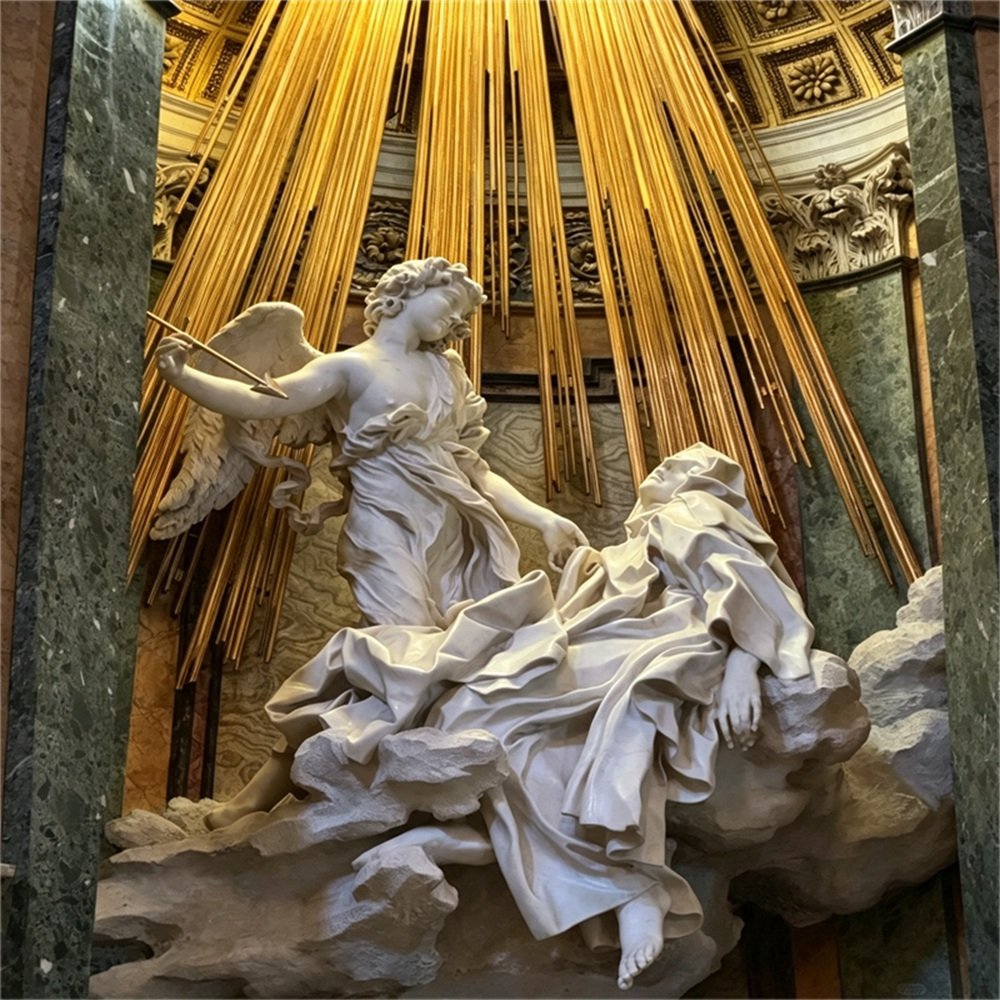
The once-glorious Bernini fell into a life crisis. At this time, he accepted a commission from the Cornaro family for a small chapel. This wasn’t a papal project or a high-profile major work, but for Bernini, now middle-aged and in crisis, it was an opportunity to prove himself again.
St. Teresa was a 16th-century Spanish nun. In her autobiography, she described a mystical experience: an angel used a golden arrow to pierce her heart, and in the intense pain, she simultaneously felt indescribable sweetness, believing she had become one with God in that moment. She wrote: “The intense pain brought me the ultimate sweetness.”
Bernini chose this moment. The angel smiles as he raises the golden arrow. Teresa, eyes closed, falls backward, her marble robes surging like flames as if in motion. Hidden windows above allow natural light to pour down in golden rays. This work feels like both a religious experience and an extreme emotion. Bernini didn’t try to represent rational faith—he turned the moment St. Teresa described, when her soul united with God, into marble that could be seen and felt.
But the sculpture itself is only part of the experience. Bernini designed the entire chapel as a theater. Hidden windows above the sculpture allow natural light to pour down in golden rays (enhanced by gilded bronze rods), creating the impression that divine light is literally flooding the scene. On the side walls, members of the Cornaro family sit in sculpted theater boxes, watching the mystical drama unfold as if they were at the opera.
The effect is overwhelming. You’re not just looking at a sculpture—you’re witnessing a miracle. The line between art and reality blurs.
Today, this 350 cm tall marble sculpture still rests in the Cornaro Chapel of Santa Maria della Vittoria in Rome. First-time viewers can’t help but feel shy, yet fascinated. But what cannot be stopped is that overwhelming sense of awe. This is the sculpture that made all of Rome blush—Bernini’s forbidden masterpiece.
19th Century
The Gates of Hell (La Porte de l’Enfer)
Theme: “Abandon all hope, ye who enter here!”
“The Gates of Hell” is Auguste Rodin’s sculptural masterpiece. The creative inspiration came from Dante’s “Divine Comedy.” In 1880, the French government commissioned Rodin to create decorative sculptures for the bronze doors of the soon-to-be-built Museum of Decorative Arts in Paris.
Rodin created countless sculptures for “The Gates of Hell,” including some of his most famous works: “The Thinker,” “The Three Shades,” “The Kiss,” “Adam,” “Eve,” and others.
Creation Period: 1880-1917. Rodin spent most of his later life creating this work. He continued working on it until his death, never fully completing it—a span of 37 years.
Dimensions: Bronze relief, 635cm × 400cm × 85cm
Important Note—Many People Confuse This:
The plaster master version (the original Rodin personally modified) → Musée d’Orsay
The bronze cast version → Rodin Museum (Hôtel Biron)
“The Thinker” is just one character on the door; the independent large bronze Thinker is in the Rodin Museum courtyard
Many people think “The Gates of Hell” is at the Rodin Museum, but the original plaster master is actually displayed at the Orsay. Rodin spent 37 years but ultimately couldn’t cast it in bronze. Inspired by Dante’s “Inferno,” the 6-meter-high door features hundreds of struggling, suffering human bodies. At the top center of the lintel sits the famous “Thinker”—originally called “The Poet,” representing Dante himself, overlooking the suffering below, gazing with compassion at worldly suffering. The uncolored plaster, rough yet full of power—every concave and convex mark is a trace left by Rodin’s creative touch. Standing before it, you’re instantly struck by a heavy sense of fate.
The entire sculpture features 186 figures (some say 250). At the top of the lintel are “The Three Shades”—three identical male nudes bowing their heads and hanging their hands toward the gates of hell, drawing viewers’ eyes to the “hell” below. Below the lintel, at the horizontal band, is the top and entrance of hell, where a group of sinners about to be cast into hell by angels make their final painful struggles, with “The Thinker” seated in the center. Below the horizontal band, the door’s center seam naturally divides the composition into left and right halves, with countless sinful souls falling toward hell, crying out and struggling in despair and futility, including Ugolino, mad with hunger and about to eat his own son’s flesh.
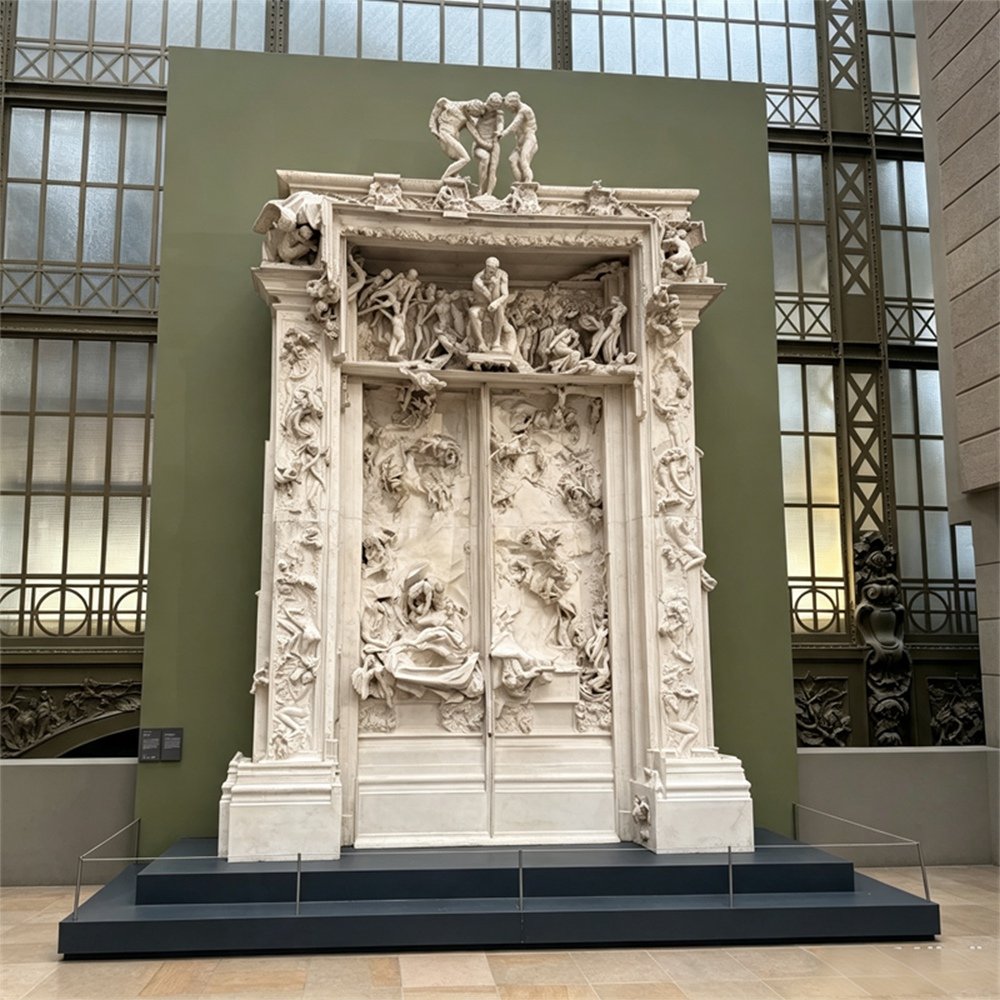
The overall style is overwhelming—high relief and low relief interweave across the surface, forming complex and ever-changing shadows that appear gloomy, melancholic, and full of movement, as if echoing with the clamor of hell. Rodin was skilled at using rich and diverse painting techniques to create vivid, powerful artistic images. All figures are sculpted nude. He believed that to express人 and their thoughts and feelings, the only expressive form is the human body. Nude sculpture has nothing to do with morality—it is an artistic language, a symbol of beauty.
Modern / 20th Century
Christ of the Abyss (Il Cristo degli Abissi)
Christ of the Abyss (“Il Cristo degli Abissi”) is an underwater statue of Jesus in the Mediterranean Sea near San Fruttuoso in northern Italy. Located 17 meters underwater, this marble statue was designed by Guido Galletti and placed in the water on August 22, 1954, to protect sailors. It has been守护ing the small town ever since.
This might be the most unusual location for a Christian sculpture in history: the bottom of the Mediterranean Sea. Christ of the Abyss stands on the seafloor near San Fruttuoso, between Camogli and Portofino on the Italian Riviera, his arms raised upward toward the surface in a gesture of blessing and peace.
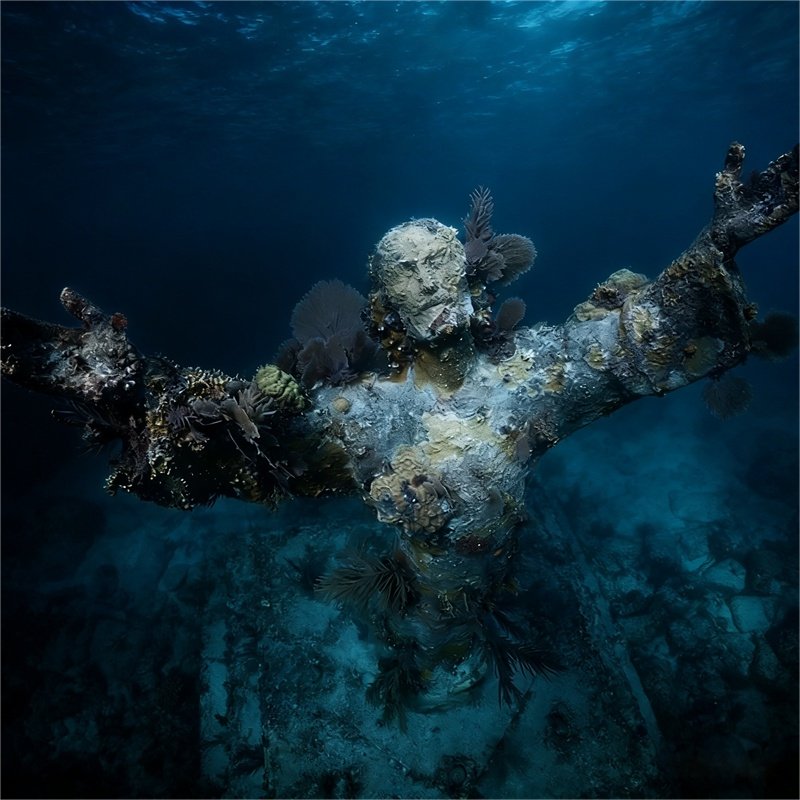
The statue was placed underwater in 1954 to honor Dario Gonzatti, the first Italian to use SCUBA equipment, who died in 1947 while diving in that spot. But it quickly became much more than a memorial—it became a pilgrimage site for divers, a place of underwater prayer, and a powerful symbol of Christ’s presence in all of creation, even in the depths of the sea.
The bronze figure stands about 2.5 meters tall. Christ’s face looks upward toward the light filtering down from the surface. His arms are extended upward and outward in a welcoming gesture. Over the decades, the bronze has become encrusted with algae, barnacles, and marine life, giving it an ancient, otherworldly appearance—as if Christ has always been there, waiting in the deep.
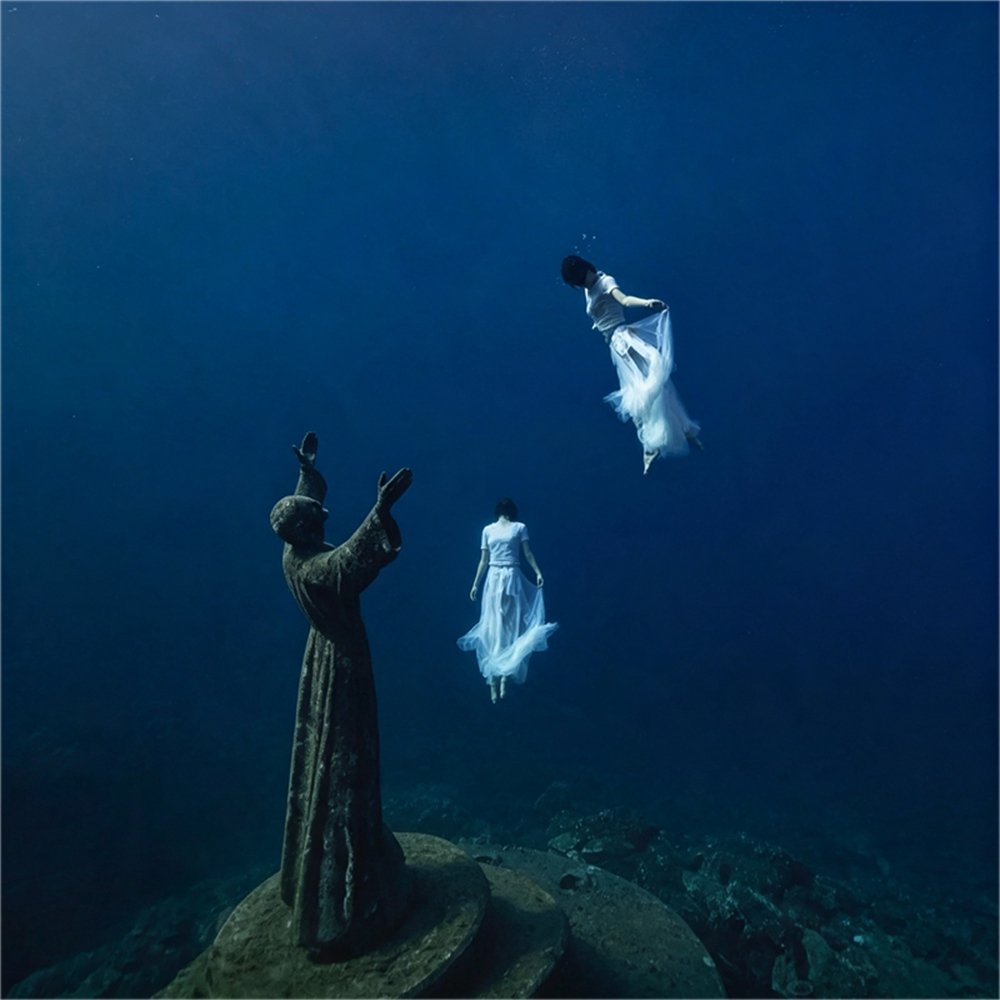
Divers from around the world make pilgrimages to the statue. Some bring waterproof flowers to leave at its base. Others simply hover in the water before it, praying in the silent, weightless world beneath the waves. The experience is profoundly moving—encountering Christ in a place where humans cannot naturally survive, where we are visitors in an alien realm.
The original statue was removed for restoration in 2003 (corrosion from seawater and damage from boat anchors) and reinstalled in 2004. It continues to stand watch over the Mediterranean, a silent bronze guardian blessing the deep.
Other Remarkable Christian Sculptures
The Veiled Christ (Cristo Velato)
Naples’ most stunning sculpture, “The Veiled Christ,” is in the Sansevero Chapel. On an ordinary street, after turning left and right, we finally found this chapel. Photography is prohibited here, so I found some images from the official website to record this miracle—absolutely worth seeing in person.
“The Veiled Christ” is a marble sculpture masterpiece created by Italian sculptor Giuseppe Sanmartino (1720–1793) in 1753. The most impressive aspect of the sculpture is the veil covering Christ’s body—carved entirely from marble, thin as a cicada’s wing. The folds, drape, and even transparency of the veil are lifelike, as if real fabric gently covers Christ’s remains. This technique demonstrates Sanmartino’s mastery of marble.
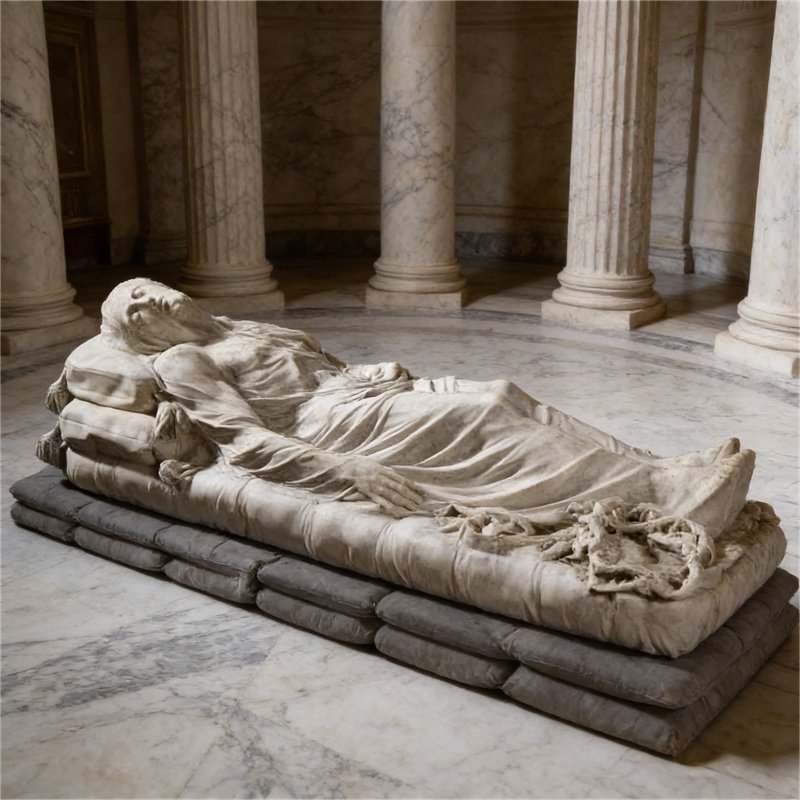
This work carves a shroud belonging to death.
The marble seems soaked by the deceased’s final cold sweat, clinging wetly and coldly to the body. Through the stone thin as a cicada’s wing, you can clearly see the sunken ribs, the remaining veins on hands and feet, while at the feet lie scattered the crown of thorns and nails.
Christ’s face is serene, devoid of any trace of agonized struggle, yet death is rendered with striking clarity.
And when you walked out of the chapel back to Naples’ noisy streets, there’s a brief sense of dislocation. No photos were left behind, but that layer of marble veil tightly adhering to the body remained in memory with a concrete tactile sensation for a long time.
The Veiled Virgin
The one in the picture is the “foreign Virgin” who drifted all the way from Rome to Canada—every step documented in historical records.
In the 1850s, Italian sculptor Giovanni Strazza used a single block of Carrara marble in Rome to carve this translucent veil—turning hard stone into silk. The Virgin’s lowered eyes and brows are hidden behind the veil, even the hair texture faintly visible.
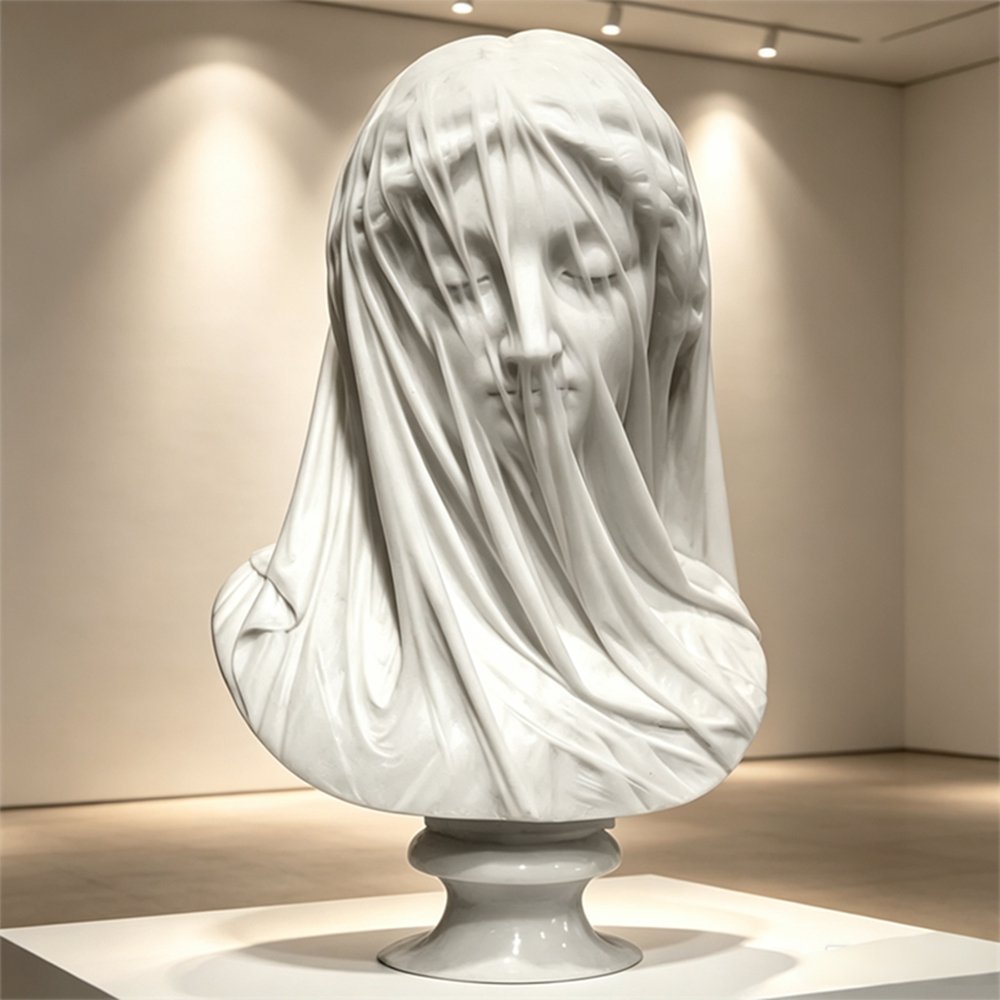
In 1856, this masterpiece was packed in a wooden crate and crossed the Atlantic to Newfoundland, Canada. Bishop Mullock excitedly wrote in his diary: “Received from Rome a beautiful marble statue of the Virgin, the face clearly visible beneath the veil—this is a perfect treasure of art.”
In 1862, Mullock gave it to his own sister, who was a nun. From then on, this sculpture remained in a quiet corner of the convent for over 160 years. It wasn’t hidden in a top museum, but in the New World far from its homeland, it preserved 19th-century tenderness intact to this day.
Tomb of Pope Alexander VII
Our Lady of Montserrat (La Moreneta)
Legendary Origins
Her Place in Catalonia’s Soul
Pilgrimage and the Promise of Miracles
The Weight of Symbol
The Enduring Legacy
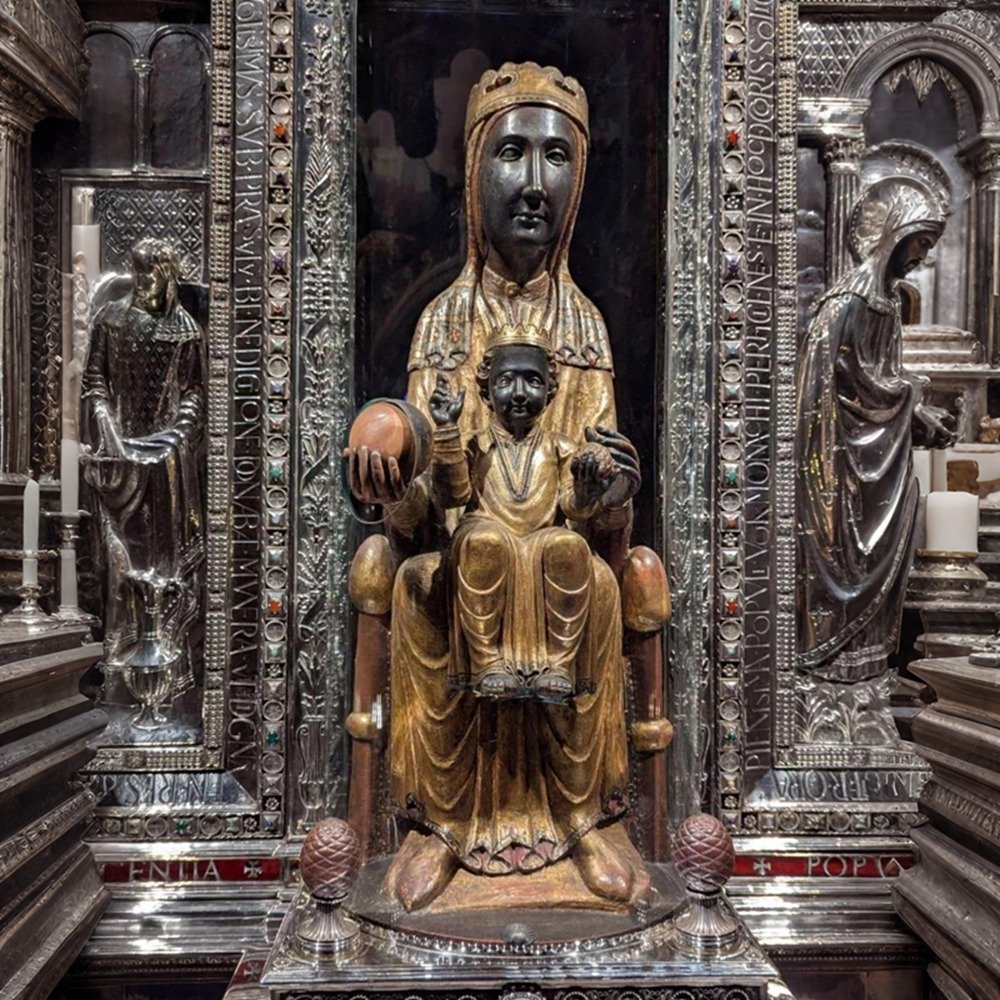
Christian sculpture has given the world some of its most profound artistic achievements. From the prophets of Dijon to the depths of the Mediterranean, from the veiled Christ in Naples to the Black Madonna of Montserrat, these works prove that faith and art are natural partners.
What strikes me most, having stood before many of these sculptures, is how they transform the act of looking into something more—into prayer, into meditation, into a conversation across centuries. When you stand before Michelangelo’s Pietà, you’re not just admiring technical skill. You’re experiencing the same grief Mary felt, the same question she asked. When you dive down to meet the Christ of the Abyss, you’re not just seeing an underwater statue—you’re encountering the sacred in a place where humans cannot naturally survive.
These sculptures remind us that Christian art is not a relic of the past. From Rodin’s Gates of Hell to the underwater Christ, artists continue to grapple with Christian themes, to find new forms for old stories, to make the invisible visible.
Whether carved in marble, cast in bronze, or hewn from wood, whether standing in cathedrals or resting on the ocean floor, whether veiled in stone so thin it seems transparent or blackened by centuries of devotion, these sculptures share a common purpose: to point beyond themselves to something greater, to create a space where the human and the divine can meet, to transform stone and metal into prayer.
They are, in the truest sense, impressive—not just because of their technical brilliance or aesthetic beauty, but because they press into us, leaving their mark on our souls, changing how we see the world and ourselves. And that, ultimately, is what the greatest Christian art has always done: it doesn’t just show us what faith looks like—it makes us feel what faith feels like.