Religious Sculpture and Its Place in a Catholic School
A child passes the Good Shepherd on the way to class. Students gather before Our Lady of Lourdes. In the school chapel, a teacher pauses beside a familiar statue before the day begins.
Over the years, a statue can become part of a school’s shared memory — a quiet presence students come to associate with prayer, encouragement, and belonging.
Many schools approach us with a figure already in mind. Others are still discerning how Christ, Our Lady, or a patron saint might become part of a new campus or prayer space. In either case, the decisions ahead deserve care: the expression, the material, the scale, the location, and the arrangements for installation.
This guide is written to help school decision-makers choose a high-quality religious sculpture that will serve their community for decades.
Why Do Religious Statues Matter in Catholic Schools?
Religious statues give visible form to the faith that shapes a school’s daily life.
A Good Shepherd statue can express the care a school hopes to offer every student. A Marian shrine provides a place for shared prayer. A patron saint connects the school community with a life of faith that teachers and students can explore together.
Over time, a religious statue becomes familiar — students pass it each morning, gather around it on a feast day, or return to it during a difficult week.
In this way, religious statues are not merely physical objects. They become a quiet point of encounter, helping young people draw closer to God and, in time, recognize His calling on their lives. For this reason, it is meaningful for a Catholic school to have its own religious statues.
But choosing one is not a simple task. Many questions deserve careful consideration:
Will it welcome families? Support prayer? Honor the school’s patron? Mark an anniversary, or serve as a gift from a graduating class? Only when this purpose is clear do the practical decisions become meaningful.
Which Religious Figures Best Reflect Your School’s Mission?
Your school’s name, history, and devotional traditions are useful starting points.
If the community has already chosen a religious image, preserve that connection. A new commission offers the opportunity to give a familiar devotion a fitting physical presence.
Which Images of Jesus Suit a Catholic School?
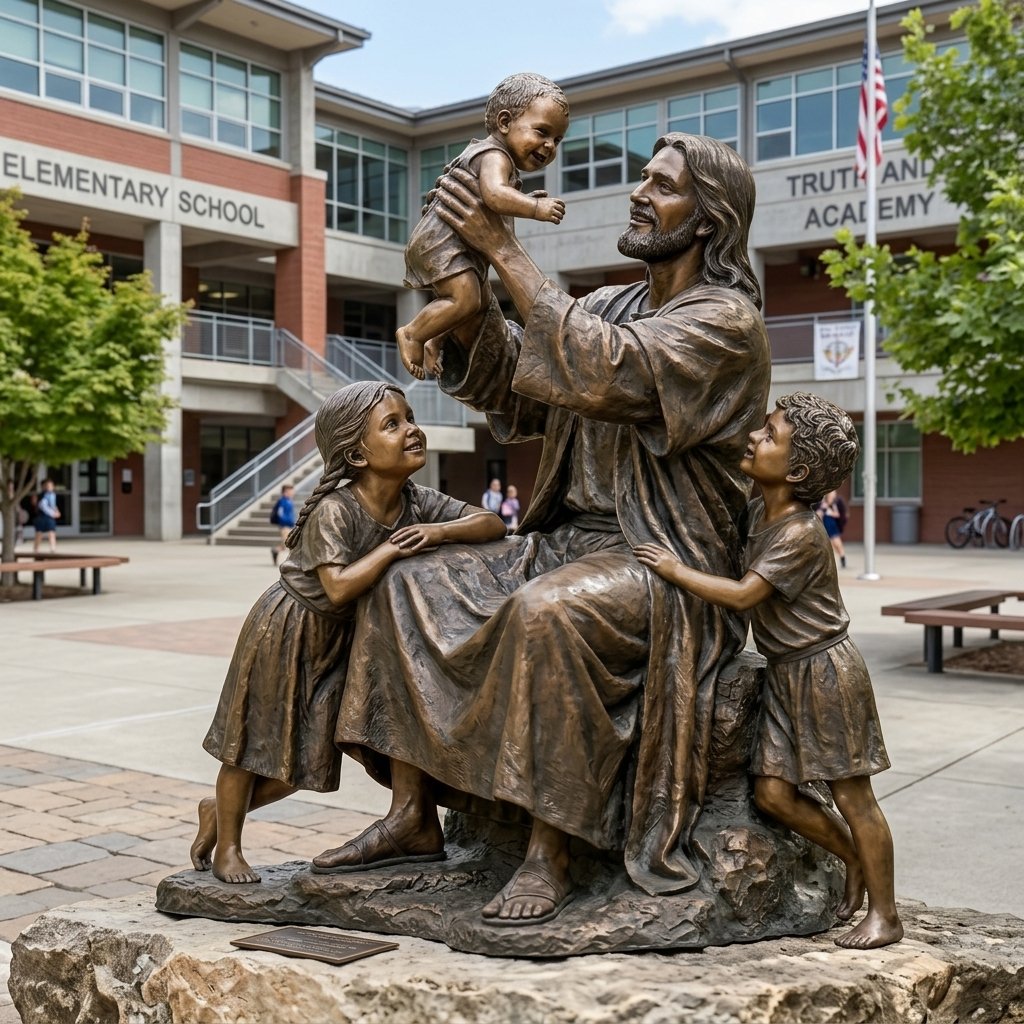
The scene of Jesus with the Children embodies welcome and loving care. This is a beloved theme frequently chosen by our clients, inspired by Matthew 19:14 (NIV): Jesus said, “Let the little children come to me, and do not hinder them, for the kingdom of heaven belongs to such as these.”
The Good Shepherd statue is a popular choice among Catholic school clients. Inspired by John 10:10, Jesus came to bring abundant life to every child. He guides, protects, and knows each one by name. This marble figure is a gentle reminder of care, belonging and growth.
The Sacred Heart of Jesus statue is also popular. It is widely selected by Catholic schools as a quiet symbol of divine love, grace and blessing.
Which Marian Statues Could Serve Your School Community?
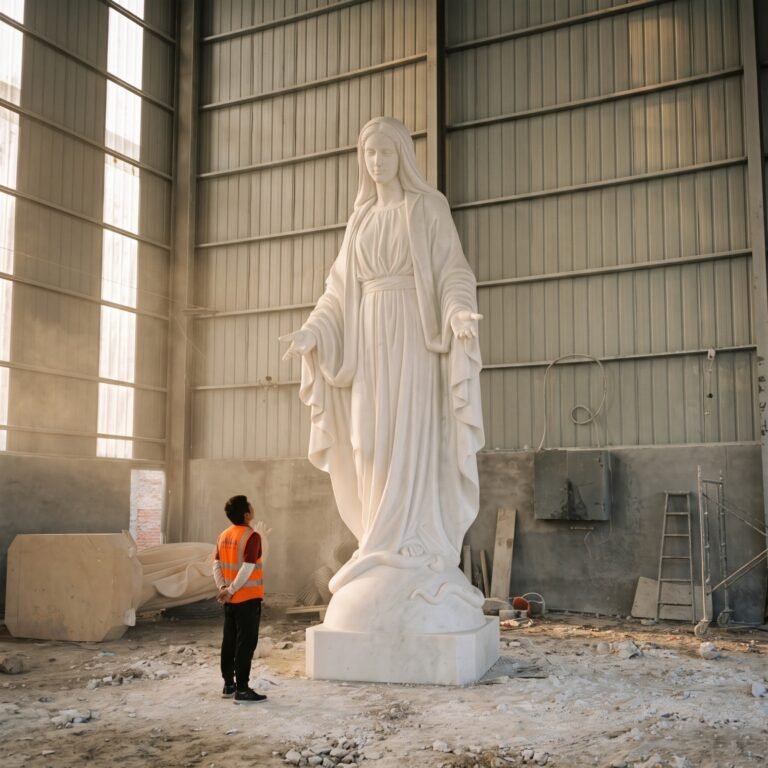
Our Lady of Grace, in the familiar Miraculous Medal posture, extends her hands downward with open palms. Her expression, gaze, and flowing mantle combine to create a welcoming presence.
Our Lady, Seat of Wisdom, depicts Mary holding the Christ Child and offers a profound link between faith and learning. If the school has a preferred reference image, we can confirm the position of the Child, the seated composition, and any key details to be preserved.

Our Lady of Lourdes is a popular selection for school shrines and grottos. Her joined hands, veil, rosary and roses form a well-recognised devotional image. Where space and the school’s vision permit, a companion statue of St. Bernadette completes the scene.
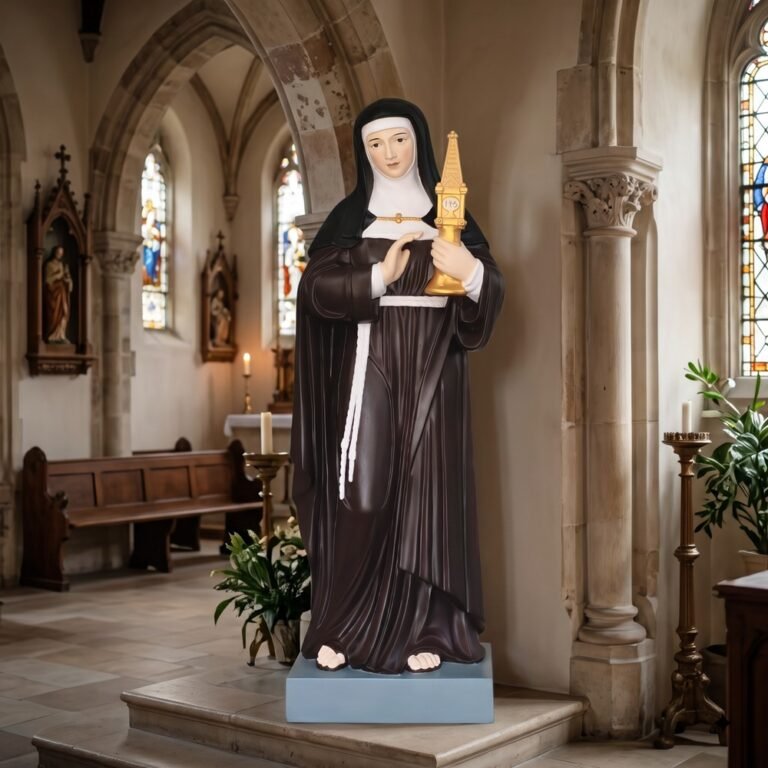
Besides statues of Jesus and Mary, drawing on our quotes and completed commissions, the following saints are also popular choices for Catholic schools:
St. John Bosco: associated with the care of young people and education.
St. Joseph: symbolises family life, patient care, and the dignity of work.
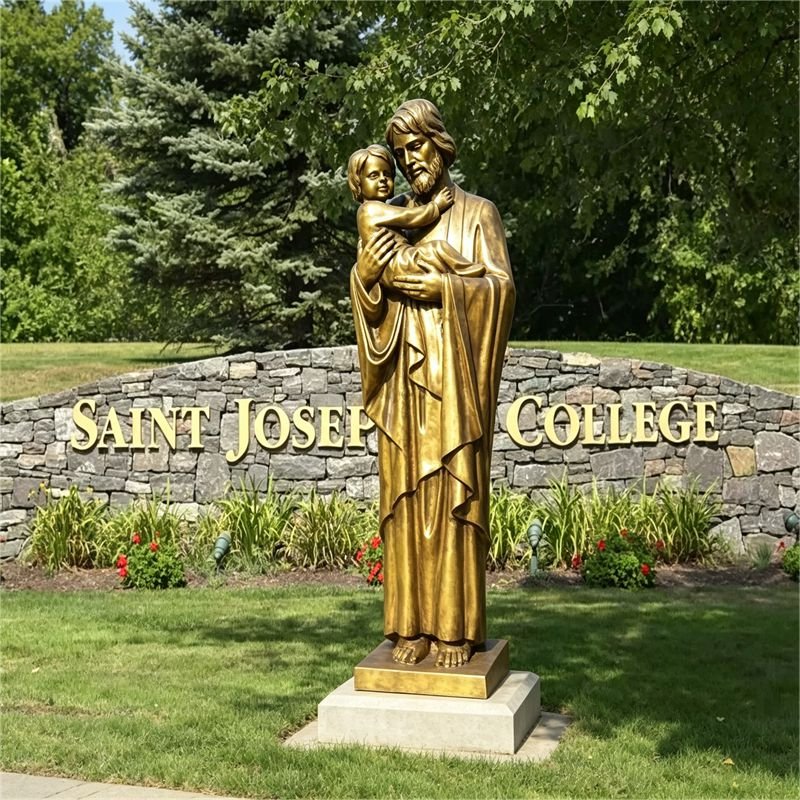
St. Thomas Aquinas: represents study, reflection, and the harmony between faith and reason.
St. Michael the Archangel: stands for courage and spiritual protection.
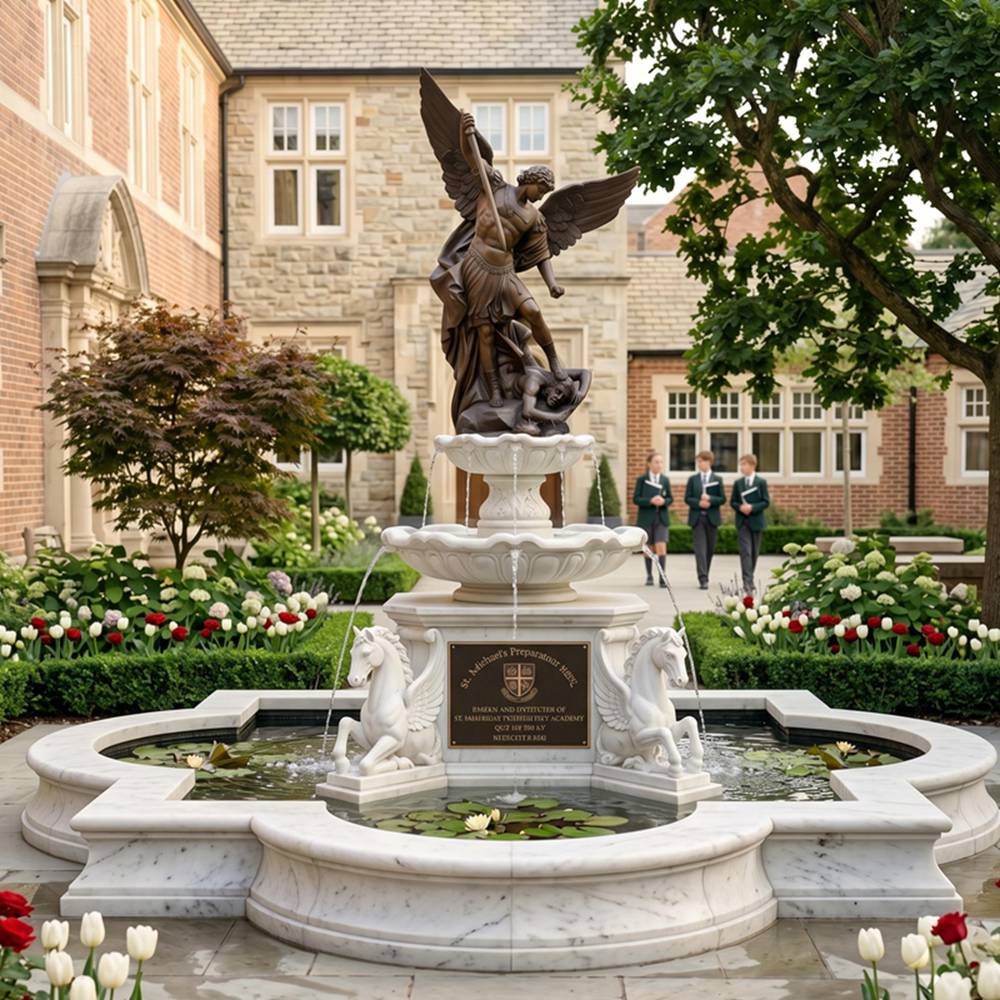
St. Francis of Assisi: embodies humility and stewardship of creation.
St. Thérèse of Lisieux: speaks of faith lived out through small, everyday acts of love.
In short, whether you already know which religious statue you would like, or are unsure where to begin, the best starting question is simple: what connection does this saint already share with your students and school?
Where Should Religious Statues Be Placed on a School Campus?
Before we talk about material or size, we talk about where the statue will actually stand. The site decides everything that comes after it — how students encounter it, whether they can gather around it, and what the sculpture has to be made of to last.
At the Entrance
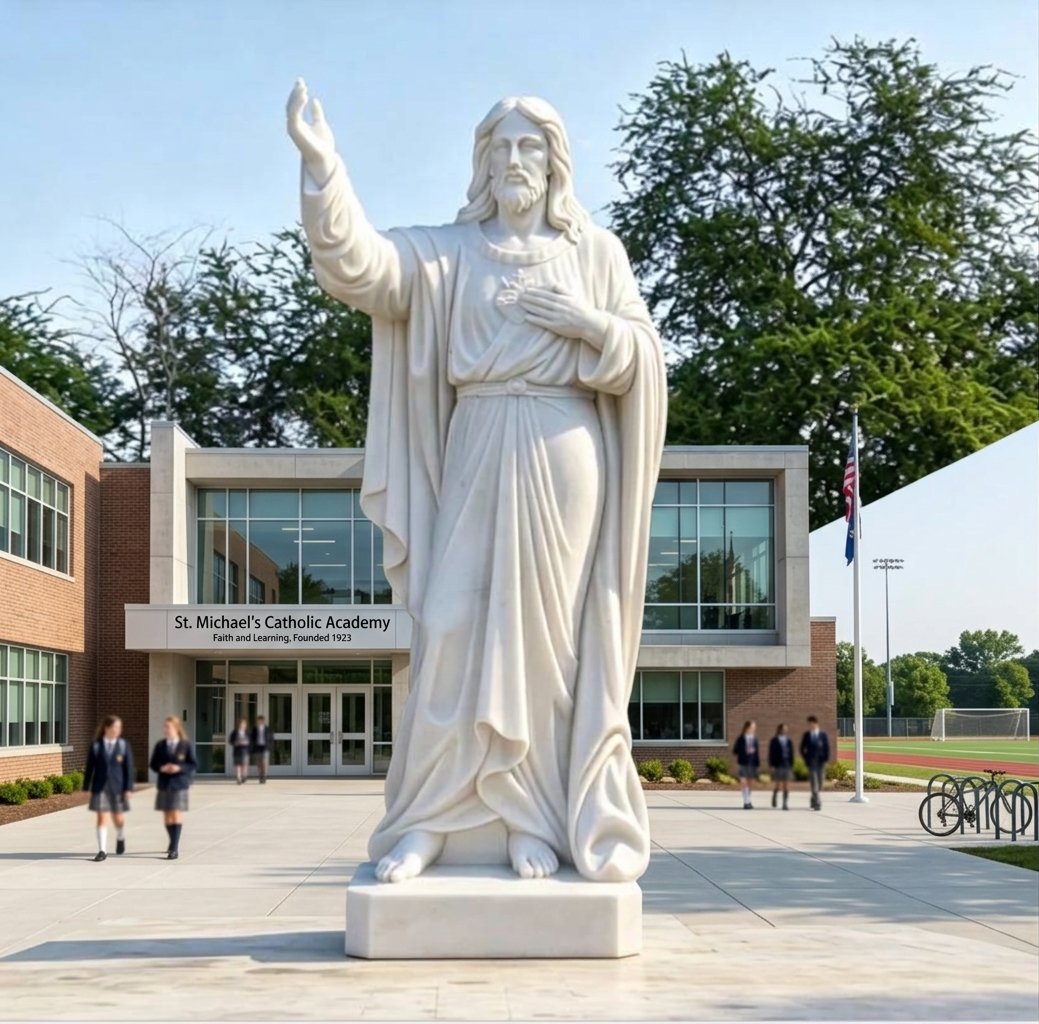
An entrance statue is the first thing a family sees when they drive up. It sets the tone. But it has to work from a distance first — the footpath, the drop-off loop, the main doors. We always ask the school to stand where parents will stand and look. Is the face recognizable from the car? Does the scale suit the building? And is there room — room for kids to walk past without brushing the plinth, room for the grounds crew to mow and edge without working around the base, room for a Christmas ceremony in front of it?
A Garden or Courtyard
A prayer garden is different from an entrance. Students don’t just pass it — they gather in it. That means the space around the statue matters as much as the statue itself. Is there a path? A place to stand or kneel? Enough room for a class of thirty without someone standing in the flower bed?
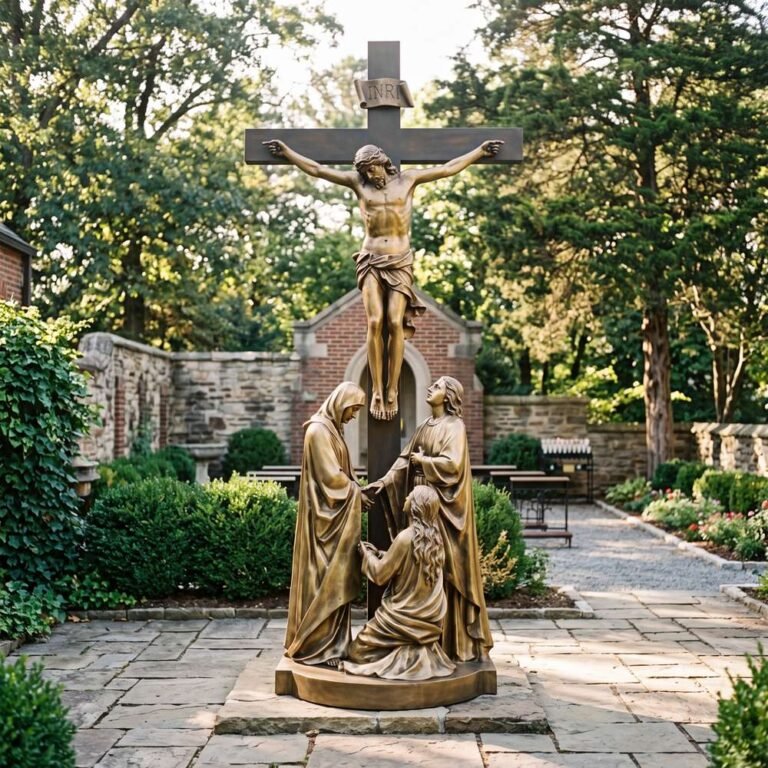
If the composition is a group — Mary and Bernadette, or Christ with the children — the figures have to read as one scene from wherever the students will be standing. Two separate statues placed ten feet apart can look like two unrelated pieces if the spacing isn’t thought through. The planting behind should be calm: a green hedge, a stone wall, something dark and quiet. A busy flower bed turns the sculpture into decoration.
The School Chapel
Inside a chapel, the statue is not a free-standing object. It lives next to the altar, the ambo, the crucifix, the stations. Its material, its pedestal, its scale all have to sit inside that existing arrangement without competing.
For anything that touches liturgical space, we tell the school to bring the chaplain in early — and the parish or diocesan advisers who normally sign off on church furnishings. The architect and the facilities team can handle the engineering. But whether a devotional statue belongs where the school wants it, and how it should read inside the chapel, is a question for the people who serve there — not just the people who build there.
Should Your School Choose Marble or Bronze?
There is no better material. There is the right material for the setting, and the care the school can actually give it.
When Might Marble Be Appropriate?
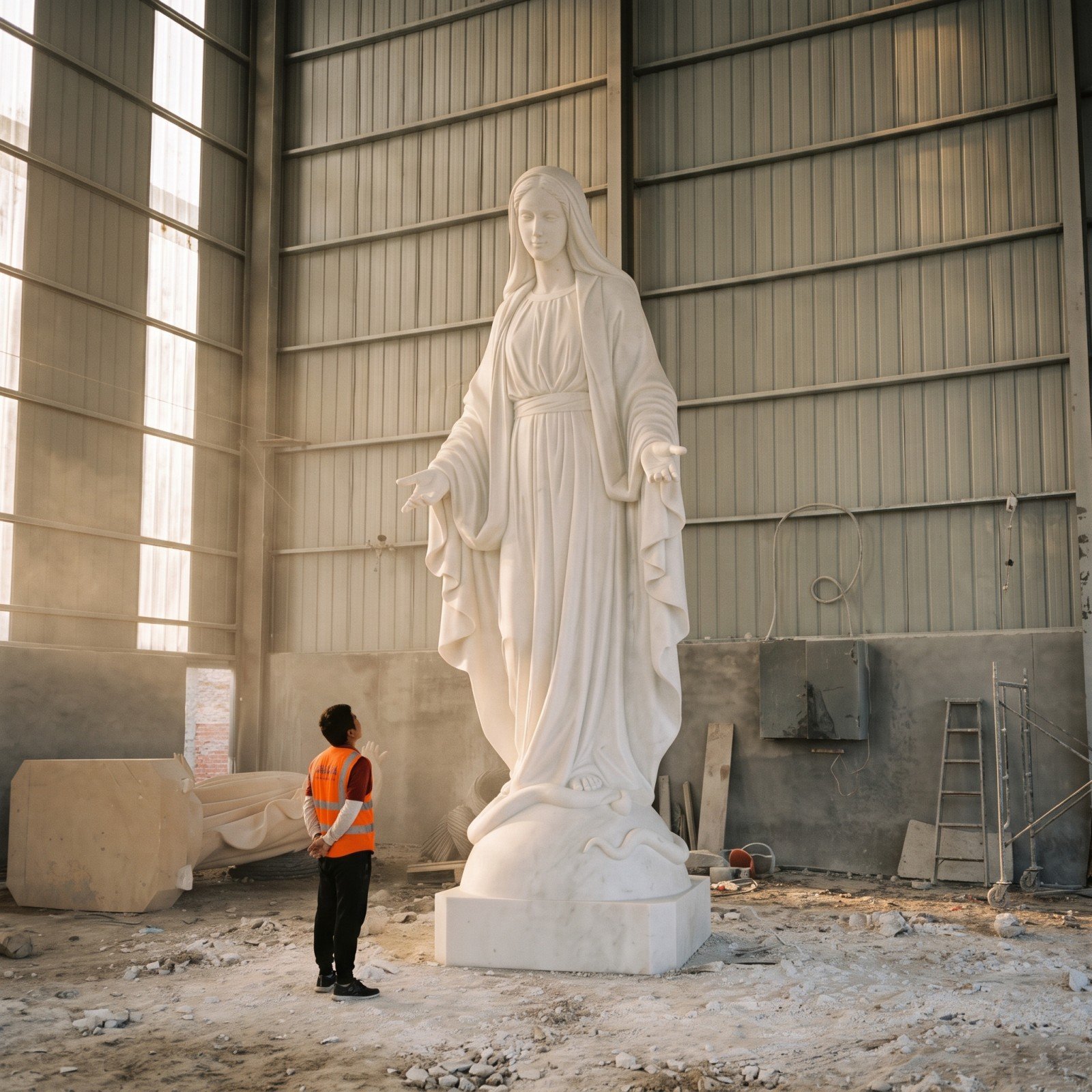
Marble is what people reach for when they want a Madonna to feel quiet. But marble is honest about where it belongs. It is an indoor material, or a covered one: a side chapel, a cloister walk, a baptistery, a niche in a narthex. In those places, a carved Madonna will still look like itself in a hundred years. Outdoors, in a freeze-thaw climate, near irrigation, or where the grounds crew cleans with chemicals, marble does not age the way bronze does. It erodes. The face softens, the fingers round off, the rosary beads lose their definition.
So when a school comes to us for a Marian commission, we look at three things.
The carving itself. The face, the hands, the rosary, the details around the feet — this is where the sculptor’s hand shows, and where a rushed finish betrays the piece. Ask to see the actual block proposed, not a catalog photo. Natural veining is not a defect; it is what makes each Madonna different. The finish — polished, honed, satin — should be chosen for the light it will live under, not for how it looks in a showroom.
The site. Weather exposure, irrigation spray, nearby planting, how the piece will be cleaned. These decide whether the marble still reads as marble in ten years or as a weathered lump.
And the reason. People choose marble for a Marian statue because they want something that feels like prayer, not like a monument. That is a real reason. But it has to match the site, or the stone will not last long enough to be prayer.
When Might Bronze Be Appropriate?
Climate is part of it, but it is not the whole reason schools choose bronze.
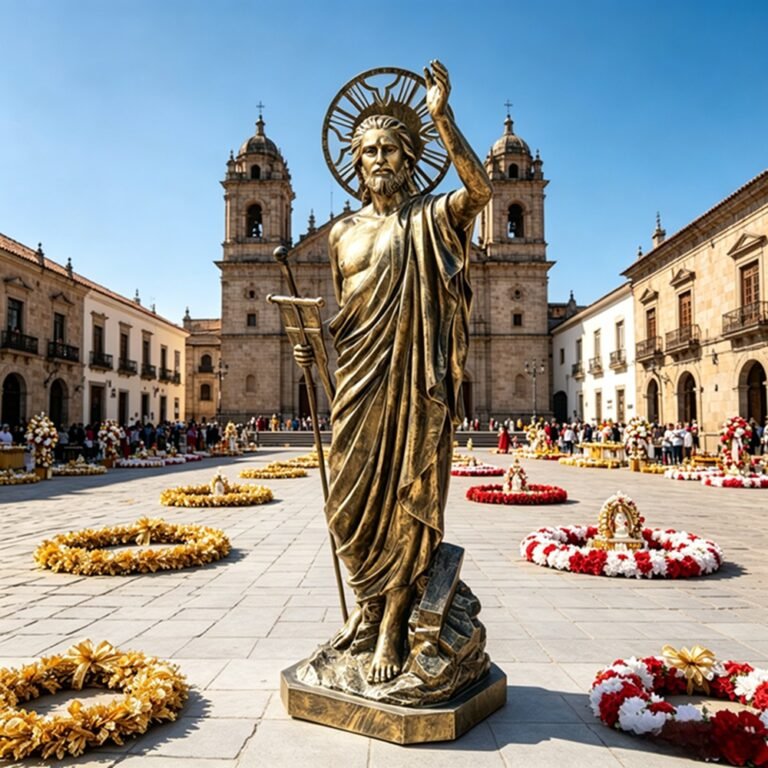
We see this on school commissions again and again. A cast-stone figure chips at the base after a few winters. A fiberglass piece fades and cracks in the sun. Bronze does not do those things. It ages the other way — the surface deepens, the patina settles, and after twenty years it looks more like it has always stood there than like something that was installed. That is why so many alumni gifts and memorials end up in bronze: the school wants something that will outlast the fundraising cycle, that a student twenty years from now will still recognize.
It also carries group compositions that softer materials struggle with. Drapery folds, a child’s hand on a knee, the way one figure leans toward another — bronze can hold that kind of detail without it turning into surface noise.
Where it helps to have a good site: reasonable drainage, planting set back from the plinth so sap and leaves are not constantly dripping on it, irrigation aimed away from the base, and a grounds crew that does not throw salt on the walkways around it. Open airflow and a raised plinth do more than any coating. A calm, dark planting backdrop also helps the sculpture read from a distance.
Those are the conditions. But the reason schools pick bronze is simpler: it is patient, it ages well, and it does not ask to be replaced.
What Size Will Suit Your Campus?
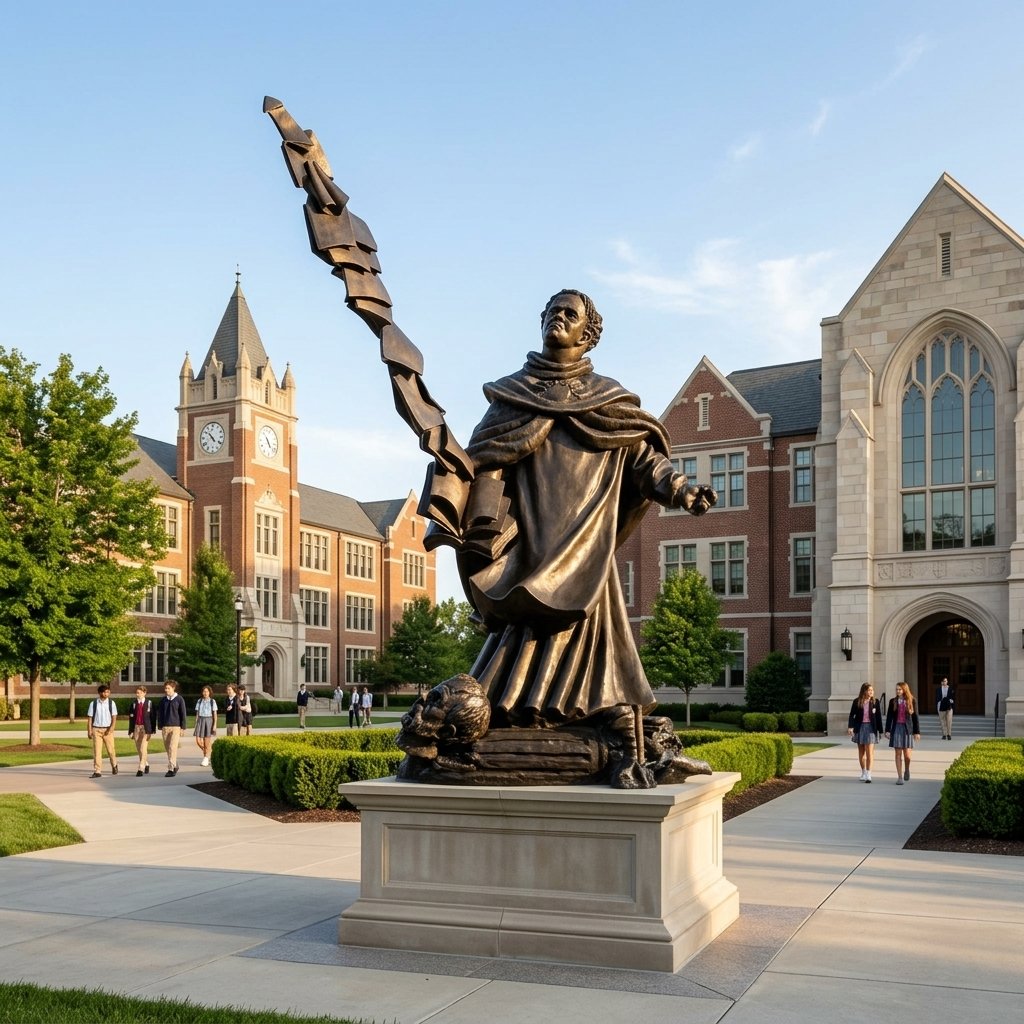
Consider the complete installation, including the pedestal.
A statue viewed across an entrance lawn needs a different scale from one approached closely in a small courtyard. A wide group also requires more space than a single standing figure of the same height.
Ask for drawings showing:
The statue’s height, width, and depth.
The pedestal dimensions.
The total installed height.
The relationship to nearby buildings, planting, or chapel furnishings.
Think about the student’s view. Will younger children be looking steeply upward? Can the face and gestures be appreciated from where a class will gather?
Measured site photographs can help the school and sculptor judge those proportions together.
What Should Your School Confirm Before Placing an Order?
A clear proposal helps the school understand both the artwork and the work required to install it.
Confirm the chosen subject, approved references, dimensions, material, finish, and any inscription. Establish which drawings or model stages are included and how revisions will be approved.
Then review the complete project cost. The pedestal, packing, freight, applicable import charges, unloading, foundation work, and installation may be separate items.
Share the intended completion date early, especially if the sculpture is planned for an anniversary, school opening, or blessing ceremony. Allow time for decisions, production, transport, site preparation, and installation.
One school representative can consolidate comments from leadership, the chaplain, facilities staff, and other participants, helping the project move forward with clear approvals.
What Should You Check Before Shipping?
Compare the finished sculpture with the approved design or model.
Request photographs from several angles, together with close-ups of the face, hands, drapery, and important attributes. For a group, confirm the number, position, and appearance of all accompanying figures.
Check inscriptions, final dimensions, weight, base details, and separately packed accessories.
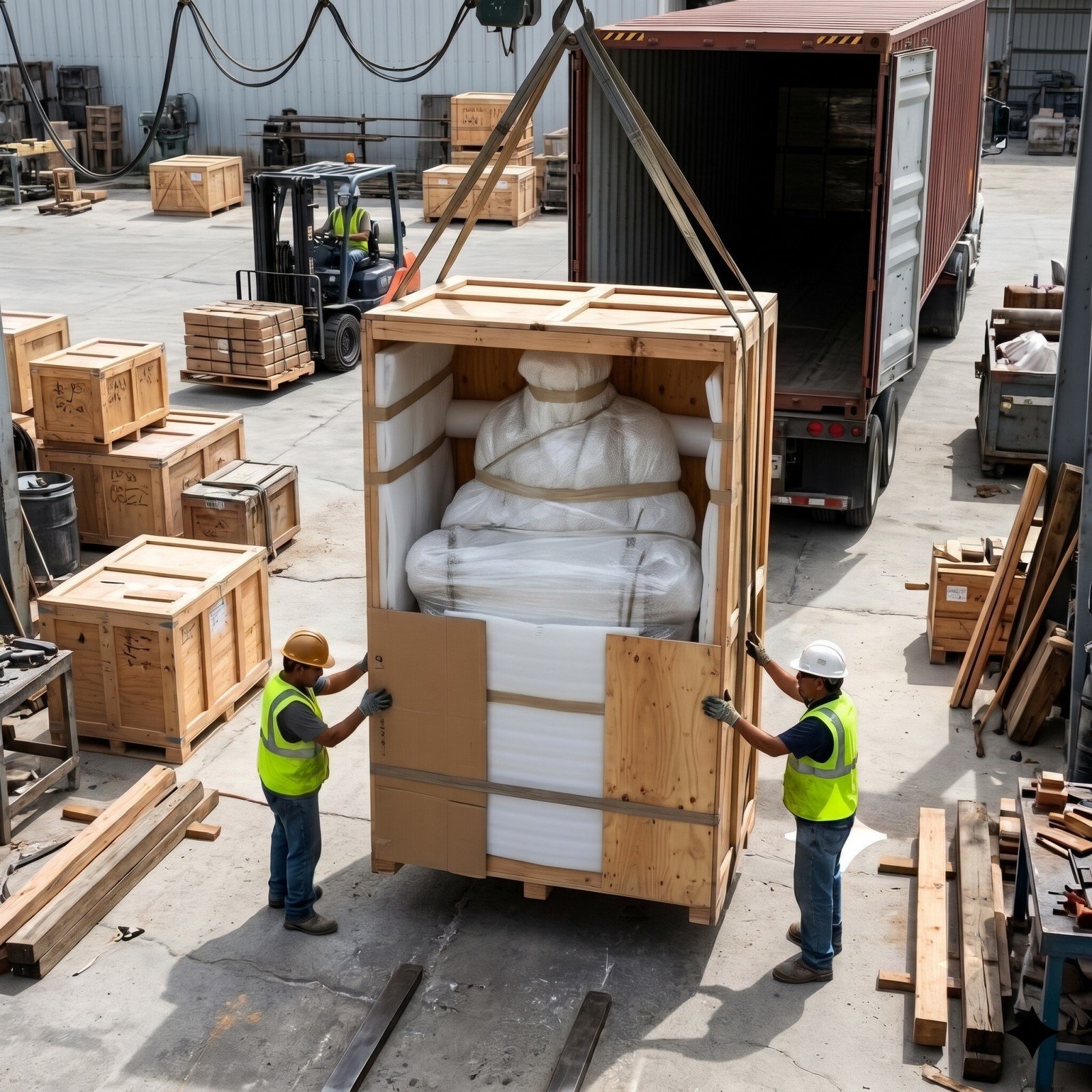
Packing deserves its own review. The curved staff on a Good Shepherd figure requires particular protection with foam and plastic film. Other vulnerable parts may include fingers, flower stems, rosaries, or projecting ornaments.
Confirm the packed dimensions and handling requirements with the receiving team. Clear arrangements for unloading and installation make the final stage easier to coordinate.
How Will the Statue Become Part of Your School’s Story?
Years after installation, students may remember the lamb on Christ’s shoulders, the animals beside St. Francis, or a morning spent praying before Our Lady of Lourdes.
Those memories begin with thoughtful choices: a meaningful subject, a carefully preserved expression, a suitable place, and a well-prepared installation.
If your school has a religious figure in mind, share the reference with us, together with photographs of the location, approximate dimensions, budget range, and preferred completion date. These details provide a useful beginning for a commission shaped around your school’s faith and daily life.