A practical guide to commissioning sacred sculpture, from the first reference image to its place in your church.
Picture a statue of the Virgin Mary in a quiet side chapel. Her head inclines gently, her hands open toward those who come to pray. The folds of her veil frame a calm face, while soft light reveals the carved edges of her robe. Nearby, candles flicker against a marble altar, and the same restrained carving appears again on the chapel’s architectural details.
The beauty of that setting comes from many decisions working together: the expression of the face, the meaning of the gesture, the scale of the figure, and its relationship with the space around it.
Commissioning a religious statue gives your parish the opportunity to consider each of those decisions carefully. Whether you are planning a marble Virgin Mary, a bronze figure of Jesus, or a coordinated sanctuary with an altar and ambo, the process begins with understanding what the work should mean to your community.
Begin with the Devotion Your Parish Wants to Express
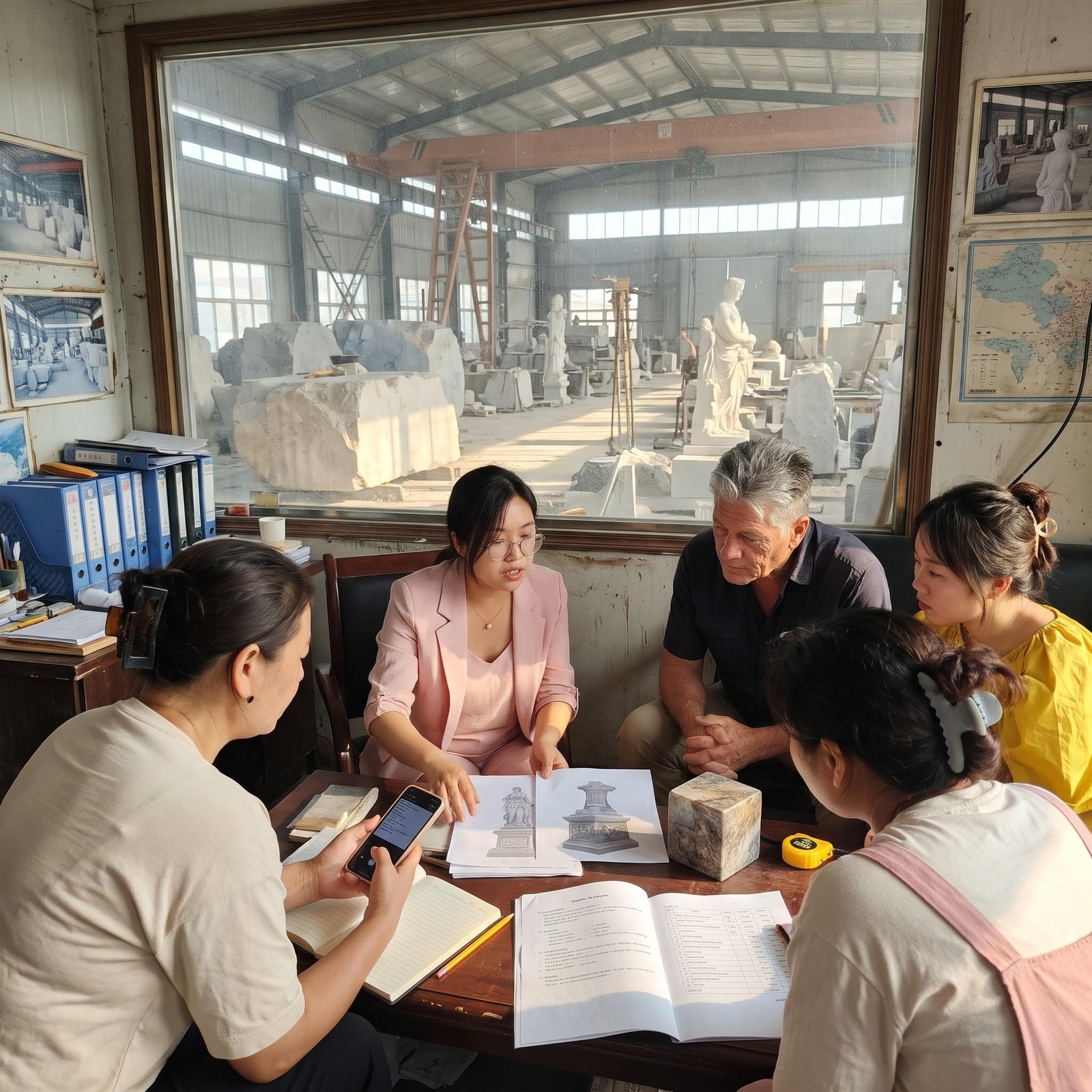
Before choosing dimensions or materials, identify the subject and the particular devotion the sculpture will represent.
A statue of Our Lady of Grace has a different visual character from Our Lady of Lourdes or a Madonna and Child. Open hands, joined hands, a lowered gaze, a crown, or the position of the Christ Child all affect how the figure is recognized and experienced.
For a statue of Jesus, consider the moment or devotion you wish to portray. The Sacred Heart may emphasize a compassionate expression, the visible heart, and a carefully composed blessing gesture. A Good Shepherd composition draws attention to the relationship between Christ and the lamb. A crucifix requires particular care in the position of the head, the anatomy of the body, and the treatment of suffering.
Reference images help make these intentions clear. Along with a photograph of a statue you admire, explain what draws you to it:
The gentleness of Mary’s face.
The movement of a veil over the shoulders.
The dignity of Christ’s blessing hand.
The depth and rhythm of the robe’s folds.
The balance between detailed carving and a simple silhouette.
Your references do not need to come from a single artwork. You may prefer the expression of one statue, the drapery of another, and a simpler base suited to your church. These preferences give the sculptor a useful starting point for a coherent design.
Details worth discussing: the direction of the eyes, the position of each hand, visible devotional attributes, inscriptions, and whether a halo or crown is integral to the sculpture or made separately.
For the Catholic understanding of devotional imagery, see the Vatican’s Catechism explanation of the veneration of sacred images.
Design for the Church Around the Statue
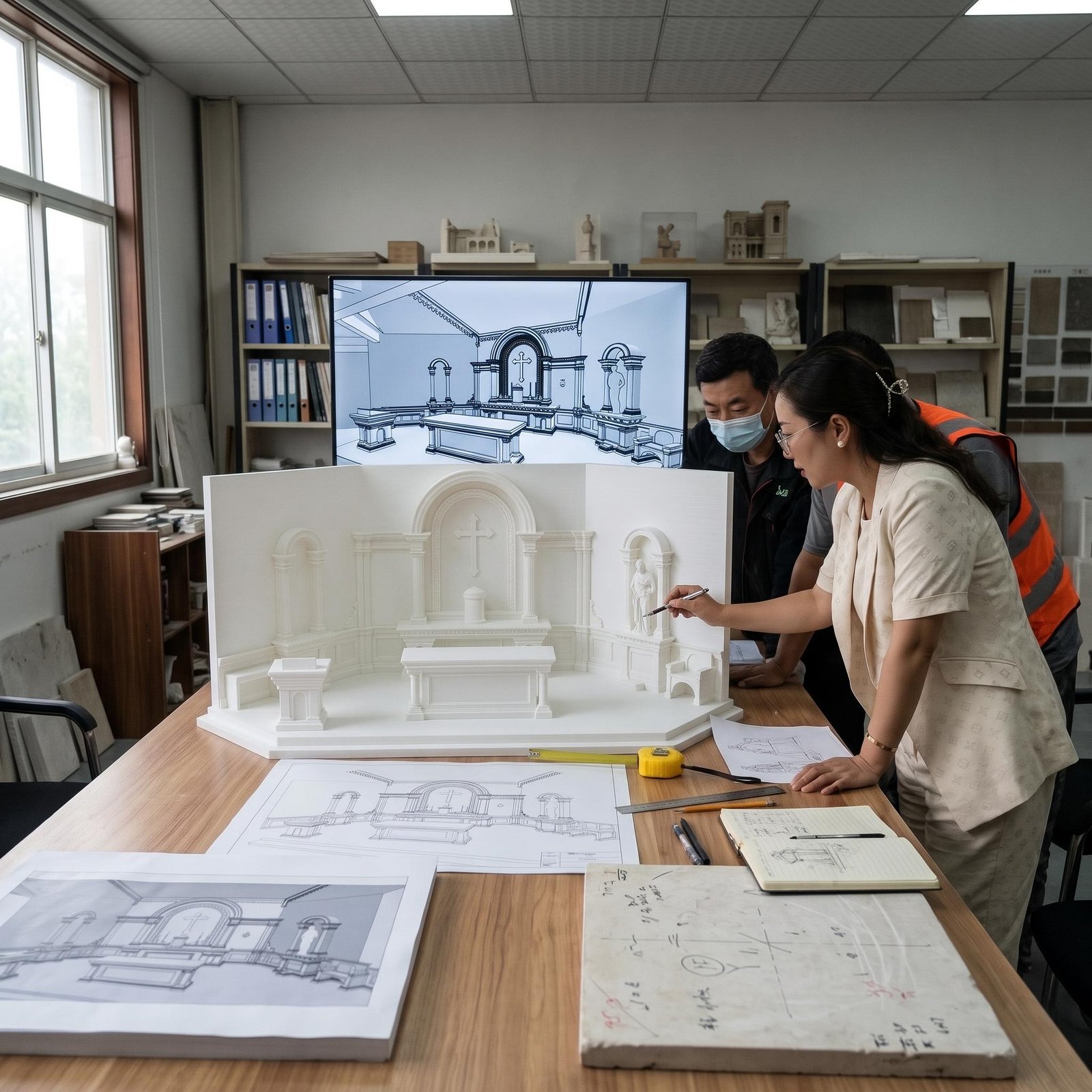
Consider the overall scale and silhouette as well as the expression and gesture.
A statue should feel at home in its intended setting.
A figure placed high above an altar will be seen differently from one standing at eye level in a prayer garden. Fine facial details may be appreciated in a small chapel, while a large nave needs a clear pose and recognizable silhouette that remain legible from the rear pews.
Send photographs of the installation area, including its surroundings. A close-up of the niche is useful, but a wider view can reveal relationships that measurements alone cannot explain: the height of an arch, the color of the wall behind the statue, or the visual prominence of a nearby crucifix.
For a sanctuary commission, consider the sculpture alongside the altar, ambo or pulpit, tabernacle setting, and other permanent furnishings.
A white marble statue might share the altar’s stone palette. A carved border on the statue’s pedestal might echo a restrained detail on the ambo. In a more ornate church, Gothic arches, foliage, or other approved motifs may help connect new work with the existing architecture.
That connection should be deliberate. Repeating every decorative element can make a sanctuary feel crowded; choosing a few shared materials and forms often creates a more composed result.
Provide these measurements: available width and depth, niche height, proposed pedestal height, viewing distance, and any doorway or access restrictions.
Choose a Material That Suits the Setting and the Detail
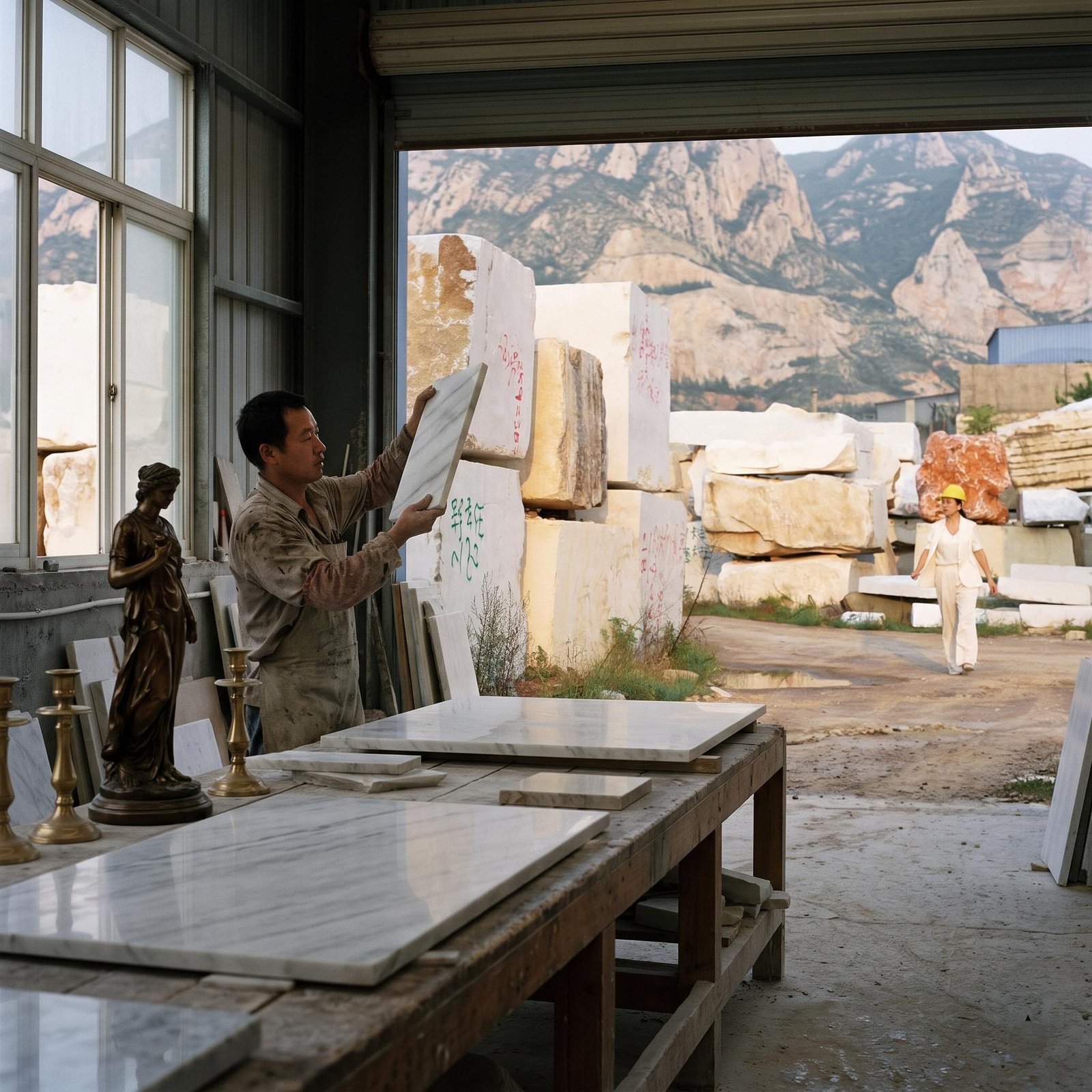
Material affects much more than color. It influences the treatment of the face, the strength of projecting details, the surface finish, and future maintenance.
Marble: Light, Texture, and Quiet Detail
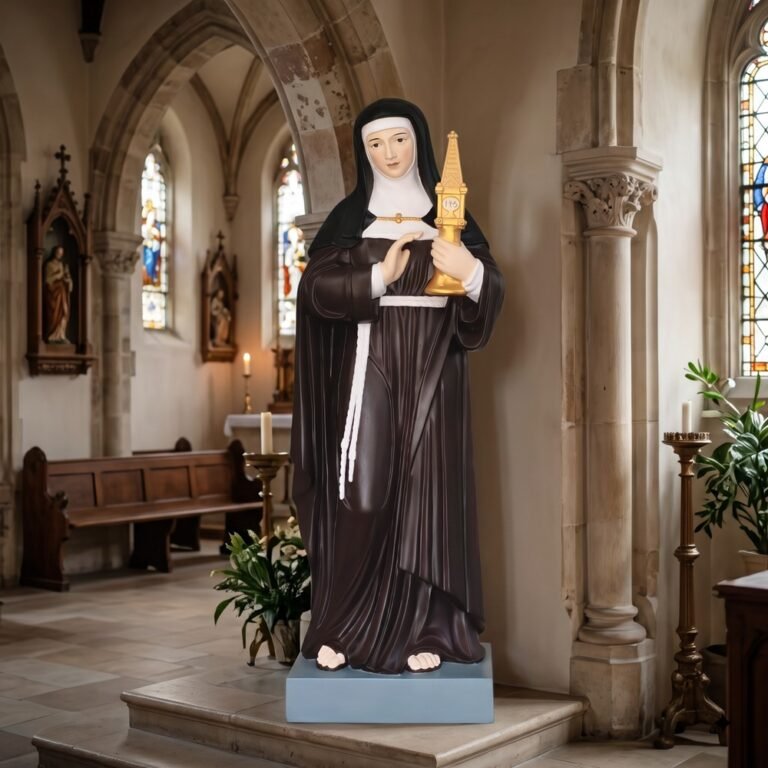
Marble can give sacred sculpture a gentle, luminous presence. It is especially expressive in the transition from a cheek to a veil, the curve of a hand, and the deeper folds beneath a mantle.
For a Virgin Mary statue, discuss how the sculptor will distinguish the veil, robe, and exposed skin through carving and finish. A carefully judged surface can preserve delicate facial modeling while allowing deeper shadows to define the garments.
For a figure of Jesus, consider how the stone’s veining will interact with the face, chest, hands, and devotional attributes. Request photographs of the proposed stone where available, since natural variation is part of the finished work.
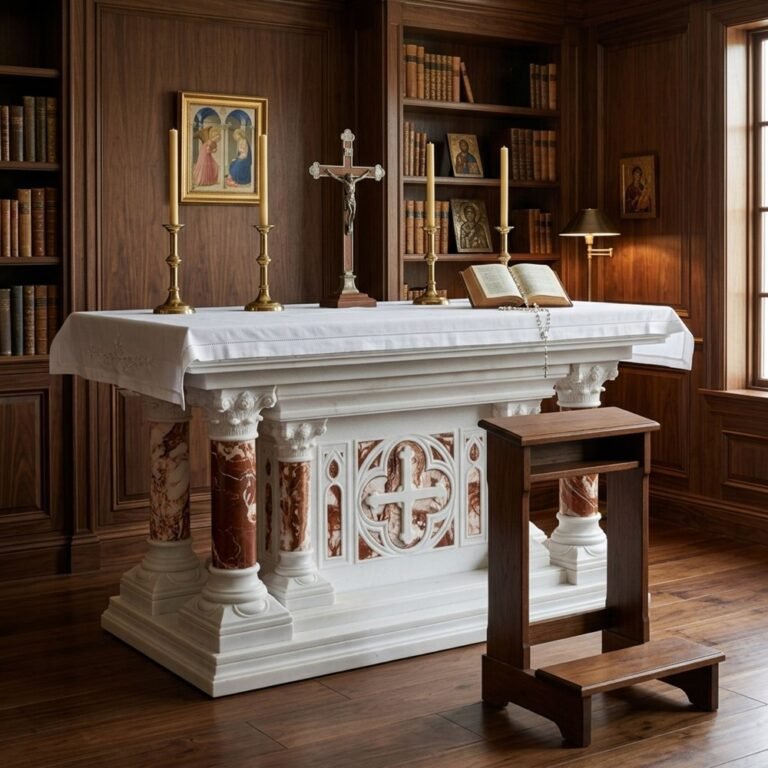
Marble can also unite a larger church commission. An altar, ambo, baptismal font, and statue bases may use complementary stone selections, with differences in carving helping each piece retain its own purpose.
Bronze: Strong Silhouettes and Expressive Movement
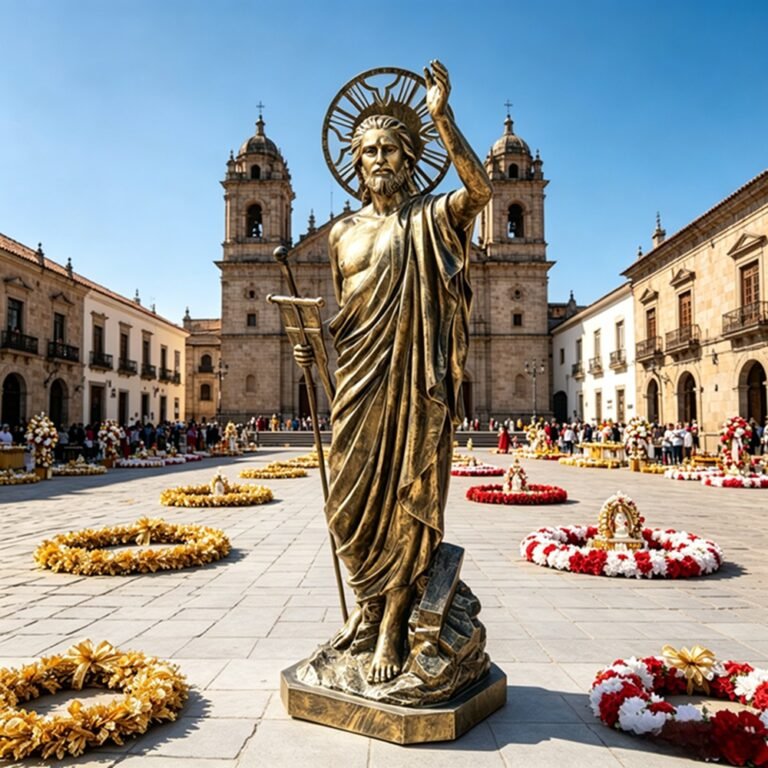
Bronze offers a different character. Its surface can emphasize the sweep of a mantle, the turn of a head, or the gesture of an extended arm.
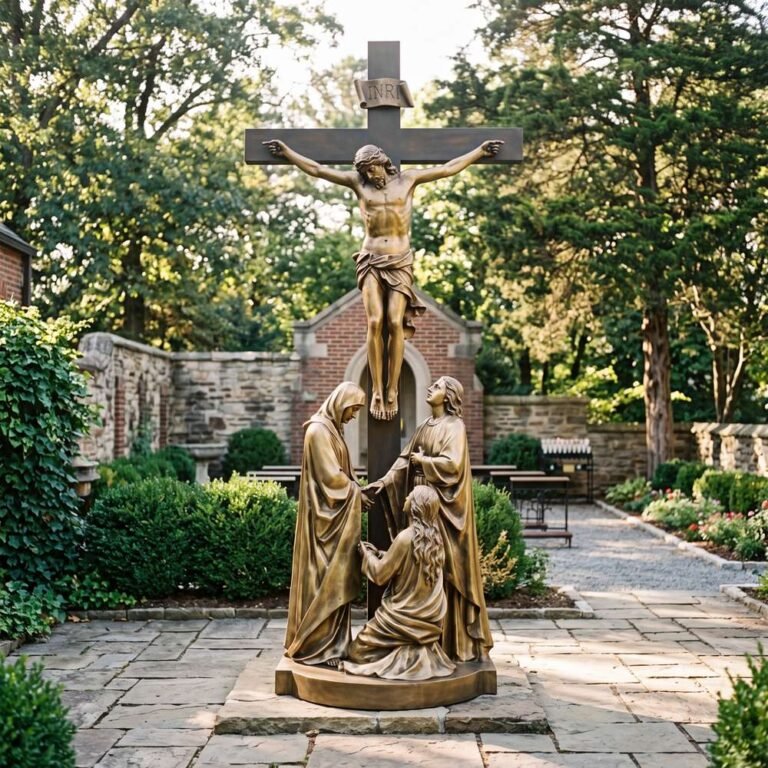
For an outdoor Jesus statue or a Holy Family group, consider how the composition will look against trees, sky, or the church façade. The outline of the sculpture matters as much as the close-up detail.
Discuss patina samples before approving the finish. A dark brown, warm bronze, or other agreed treatment changes how the face and drapery catch the light. Outdoor bronze also requires an appropriate maintenance plan.
Brass and Metal Accents
Brass can bring warmth to selected details, such as candleholders, crosses, and decorative fittings. Where several metal elements appear together, compare finishes so that a brightly polished fitting does not unintentionally dominate a quieter sculptural composition.
Material selection should account for the environment, structural design, budget, and maintenance needs of the particular commission.
Approve the Expression, Gesture, and Religious Details
Design approval is where the sculpture’s character becomes concrete.
Start with drawings that establish the pose, proportions, dimensions, and base. For a group composition, check the relationship between the figures: how Mary holds the Christ Child, how Joseph turns toward the family, or how the figures guide the viewer’s attention.
Depending on the material and complexity, the next stage may involve a digital model, a small clay study, or a larger sculptural model. Confirm which stages are included in your commission.
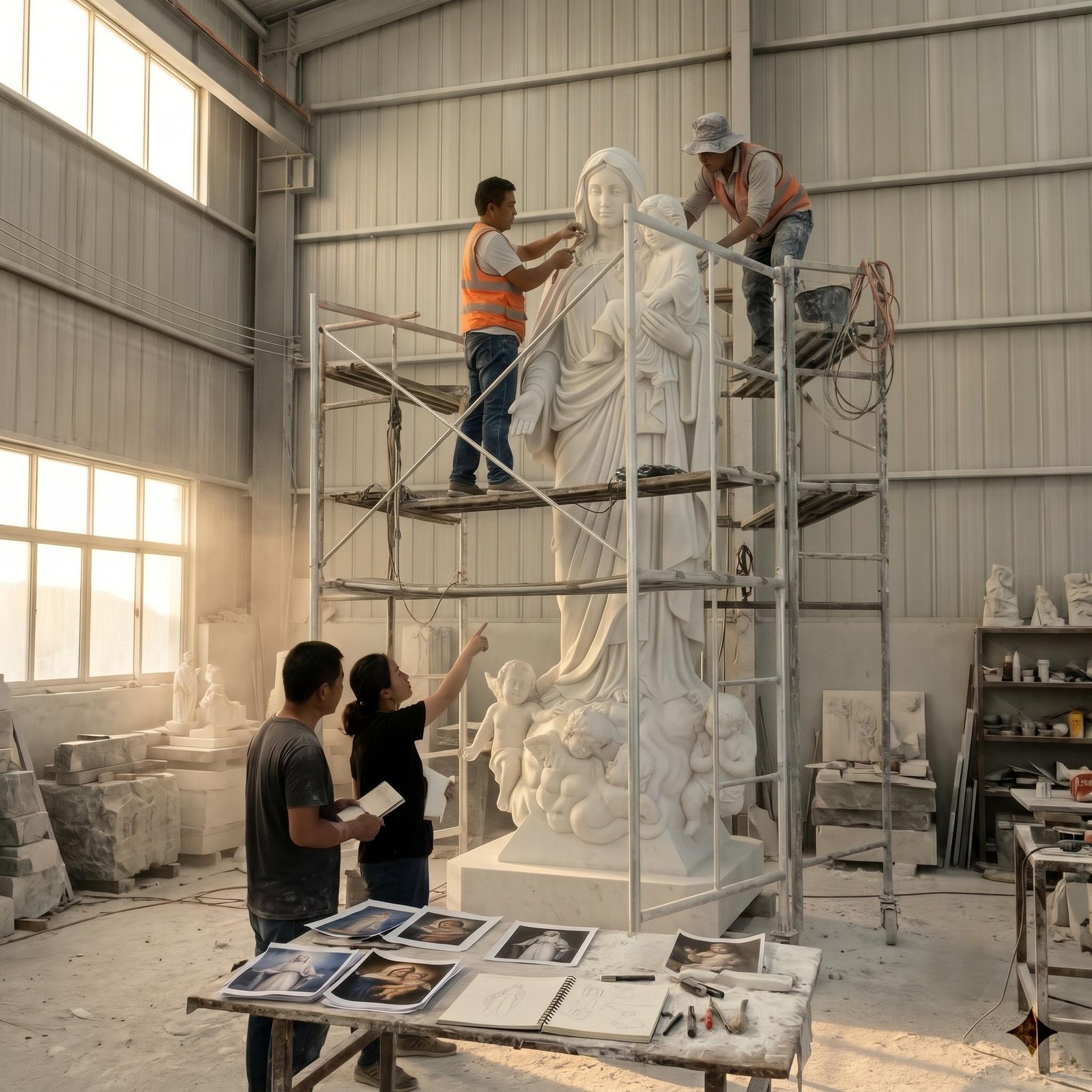
The Face
Does Mary’s expression convey the tenderness and dignity your parish hopes for? Does the face of Jesus suit the intended devotion?
Small changes to the eyelids, mouth, or angle of the head can alter the emotional character of a statue. Ask for images from the intended viewing angle, particularly if the finished piece will stand well above eye level.
The Hands
Hands carry much of the meaning in religious sculpture.
Check the position of a blessing hand, the meeting of palms in prayer, or the way a hand supports the Christ Child. Fingers should feel natural, and the gesture should remain clear from the congregation’s normal viewing distance.
The Drapery
Well-composed drapery helps the figure feel grounded and gives the sculpture a readable structure.
Look at where the veil rests on Mary’s shoulders, how the mantle falls over the arms, and where the robe gathers above the base. The folds should support the pose and guide the eye through the figure.
The Sacred Attributes
Confirm the details associated with the chosen devotion: the Sacred Heart, wounds, rosary, lilies, crown, cross, or other attributes.
Ask your priest or designated parish reviewer to approve these elements before production proceeds. Record the approved design and any requested revisions in writing.
Give Altars and Ambos the Same Attention
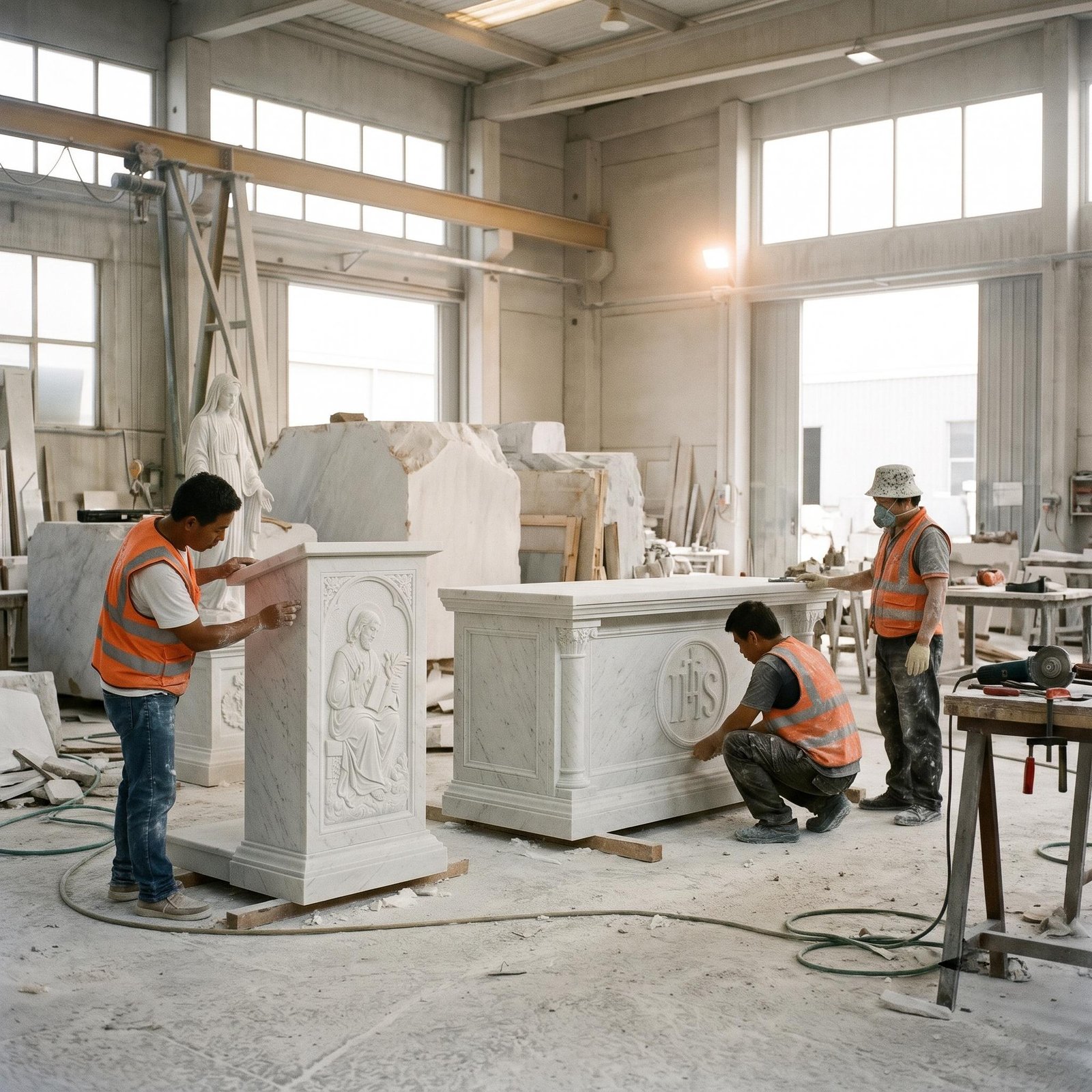
If your project includes sanctuary furnishings, review them as carefully as the statues.
For an altar, discuss its overall proportions, the appearance of the mensa and supports, the stone selection, and any carved panels. A cross, wheat, grapevine, or other proposed motif should be considered in relation to the church’s tradition and approved liturgical design.
For an ambo or pulpit, consider both appearance and use. The height, reading surface, access, and provision for a microphone should be resolved alongside the carving.
A relief of the Evangelists or an architectural border may look compelling in a drawing, but it must also work at the scale of the finished furnishing. Request views that show the piece in the sanctuary, alongside the altar and sculpture, to judge their relationship.
Have the final arrangement reviewed by the parish’s liturgical advisers and relevant church authorities as appropriate. For Catholic projects, consult Chapter V of the General Instruction of the Roman Missal, which addresses the altar, ambo, and sacred images.
Request a Quote That Reflects the Actual Design
The price of a religious sculpture depends on more than height.
A simple standing figure differs from a Madonna and Child with intricate garments, separately made attributes, and an elaborate pedestal. A coordinated altar and ambo commission also involves decisions about stone matching, relief depth, assembly, and installation.
Ask for a written quotation that identifies:
- The subject, dimensions, material, and agreed finish.
- Design and model stages, including revision allowances.
- The pedestal, inscriptions, and separately made accessories.
- Packing, transport, insurance, and delivery terms.
- Responsibility for import charges, unloading, and installation.
- Payment stages and the agreed production schedule.
If your parish has a fixed budget, share it early. The design can then be developed around clear priorities, such as preserving the quality of the face and hands while simplifying the base ornament.
Review the Finished Work Before Shipping
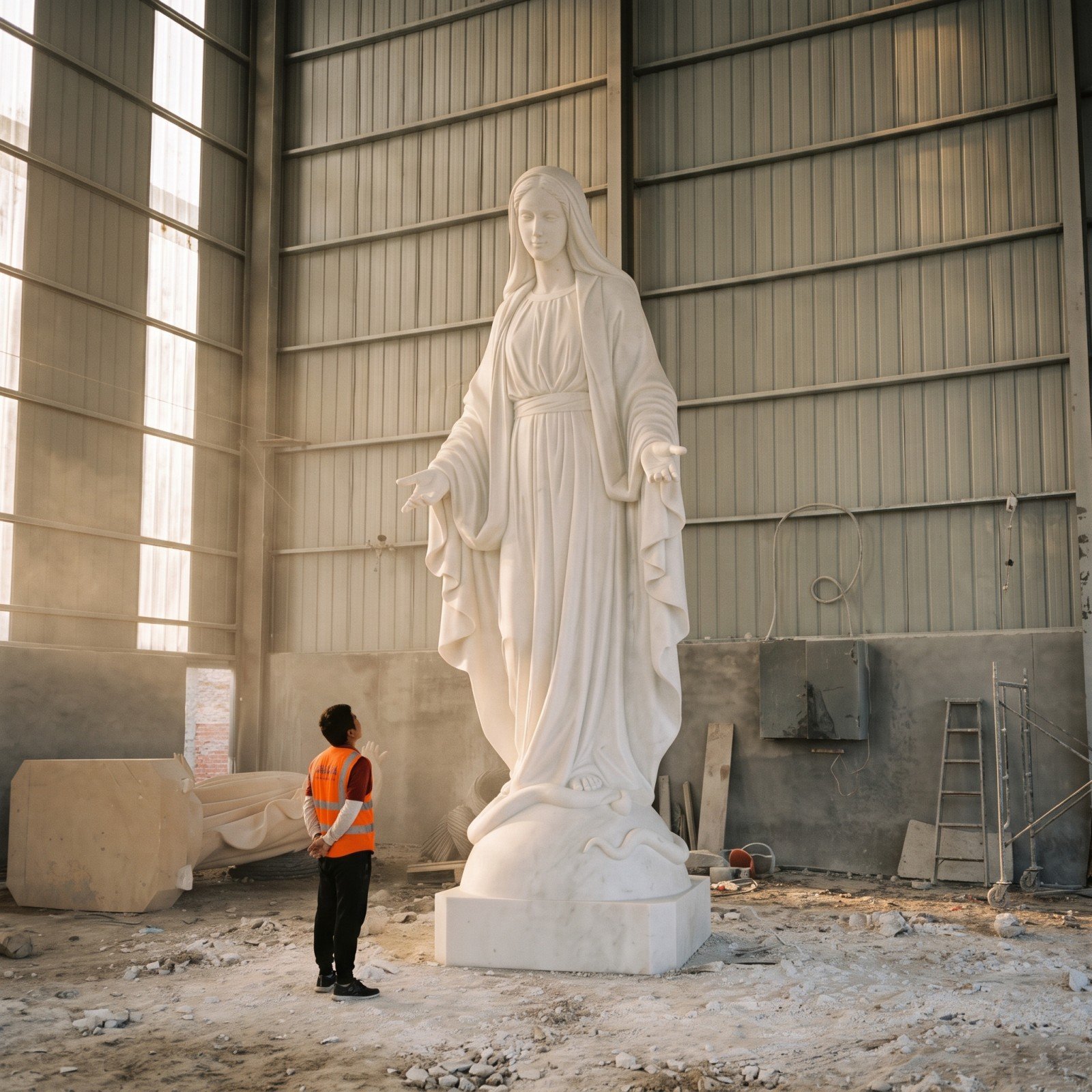
Before the sculpture leaves the workshop, compare it with the approved design.
Request full views from several angles and close-ups of the face, hands, drapery, and religious attributes. For a Virgin Mary statue, these might include the edge of the veil, the fingertips, and the transition from robe to pedestal. For a Sacred Heart figure, review the heart, blessing gesture, and facial expression.
For altars and ambos, inspect carved panels, edges, joints, inscriptions, and the consistency of the finish.
Also confirm the final dimensions, weight, packing arrangements, and any material documentation agreed in the contract. These details help your receiving team prepare for the actual object being delivered.
8. Prepare Its Place Before It Arrives
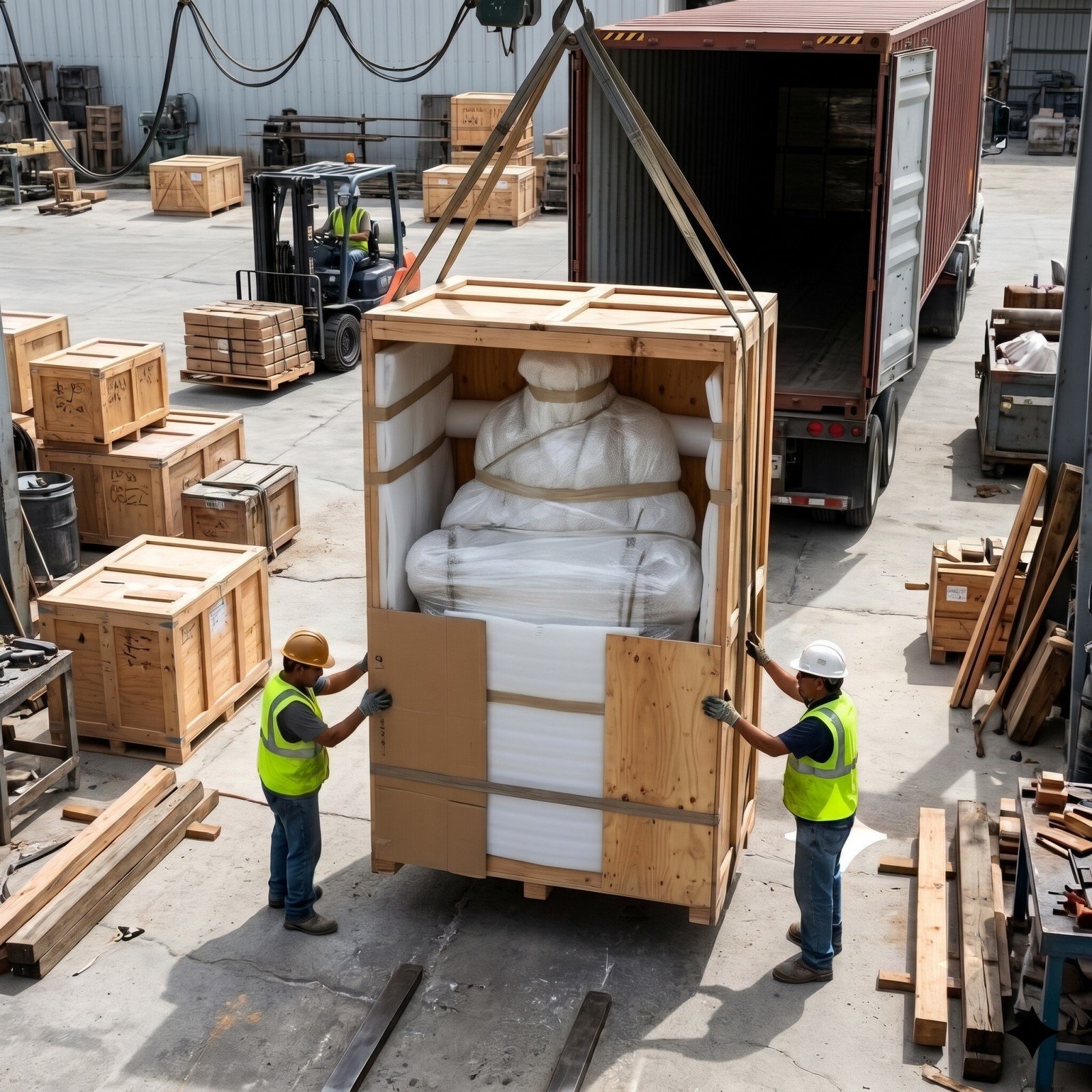
The installation site should be ready before delivery.
Have qualified local professionals confirm the foundation or supporting structure, anchoring requirements, access route, and lifting plan. The appropriate solution depends on the sculpture’s weight, shape, material, and location.
Consider the final setting as well as the installation itself. Will candles obscure the base? Will flowers hide a significant detail? Does the lighting cast a heavy shadow across the eyes?
For a statue in a niche, check the view from the pews and from the aisle. For an outdoor figure, consider planting, drainage, and the approach to the prayer area. These final decisions help the sculpture become part of the life of the parish.
A Sacred Work Begins with Careful Attention
The most meaningful commissions grow from specific, thoughtful choices: the inclination of Mary’s head, the openness of Christ’s hand, the fall of a carved robe, and the way an altar and ambo belong within the same sanctuary.
Those details give a religious sculpture its presence. A clear commissioning process helps preserve them from the first drawing to the finished work.
To discuss a custom religious statue or coordinated church furnishings with YouFine, share your reference images, approximate dimensions, photographs of the setting, and preferred completion date. These provide the foundation for a design shaped around your parish’s devotion and its place of worship.